- Serving Boston and the Greater Boston Area

- Home
- Services
- Garden Design Services
- Landscape Design
- Urban Garden Design
- Rooftop Garden Installation
- Roof Deck Planting
- Container Gardening Services
- Seasonal Container Planting
- Window Boxes
- Fine Gardening
- Garden Maintenance
- Planting Maintenance
- Flower & Plant Installation
- Drip Irrigation Installation
- Landscape Lighting
- Service Areas
Charlestown, MA
- Garden Services in Charlestown, MA
- Garden Design in Charlestown, MA
- Landscape Design in Charlestown, MA
- Urban Garden Design in Charlestown, MA
- Rooftop Garden Installation in Charlestown, MA
- Roof Deck Planting in Charlestown, MA
- Container Gardening in Charlestown, MA
- Seasonal Container Planting in Charlestown, MA
- Flower & Plant Installation in Charlestown, MA
- Window Boxes in Charlestown, MA
- Fine Gardening in Charlestown, MA
- Garden Maintenance in Charlestown, MA
- Planting & Maintenance in Charlestown, MA
- Drip Irrigation Installation in Charlestown, MA
- Landscape Lighting in Charlestown, MA
North End, MA
- Garden Services in north-end, MA
- Garden Design in north-end, MA
- Landscape Design in north-end, MA
- Urban Garden Design in north-end, MA
- Rooftop Garden Installation in north-end, MA
- Roof Deck Planting in north-end, MA
- Container Gardening in north-end, MA
- Seasonal Container Planting in north-end, MA
- Flower & Plant Installation in north-end, MA
- Window Boxes in north-end, MA
- Fine Gardening in north-end, MA
- Garden Maintenance in north-end, MA
- Planting & Maintenance in north-end, MA
- Drip Irrigation Installation in north-end, MA
- Landscape Lighting in north-end, MA
Downtown Boston, MA
- Garden Services in downtown boston, MA
- Garden Design in downtown boston, MA
- Landscape Design in downtown boston, MA
- Urban Garden Design in downtown boston, MA
- Rooftop Garden Installation in downtown boston, MA
- Roof Deck Planting in downtown boston, MA
- Container Gardening in downtown boston, MA
- Seasonal Container Planting in downtown boston, MA
- Flower & Plant Installation in downtown boston, MA
- Window Boxes in downtown boston, MA
- Fine Gardening in downtown boston, MA
- Garden Maintenance in downtown boston, MA
- Planting & Maintenance in downtown boston, MA
- Drip Irrigation Installation in downtown boston, MA
- Landscape Lighting in downtown boston, MA
Beacon Hill, MA
- Garden Services in beacon hill, MA
- Garden Design in beacon hill, MA
- Landscape Design in beacon hill, MA
- Urban Garden Design in beacon hill, MA
- Rooftop Garden Installation in beacon hill, MA
- Roof Deck Planting in beacon hill, MA
- Container Gardening in beacon hill, MA
- Seasonal Container Planting in beacon hill, MA
- Flower & Plant Installation in beacon hill, MA
- Window Boxes in beacon hill, MA
- Fine Gardening in beacon hill, MA
- Garden Maintenance in beacon hill, MA
- Planting & Maintenance in beacon hill, MA
- Drip Irrigation Installation in beacon hill, MA
- Landscape Lighting in beacon hill, MA
Boston, MA
- Garden Services in boston, MA
- Garden Design in boston, MA
- Landscape Design in boston, MA
- Urban Garden Design in boston, MA
- Rooftop Garden Installation in boston, MA
- Roof Deck Planting in boston, MA
- Container Gardening in boston, MA
- Seasonal Container Planting in boston, MA
- Flower & Plant Installation in boston, MA
- Window Boxes in boston, MA
- Fine Gardening in boston, MA
- Garden Maintenance in boston, MA
- Planting & Maintenance in boston, MA
- Drip Irrigation Installation in boston, MA
- Landscape Lighting in boston, MA
seaport, MA
- Garden Services in seaport, MA
- Garden Design in seaport, MA
- Landscape Design in seaport, MA
- Urban Garden Design in seaport, MA
- Rooftop Garden Installation in seaport, MA
- Roof Deck Planting in seaport, MA
- Container Gardening in seaport, MA
- Seasonal Container Planting in seaport, MA
- Flower & Plant Installation in seaport, MA
- Window Boxes in seaport, MA
- Fine Gardening in seaport, MA
- Garden Maintenance in seaport, MA
- Planting & Maintenance in seaport, MA
- Drip Irrigation Installation in seaport, MA
- Landscape Lighting in seaport, MA
back bay, MA
- Garden Services in back bay, MA
- Garden Design in back bay, MA
- Landscape Design in back bay, MA
- Urban Garden Design in back bay, MA
- Rooftop Garden Installation in back bay, MA
- Roof Deck Planting in back bay, MA
- Container Gardening in back bay, MA
- Seasonal Container Planting in back bay, MA
- Flower & Plant Installation in back bay, MA
- Window Boxes in back bay, MA
- Fine Gardening in back bay, MA
- Garden Maintenance in back bay, MA
- Planting & Maintenance in back bay, MA
- Drip Irrigation Installation in back bay, MA
- Landscape Lighting in back bay, MA
cambridge, MA
- Garden Services in cambridge, MA
- Garden Design in cambridge, MA
- Landscape Design in cambridge, MA
- Urban Garden Design in cambridge, MA
- Rooftop Garden Installation in cambridge, MA
- Roof Deck Planting in cambridge, MA
- Container Gardening in cambridge, MA
- Seasonal Container Planting in cambridge, MA
- Flower & Plant Installation in cambridge, MA
- Window Boxes in cambridge, MA
- Fine Gardening in cambridge, MA
- Garden Maintenance in cambridge, MA
- Planting & Maintenance in cambridge, MA
- Drip Irrigation Installation in cambridge, MA
- Landscape Lighting in cambridge, MA
south-end, MA
- Garden Services in south-end, MA
- Garden Design in south-end, MA
- Landscape Design in south-end, MA
- Urban Garden Design in south-end, MA
- Rooftop Garden Installation in south-end, MA
- Roof Deck Planting in south-end, MA
- Container Gardening in south-end, MA
- Seasonal Container Planting in south-end, MA
- Flower & Plant Installation in south-end, MA
- Window Boxes in south-end, MA
- Fine Gardening in south-end, MA
- Garden Maintenance in south-end, MA
- Planting & Maintenance in south-end, MA
- Drip Irrigation Installation in south-end, MA
- Landscape Lighting in south-end, MA
brookline, MA
- Garden Services in brookline, MA
- Garden Design in brookline, MA
- Landscape Design in brookline, MA
- Urban Garden Design in brookline, MA
- Rooftop Garden Installation in brookline, MA
- Roof Deck Planting in brookline, MA
- Container Gardening in brookline, MA
- Seasonal Container Planting in brookline, MA
- Flower & Plant Installation in brookline, MA
- Window Boxes in brookline, MA
- Fine Gardening in brookline, MA
- Garden Maintenance in brookline, MA
- Planting & Maintenance in brookline, MA
- Drip Irrigation Installation in brookline, MA
- Landscape Lighting in brookline, MA
winchester, MA
- Garden Services in winchester, MA
- Garden Design in winchester, MA
- Landscape Design in winchester, MA
- Urban Garden Design in winchester, MA
- Rooftop Garden Installation in winchester, MA
- Roof Deck Planting in winchester, MA
- Container Gardening in winchester, MA
- Seasonal Container Planting in winchester, MA
- Flower & Plant Installation in winchester, MA
- Window Boxes in winchester, MA
- Fine Gardening in winchester, MA
- Garden Maintenance in winchester, MA
- Planting & Maintenance in winchester, MA
- Drip Irrigation Installation in winchester, MA
- Landscape Lighting in winchester, MA
newton, MA
- Garden Services in newton, MA
- Garden Design in newton, MA
- Landscape Design in newton, MA
- Urban Garden Design in newton, MA
- Rooftop Garden Installation in newton, MA
- Roof Deck Planting in newton, MA
- Container Gardening in newton, MA
- Seasonal Container Planting in newton, MA
- Flower & Plant Installation in newton, MA
- Window Boxes in newton, MA
- Fine Gardening in newton, MA
- Garden Maintenance in newton, MA
- Planting & Maintenance in newton, MA
- Drip Irrigation Installation in newton, MA
- Landscape Lighting in newton, MA
lexington, MA
- Garden Services in lexington, MA
- Garden Design in lexington, MA
- Landscape Design in lexington, MA
- Urban Garden Design in lexington, MA
- Rooftop Garden Installation in lexington, MA
- Roof Deck Planting in lexington, MA
- Container Gardening in lexington, MA
- Seasonal Container Planting newton, MA
- Flower & Plant Installation in lexington, MA
- Window Boxes in lexington, MA
- Fine Gardening in lexington, MA
- Garden Maintenance in lexington, MA
- Planting & Maintenance in lexington, MA
- Drip Irrigation Installation in lexington, MA
- Landscape Lighting in lexington, MA
weston, MA
- Garden Services in weston, MA
- Garden Design in weston, MA
- Landscape Design in weston, MA
- Urban Garden Design in weston, MA
- Rooftop Garden Installation in weston, MA
- Roof Deck Planting in weston, MA
- Container Gardening in weston, MA
- Seasonal Container Planting weston, MA
- Flower & Plant Installation in weston, MA
- Window Boxes in weston, MA
- Fine Gardening in weston, MA
- Garden Maintenance in weston, MA
- Planting & Maintenance in weston, MA
- Drip Irrigation Installation in weston, MA
- Landscape Lighting in weston, MA
wellesley, MA
- Garden Services in wellesley, MA
- Garden Design in wellesley, MA
- Landscape Design in wellesley, MA
- Urban Garden Design in wellesley, MA
- Rooftop Garden Installation in wellesley, MA
- Roof Deck Planting in wellesley, MA
- Container Gardening in wellesley, MA
- Seasonal Container Planting wellesley, MA
- Flower & Plant Installation in wellesley, MA
- Window Boxes in wellesley, MA
- Fine Gardening in wellesley, MA
- Garden Maintenance in wellesley, MA
- Planting & Maintenance in wellesley, MA
- Drip Irrigation Installation in wellesley, MA
- Landscape Lighting in wellesley, MA
- Portfolio
- About us
- Blog
- Contact
- Flower Delivery
Seasonal Container Planting in Downtown Boston, MA
A terrace container that thrives in the Back Bay will shred on a 30th-floor setback in Downtown Boston within a week. The wind coming off the harbor and funneling between towers on Franklin, Summer, and Devonshire Streets is the design problem here, not sun exposure. Add in a freight-elevator delivery window that a building manager will only confirm the morning of, and a service scope that has to be planned around access as much as aesthetics. This is a different planting job than a Back Bay bowfront or a Beacon Hill dooryard, and it has to be treated that way.

What Seasonal Container Planting looks like in Downtown Boston
Most of our Downtown Boston container work happens thirty, forty, sixty floors up, on terraces attached to condominiums and corporate residences along the Financial District and Rose Kennedy Greenway corridor. A smaller share is street-level: planters flanking the entrance of a boutique office building or a ground-floor retail tenant on Winter Street or Franklin Street, where the concern is pedestrian traffic and building-management sign-off rather than wind load.
Light is rarely the limiting factor. A south-facing terrace on the 40th floor gets more sun in February than most suburban gardens get in June, and a north tower can throw permanent shade across an entire building’s plaza-level beds. What decides the plant list, the container weight, and the install sequence is exposure to wind, the building’s rules about what can go on a shared terrace or lobby frontage, and how — and when — we’re allowed to get material up to the space.
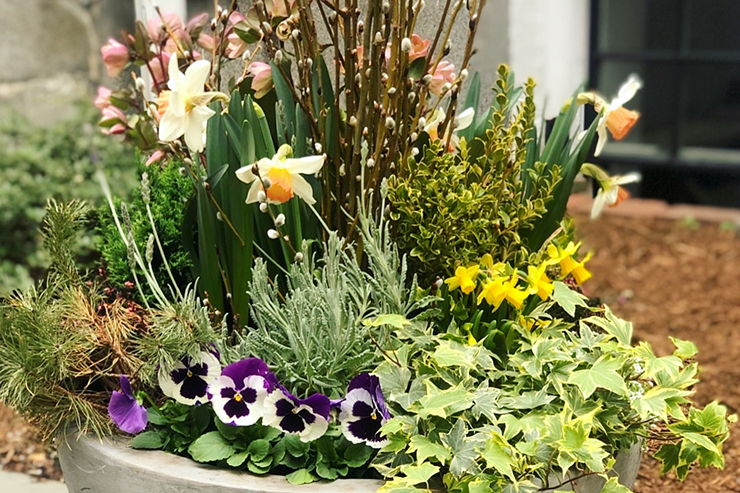
We treat every Downtown Boston container job as a logistics plan first and a design plan second. That means confirming freight elevator dimensions and booking windows before we finalize a plant palette, sourcing soil-filled, wind-rated containers rather than lightweight decorative pots that will not hold their footing above the 20th floor, and building a seasonal rotation — spring bulbs and cool-season foliage, summer tropicals and grasses, fall mums and ornamental kale, winter evergreens and lit branches — that survives four to six weeks between our visits without a resident having to think about it.
What we account for here
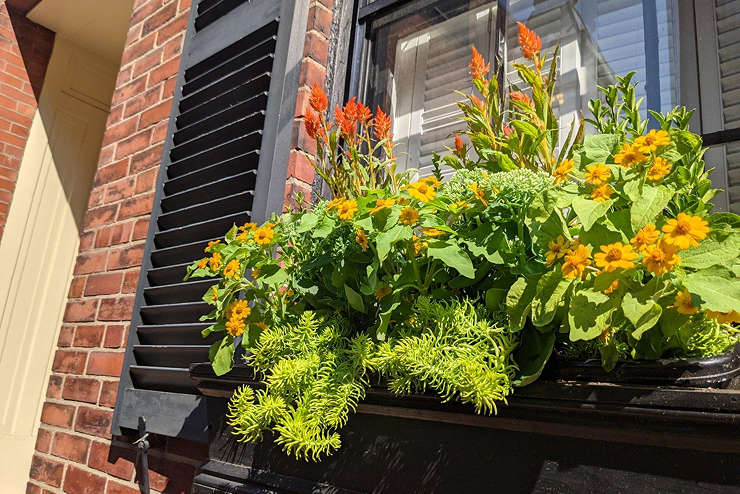
What we account for here
Wind load on high-rise terraces
Above roughly the 15th floor, sustained wind — not cold — is what kills container plantings. We select structurally rigid containers with low centers of gravity, weight the base with drainage stone rather than relying on plant mass, and choose species (dwarf conifers, ornamental grasses, boxwood, heuchera) that flex instead of snapping. Tall, top-heavy specimens are avoided entirely on exposed terraces regardless of how well they’d perform elsewhere.
Building management approval and house rules
Nearly every Downtown Boston tower has a condo association or commercial property manager with its own rules on terrace weight limits, approved plant lists, water runoff, and contractor insurance. We handle the paperwork and the certificate of insurance submission before scheduling, so the first the resident sees of the job is the finished install, not a stalled approval chain.
Freight elevator and delivery scheduling
Buildings in this neighborhood typically allot a narrow freight window — often a single hour early morning or midday — shared across multiple tenants and vendors. We pre-stage soil, containers, and plant material off-site, confirm the booking a week out and again the morning of, and move everything through in one coordinated trip rather than several, which is the single biggest source of delay if it isn’t planned properly.
Micro-climate swings between floors and orientations
A planting brief for a 12th-floor east terrace and a 45th-floor south terrace on the same building can call for entirely different container weights and plant choices. We assess each terrace individually rather than applying one plan across a whole building, which is where generic seasonal rotations tend to fail in this part of the city.
Recent Downtown Boston work
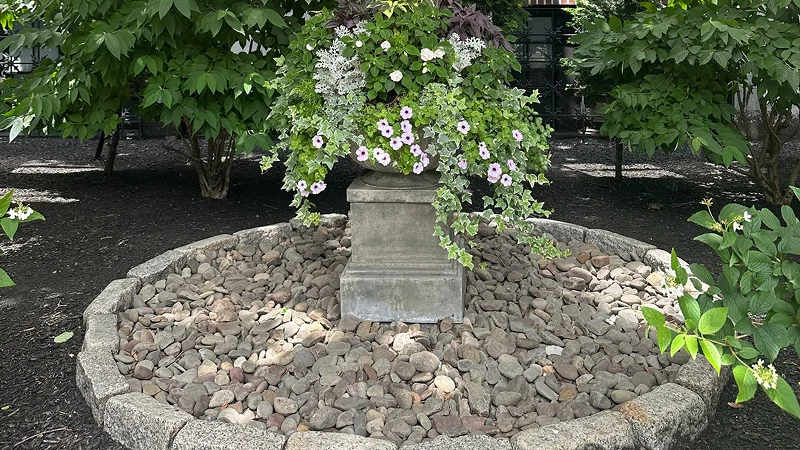
Recent work in the neighborhood has included a full seasonal rotation program for a high-floor residential terrace overlooking the harbor, where wind-rated fiberglass containers replaced a set of decorative ceramic pots that had cracked and tipped the previous winter, and a street-level planting refresh for a Financial District office lobby entrance, coordinated around the building’s loading-dock schedule and its property manager’s approved-plant list. Both projects were built around access and structural constraints first, with the planting palette designed to fit inside those limits rather than fight them.
Other services we provide in Downtown Boston
Container planting is one piece of a broader service list we run in Downtown Boston. We also handle garden design and installation for lobby-level and terrace projects, ongoing fine gardening and maintenance visits, window box planting for street-facing units, roof deck and terrace planting for buildings where the container program extends into a full outdoor room, drip irrigation runs designed for wind-exposed high-rise terraces, and low-voltage landscape lighting for evening terrace and entrance use. Most Downtown Boston clients start with containers and fold in irrigation or lighting once the space is proven out.
Working across the neighborhood
The same wind and access constraints that shape our Downtown Boston work show up, in different forms, just across the harbor and up the hill. We run the identical seasonal container program in Beacon Hill and North End, and a citywide overview of how we approach this service across Boston’s neighborhoods is available on our Boston seasonal container planting page.
Start a Downtown Boston container planting plan
From our Downtown Boston location at 5 Crescent St, Downtown Boston is about a 1.6-mile drive — close enough that we can walk a terrace or lobby frontage on short notice and turn around a proposal fast. A call gets you a site assessment: we confirm your building’s freight and approval requirements, measure wind exposure by floor and orientation, and come back with a seasonal plan and a container spec before we schedule the install. Call to set up a visit, or request a consultation and we’ll follow up within one business day to schedule it.
Related planting and garden work nearby
Seasonal container planting in Downtown Boston rarely happens in isolation. Many of the properties we serve here sit alongside plazas, lobby entrances, and small terraces that call for a coordinated approach rather than a single delivery of pots. We often pair container rotations with fine gardening and maintenance visits, so the same crew that refreshes your urns is also keeping any surrounding planters, tree pits, or ground-level beds tidy between installations.
For buildings with balconies, roof terraces, or setback gardens above street level, we provide roof deck and terrace planting, frequently combined with drip irrigation installation so containers several stories up stay consistent without relying on staff to haul water. Properties with ledges or sills instead of floor space often use window box planting as a dedicated track, reviewed on the same seasonal calendar as larger containers.
Because Downtown Boston’s planting windows are tight and heavily influenced by foot traffic, building shadow lines, and property management schedules, we also offer:
- Spring and fall garden cleanup timed to each seasonal changeover
- Low-voltage landscape lighting for containers near entrances and walkways
- Garden consultation for owners weighing a container-only plan against a fuller landscape update
If your property includes a courtyard, atrium, or any bed space beyond containers, we can fold those into the same planning conversation. Ask us how a Downtown Boston container schedule fits alongside the rest of what we do in the neighborhood.
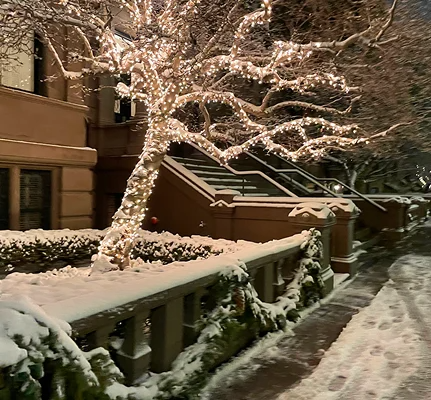
Ready for a fresh look on your storefront or terrace?
Downtown Boston’s mix of office plazas, condo entrances, and retail storefronts calls for containers that hold up to foot traffic, wind tunnels between towers, and tight loading access. We’ll assess your space, discuss the look you want season to season, and set a planting schedule that keeps entrances polished year-round without disrupting daily operations.
What Our Customers Say
Frequently Asked Questions
Do you handle building management approval for terrace containers in Downtown Boston?
Yes. We submit certificates of insurance and confirm weight limits and approved-plant lists with the property manager or condo association before scheduling any work, so the approval is settled before install day.
How do you deal with wind on a high-floor terrace?
We use heavier, low-profile containers weighted with drainage stone, and select wind-tolerant species like ornamental grasses, dwarf conifers, and boxwood rather than tall, top-heavy specimens that catch wind and tip.
What if the building only allows a narrow freight elevator window?
We pre-stage soil, containers, and plants off-site and confirm the delivery booking in advance and again the morning of, so the entire install moves through in one coordinated trip within that window.
Can you plant street-level containers for a retail or office entrance?
Yes. We plant and maintain ground-floor entrance and lobby containers throughout the Financial District and surrounding blocks, working around loading-dock schedules and building house rules.
How often do you rotate seasonal containers in Downtown Boston?
Typically four times a year — spring, summer, fall, and winter — with visits every four to six weeks in between to check condition, since exposed terraces dry out and weather faster than ground-level beds.