- Serving Boston and the Greater Boston Area

- Home
- Services
- Garden Design Services
- Landscape Design
- Urban Garden Design
- Rooftop Garden Installation
- Roof Deck Planting
- Container Gardening Services
- Seasonal Container Planting
- Window Boxes
- Fine Gardening
- Garden Maintenance
- Planting Maintenance
- Flower & Plant Installation
- Drip Irrigation Installation
- Landscape Lighting
- Service Areas
Charlestown, MA
- Garden Services in Charlestown, MA
- Garden Design in Charlestown, MA
- Landscape Design in Charlestown, MA
- Urban Garden Design in Charlestown, MA
- Rooftop Garden Installation in Charlestown, MA
- Roof Deck Planting in Charlestown, MA
- Container Gardening in Charlestown, MA
- Seasonal Container Planting in Charlestown, MA
- Flower & Plant Installation in Charlestown, MA
- Window Boxes in Charlestown, MA
- Fine Gardening in Charlestown, MA
- Garden Maintenance in Charlestown, MA
- Planting & Maintenance in Charlestown, MA
- Drip Irrigation Installation in Charlestown, MA
- Landscape Lighting in Charlestown, MA
North End, MA
- Garden Services in north-end, MA
- Garden Design in north-end, MA
- Landscape Design in north-end, MA
- Urban Garden Design in north-end, MA
- Rooftop Garden Installation in north-end, MA
- Roof Deck Planting in north-end, MA
- Container Gardening in north-end, MA
- Seasonal Container Planting in north-end, MA
- Flower & Plant Installation in north-end, MA
- Window Boxes in north-end, MA
- Fine Gardening in north-end, MA
- Garden Maintenance in north-end, MA
- Planting & Maintenance in north-end, MA
- Drip Irrigation Installation in north-end, MA
- Landscape Lighting in north-end, MA
Downtown Boston, MA
- Garden Services in downtown boston, MA
- Garden Design in downtown boston, MA
- Landscape Design in downtown boston, MA
- Urban Garden Design in downtown boston, MA
- Rooftop Garden Installation in downtown boston, MA
- Roof Deck Planting in downtown boston, MA
- Container Gardening in downtown boston, MA
- Seasonal Container Planting in downtown boston, MA
- Flower & Plant Installation in downtown boston, MA
- Window Boxes in downtown boston, MA
- Fine Gardening in downtown boston, MA
- Garden Maintenance in downtown boston, MA
- Planting & Maintenance in downtown boston, MA
- Drip Irrigation Installation in downtown boston, MA
- Landscape Lighting in downtown boston, MA
Beacon Hill, MA
- Garden Services in beacon hill, MA
- Garden Design in beacon hill, MA
- Landscape Design in beacon hill, MA
- Urban Garden Design in beacon hill, MA
- Rooftop Garden Installation in beacon hill, MA
- Roof Deck Planting in beacon hill, MA
- Container Gardening in beacon hill, MA
- Seasonal Container Planting in beacon hill, MA
- Flower & Plant Installation in beacon hill, MA
- Window Boxes in beacon hill, MA
- Fine Gardening in beacon hill, MA
- Garden Maintenance in beacon hill, MA
- Planting & Maintenance in beacon hill, MA
- Drip Irrigation Installation in beacon hill, MA
- Landscape Lighting in beacon hill, MA
Boston, MA
- Garden Services in boston, MA
- Garden Design in boston, MA
- Landscape Design in boston, MA
- Urban Garden Design in boston, MA
- Rooftop Garden Installation in boston, MA
- Roof Deck Planting in boston, MA
- Container Gardening in boston, MA
- Seasonal Container Planting in boston, MA
- Flower & Plant Installation in boston, MA
- Window Boxes in boston, MA
- Fine Gardening in boston, MA
- Garden Maintenance in boston, MA
- Planting & Maintenance in boston, MA
- Drip Irrigation Installation in boston, MA
- Landscape Lighting in boston, MA
seaport, MA
- Garden Services in seaport, MA
- Garden Design in seaport, MA
- Landscape Design in seaport, MA
- Urban Garden Design in seaport, MA
- Rooftop Garden Installation in seaport, MA
- Roof Deck Planting in seaport, MA
- Container Gardening in seaport, MA
- Seasonal Container Planting in seaport, MA
- Flower & Plant Installation in seaport, MA
- Window Boxes in seaport, MA
- Fine Gardening in seaport, MA
- Garden Maintenance in seaport, MA
- Planting & Maintenance in seaport, MA
- Drip Irrigation Installation in seaport, MA
- Landscape Lighting in seaport, MA
back bay, MA
- Garden Services in back bay, MA
- Garden Design in back bay, MA
- Landscape Design in back bay, MA
- Urban Garden Design in back bay, MA
- Rooftop Garden Installation in back bay, MA
- Roof Deck Planting in back bay, MA
- Container Gardening in back bay, MA
- Seasonal Container Planting in back bay, MA
- Flower & Plant Installation in back bay, MA
- Window Boxes in back bay, MA
- Fine Gardening in back bay, MA
- Garden Maintenance in back bay, MA
- Planting & Maintenance in back bay, MA
- Drip Irrigation Installation in back bay, MA
- Landscape Lighting in back bay, MA
cambridge, MA
- Garden Services in cambridge, MA
- Garden Design in cambridge, MA
- Landscape Design in cambridge, MA
- Urban Garden Design in cambridge, MA
- Rooftop Garden Installation in cambridge, MA
- Roof Deck Planting in cambridge, MA
- Container Gardening in cambridge, MA
- Seasonal Container Planting in cambridge, MA
- Flower & Plant Installation in cambridge, MA
- Window Boxes in cambridge, MA
- Fine Gardening in cambridge, MA
- Garden Maintenance in cambridge, MA
- Planting & Maintenance in cambridge, MA
- Drip Irrigation Installation in cambridge, MA
- Landscape Lighting in cambridge, MA
south-end, MA
- Garden Services in south-end, MA
- Garden Design in south-end, MA
- Landscape Design in south-end, MA
- Urban Garden Design in south-end, MA
- Rooftop Garden Installation in south-end, MA
- Roof Deck Planting in south-end, MA
- Container Gardening in south-end, MA
- Seasonal Container Planting in south-end, MA
- Flower & Plant Installation in south-end, MA
- Window Boxes in south-end, MA
- Fine Gardening in south-end, MA
- Garden Maintenance in south-end, MA
- Planting & Maintenance in south-end, MA
- Drip Irrigation Installation in south-end, MA
- Landscape Lighting in south-end, MA
brookline, MA
- Garden Services in brookline, MA
- Garden Design in brookline, MA
- Landscape Design in brookline, MA
- Urban Garden Design in brookline, MA
- Rooftop Garden Installation in brookline, MA
- Roof Deck Planting in brookline, MA
- Container Gardening in brookline, MA
- Seasonal Container Planting in brookline, MA
- Flower & Plant Installation in brookline, MA
- Window Boxes in brookline, MA
- Fine Gardening in brookline, MA
- Garden Maintenance in brookline, MA
- Planting & Maintenance in brookline, MA
- Drip Irrigation Installation in brookline, MA
- Landscape Lighting in brookline, MA
winchester, MA
- Garden Services in winchester, MA
- Garden Design in winchester, MA
- Landscape Design in winchester, MA
- Urban Garden Design in winchester, MA
- Rooftop Garden Installation in winchester, MA
- Roof Deck Planting in winchester, MA
- Container Gardening in winchester, MA
- Seasonal Container Planting in winchester, MA
- Flower & Plant Installation in winchester, MA
- Window Boxes in winchester, MA
- Fine Gardening in winchester, MA
- Garden Maintenance in winchester, MA
- Planting & Maintenance in winchester, MA
- Drip Irrigation Installation in winchester, MA
- Landscape Lighting in winchester, MA
newton, MA
- Garden Services in newton, MA
- Garden Design in newton, MA
- Landscape Design in newton, MA
- Urban Garden Design in newton, MA
- Rooftop Garden Installation in newton, MA
- Roof Deck Planting in newton, MA
- Container Gardening in newton, MA
- Seasonal Container Planting in newton, MA
- Flower & Plant Installation in newton, MA
- Window Boxes in newton, MA
- Fine Gardening in newton, MA
- Garden Maintenance in newton, MA
- Planting & Maintenance in newton, MA
- Drip Irrigation Installation in newton, MA
- Landscape Lighting in newton, MA
lexington, MA
- Garden Services in lexington, MA
- Garden Design in lexington, MA
- Landscape Design in lexington, MA
- Urban Garden Design in lexington, MA
- Rooftop Garden Installation in lexington, MA
- Roof Deck Planting in lexington, MA
- Container Gardening in lexington, MA
- Seasonal Container Planting newton, MA
- Flower & Plant Installation in lexington, MA
- Window Boxes in lexington, MA
- Fine Gardening in lexington, MA
- Garden Maintenance in lexington, MA
- Planting & Maintenance in lexington, MA
- Drip Irrigation Installation in lexington, MA
- Landscape Lighting in lexington, MA
weston, MA
- Garden Services in weston, MA
- Garden Design in weston, MA
- Landscape Design in weston, MA
- Urban Garden Design in weston, MA
- Rooftop Garden Installation in weston, MA
- Roof Deck Planting in weston, MA
- Container Gardening in weston, MA
- Seasonal Container Planting weston, MA
- Flower & Plant Installation in weston, MA
- Window Boxes in weston, MA
- Fine Gardening in weston, MA
- Garden Maintenance in weston, MA
- Planting & Maintenance in weston, MA
- Drip Irrigation Installation in weston, MA
- Landscape Lighting in weston, MA
wellesley, MA
- Garden Services in wellesley, MA
- Garden Design in wellesley, MA
- Landscape Design in wellesley, MA
- Urban Garden Design in wellesley, MA
- Rooftop Garden Installation in wellesley, MA
- Roof Deck Planting in wellesley, MA
- Container Gardening in wellesley, MA
- Seasonal Container Planting wellesley, MA
- Flower & Plant Installation in wellesley, MA
- Window Boxes in wellesley, MA
- Fine Gardening in wellesley, MA
- Garden Maintenance in wellesley, MA
- Planting & Maintenance in wellesley, MA
- Drip Irrigation Installation in wellesley, MA
- Landscape Lighting in wellesley, MA
- Portfolio
- About us
- Blog
- Contact
- Flower Delivery
Garden Design in Wellesley, MA
A Wellesley garden plan has to answer three questions before a single plant is chosen: what will the deer leave alone, what will hold its form under a canopy of century-old oaks and beeches, and how does a new design sit alongside the formal, axial layouts that many of these estates were built around. Add the cooler, damper microclimate that sits near Lake Waban and the Wellesley College grounds, and a planting palette that works two towns over in Newton or Brookline can simply fail here. We design for the property in front of us, not a template.

What Garden Design looks like in Wellesley
Most of our Wellesley clients own properties built in the early-to-mid twentieth century, many with an existing formal structure — a boxwood parterre, an allée, a walled garden, or a straight sightline from a rear terrace to a distant tree line. The design work here is rarely a blank canvas. It is usually a negotiation between what the original landscape architect intended and what the property needs now: less lawn to maintain, more four-season interest, and planting that survives a deer population that treats hosta and arborvitae as a standing buffet.
Light is the second variable that shapes everything. Wellesley’s mature tree canopy — much of it protected by long-standing town tree bylaws and by owners who value the shade as much as the house itself — means a garden plan has to work in dappled or filtered light for a good part of the day, with pockets of deep shade near the trunk lines and brighter, hotter edges where the canopy breaks. We map light exposure room by room, not lot by lot, before we settle on a palette.
Soil on these estate parcels varies more than people expect. Decades of leaf litter and organic buildup near the older trees can produce rich, acidic soil that favors woodland perennials and ferns, while areas regraded for additions or pool installations often sit on compacted fill that drains poorly and needs real amendment before anything ornamental goes in. We test before we design, not after something fails.
Finally, there is the Wellesley College microclimate itself — the combination of the lake, the wooded campus grounds, and the town’s overall tree cover keeps parts of Wellesley noticeably cooler and more humid in spring and fall than surrounding towns. That shifts bloom timing and extends the window where certain fungal issues take hold on dense plantings, both of which we plan around rather than discover in June.
What we account for here
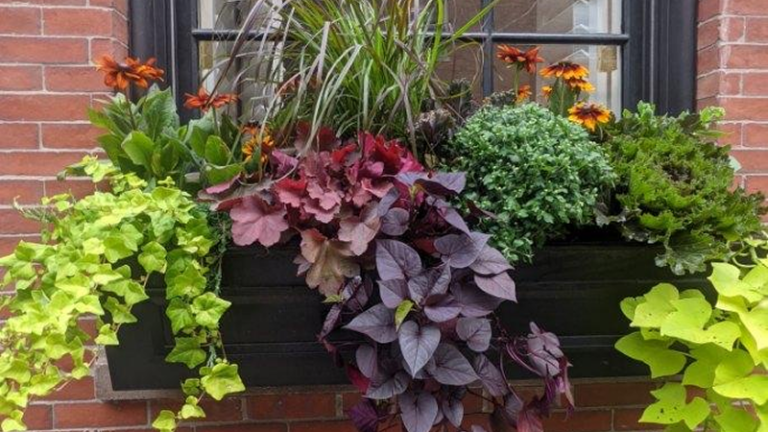
What we account for here
Deer pressure on ornamental planting
Wellesley’s estate lots back onto wooded corridors and conservation land that keep deer populations high and hungry, especially in winter. We build palettes around genuinely deer-resistant structure — boxwood, viburnum, ornamental grasses, ferns, ligustrum where hardy, and layered perennials like nepeta, amsonia, and baptisia — and reserve anything deer favor for spots we can protect with fencing or repellent programs built into ongoing maintenance.
Mature canopy and root competition
Century-old shade trees are an asset worth protecting, not an obstacle to clear. Our planting plans work with root zones rather than against them, choosing shallow-rooted, shade-tolerant companions and avoiding grade changes or heavy excavation near trunk flares that could compromise a tree the town, and the owner, wants kept.
Formal garden traditions and historic layouts
Many Wellesley properties were laid out with clear architectural intent — axial paths, clipped hedging, symmetrical beds. Where that structure exists, we restore and extend it rather than override it with a looser, more casual style that fights the house. Where a formal layout has to change to suit modern use, we keep the bones and update the planting.
Microclimate and drainage variation
Because light, moisture, and soil condition can change dramatically within a single Wellesley lot, we design zone by zone. A north-facing woodland bed near the property line gets a different plant list, irrigation setting, and maintenance calendar than a south-facing terrace bed thirty feet away, even on the same job.
Recent Wellesley work
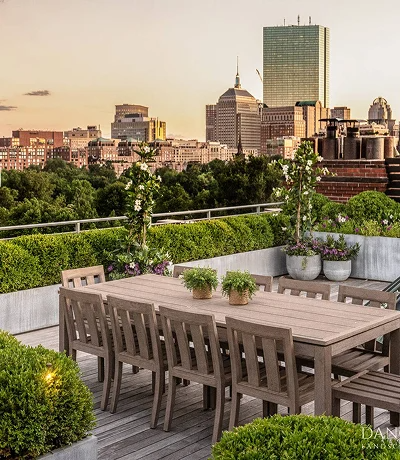
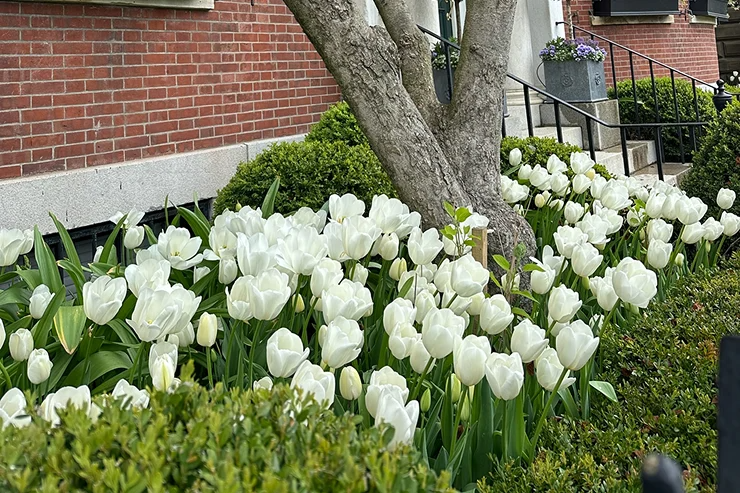
A recurring project type on Wellesley estate properties is the restoration of an existing formal garden that had been left to decline — boxwood parterres regrown out of shape, perennial borders overtaken by shade as trees matured, or a walled garden that needed a fresh planting plan while keeping its original hardscape. We have also designed deer-resistant foundation and border plantings for newer construction on older lots, and built out shaded woodland gardens under mature canopy where lawn had struggled for years. Each project starts from the site’s existing structure and light conditions, not a standard plant list.
Other services we provide in Wellesley
Garden design is usually the starting point, not the whole engagement. Once a Wellesley property’s planting plan is set, most owners move into ongoing garden services in Wellesley to keep formal hedging clipped, perennial borders edited season to season, and deer pressure managed year-round. Estate properties with terraces or pool decks often pair the garden plan with container and window box planting for seasonal color near the house, and low-voltage landscape lighting to make the mature trees and formal beds visible after dark. Properties with irrigation gaps — common where old systems were designed around a smaller garden footprint — get a drip irrigation retrofit sized to the new planting zones. We also handle roof deck and terrace planting for the newer construction interspersed among Wellesley’s older estate lots.
Garden design across the western suburbs
The estate conditions we design around in Wellesley — mature canopy, deer pressure, formal layouts under historic influence — show up with variations across the western suburbs. We provide the same depth of garden design in Weston and garden design in Lexington, and for city properties, our garden design in Boston work covers the tighter, more urban conditions of the neighborhoods closer to our Wellesley base.
Start a Wellesley garden design project
Wellesley is roughly 14.6 miles from our Wellesley location, and estate-scale design work here typically starts with a site visit to walk the property, assess existing structure, canopy, and drainage, and talk through what the garden needs to do for the way you actually use the space. Call us to schedule that visit. After the walk-through, we put together a design concept and planting plan specific to the site, with a clear scope and timeline before any installation begins.
Where Wellesley garden design questions usually lead
Clients often come to us with one question about a bed or border, and the conversation naturally widens once we’re on site. A design plan is easiest to price and schedule alongside a look at irrigation, since new plantings on Wellesley’s clay-heavy soil need consistent water the first couple of seasons to establish well. Drainage and grading also come up often on the town’s older lots, where foundation plantings sit close to basements or low spots collect runoff after storms.
We’re happy to keep the scope narrow if that’s what a property needs, but we’ll flag anything nearby that affects how the design performs:
- Irrigation zoning for new beds
- Drainage and grading near planting areas
- Seasonal maintenance to protect the plan
Ready to plan your Wellesley garden?
Reach out to Rouvalis Gardens to begin. We’ll schedule a visit to your Wellesley property, review sun patterns, soil, and how you actually use the yard, then put together a design scope with clear pricing. Nothing moves forward until you’ve reviewed and approved that plan.
What Our Customers Say
Frequently Asked Questions
Does Rouvalis Gardens design around deer pressure in Wellesley?
Yes. Deer pressure is one of the first constraints we plan for on any Wellesley property, given the proximity to wooded conservation land and campus grounds. We build palettes around resistant species and reserve vulnerable plants for fenced or protected areas.
Can you work with an existing formal garden instead of replacing it?
That is the more common request in Wellesley. Most estate properties already have a formal structure worth keeping, and our design work typically restores and extends that layout rather than replacing it with something unrelated to the house.
How does the Wellesley College microclimate affect planting choices?
The lake and wooded campus grounds keep parts of Wellesley cooler and more humid than surrounding towns, which shifts bloom timing and can extend conditions favorable to certain fungal issues on dense plantings. We account for this in plant selection and spacing rather than treating Wellesley like any other suburb.
Do you design gardens for properties near mature trees the owner wants to protect?
Yes, and this comes up on nearly every estate lot we work on. We plan planting zones and any necessary grading around root flares and drip lines so the tree canopy that gives these properties their character is not compromised by the new garden.
How far is Wellesley from your Wellesley location?
About 14.6 miles. We regularly work estate properties throughout Wellesley and can schedule an on-site consultation to assess the specific conditions of your garden.