- Serving Boston and the Greater Boston Area

- Home
- Services
- Garden Design Services
- Landscape Design
- Urban Garden Design
- Rooftop Garden Installation
- Roof Deck Planting
- Container Gardening Services
- Seasonal Container Planting
- Window Boxes
- Fine Gardening
- Garden Maintenance
- Planting Maintenance
- Flower & Plant Installation
- Drip Irrigation Installation
- Landscape Lighting
- Service Areas
Charlestown, MA
- Garden Services in Charlestown, MA
- Garden Design in Charlestown, MA
- Landscape Design in Charlestown, MA
- Urban Garden Design in Charlestown, MA
- Rooftop Garden Installation in Charlestown, MA
- Roof Deck Planting in Charlestown, MA
- Container Gardening in Charlestown, MA
- Seasonal Container Planting in Charlestown, MA
- Flower & Plant Installation in Charlestown, MA
- Window Boxes in Charlestown, MA
- Fine Gardening in Charlestown, MA
- Garden Maintenance in Charlestown, MA
- Planting & Maintenance in Charlestown, MA
- Drip Irrigation Installation in Charlestown, MA
- Landscape Lighting in Charlestown, MA
North End, MA
- Garden Services in north-end, MA
- Garden Design in north-end, MA
- Landscape Design in north-end, MA
- Urban Garden Design in north-end, MA
- Rooftop Garden Installation in north-end, MA
- Roof Deck Planting in north-end, MA
- Container Gardening in north-end, MA
- Seasonal Container Planting in north-end, MA
- Flower & Plant Installation in north-end, MA
- Window Boxes in north-end, MA
- Fine Gardening in north-end, MA
- Garden Maintenance in north-end, MA
- Planting & Maintenance in north-end, MA
- Drip Irrigation Installation in north-end, MA
- Landscape Lighting in north-end, MA
Downtown Boston, MA
- Garden Services in downtown boston, MA
- Garden Design in downtown boston, MA
- Landscape Design in downtown boston, MA
- Urban Garden Design in downtown boston, MA
- Rooftop Garden Installation in downtown boston, MA
- Roof Deck Planting in downtown boston, MA
- Container Gardening in downtown boston, MA
- Seasonal Container Planting in downtown boston, MA
- Flower & Plant Installation in downtown boston, MA
- Window Boxes in downtown boston, MA
- Fine Gardening in downtown boston, MA
- Garden Maintenance in downtown boston, MA
- Planting & Maintenance in downtown boston, MA
- Drip Irrigation Installation in downtown boston, MA
- Landscape Lighting in downtown boston, MA
Beacon Hill, MA
- Garden Services in beacon hill, MA
- Garden Design in beacon hill, MA
- Landscape Design in beacon hill, MA
- Urban Garden Design in beacon hill, MA
- Rooftop Garden Installation in beacon hill, MA
- Roof Deck Planting in beacon hill, MA
- Container Gardening in beacon hill, MA
- Seasonal Container Planting in beacon hill, MA
- Flower & Plant Installation in beacon hill, MA
- Window Boxes in beacon hill, MA
- Fine Gardening in beacon hill, MA
- Garden Maintenance in beacon hill, MA
- Planting & Maintenance in beacon hill, MA
- Drip Irrigation Installation in beacon hill, MA
- Landscape Lighting in beacon hill, MA
Boston, MA
- Garden Services in boston, MA
- Garden Design in boston, MA
- Landscape Design in boston, MA
- Urban Garden Design in boston, MA
- Rooftop Garden Installation in boston, MA
- Roof Deck Planting in boston, MA
- Container Gardening in boston, MA
- Seasonal Container Planting in boston, MA
- Flower & Plant Installation in boston, MA
- Window Boxes in boston, MA
- Fine Gardening in boston, MA
- Garden Maintenance in boston, MA
- Planting & Maintenance in boston, MA
- Drip Irrigation Installation in boston, MA
- Landscape Lighting in boston, MA
seaport, MA
- Garden Services in seaport, MA
- Garden Design in seaport, MA
- Landscape Design in seaport, MA
- Urban Garden Design in seaport, MA
- Rooftop Garden Installation in seaport, MA
- Roof Deck Planting in seaport, MA
- Container Gardening in seaport, MA
- Seasonal Container Planting in seaport, MA
- Flower & Plant Installation in seaport, MA
- Window Boxes in seaport, MA
- Fine Gardening in seaport, MA
- Garden Maintenance in seaport, MA
- Planting & Maintenance in seaport, MA
- Drip Irrigation Installation in seaport, MA
- Landscape Lighting in seaport, MA
back bay, MA
- Garden Services in back bay, MA
- Garden Design in back bay, MA
- Landscape Design in back bay, MA
- Urban Garden Design in back bay, MA
- Rooftop Garden Installation in back bay, MA
- Roof Deck Planting in back bay, MA
- Container Gardening in back bay, MA
- Seasonal Container Planting in back bay, MA
- Flower & Plant Installation in back bay, MA
- Window Boxes in back bay, MA
- Fine Gardening in back bay, MA
- Garden Maintenance in back bay, MA
- Planting & Maintenance in back bay, MA
- Drip Irrigation Installation in back bay, MA
- Landscape Lighting in back bay, MA
cambridge, MA
- Garden Services in cambridge, MA
- Garden Design in cambridge, MA
- Landscape Design in cambridge, MA
- Urban Garden Design in cambridge, MA
- Rooftop Garden Installation in cambridge, MA
- Roof Deck Planting in cambridge, MA
- Container Gardening in cambridge, MA
- Seasonal Container Planting in cambridge, MA
- Flower & Plant Installation in cambridge, MA
- Window Boxes in cambridge, MA
- Fine Gardening in cambridge, MA
- Garden Maintenance in cambridge, MA
- Planting & Maintenance in cambridge, MA
- Drip Irrigation Installation in cambridge, MA
- Landscape Lighting in cambridge, MA
south-end, MA
- Garden Services in south-end, MA
- Garden Design in south-end, MA
- Landscape Design in south-end, MA
- Urban Garden Design in south-end, MA
- Rooftop Garden Installation in south-end, MA
- Roof Deck Planting in south-end, MA
- Container Gardening in south-end, MA
- Seasonal Container Planting in south-end, MA
- Flower & Plant Installation in south-end, MA
- Window Boxes in south-end, MA
- Fine Gardening in south-end, MA
- Garden Maintenance in south-end, MA
- Planting & Maintenance in south-end, MA
- Drip Irrigation Installation in south-end, MA
- Landscape Lighting in south-end, MA
brookline, MA
- Garden Services in brookline, MA
- Garden Design in brookline, MA
- Landscape Design in brookline, MA
- Urban Garden Design in brookline, MA
- Rooftop Garden Installation in brookline, MA
- Roof Deck Planting in brookline, MA
- Container Gardening in brookline, MA
- Seasonal Container Planting in brookline, MA
- Flower & Plant Installation in brookline, MA
- Window Boxes in brookline, MA
- Fine Gardening in brookline, MA
- Garden Maintenance in brookline, MA
- Planting & Maintenance in brookline, MA
- Drip Irrigation Installation in brookline, MA
- Landscape Lighting in brookline, MA
winchester, MA
- Garden Services in winchester, MA
- Garden Design in winchester, MA
- Landscape Design in winchester, MA
- Urban Garden Design in winchester, MA
- Rooftop Garden Installation in winchester, MA
- Roof Deck Planting in winchester, MA
- Container Gardening in winchester, MA
- Seasonal Container Planting in winchester, MA
- Flower & Plant Installation in winchester, MA
- Window Boxes in winchester, MA
- Fine Gardening in winchester, MA
- Garden Maintenance in winchester, MA
- Planting & Maintenance in winchester, MA
- Drip Irrigation Installation in winchester, MA
- Landscape Lighting in winchester, MA
newton, MA
- Garden Services in newton, MA
- Garden Design in newton, MA
- Landscape Design in newton, MA
- Urban Garden Design in newton, MA
- Rooftop Garden Installation in newton, MA
- Roof Deck Planting in newton, MA
- Container Gardening in newton, MA
- Seasonal Container Planting in newton, MA
- Flower & Plant Installation in newton, MA
- Window Boxes in newton, MA
- Fine Gardening in newton, MA
- Garden Maintenance in newton, MA
- Planting & Maintenance in newton, MA
- Drip Irrigation Installation in newton, MA
- Landscape Lighting in newton, MA
lexington, MA
- Garden Services in lexington, MA
- Garden Design in lexington, MA
- Landscape Design in lexington, MA
- Urban Garden Design in lexington, MA
- Rooftop Garden Installation in lexington, MA
- Roof Deck Planting in lexington, MA
- Container Gardening in lexington, MA
- Seasonal Container Planting newton, MA
- Flower & Plant Installation in lexington, MA
- Window Boxes in lexington, MA
- Fine Gardening in lexington, MA
- Garden Maintenance in lexington, MA
- Planting & Maintenance in lexington, MA
- Drip Irrigation Installation in lexington, MA
- Landscape Lighting in lexington, MA
weston, MA
- Garden Services in weston, MA
- Garden Design in weston, MA
- Landscape Design in weston, MA
- Urban Garden Design in weston, MA
- Rooftop Garden Installation in weston, MA
- Roof Deck Planting in weston, MA
- Container Gardening in weston, MA
- Seasonal Container Planting weston, MA
- Flower & Plant Installation in weston, MA
- Window Boxes in weston, MA
- Fine Gardening in weston, MA
- Garden Maintenance in weston, MA
- Planting & Maintenance in weston, MA
- Drip Irrigation Installation in weston, MA
- Landscape Lighting in weston, MA
wellesley, MA
- Garden Services in wellesley, MA
- Garden Design in wellesley, MA
- Landscape Design in wellesley, MA
- Urban Garden Design in wellesley, MA
- Rooftop Garden Installation in wellesley, MA
- Roof Deck Planting in wellesley, MA
- Container Gardening in wellesley, MA
- Seasonal Container Planting wellesley, MA
- Flower & Plant Installation in wellesley, MA
- Window Boxes in wellesley, MA
- Fine Gardening in wellesley, MA
- Garden Maintenance in wellesley, MA
- Planting & Maintenance in wellesley, MA
- Drip Irrigation Installation in wellesley, MA
- Landscape Lighting in wellesley, MA
- Portfolio
- About us
- Blog
- Contact
- Flower Delivery
Fine Gardening in South End, MA
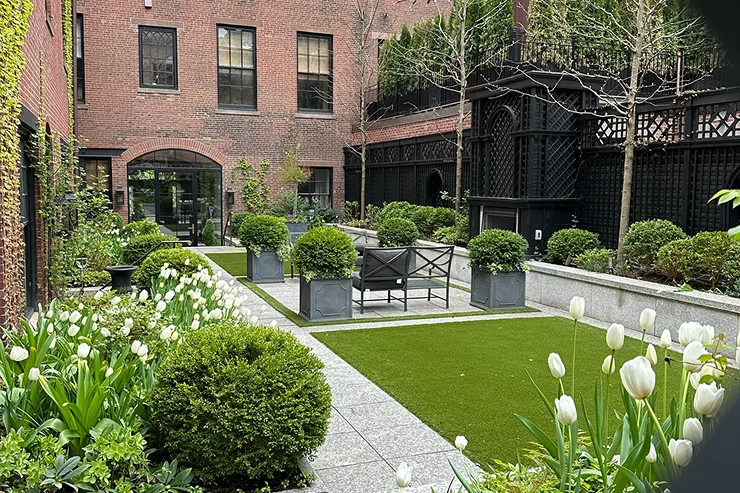
A South End garden usually isn’t a garden in the front-yard sense at all — it’s a strip behind a bowfront brick facade, reached through the house or down a shared alley, shaded half the day by the building next door and fought over by roots, foot traffic and whatever the previous tenant planted. Fine gardening here means working within a footprint that’s often twelve feet wide, respecting a shared fence line with three other households, and keeping the whole thing presentable enough that it holds its own against the architecture. It is precision work, not acreage work.

What Fine Gardening looks like in South End
Fine gardening in South End is defined less by square footage and more by constraint. Most beds run along a brick or granite foundation wall that holds heat in summer and drains fast after rain, which means plant choices lean toward things that tolerate both drought stress and occasional standing water in the low corners near old drainage lines. Light is patchy and specific to each block — a garden facing a shared alley might get four hours of direct sun bounced off a neighboring wall, while a bowfront’s rear yard sits in near-constant shade from the building itself and the one behind it.
Access shapes the work schedule as much as the planting plan. Many of these gardens are only reachable through the parlor floor or down a narrow side passage shared with an abutter, so our crews plan visits around what can be carried in by hand — no trailers, no wide equipment, tools and soil brought through on foot. That changes how a bed gets renovated and how often we can reasonably disturb the space without disrupting a household’s daily comings and goings.
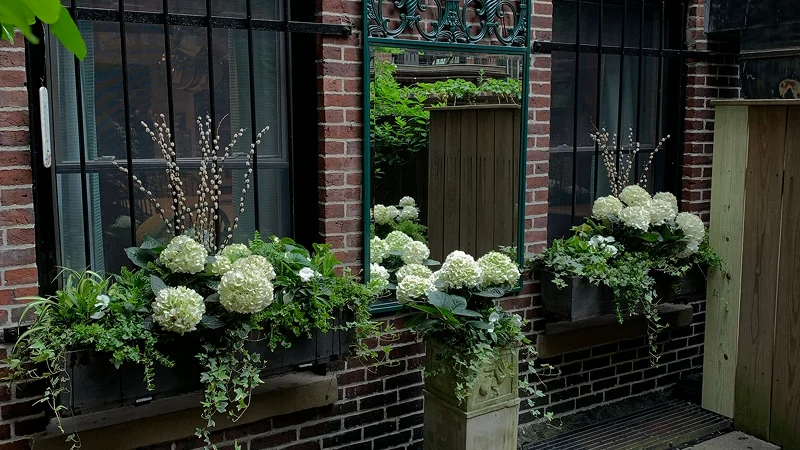
Because so many of these lots sit inside the South End’s Landmark District, plant material and hardscape choices at the street-facing side get reviewed with the same scrutiny as a shutter color or a door. We keep a working knowledge of what reads as appropriate to the commission — window boxes with proportions and plant lists in keeping with the block, no oversized planters that compete with the ironwork, nothing that reads as a modern intrusion from the sidewalk. The private rear garden has more latitude, which is usually where we do the more textural, personal planting.
Soil in these yards has typically been built up, dug over and compacted by decades of use, and it often carries construction debris from additions or repointing work. Before any planting plan goes in, we test and amend rather than assume — a South End bed rarely behaves like open ground.
What we account for here
What we account for here
Narrow, shared alley access
A long list of South End gardens are only reachable by a common alley used by four or five abutting properties. We schedule deliveries and larger material drops for times that don’t block that shared right-of-way, and we move soil and plants through by hand cart rather than assuming truck access to the bed itself.
Bowfront shade and reflected heat
The classic bowfront creates two microclimates in one small lot — deep shade close to the house and a hot, bright strip along a south-facing party wall. We plan the bed in two zones rather than treating the yard as a single exposure, so a hosta collection near the house and a lavender or salvia planting six feet away both actually perform.
Landmark District review on street-facing elements
Window boxes, tree pits and any planter visible from the public way fall under design guidelines tied to the historic district. We select material and container styles that we know read as consistent with the block before anything goes in, so a homeowner isn’t caught between a finished install and a commission note after the fact.
Community garden boundaries and shared fences
South End’s culture of shared and community gardens means property lines are sometimes informal, negotiated between neighbors rather than fixed by a survey. We work from whatever boundary understanding the client has in place, keep plantings and irrigation lines clearly on the right side of it, and flag anything ambiguous before we touch a shared fence or hedge.
Recent South End work
A representative project type in this neighborhood: a rear alley garden behind a bowfront on a block near Union Park, roughly ten feet wide, reachable only through the parlor floor. The existing bed was compacted clay with a failed foundation planting of overgrown yews. We reworked the soil, installed a shade-tolerant palette suited to the reflected light off the party wall, added a drip line run along the fence to cut down on hand-watering through a narrow passage, and set the homeowner on a biweekly fine gardening visit to keep the small space looking finished year-round. Nothing here is unusual for the neighborhood — it’s the standard shape of the work.
Other services we provide in South End
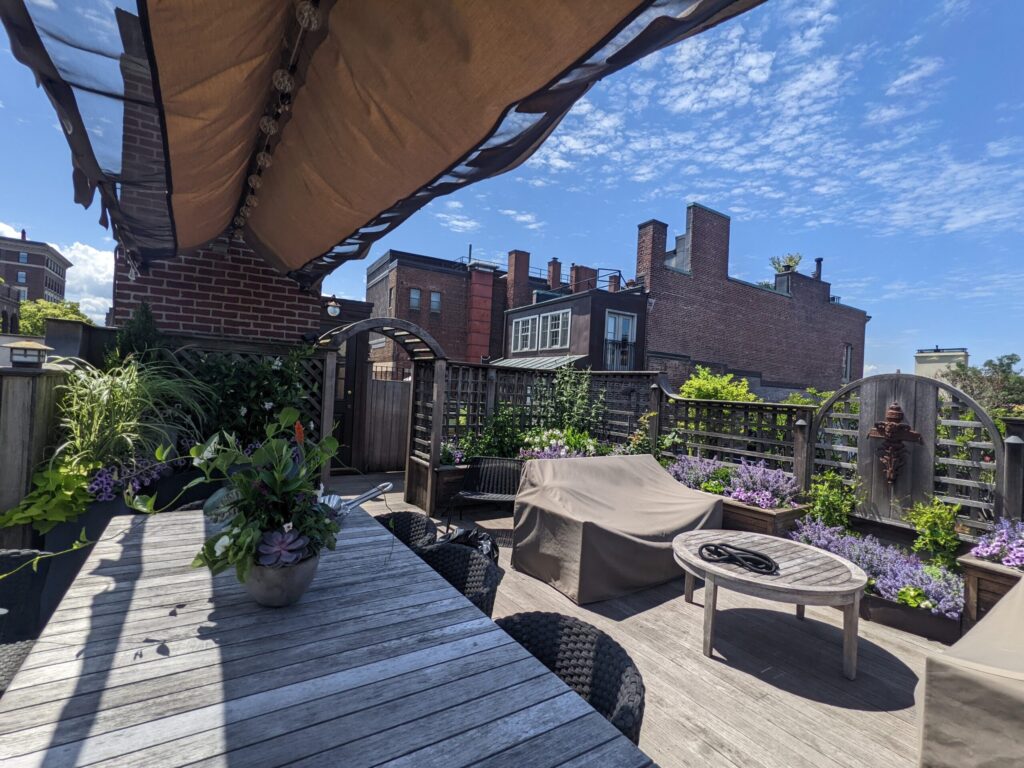
Fine gardening is often one piece of a larger South End property plan. We also handle garden design and installation for owners renovating a rear yard or alley garden from scratch, and containers and window boxes sized and styled to satisfy Landmark District expectations on the street side. Many South End properties have added roof decks or rear terraces over parlor-floor additions, and we design and plant those spaces through our roof deck and terrace planting service, accounting for the wind exposure that comes with height in a dense block. For the watering challenges of a narrow, hand-access garden, our drip irrigation installs run efficiently along fence lines and raised beds without requiring wide trenching. And for evening use of a small rear garden or alley, low-voltage landscape lighting adds definition to a compact space without the glare that a small footyard makes obvious. All of these sit under our broader garden services in South End and our citywide fine gardening in Boston page.
The same care in Brookline and Cambridge
The constraints change block by block but the standard doesn’t. We provide the same level of fine gardening attention to properties across the river and out along the western suburbs, including fine gardening in Brookline and fine gardening in Cambridge, where similarly tight lots, mature street trees and historic review processes shape how the work gets scheduled and planted.
Book fine gardening in South End
South End is roughly 3.1 miles from our South End location at 5 Crescent St, a short enough distance that our crews are on-site quickly and know the neighborhood’s alley access, review timelines and shade patterns well before they arrive with tools. Call to set up a walk-through of the garden — we’ll assess access, sun exposure and any Landmark District considerations on the spot, and follow up with a written plan and a proposed visit schedule, weekly or biweekly, within a few days.
Other services we provide in South End
Fine gardening is just one piece of what South End properties need. Many rowhouse gardens and rooftop spaces call for a full redesign rather than upkeep, so we also handle garden design and installation in South End, planned around tight access and shared walkways. For front stoops and small yards, container and window box planting in South End brings color to spaces with no ground to dig into, while rooftop and terrace planting in South End is selected for wind exposure and weight limits common to the neighborhood’s decks.
Where watering is inconsistent, drip irrigation in South End keeps plantings on a steady schedule without dragging hoses through a home. And once the sun goes down, low-voltage landscape lighting in South End extends the use of a courtyard or patio into the evening.
For the complete range of what we offer nearby, see our garden services in South End.
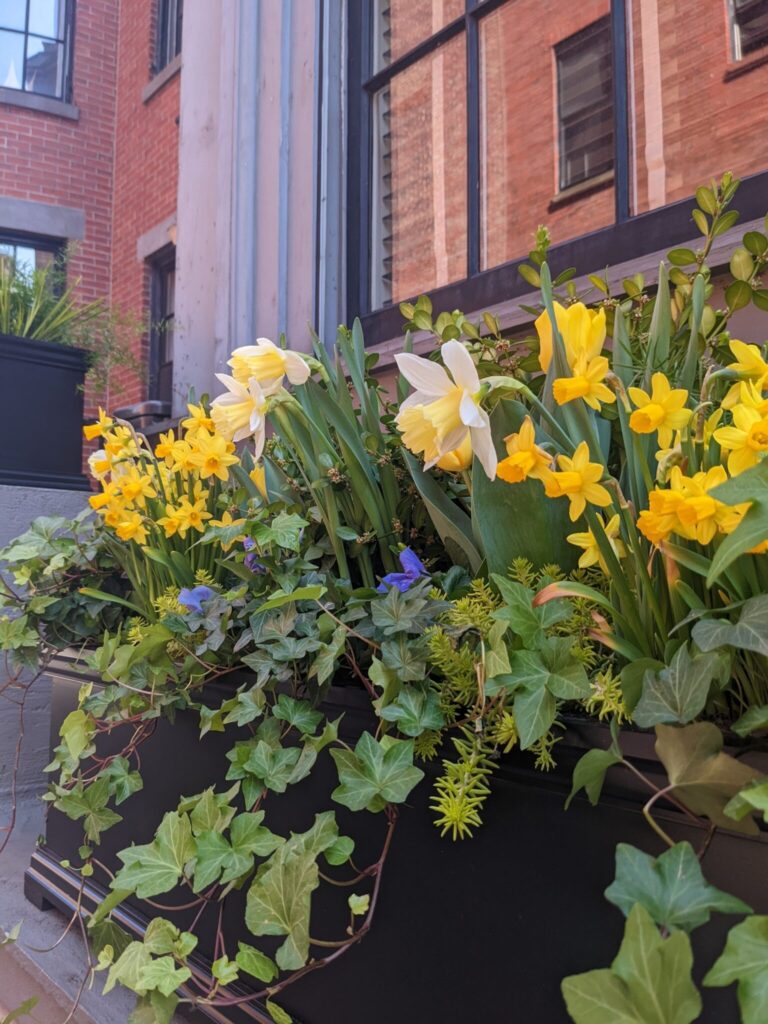
Ready for fine gardening care in South End
If your South End garden deserves consistent, expert attention, reach out to request a consultation. We will arrange a visit to walk your space, discuss your goals and note the plantings, soil and light conditions that shape our approach. From there, you will receive a clear proposal outlining the seasonal plan, hands-on maintenance and the finer details that keep a South End garden looking its best year-round.
- On-site consultation
- Written seasonal proposal
- Ongoing care plan
What Our Customers Say
Frequently Asked Questions
Can you maintain a garden that's only accessible through the house?
Yes. Many South End rear and alley gardens have no exterior access at all, or access only through a shared passage. We plan visits around this, carrying tools and material through by hand and scheduling around a household's routine rather than assuming truck or trailer access.
Do window boxes and planters need Landmark Commission approval in South End?
Elements visible from the public way, including window boxes and street-facing planters, generally fall under design review in the South End Landmark District. We select styles and plant lists that align with what typically gets approved on a given block, which helps avoid delays.
How do you handle shared alley gardens with unclear property lines?
South End's community garden culture means boundaries between abutting yards are sometimes informal. We work from the understanding already in place among neighbors, keep new plantings and any irrigation clearly within it, and raise questions before touching a shared fence line.
What plants actually do well in a shaded bowfront rear yard?
Shade-tolerant perennials such as hostas, ferns, hellebores and heuchera generally perform well against the house, while the brighter strip along a party wall can support more sun-loving material. We zone the bed rather than picking one plant list for the whole space.
How often does a small South End garden need a visit?
Most compact South End gardens hold their appearance well on a biweekly schedule, though a heavily planted alley bed or a client preparing for frequent entertaining may prefer weekly visits during the growing season.