- Serving Boston and the Greater Boston Area

- Home
- Services
- Garden Design Services
- Landscape Design
- Urban Garden Design
- Rooftop Garden Installation
- Roof Deck Planting
- Container Gardening Services
- Seasonal Container Planting
- Window Boxes
- Fine Gardening
- Garden Maintenance
- Planting Maintenance
- Flower & Plant Installation
- Drip Irrigation Installation
- Landscape Lighting
- Service Areas
Charlestown, MA
- Garden Services in Charlestown, MA
- Garden Design in Charlestown, MA
- Landscape Design in Charlestown, MA
- Urban Garden Design in Charlestown, MA
- Rooftop Garden Installation in Charlestown, MA
- Roof Deck Planting in Charlestown, MA
- Container Gardening in Charlestown, MA
- Seasonal Container Planting in Charlestown, MA
- Flower & Plant Installation in Charlestown, MA
- Window Boxes in Charlestown, MA
- Fine Gardening in Charlestown, MA
- Garden Maintenance in Charlestown, MA
- Planting & Maintenance in Charlestown, MA
- Drip Irrigation Installation in Charlestown, MA
- Landscape Lighting in Charlestown, MA
North End, MA
- Garden Services in north-end, MA
- Garden Design in north-end, MA
- Landscape Design in north-end, MA
- Urban Garden Design in north-end, MA
- Rooftop Garden Installation in north-end, MA
- Roof Deck Planting in north-end, MA
- Container Gardening in north-end, MA
- Seasonal Container Planting in north-end, MA
- Flower & Plant Installation in north-end, MA
- Window Boxes in north-end, MA
- Fine Gardening in north-end, MA
- Garden Maintenance in north-end, MA
- Planting & Maintenance in north-end, MA
- Drip Irrigation Installation in north-end, MA
- Landscape Lighting in north-end, MA
Downtown Boston, MA
- Garden Services in downtown boston, MA
- Garden Design in downtown boston, MA
- Landscape Design in downtown boston, MA
- Urban Garden Design in downtown boston, MA
- Rooftop Garden Installation in downtown boston, MA
- Roof Deck Planting in downtown boston, MA
- Container Gardening in downtown boston, MA
- Seasonal Container Planting in downtown boston, MA
- Flower & Plant Installation in downtown boston, MA
- Window Boxes in downtown boston, MA
- Fine Gardening in downtown boston, MA
- Garden Maintenance in downtown boston, MA
- Planting & Maintenance in downtown boston, MA
- Drip Irrigation Installation in downtown boston, MA
- Landscape Lighting in downtown boston, MA
Beacon Hill, MA
- Garden Services in beacon hill, MA
- Garden Design in beacon hill, MA
- Landscape Design in beacon hill, MA
- Urban Garden Design in beacon hill, MA
- Rooftop Garden Installation in beacon hill, MA
- Roof Deck Planting in beacon hill, MA
- Container Gardening in beacon hill, MA
- Seasonal Container Planting in beacon hill, MA
- Flower & Plant Installation in beacon hill, MA
- Window Boxes in beacon hill, MA
- Fine Gardening in beacon hill, MA
- Garden Maintenance in beacon hill, MA
- Planting & Maintenance in beacon hill, MA
- Drip Irrigation Installation in beacon hill, MA
- Landscape Lighting in beacon hill, MA
Boston, MA
- Garden Services in boston, MA
- Garden Design in boston, MA
- Landscape Design in boston, MA
- Urban Garden Design in boston, MA
- Rooftop Garden Installation in boston, MA
- Roof Deck Planting in boston, MA
- Container Gardening in boston, MA
- Seasonal Container Planting in boston, MA
- Flower & Plant Installation in boston, MA
- Window Boxes in boston, MA
- Fine Gardening in boston, MA
- Garden Maintenance in boston, MA
- Planting & Maintenance in boston, MA
- Drip Irrigation Installation in boston, MA
- Landscape Lighting in boston, MA
seaport, MA
- Garden Services in seaport, MA
- Garden Design in seaport, MA
- Landscape Design in seaport, MA
- Urban Garden Design in seaport, MA
- Rooftop Garden Installation in seaport, MA
- Roof Deck Planting in seaport, MA
- Container Gardening in seaport, MA
- Seasonal Container Planting in seaport, MA
- Flower & Plant Installation in seaport, MA
- Window Boxes in seaport, MA
- Fine Gardening in seaport, MA
- Garden Maintenance in seaport, MA
- Planting & Maintenance in seaport, MA
- Drip Irrigation Installation in seaport, MA
- Landscape Lighting in seaport, MA
back bay, MA
- Garden Services in back bay, MA
- Garden Design in back bay, MA
- Landscape Design in back bay, MA
- Urban Garden Design in back bay, MA
- Rooftop Garden Installation in back bay, MA
- Roof Deck Planting in back bay, MA
- Container Gardening in back bay, MA
- Seasonal Container Planting in back bay, MA
- Flower & Plant Installation in back bay, MA
- Window Boxes in back bay, MA
- Fine Gardening in back bay, MA
- Garden Maintenance in back bay, MA
- Planting & Maintenance in back bay, MA
- Drip Irrigation Installation in back bay, MA
- Landscape Lighting in back bay, MA
cambridge, MA
- Garden Services in cambridge, MA
- Garden Design in cambridge, MA
- Landscape Design in cambridge, MA
- Urban Garden Design in cambridge, MA
- Rooftop Garden Installation in cambridge, MA
- Roof Deck Planting in cambridge, MA
- Container Gardening in cambridge, MA
- Seasonal Container Planting in cambridge, MA
- Flower & Plant Installation in cambridge, MA
- Window Boxes in cambridge, MA
- Fine Gardening in cambridge, MA
- Garden Maintenance in cambridge, MA
- Planting & Maintenance in cambridge, MA
- Drip Irrigation Installation in cambridge, MA
- Landscape Lighting in cambridge, MA
south-end, MA
- Garden Services in south-end, MA
- Garden Design in south-end, MA
- Landscape Design in south-end, MA
- Urban Garden Design in south-end, MA
- Rooftop Garden Installation in south-end, MA
- Roof Deck Planting in south-end, MA
- Container Gardening in south-end, MA
- Seasonal Container Planting in south-end, MA
- Flower & Plant Installation in south-end, MA
- Window Boxes in south-end, MA
- Fine Gardening in south-end, MA
- Garden Maintenance in south-end, MA
- Planting & Maintenance in south-end, MA
- Drip Irrigation Installation in south-end, MA
- Landscape Lighting in south-end, MA
brookline, MA
- Garden Services in brookline, MA
- Garden Design in brookline, MA
- Landscape Design in brookline, MA
- Urban Garden Design in brookline, MA
- Rooftop Garden Installation in brookline, MA
- Roof Deck Planting in brookline, MA
- Container Gardening in brookline, MA
- Seasonal Container Planting in brookline, MA
- Flower & Plant Installation in brookline, MA
- Window Boxes in brookline, MA
- Fine Gardening in brookline, MA
- Garden Maintenance in brookline, MA
- Planting & Maintenance in brookline, MA
- Drip Irrigation Installation in brookline, MA
- Landscape Lighting in brookline, MA
winchester, MA
- Garden Services in winchester, MA
- Garden Design in winchester, MA
- Landscape Design in winchester, MA
- Urban Garden Design in winchester, MA
- Rooftop Garden Installation in winchester, MA
- Roof Deck Planting in winchester, MA
- Container Gardening in winchester, MA
- Seasonal Container Planting in winchester, MA
- Flower & Plant Installation in winchester, MA
- Window Boxes in winchester, MA
- Fine Gardening in winchester, MA
- Garden Maintenance in winchester, MA
- Planting & Maintenance in winchester, MA
- Drip Irrigation Installation in winchester, MA
- Landscape Lighting in winchester, MA
newton, MA
- Garden Services in newton, MA
- Garden Design in newton, MA
- Landscape Design in newton, MA
- Urban Garden Design in newton, MA
- Rooftop Garden Installation in newton, MA
- Roof Deck Planting in newton, MA
- Container Gardening in newton, MA
- Seasonal Container Planting in newton, MA
- Flower & Plant Installation in newton, MA
- Window Boxes in newton, MA
- Fine Gardening in newton, MA
- Garden Maintenance in newton, MA
- Planting & Maintenance in newton, MA
- Drip Irrigation Installation in newton, MA
- Landscape Lighting in newton, MA
lexington, MA
- Garden Services in lexington, MA
- Garden Design in lexington, MA
- Landscape Design in lexington, MA
- Urban Garden Design in lexington, MA
- Rooftop Garden Installation in lexington, MA
- Roof Deck Planting in lexington, MA
- Container Gardening in lexington, MA
- Seasonal Container Planting newton, MA
- Flower & Plant Installation in lexington, MA
- Window Boxes in lexington, MA
- Fine Gardening in lexington, MA
- Garden Maintenance in lexington, MA
- Planting & Maintenance in lexington, MA
- Drip Irrigation Installation in lexington, MA
- Landscape Lighting in lexington, MA
weston, MA
- Garden Services in weston, MA
- Garden Design in weston, MA
- Landscape Design in weston, MA
- Urban Garden Design in weston, MA
- Rooftop Garden Installation in weston, MA
- Roof Deck Planting in weston, MA
- Container Gardening in weston, MA
- Seasonal Container Planting weston, MA
- Flower & Plant Installation in weston, MA
- Window Boxes in weston, MA
- Fine Gardening in weston, MA
- Garden Maintenance in weston, MA
- Planting & Maintenance in weston, MA
- Drip Irrigation Installation in weston, MA
- Landscape Lighting in weston, MA
wellesley, MA
- Garden Services in wellesley, MA
- Garden Design in wellesley, MA
- Landscape Design in wellesley, MA
- Urban Garden Design in wellesley, MA
- Rooftop Garden Installation in wellesley, MA
- Roof Deck Planting in wellesley, MA
- Container Gardening in wellesley, MA
- Seasonal Container Planting wellesley, MA
- Flower & Plant Installation in wellesley, MA
- Window Boxes in wellesley, MA
- Fine Gardening in wellesley, MA
- Garden Maintenance in wellesley, MA
- Planting & Maintenance in wellesley, MA
- Drip Irrigation Installation in wellesley, MA
- Landscape Lighting in wellesley, MA
- Portfolio
- About us
- Blog
- Contact
- Flower Delivery
Flower & Plant Installation in Brookline, MA
If deer have been working through your tulips near the Newton line, or a Preservation Commission review is holding up a planting plan for a Victorian on a Brookline corner lot, the fix is not a bigger fence or a faster contractor. It is a planting plan built around both problems from the start. Brookline’s larger lots and decades-old rhododendron and boxwood plantings call for a different installation approach than a Back Bay planter box, and we design and install accordingly.

What Flower & Plant Installation looks like in Brookline
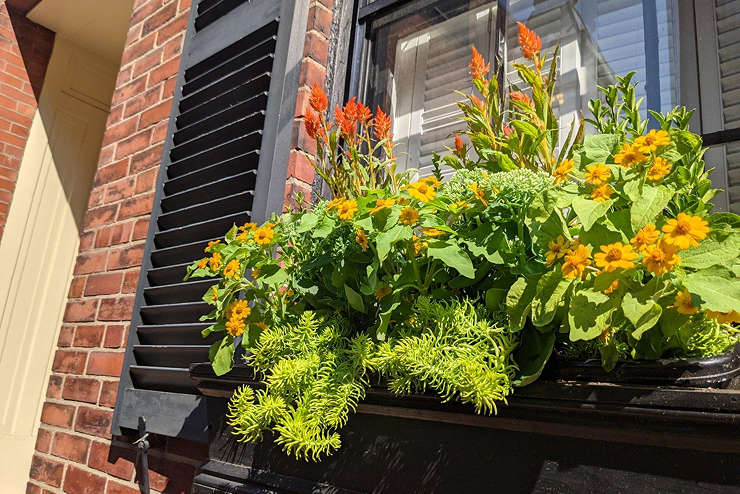
Brookline properties tend to give us more ground to work with than most Boston neighborhoods, and that changes the installation plan. A quarter-acre lot in Cottage Farm or Chestnut Hill usually already has a structure of mature specimens in place — old rhododendron, mountain laurel, established yews — planted decades ago and often outgrowing their original footprint. Flower and plant installation here is rarely a blank-slate project. It is an infill and integration job: choosing seasonal color and new perennial plantings that read as intentional against an existing backbone rather than competing with it or getting lost in its shade.
Soil across town varies more than people expect. The glacial till and clay pockets common in North Brookline hold water differently than the better-drained soil closer to the reservoir and the Chestnut Hill line, so we test and amend bed by bed rather than applying one soil plan to the whole property. Sun exposure shifts the same way — a south-facing bed along Warren Street can run hot and dry by midsummer, while a shaded foundation planting under a century-old beech on Fisher Hill barely gets two hours of direct light.
Then there is deer pressure, which is real and increasing the closer a property sits to the Newton border and the reservoir corridor. We plant with that pressure in mind from day one — not as an afterthought once the hostas have been eaten to stubs. And because a meaningful share of Brookline’s housing stock sits inside a local historic district, street-facing installation work often needs to account for Preservation Commission guidelines before a single plant goes in the ground.
What we account for here
What we account for here
Four conditions come up on nearly every Brookline installation. Here is how we plan for each one before crews arrive on site.
Deer pressure toward the Newton line
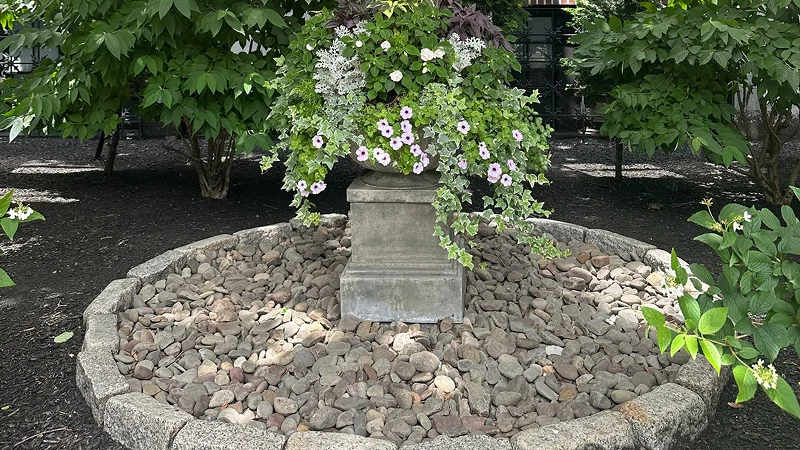
Properties in South Brookline and anywhere near the reservoir see regular deer traffic, especially in fall and early spring. We build plant palettes around species deer tend to leave alone — boxwood, most ornamental grasses, hellebore, and many strongly scented herbs — and reserve deer favorites like hosta and hydrangea for courtyards or areas we can protect with discreet fencing or repellent programs built into ongoing maintenance.
Preservation Commission districts
Several Brookline neighborhoods, including sections of the Town Green and areas around Cottage Farm, fall under local historic district review. Where a planting plan touches a street-facing bed, fence line, or anything visible from the public way on a reviewed property, we design with those guidelines in mind and can provide the plant list and layout detail a homeowner may need to bring to the commission — so the installation itself moves quickly once the plan is settled.
Established plantings and mature shade
Many Brookline lots have thirty- or forty-year-old plantings that define the site’s structure. We work new flower and plant installations into that existing framework rather than removing mature material unnecessarily, matching new plant choices to the light levels those older trees and shrubs have created over the years.
Larger lots and longer sightlines
Bigger properties mean beds are viewed from more angles and greater distances — a front bed on a Chestnut Hill lot might be seen from the street, the driveway, and a second-floor window all at once. We plan color and massing at the scale the lot actually calls for, so plantings hold together whether seen up close or from across the lawn.
Recent Brookline work
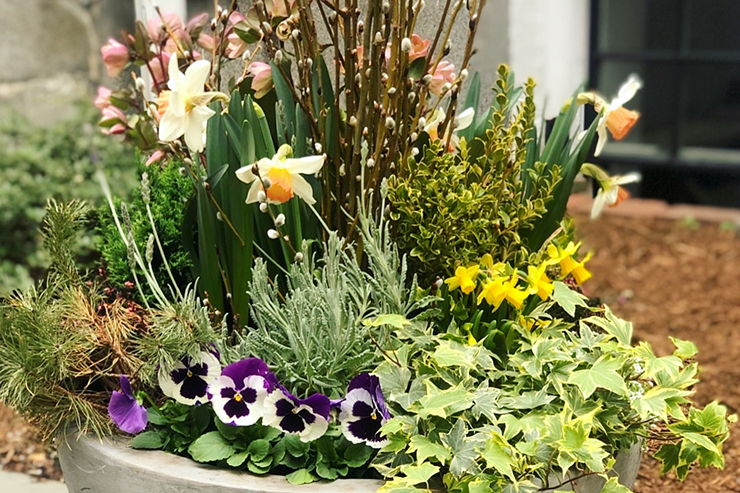
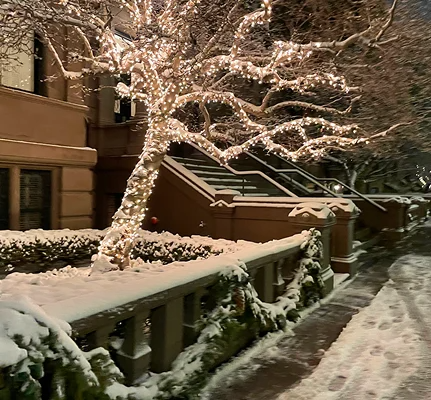
Recent projects in the area have included refreshing tired foundation beds on older Colonials near Coolidge Corner with deer-resistant perennials and seasonal color, and installing new container and bed plantings for a Fisher Hill property working through historic district approval on a front-facing renovation. Each project started with a site walk to read the existing plant structure, the light, and the review status before any plant list was finalized.
Other services we provide in Brookline
Flower and plant installation is often the first visible piece of a broader Brookline project. We also handle full garden design and installation for properties starting from scratch, ongoing fine gardening and maintenance to keep mature beds performing through the season, containers and window boxes for entries and terraces, roof deck and terrace planting for the town’s newer condominium buildings, drip irrigation to keep new plantings established through dry Brookline summers, and low-voltage landscape lighting to carry a planting scheme into the evening. Clients working through Preservation Commission review often start with the planting plan and add lighting or irrigation once the layout is approved.
Start with a consultation
Call Rouvalis Gardens to schedule a site walk in Brookline, about 5.4 miles from our Brookline location. We look at the existing plantings, light, soil, and any deer or review-board considerations on site, then follow up with a plant list and installation plan specific to that property. From there, scheduling and installation move quickly, and we can fold ongoing maintenance into the same conversation if you want the beds looked after once they’re in.
What Our Customers Say
Frequently Asked Questions
Does Rouvalis Gardens handle deer-resistant plantings for Brookline properties near Newton?
Yes. For properties in South Brookline and anywhere near the reservoir corridor where deer pressure is heaviest, we build plant palettes around species deer generally avoid and reserve more vulnerable plants for protected areas or courtyards.
Do you handle Preservation Commission approvals for planting plans?
We design planting plans with local historic district guidelines in mind and provide the plant lists and layout detail a homeowner can bring to the commission, but the homeowner submits the application. We coordinate timing so installation can move quickly once approval comes through.
Can you work with our existing mature plantings instead of replacing them?
In most cases, yes. Many Brookline properties have decades-old shrubs and specimens worth keeping, and we typically plan new flower and plant installations to integrate with that existing structure rather than remove it.
How far is Brookline from your Brookline location?
Brookline is about 5.4 miles from our Brookline address, and we service the neighborhood regularly.
Do you also offer flower and plant installation in other Boston-area neighborhoods?
Yes. We provide the same service in <a href="/flower-plant-installation-boston-ma/">Boston</a>, <a href="/flower-plant-installation-winchester-ma/">Winchester</a>, and the <a href="/flower-plant-installation-south-end-ma/">South End</a>, each planned around that neighborhood's specific conditions.