- Serving Boston and the Greater Boston Area

- Home
- Services
- Garden Design Services
- Landscape Design
- Urban Garden Design
- Rooftop Garden Installation
- Roof Deck Planting
- Container Gardening Services
- Seasonal Container Planting
- Window Boxes
- Fine Gardening
- Garden Maintenance
- Planting Maintenance
- Flower & Plant Installation
- Drip Irrigation Installation
- Landscape Lighting
- Service Areas
Charlestown, MA
- Garden Services in Charlestown, MA
- Garden Design in Charlestown, MA
- Landscape Design in Charlestown, MA
- Urban Garden Design in Charlestown, MA
- Rooftop Garden Installation in Charlestown, MA
- Roof Deck Planting in Charlestown, MA
- Container Gardening in Charlestown, MA
- Seasonal Container Planting in Charlestown, MA
- Flower & Plant Installation in Charlestown, MA
- Window Boxes in Charlestown, MA
- Fine Gardening in Charlestown, MA
- Garden Maintenance in Charlestown, MA
- Planting & Maintenance in Charlestown, MA
- Drip Irrigation Installation in Charlestown, MA
- Landscape Lighting in Charlestown, MA
North End, MA
- Garden Services in north-end, MA
- Garden Design in north-end, MA
- Landscape Design in north-end, MA
- Urban Garden Design in north-end, MA
- Rooftop Garden Installation in north-end, MA
- Roof Deck Planting in north-end, MA
- Container Gardening in north-end, MA
- Seasonal Container Planting in north-end, MA
- Flower & Plant Installation in north-end, MA
- Window Boxes in north-end, MA
- Fine Gardening in north-end, MA
- Garden Maintenance in north-end, MA
- Planting & Maintenance in north-end, MA
- Drip Irrigation Installation in north-end, MA
- Landscape Lighting in north-end, MA
Downtown Boston, MA
- Garden Services in downtown boston, MA
- Garden Design in downtown boston, MA
- Landscape Design in downtown boston, MA
- Urban Garden Design in downtown boston, MA
- Rooftop Garden Installation in downtown boston, MA
- Roof Deck Planting in downtown boston, MA
- Container Gardening in downtown boston, MA
- Seasonal Container Planting in downtown boston, MA
- Flower & Plant Installation in downtown boston, MA
- Window Boxes in downtown boston, MA
- Fine Gardening in downtown boston, MA
- Garden Maintenance in downtown boston, MA
- Planting & Maintenance in downtown boston, MA
- Drip Irrigation Installation in downtown boston, MA
- Landscape Lighting in downtown boston, MA
Beacon Hill, MA
- Garden Services in beacon hill, MA
- Garden Design in beacon hill, MA
- Landscape Design in beacon hill, MA
- Urban Garden Design in beacon hill, MA
- Rooftop Garden Installation in beacon hill, MA
- Roof Deck Planting in beacon hill, MA
- Container Gardening in beacon hill, MA
- Seasonal Container Planting in beacon hill, MA
- Flower & Plant Installation in beacon hill, MA
- Window Boxes in beacon hill, MA
- Fine Gardening in beacon hill, MA
- Garden Maintenance in beacon hill, MA
- Planting & Maintenance in beacon hill, MA
- Drip Irrigation Installation in beacon hill, MA
- Landscape Lighting in beacon hill, MA
Boston, MA
- Garden Services in boston, MA
- Garden Design in boston, MA
- Landscape Design in boston, MA
- Urban Garden Design in boston, MA
- Rooftop Garden Installation in boston, MA
- Roof Deck Planting in boston, MA
- Container Gardening in boston, MA
- Seasonal Container Planting in boston, MA
- Flower & Plant Installation in boston, MA
- Window Boxes in boston, MA
- Fine Gardening in boston, MA
- Garden Maintenance in boston, MA
- Planting & Maintenance in boston, MA
- Drip Irrigation Installation in boston, MA
- Landscape Lighting in boston, MA
seaport, MA
- Garden Services in seaport, MA
- Garden Design in seaport, MA
- Landscape Design in seaport, MA
- Urban Garden Design in seaport, MA
- Rooftop Garden Installation in seaport, MA
- Roof Deck Planting in seaport, MA
- Container Gardening in seaport, MA
- Seasonal Container Planting in seaport, MA
- Flower & Plant Installation in seaport, MA
- Window Boxes in seaport, MA
- Fine Gardening in seaport, MA
- Garden Maintenance in seaport, MA
- Planting & Maintenance in seaport, MA
- Drip Irrigation Installation in seaport, MA
- Landscape Lighting in seaport, MA
back bay, MA
- Garden Services in back bay, MA
- Garden Design in back bay, MA
- Landscape Design in back bay, MA
- Urban Garden Design in back bay, MA
- Rooftop Garden Installation in back bay, MA
- Roof Deck Planting in back bay, MA
- Container Gardening in back bay, MA
- Seasonal Container Planting in back bay, MA
- Flower & Plant Installation in back bay, MA
- Window Boxes in back bay, MA
- Fine Gardening in back bay, MA
- Garden Maintenance in back bay, MA
- Planting & Maintenance in back bay, MA
- Drip Irrigation Installation in back bay, MA
- Landscape Lighting in back bay, MA
cambridge, MA
- Garden Services in cambridge, MA
- Garden Design in cambridge, MA
- Landscape Design in cambridge, MA
- Urban Garden Design in cambridge, MA
- Rooftop Garden Installation in cambridge, MA
- Roof Deck Planting in cambridge, MA
- Container Gardening in cambridge, MA
- Seasonal Container Planting in cambridge, MA
- Flower & Plant Installation in cambridge, MA
- Window Boxes in cambridge, MA
- Fine Gardening in cambridge, MA
- Garden Maintenance in cambridge, MA
- Planting & Maintenance in cambridge, MA
- Drip Irrigation Installation in cambridge, MA
- Landscape Lighting in cambridge, MA
south-end, MA
- Garden Services in south-end, MA
- Garden Design in south-end, MA
- Landscape Design in south-end, MA
- Urban Garden Design in south-end, MA
- Rooftop Garden Installation in south-end, MA
- Roof Deck Planting in south-end, MA
- Container Gardening in south-end, MA
- Seasonal Container Planting in south-end, MA
- Flower & Plant Installation in south-end, MA
- Window Boxes in south-end, MA
- Fine Gardening in south-end, MA
- Garden Maintenance in south-end, MA
- Planting & Maintenance in south-end, MA
- Drip Irrigation Installation in south-end, MA
- Landscape Lighting in south-end, MA
brookline, MA
- Garden Services in brookline, MA
- Garden Design in brookline, MA
- Landscape Design in brookline, MA
- Urban Garden Design in brookline, MA
- Rooftop Garden Installation in brookline, MA
- Roof Deck Planting in brookline, MA
- Container Gardening in brookline, MA
- Seasonal Container Planting in brookline, MA
- Flower & Plant Installation in brookline, MA
- Window Boxes in brookline, MA
- Fine Gardening in brookline, MA
- Garden Maintenance in brookline, MA
- Planting & Maintenance in brookline, MA
- Drip Irrigation Installation in brookline, MA
- Landscape Lighting in brookline, MA
winchester, MA
- Garden Services in winchester, MA
- Garden Design in winchester, MA
- Landscape Design in winchester, MA
- Urban Garden Design in winchester, MA
- Rooftop Garden Installation in winchester, MA
- Roof Deck Planting in winchester, MA
- Container Gardening in winchester, MA
- Seasonal Container Planting in winchester, MA
- Flower & Plant Installation in winchester, MA
- Window Boxes in winchester, MA
- Fine Gardening in winchester, MA
- Garden Maintenance in winchester, MA
- Planting & Maintenance in winchester, MA
- Drip Irrigation Installation in winchester, MA
- Landscape Lighting in winchester, MA
newton, MA
- Garden Services in newton, MA
- Garden Design in newton, MA
- Landscape Design in newton, MA
- Urban Garden Design in newton, MA
- Rooftop Garden Installation in newton, MA
- Roof Deck Planting in newton, MA
- Container Gardening in newton, MA
- Seasonal Container Planting in newton, MA
- Flower & Plant Installation in newton, MA
- Window Boxes in newton, MA
- Fine Gardening in newton, MA
- Garden Maintenance in newton, MA
- Planting & Maintenance in newton, MA
- Drip Irrigation Installation in newton, MA
- Landscape Lighting in newton, MA
lexington, MA
- Garden Services in lexington, MA
- Garden Design in lexington, MA
- Landscape Design in lexington, MA
- Urban Garden Design in lexington, MA
- Rooftop Garden Installation in lexington, MA
- Roof Deck Planting in lexington, MA
- Container Gardening in lexington, MA
- Seasonal Container Planting newton, MA
- Flower & Plant Installation in lexington, MA
- Window Boxes in lexington, MA
- Fine Gardening in lexington, MA
- Garden Maintenance in lexington, MA
- Planting & Maintenance in lexington, MA
- Drip Irrigation Installation in lexington, MA
- Landscape Lighting in lexington, MA
weston, MA
- Garden Services in weston, MA
- Garden Design in weston, MA
- Landscape Design in weston, MA
- Urban Garden Design in weston, MA
- Rooftop Garden Installation in weston, MA
- Roof Deck Planting in weston, MA
- Container Gardening in weston, MA
- Seasonal Container Planting weston, MA
- Flower & Plant Installation in weston, MA
- Window Boxes in weston, MA
- Fine Gardening in weston, MA
- Garden Maintenance in weston, MA
- Planting & Maintenance in weston, MA
- Drip Irrigation Installation in weston, MA
- Landscape Lighting in weston, MA
wellesley, MA
- Garden Services in wellesley, MA
- Garden Design in wellesley, MA
- Landscape Design in wellesley, MA
- Urban Garden Design in wellesley, MA
- Rooftop Garden Installation in wellesley, MA
- Roof Deck Planting in wellesley, MA
- Container Gardening in wellesley, MA
- Seasonal Container Planting wellesley, MA
- Flower & Plant Installation in wellesley, MA
- Window Boxes in wellesley, MA
- Fine Gardening in wellesley, MA
- Garden Maintenance in wellesley, MA
- Planting & Maintenance in wellesley, MA
- Drip Irrigation Installation in wellesley, MA
- Landscape Lighting in wellesley, MA
- Portfolio
- About us
- Blog
- Contact
- Flower Delivery
Drip Irrigation Installation in Brookline, MA
Brookline’s larger parcels change the drip irrigation math. A quarter-acre lot in Chestnut Hill or a deep back garden off Warren Street has more root zones, more canopy shade, and more distance for tubing to run than a typical city lot. Add deer pressure moving in from the Newton line and foundation plantings that predate most current owners, and a system built for a smaller yard simply won’t hold up. We design drip layouts around the property you actually have, not a generic zone count.

What Drip Irrigation Installation looks like in Brookline
Most Brookline properties we irrigate fall into one of two categories: the large, mature lot with decades of shrub and perennial growth, or the closer-in Coolidge Corner and Washington Square property where beds are smaller but layered with containers, foundation plantings, and a lawn irrigation system that was never designed to also water beds properly. Both need drip, but for different reasons.
On the larger lots, the challenge is coverage without waste. Mature rhododendron, hydrangea, and hornbeam hedging have root systems that spread well past the original planting line, and a system installed for a young garden ten or fifteen years ago is usually under-serving half of what’s actually growing there now. We re-map emitter placement to the current root zone, not the original planting plan, and split zones by sun exposure since a south-facing border and a shaded north side of the same house dry at very different rates.
Closer to the T lines and in the more tightly built sections near Brookline Village, lots shrink and everything competes for space — foundation beds, window boxes, a small terrace, sometimes a rain garden required by stormwater review. Here the work is more about precise, low-flow zoning: keeping pressure consistent across several small runs rather than over-building a single line that overwaters the bed nearest the spigot and starves the one at the far end.
Soil across town varies more than people expect. Some of the older Brookline lots sit on decent loam built up over a century of gardening; others, especially newer construction and additions, have compacted fill that needs attention before emitter placement matters at all. We check infiltration rate on-site before finalizing zone design rather than assuming.
What we account for here
What we account for here
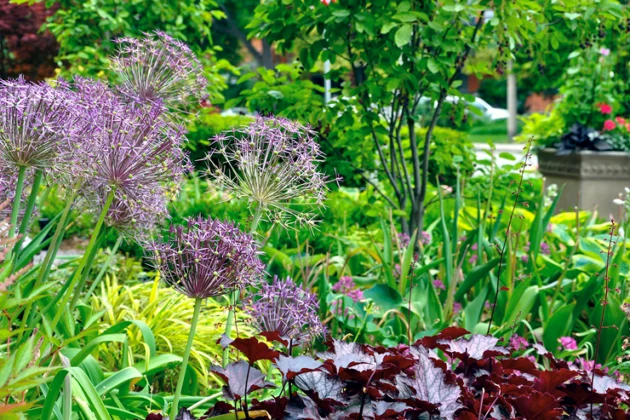
Brookline properties bring a mix of tight side yards, mature landscaping, and older homes with varying water pressure and hose bib access. Before laying any tubing, we look at existing plant spacing, soil type, and how the yard drains after rain.
- Zone layout matched to plant water needs
- Pressure and filtration checks at the source
- Tubing routes that stay out of mower and foot traffic paths
Preservation Commission and historic district review
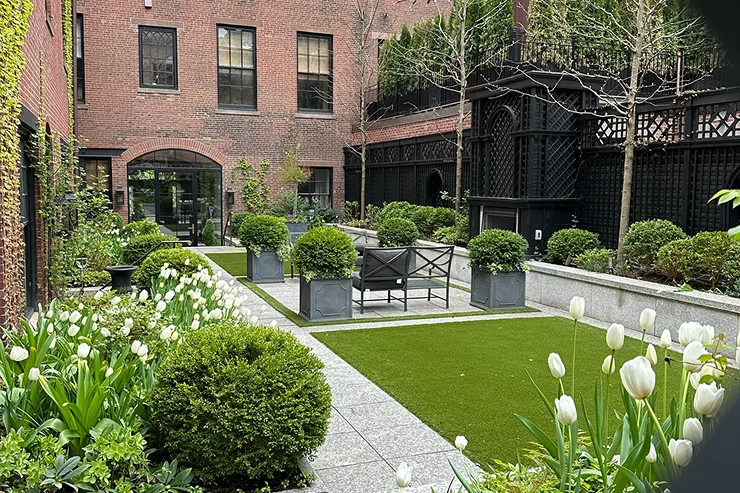
Brookline has several local historic districts, and much of the town’s older housing stock sits under some form of design review even outside those formal boundaries. Irrigation work itself is rarely the trigger for review, but any visible hardware — above-grade valve boxes, exposed tubing near a front walk, controller placement on a street-facing wall — can draw attention on a property under active commission oversight. We route mainline and valve boxes to stay out of sightlines from the street, and where a controller needs exterior mounting, we place it on a side or rear elevation and confirm placement with the property manager or owner before installation, not after.
Deer pressure toward the Newton line
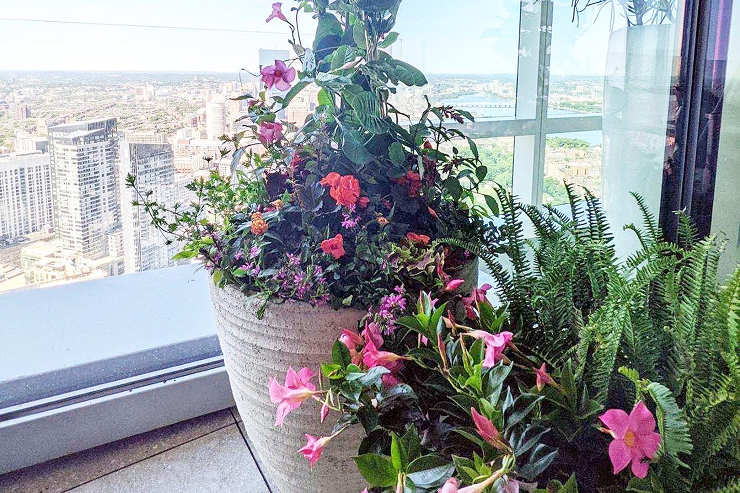
Properties in the southern and western parts of Brookline, closer to Newton, see real deer browsing pressure — enough that plant selection and irrigation design have to work together. Drip lines feeding deer-resistant plantings can run leaner and more targeted; areas still planted with deer candy like hosta and hydrangea need irrigation that supports faster recovery growth after browsing, which usually means slightly more frequent, shorter cycles rather than one long soak. We ask about deer activity on-site during the initial walk so zoning reflects what’s actually eating the garden, not just what’s growing in it.
Mature plantings and established root zones
A lot of Brookline’s tree canopy and foundation planting is 30, 40, even 60 years old. Roots have moved, canopy has thickened, and shade patterns have shifted since the original garden was laid out. Before we run a single line, we walk the property to identify where root zones actually sit now, which shrubs are competing for the same soil volume, and where old irrigation trenches or utility lines might already run underground. Retrofitting drip into an established garden means working around what’s there, not clearing it out to start clean.
Larger-lot zoning and water pressure consistency
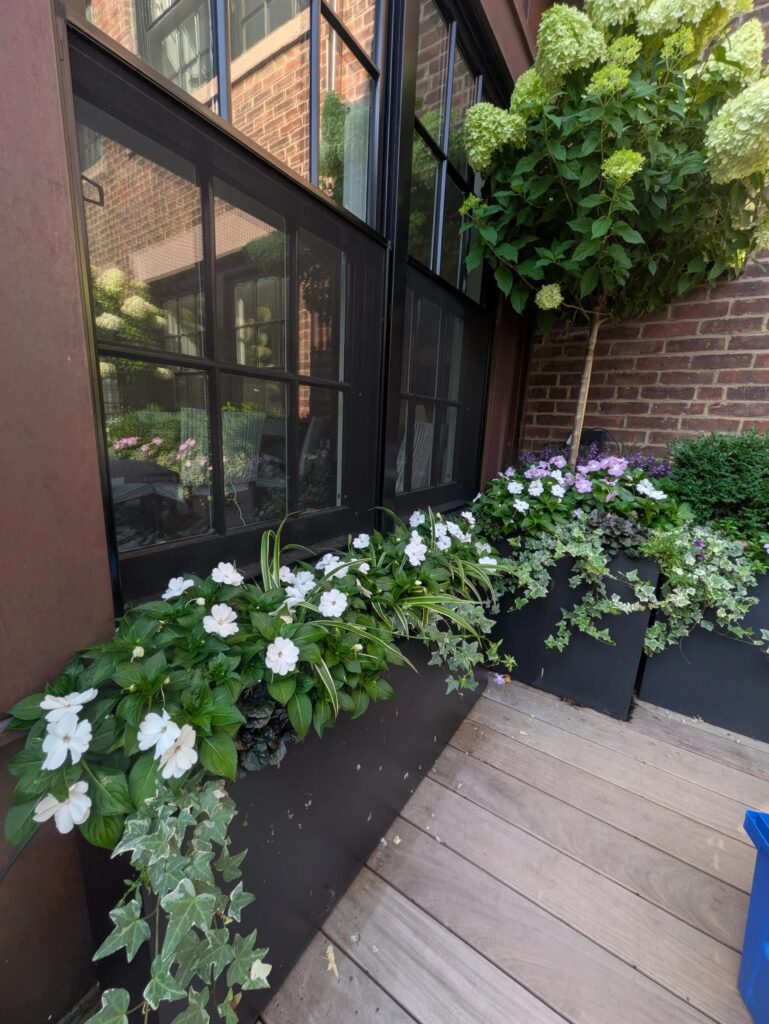
Bigger lots mean longer runs, and longer runs mean pressure loss becomes a real design factor rather than an afterthought. We zone by both sun exposure and distance from the water source, using pressure-compensating emitters on the longer runs so the planting bed at the far end of a 150-foot property gets the same flow as the one closest to the house.
Recent Brookline work
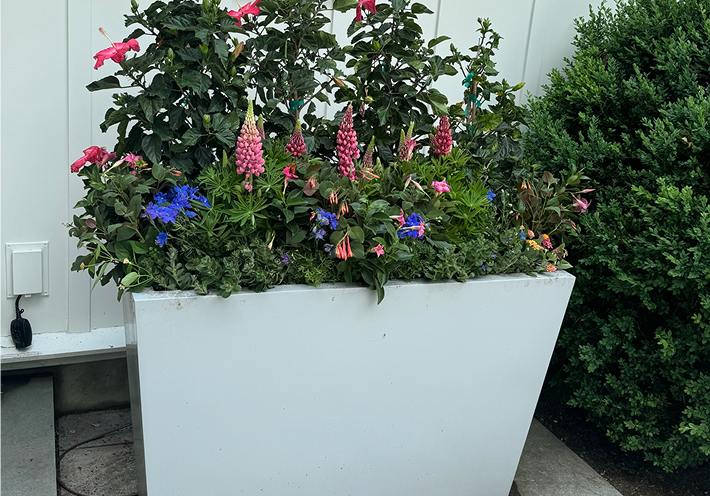
Recent work in Brookline has included re-piping drip zones for a mature perennial border in Chestnut Hill where the original system had been installed around a planting plan that no longer matched what was in the ground, and adding targeted drip zones to a Brookline Village property’s rear terrace containers and adjacent foundation beds, coordinated with the homeowner’s historic district timeline for exterior work. We don’t publish client names or addresses, but the pattern across both jobs is consistent: re-map before you re-pipe, and build zones around current growth, current light, and current review requirements.
Other services we provide in Brookline
Drip irrigation is rarely the only work a Brookline property needs in a given season. We handle full garden services in Brookline alongside irrigation, including garden design and installation for new or renovated beds, ongoing fine gardening and maintenance through the growing season, container and window box planting for street-facing facades under design review, roof deck and terrace planting for the town’s growing number of flat-roof additions, and low-voltage landscape lighting designed to meet historic district lighting standards where they apply. Most Brookline clients combine two or three of these services into a single seasonal plan rather than booking them separately, which also keeps site visits and scheduling to a minimum.
Start with a consultation in Brookline
Brookline is about 5.4 miles from our Brookline base, and most first visits are scheduled within the same week. A consultation starts with a walk of the property to look at existing plantings, root zones, sun exposure, and any historic district constraints on hardware placement, followed by a straightforward zone plan and cost estimate before any work begins. Call to set up a site visit, and we’ll confirm timing around your property’s review requirements if applicable.
What Our Customers Say
Frequently Asked Questions
Does drip irrigation installation require Preservation Commission approval in Brookline?
Irrigation itself is rarely a formal review item, but visible hardware on street-facing elevations of a property in a local historic district can draw scrutiny. We keep valve boxes and controllers off sightlines and confirm placement with owners or property managers on any property under active review.
How does deer pressure near the Newton line affect irrigation design?
Where deer browsing is heavy, we often zone irrigation to support faster recovery on plants that get eaten back, using shorter, more frequent cycles on vulnerable beds rather than one long soak. Combined with plant selection, this keeps browsed areas recovering rather than declining.
Can drip irrigation be added to an established garden without disturbing mature plantings?
Yes. We map current root zones before installation and route lines around existing shrubs and perennials rather than around the original planting plan, which is often decades out of date.
Do larger Brookline lots need more irrigation zones than smaller properties?
Usually, yes. Longer runs lose pressure over distance, and larger lots typically have more variation in sun exposure and soil, so we zone by both distance and light rather than treating the whole property as one run.
How far is Brookline from your Brookline location?
About 5.4 miles. We schedule Brookline consultations on the same weekly rotation as our other Boston-area service areas, so a first visit is usually available within a week of your call.