- Serving Boston and the Greater Boston Area

- Home
- Services
- Garden Design Services
- Landscape Design
- Urban Garden Design
- Rooftop Garden Installation
- Roof Deck Planting
- Container Gardening Services
- Seasonal Container Planting
- Window Boxes
- Fine Gardening
- Garden Maintenance
- Planting Maintenance
- Flower & Plant Installation
- Drip Irrigation Installation
- Landscape Lighting
- Service Areas
Charlestown, MA
- Garden Services in Charlestown, MA
- Garden Design in Charlestown, MA
- Landscape Design in Charlestown, MA
- Urban Garden Design in Charlestown, MA
- Rooftop Garden Installation in Charlestown, MA
- Roof Deck Planting in Charlestown, MA
- Container Gardening in Charlestown, MA
- Seasonal Container Planting in Charlestown, MA
- Flower & Plant Installation in Charlestown, MA
- Window Boxes in Charlestown, MA
- Fine Gardening in Charlestown, MA
- Garden Maintenance in Charlestown, MA
- Planting & Maintenance in Charlestown, MA
- Drip Irrigation Installation in Charlestown, MA
- Landscape Lighting in Charlestown, MA
North End, MA
- Garden Services in north-end, MA
- Garden Design in north-end, MA
- Landscape Design in north-end, MA
- Urban Garden Design in north-end, MA
- Rooftop Garden Installation in north-end, MA
- Roof Deck Planting in north-end, MA
- Container Gardening in north-end, MA
- Seasonal Container Planting in north-end, MA
- Flower & Plant Installation in north-end, MA
- Window Boxes in north-end, MA
- Fine Gardening in north-end, MA
- Garden Maintenance in north-end, MA
- Planting & Maintenance in north-end, MA
- Drip Irrigation Installation in north-end, MA
- Landscape Lighting in north-end, MA
Downtown Boston, MA
- Garden Services in downtown boston, MA
- Garden Design in downtown boston, MA
- Landscape Design in downtown boston, MA
- Urban Garden Design in downtown boston, MA
- Rooftop Garden Installation in downtown boston, MA
- Roof Deck Planting in downtown boston, MA
- Container Gardening in downtown boston, MA
- Seasonal Container Planting in downtown boston, MA
- Flower & Plant Installation in downtown boston, MA
- Window Boxes in downtown boston, MA
- Fine Gardening in downtown boston, MA
- Garden Maintenance in downtown boston, MA
- Planting & Maintenance in downtown boston, MA
- Drip Irrigation Installation in downtown boston, MA
- Landscape Lighting in downtown boston, MA
Beacon Hill, MA
- Garden Services in beacon hill, MA
- Garden Design in beacon hill, MA
- Landscape Design in beacon hill, MA
- Urban Garden Design in beacon hill, MA
- Rooftop Garden Installation in beacon hill, MA
- Roof Deck Planting in beacon hill, MA
- Container Gardening in beacon hill, MA
- Seasonal Container Planting in beacon hill, MA
- Flower & Plant Installation in beacon hill, MA
- Window Boxes in beacon hill, MA
- Fine Gardening in beacon hill, MA
- Garden Maintenance in beacon hill, MA
- Planting & Maintenance in beacon hill, MA
- Drip Irrigation Installation in beacon hill, MA
- Landscape Lighting in beacon hill, MA
Boston, MA
- Garden Services in boston, MA
- Garden Design in boston, MA
- Landscape Design in boston, MA
- Urban Garden Design in boston, MA
- Rooftop Garden Installation in boston, MA
- Roof Deck Planting in boston, MA
- Container Gardening in boston, MA
- Seasonal Container Planting in boston, MA
- Flower & Plant Installation in boston, MA
- Window Boxes in boston, MA
- Fine Gardening in boston, MA
- Garden Maintenance in boston, MA
- Planting & Maintenance in boston, MA
- Drip Irrigation Installation in boston, MA
- Landscape Lighting in boston, MA
seaport, MA
- Garden Services in seaport, MA
- Garden Design in seaport, MA
- Landscape Design in seaport, MA
- Urban Garden Design in seaport, MA
- Rooftop Garden Installation in seaport, MA
- Roof Deck Planting in seaport, MA
- Container Gardening in seaport, MA
- Seasonal Container Planting in seaport, MA
- Flower & Plant Installation in seaport, MA
- Window Boxes in seaport, MA
- Fine Gardening in seaport, MA
- Garden Maintenance in seaport, MA
- Planting & Maintenance in seaport, MA
- Drip Irrigation Installation in seaport, MA
- Landscape Lighting in seaport, MA
back bay, MA
- Garden Services in back bay, MA
- Garden Design in back bay, MA
- Landscape Design in back bay, MA
- Urban Garden Design in back bay, MA
- Rooftop Garden Installation in back bay, MA
- Roof Deck Planting in back bay, MA
- Container Gardening in back bay, MA
- Seasonal Container Planting in back bay, MA
- Flower & Plant Installation in back bay, MA
- Window Boxes in back bay, MA
- Fine Gardening in back bay, MA
- Garden Maintenance in back bay, MA
- Planting & Maintenance in back bay, MA
- Drip Irrigation Installation in back bay, MA
- Landscape Lighting in back bay, MA
cambridge, MA
- Garden Services in cambridge, MA
- Garden Design in cambridge, MA
- Landscape Design in cambridge, MA
- Urban Garden Design in cambridge, MA
- Rooftop Garden Installation in cambridge, MA
- Roof Deck Planting in cambridge, MA
- Container Gardening in cambridge, MA
- Seasonal Container Planting in cambridge, MA
- Flower & Plant Installation in cambridge, MA
- Window Boxes in cambridge, MA
- Fine Gardening in cambridge, MA
- Garden Maintenance in cambridge, MA
- Planting & Maintenance in cambridge, MA
- Drip Irrigation Installation in cambridge, MA
- Landscape Lighting in cambridge, MA
south-end, MA
- Garden Services in south-end, MA
- Garden Design in south-end, MA
- Landscape Design in south-end, MA
- Urban Garden Design in south-end, MA
- Rooftop Garden Installation in south-end, MA
- Roof Deck Planting in south-end, MA
- Container Gardening in south-end, MA
- Seasonal Container Planting in south-end, MA
- Flower & Plant Installation in south-end, MA
- Window Boxes in south-end, MA
- Fine Gardening in south-end, MA
- Garden Maintenance in south-end, MA
- Planting & Maintenance in south-end, MA
- Drip Irrigation Installation in south-end, MA
- Landscape Lighting in south-end, MA
brookline, MA
- Garden Services in brookline, MA
- Garden Design in brookline, MA
- Landscape Design in brookline, MA
- Urban Garden Design in brookline, MA
- Rooftop Garden Installation in brookline, MA
- Roof Deck Planting in brookline, MA
- Container Gardening in brookline, MA
- Seasonal Container Planting in brookline, MA
- Flower & Plant Installation in brookline, MA
- Window Boxes in brookline, MA
- Fine Gardening in brookline, MA
- Garden Maintenance in brookline, MA
- Planting & Maintenance in brookline, MA
- Drip Irrigation Installation in brookline, MA
- Landscape Lighting in brookline, MA
winchester, MA
- Garden Services in winchester, MA
- Garden Design in winchester, MA
- Landscape Design in winchester, MA
- Urban Garden Design in winchester, MA
- Rooftop Garden Installation in winchester, MA
- Roof Deck Planting in winchester, MA
- Container Gardening in winchester, MA
- Seasonal Container Planting in winchester, MA
- Flower & Plant Installation in winchester, MA
- Window Boxes in winchester, MA
- Fine Gardening in winchester, MA
- Garden Maintenance in winchester, MA
- Planting & Maintenance in winchester, MA
- Drip Irrigation Installation in winchester, MA
- Landscape Lighting in winchester, MA
newton, MA
- Garden Services in newton, MA
- Garden Design in newton, MA
- Landscape Design in newton, MA
- Urban Garden Design in newton, MA
- Rooftop Garden Installation in newton, MA
- Roof Deck Planting in newton, MA
- Container Gardening in newton, MA
- Seasonal Container Planting in newton, MA
- Flower & Plant Installation in newton, MA
- Window Boxes in newton, MA
- Fine Gardening in newton, MA
- Garden Maintenance in newton, MA
- Planting & Maintenance in newton, MA
- Drip Irrigation Installation in newton, MA
- Landscape Lighting in newton, MA
lexington, MA
- Garden Services in lexington, MA
- Garden Design in lexington, MA
- Landscape Design in lexington, MA
- Urban Garden Design in lexington, MA
- Rooftop Garden Installation in lexington, MA
- Roof Deck Planting in lexington, MA
- Container Gardening in lexington, MA
- Seasonal Container Planting newton, MA
- Flower & Plant Installation in lexington, MA
- Window Boxes in lexington, MA
- Fine Gardening in lexington, MA
- Garden Maintenance in lexington, MA
- Planting & Maintenance in lexington, MA
- Drip Irrigation Installation in lexington, MA
- Landscape Lighting in lexington, MA
weston, MA
- Garden Services in weston, MA
- Garden Design in weston, MA
- Landscape Design in weston, MA
- Urban Garden Design in weston, MA
- Rooftop Garden Installation in weston, MA
- Roof Deck Planting in weston, MA
- Container Gardening in weston, MA
- Seasonal Container Planting weston, MA
- Flower & Plant Installation in weston, MA
- Window Boxes in weston, MA
- Fine Gardening in weston, MA
- Garden Maintenance in weston, MA
- Planting & Maintenance in weston, MA
- Drip Irrigation Installation in weston, MA
- Landscape Lighting in weston, MA
wellesley, MA
- Garden Services in wellesley, MA
- Garden Design in wellesley, MA
- Landscape Design in wellesley, MA
- Urban Garden Design in wellesley, MA
- Rooftop Garden Installation in wellesley, MA
- Roof Deck Planting in wellesley, MA
- Container Gardening in wellesley, MA
- Seasonal Container Planting wellesley, MA
- Flower & Plant Installation in wellesley, MA
- Window Boxes in wellesley, MA
- Fine Gardening in wellesley, MA
- Garden Maintenance in wellesley, MA
- Planting & Maintenance in wellesley, MA
- Drip Irrigation Installation in wellesley, MA
- Landscape Lighting in wellesley, MA
- Portfolio
- About us
- Blog
- Contact
- Flower Delivery
Fine Gardening in Newton, MA
A foundation planting installed forty years ago in Waban or Newton Centre is not a blank canvas — it is a fixed layout of overgrown yews, shaded soil, and root competition that any new plan has to work around. Add a deer population that treats hosta and arborvitae as a standing buffet, mature tree canopy that keeps entire yards in shade past mid-morning, and a town tree ordinance that governs what you can and cannot remove without a permit, and fine gardening in Newton becomes a problem of editing and sequencing as much as planting. That is the work we do here.

What Fine Gardening looks like in Newton
Most of the calls we get from Newton start the same way: the foundation beds around a Colonial or Victorian on a village lot in Newton Centre, Waban, Chestnut Hill, or Newtonville have been maintained on autopilot for years — a spring mulch, an occasional trim — and the homeowner wants the garden to actually look considered again, not just tidy. Fine gardening here means going bed by bed: pruning overgrown foundation shrubs back into proportion with the house, dividing and resetting perennials that have outgrown their spot, and replacing anything that has been chewed to stubs by deer with something that will actually survive the season.
Shade is the constant. Newton’s older neighborhoods carry a mature canopy of oak, maple, and beech that most of New England lost decades ago, which is a genuine asset for the property but a real constraint for planting. We work with what the shade allows — hellebore, epimedium, ferns, hakonechloa, native woodland perennials — rather than fighting it with sun-loving plants that will sulk through July. Soil on these lots is often compacted clay from decades of foot traffic and old construction fill, so bed preparation typically includes real amendment, not a surface topdressing.
Because so many Newton properties sit close to neighbors on tree-lined streets, we also think about sightlines and privacy as part of the design, not an afterthought — screening plants selected for deer resistance and shade tolerance both, since a privacy hedge that gets eaten to the ground by October solves nothing.
What we account for here
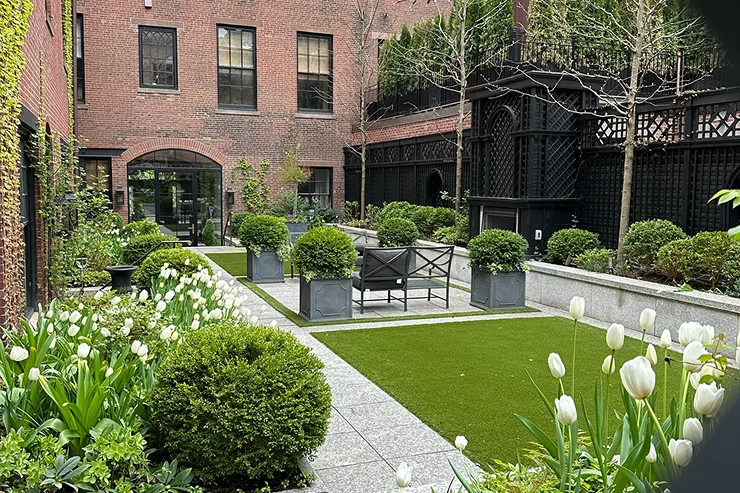
What we account for here
Newton properties vary block by block, from tight village lots to wider set-back yards near the reservoir. We look at bed exposure, existing plant health, and how a property is actually used before touching a single stem, then plan pruning and cutbacks around what’s blooming, what’s dormant, and what neighbors’ overhanging branches mean for your beds.
Deer pressure on foundation and perimeter beds
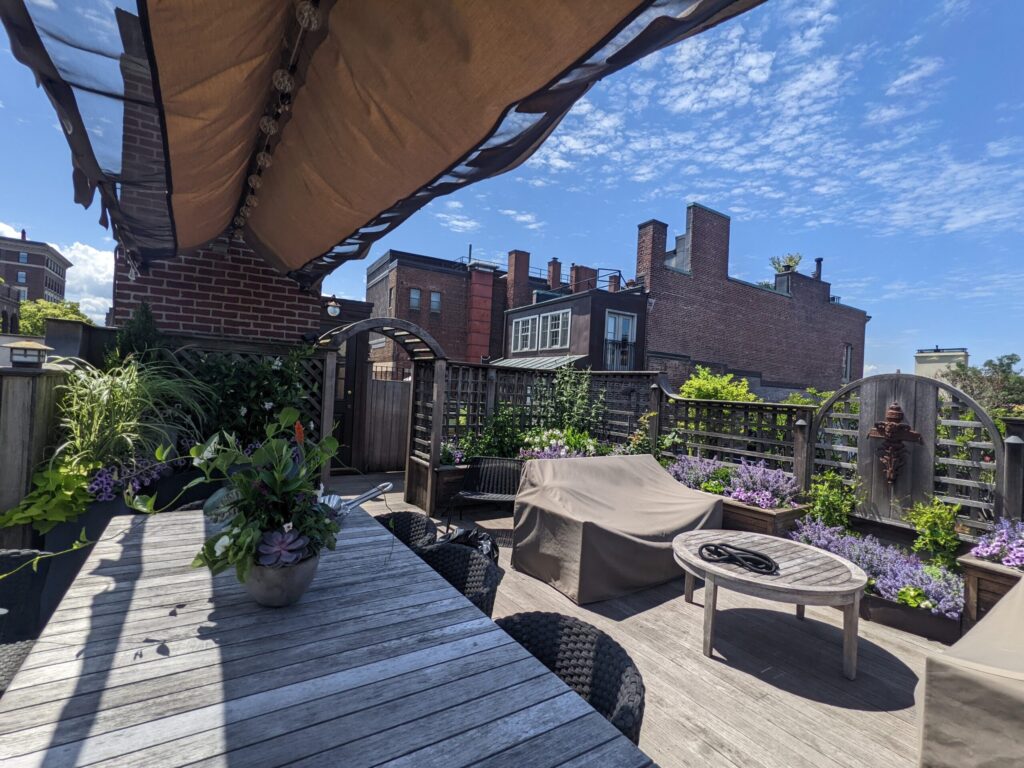
Newton’s deer population is heavy enough that any planting plan has to assume browsing, not hope against it. We favor deer-resistant palettes — boxwood, andromeda, mountain laurel, catmint, hellebore, ornamental grasses — and use targeted repellent applications on higher-risk plantings during peak browsing months rather than relying on fencing alone, which historic commission guidelines often restrict on street-facing elevations anyway.
Dense shade from mature canopy trees
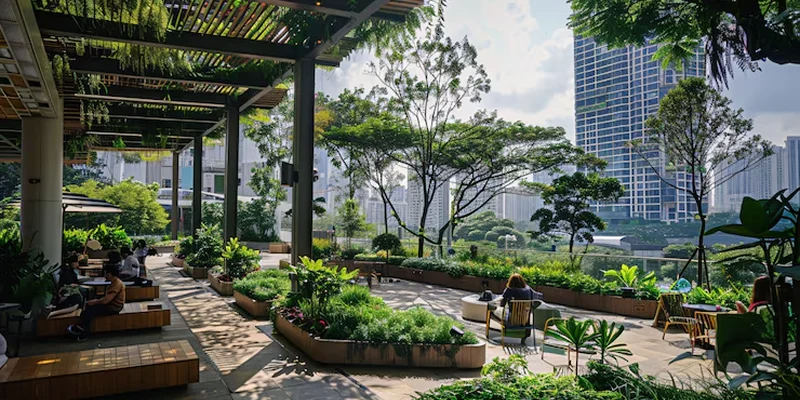
Full-shade and part-shade plant selections are the default on most Newton lots, not the exception. We assess actual light hours per bed before specifying anything, since shade under a mature beech reads very differently than shade under a high-limbed oak, and plant vigor depends on getting that distinction right.
The city's tree ordinance on removals
Newton regulates removal of trees above a certain diameter on both public and private property, and enforcement is active. Before any garden plan calls for removing a tree to open up light or clear a sightline, we confirm whether it falls under the ordinance and handle the permitting conversation with the city rather than leaving the homeowner to discover the requirement after the fact.
Compacted, clay-heavy village lot soil
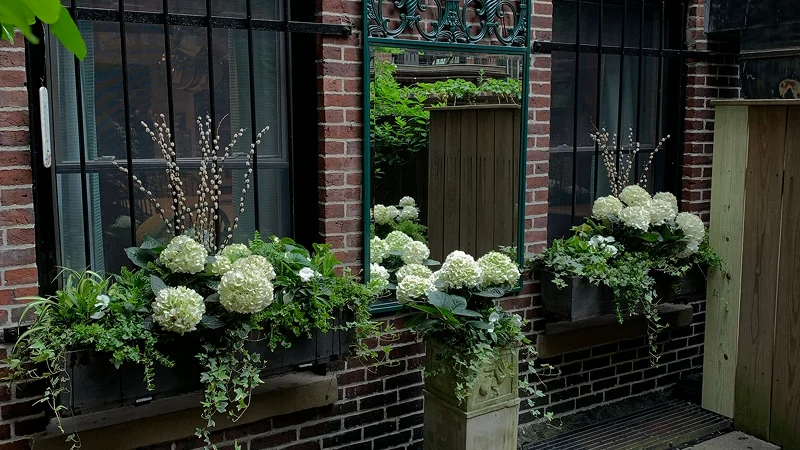
Decades of settled clay soil under foundation beds drains poorly and compacts further with routine mulching. We amend in place with organic matter and coarse material where drainage is a problem, rather than defaulting to a plant list built for garden-center soil conditions that don’t exist on the actual property.
Recent Newton work
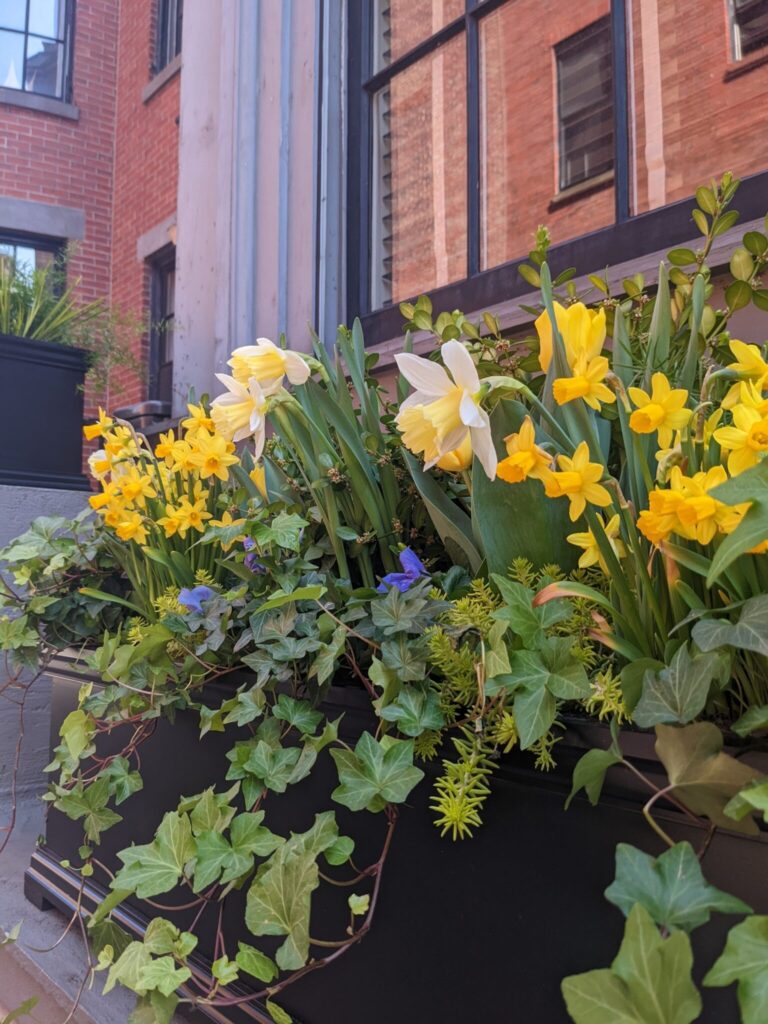
A representative project: a foundation bed renovation on a Newton Centre Colonial where forty-year-old yews had swallowed the front walk and deer had reduced the perennial border to bare stems by midsummer. The work involved selective removal and reshaping of the overgrown shrubs, soil amendment across the full bed line, and a replanting plan built entirely around deer-resistant, shade-tolerant species — boxwood, hellebore, epimedium, and ornamental grasses along the sunnier edge near the driveway. The homeowner now runs the bed on a seasonal maintenance visit rather than reactive fixes, which is the outcome most Newton clients are actually looking for.
Other services we provide in Newton
Fine gardening is usually the entry point, but most Newton properties need more than bed maintenance. We handle full garden design and installation for lots being reworked from the ground up, ongoing garden services for year-round upkeep, and containers and window boxes for the seasonal color that foundation beds alone can’t provide. For homes with outdoor living space, we install roof deck and terrace planting, drip irrigation to keep new plantings alive through a Newton summer without daily hand-watering, and low-voltage landscape lighting to extend how the garden reads after dark. Most clients start with one service and add others as the garden matures.
Book fine gardening in Newton
Newton is roughly 8.6 miles from our Newton location, and we schedule fine gardening visits there on a regular route. Call to set up a walk-through: we assess the beds, note deer damage and shade conditions, flag anything that touches the tree ordinance, and come back with a plan and a maintenance schedule. Most Newton clients move from that first visit to a recurring seasonal program within one growing season.
What Our Customers Say
Frequently Asked Questions
Do you deal with the town's tree ordinance if a garden plan requires removing a tree?
Yes. Newton regulates removal of trees above a certain diameter on both public and private property. If a fine gardening plan calls for removal to improve light or clear a sightline, we determine whether the ordinance applies and manage the permitting process with the city before any work begins.
What can actually survive the deer pressure in Newton's neighborhoods?
Boxwood, andromeda, mountain laurel, catmint, hellebore, epimedium, and most ornamental grasses hold up well. We build planting plans around deer-resistant species first, then use targeted repellent applications on anything more vulnerable during peak browsing season.
My foundation beds get almost no direct sun — is fine gardening still worth it?
Yes, and it's one of the most common conditions we work with in Newton. Full shade under mature canopy trees supports a strong plant palette — ferns, hellebore, hakonechloa, hosta paired with deer deterrents — once the bed is properly assessed for actual light hours and amended for drainage.
How is fine gardening different from your general garden maintenance service?
Fine gardening is detail-level horticultural work — pruning, dividing, editing overgrown plantings, soil correction, deer-resistant replanting. Our broader garden services program covers the recurring seasonal upkeep that follows once a garden is in the shape you want.
How often do Newton properties need fine gardening visits?
Most village lots do well on a seasonal schedule — spring cleanup and renovation, a midsummer visit to manage growth and deer damage, and fall preparation. Heavier foundation renovations are typically a one-time project followed by lighter recurring maintenance.