- Serving Boston and the Greater Boston Area

- Home
- Services
- Garden Design Services
- Landscape Design
- Urban Garden Design
- Rooftop Garden Installation
- Roof Deck Planting
- Container Gardening Services
- Seasonal Container Planting
- Window Boxes
- Fine Gardening
- Garden Maintenance
- Planting Maintenance
- Flower & Plant Installation
- Drip Irrigation Installation
- Landscape Lighting
- Service Areas
Charlestown, MA
- Garden Services in Charlestown, MA
- Garden Design in Charlestown, MA
- Landscape Design in Charlestown, MA
- Urban Garden Design in Charlestown, MA
- Rooftop Garden Installation in Charlestown, MA
- Roof Deck Planting in Charlestown, MA
- Container Gardening in Charlestown, MA
- Seasonal Container Planting in Charlestown, MA
- Flower & Plant Installation in Charlestown, MA
- Window Boxes in Charlestown, MA
- Fine Gardening in Charlestown, MA
- Garden Maintenance in Charlestown, MA
- Planting & Maintenance in Charlestown, MA
- Drip Irrigation Installation in Charlestown, MA
- Landscape Lighting in Charlestown, MA
North End, MA
- Garden Services in north-end, MA
- Garden Design in north-end, MA
- Landscape Design in north-end, MA
- Urban Garden Design in north-end, MA
- Rooftop Garden Installation in north-end, MA
- Roof Deck Planting in north-end, MA
- Container Gardening in north-end, MA
- Seasonal Container Planting in north-end, MA
- Flower & Plant Installation in north-end, MA
- Window Boxes in north-end, MA
- Fine Gardening in north-end, MA
- Garden Maintenance in north-end, MA
- Planting & Maintenance in north-end, MA
- Drip Irrigation Installation in north-end, MA
- Landscape Lighting in north-end, MA
Downtown Boston, MA
- Garden Services in downtown boston, MA
- Garden Design in downtown boston, MA
- Landscape Design in downtown boston, MA
- Urban Garden Design in downtown boston, MA
- Rooftop Garden Installation in downtown boston, MA
- Roof Deck Planting in downtown boston, MA
- Container Gardening in downtown boston, MA
- Seasonal Container Planting in downtown boston, MA
- Flower & Plant Installation in downtown boston, MA
- Window Boxes in downtown boston, MA
- Fine Gardening in downtown boston, MA
- Garden Maintenance in downtown boston, MA
- Planting & Maintenance in downtown boston, MA
- Drip Irrigation Installation in downtown boston, MA
- Landscape Lighting in downtown boston, MA
Beacon Hill, MA
- Garden Services in beacon hill, MA
- Garden Design in beacon hill, MA
- Landscape Design in beacon hill, MA
- Urban Garden Design in beacon hill, MA
- Rooftop Garden Installation in beacon hill, MA
- Roof Deck Planting in beacon hill, MA
- Container Gardening in beacon hill, MA
- Seasonal Container Planting in beacon hill, MA
- Flower & Plant Installation in beacon hill, MA
- Window Boxes in beacon hill, MA
- Fine Gardening in beacon hill, MA
- Garden Maintenance in beacon hill, MA
- Planting & Maintenance in beacon hill, MA
- Drip Irrigation Installation in beacon hill, MA
- Landscape Lighting in beacon hill, MA
Boston, MA
- Garden Services in boston, MA
- Garden Design in boston, MA
- Landscape Design in boston, MA
- Urban Garden Design in boston, MA
- Rooftop Garden Installation in boston, MA
- Roof Deck Planting in boston, MA
- Container Gardening in boston, MA
- Seasonal Container Planting in boston, MA
- Flower & Plant Installation in boston, MA
- Window Boxes in boston, MA
- Fine Gardening in boston, MA
- Garden Maintenance in boston, MA
- Planting & Maintenance in boston, MA
- Drip Irrigation Installation in boston, MA
- Landscape Lighting in boston, MA
seaport, MA
- Garden Services in seaport, MA
- Garden Design in seaport, MA
- Landscape Design in seaport, MA
- Urban Garden Design in seaport, MA
- Rooftop Garden Installation in seaport, MA
- Roof Deck Planting in seaport, MA
- Container Gardening in seaport, MA
- Seasonal Container Planting in seaport, MA
- Flower & Plant Installation in seaport, MA
- Window Boxes in seaport, MA
- Fine Gardening in seaport, MA
- Garden Maintenance in seaport, MA
- Planting & Maintenance in seaport, MA
- Drip Irrigation Installation in seaport, MA
- Landscape Lighting in seaport, MA
back bay, MA
- Garden Services in back bay, MA
- Garden Design in back bay, MA
- Landscape Design in back bay, MA
- Urban Garden Design in back bay, MA
- Rooftop Garden Installation in back bay, MA
- Roof Deck Planting in back bay, MA
- Container Gardening in back bay, MA
- Seasonal Container Planting in back bay, MA
- Flower & Plant Installation in back bay, MA
- Window Boxes in back bay, MA
- Fine Gardening in back bay, MA
- Garden Maintenance in back bay, MA
- Planting & Maintenance in back bay, MA
- Drip Irrigation Installation in back bay, MA
- Landscape Lighting in back bay, MA
cambridge, MA
- Garden Services in cambridge, MA
- Garden Design in cambridge, MA
- Landscape Design in cambridge, MA
- Urban Garden Design in cambridge, MA
- Rooftop Garden Installation in cambridge, MA
- Roof Deck Planting in cambridge, MA
- Container Gardening in cambridge, MA
- Seasonal Container Planting in cambridge, MA
- Flower & Plant Installation in cambridge, MA
- Window Boxes in cambridge, MA
- Fine Gardening in cambridge, MA
- Garden Maintenance in cambridge, MA
- Planting & Maintenance in cambridge, MA
- Drip Irrigation Installation in cambridge, MA
- Landscape Lighting in cambridge, MA
south-end, MA
- Garden Services in south-end, MA
- Garden Design in south-end, MA
- Landscape Design in south-end, MA
- Urban Garden Design in south-end, MA
- Rooftop Garden Installation in south-end, MA
- Roof Deck Planting in south-end, MA
- Container Gardening in south-end, MA
- Seasonal Container Planting in south-end, MA
- Flower & Plant Installation in south-end, MA
- Window Boxes in south-end, MA
- Fine Gardening in south-end, MA
- Garden Maintenance in south-end, MA
- Planting & Maintenance in south-end, MA
- Drip Irrigation Installation in south-end, MA
- Landscape Lighting in south-end, MA
brookline, MA
- Garden Services in brookline, MA
- Garden Design in brookline, MA
- Landscape Design in brookline, MA
- Urban Garden Design in brookline, MA
- Rooftop Garden Installation in brookline, MA
- Roof Deck Planting in brookline, MA
- Container Gardening in brookline, MA
- Seasonal Container Planting in brookline, MA
- Flower & Plant Installation in brookline, MA
- Window Boxes in brookline, MA
- Fine Gardening in brookline, MA
- Garden Maintenance in brookline, MA
- Planting & Maintenance in brookline, MA
- Drip Irrigation Installation in brookline, MA
- Landscape Lighting in brookline, MA
winchester, MA
- Garden Services in winchester, MA
- Garden Design in winchester, MA
- Landscape Design in winchester, MA
- Urban Garden Design in winchester, MA
- Rooftop Garden Installation in winchester, MA
- Roof Deck Planting in winchester, MA
- Container Gardening in winchester, MA
- Seasonal Container Planting in winchester, MA
- Flower & Plant Installation in winchester, MA
- Window Boxes in winchester, MA
- Fine Gardening in winchester, MA
- Garden Maintenance in winchester, MA
- Planting & Maintenance in winchester, MA
- Drip Irrigation Installation in winchester, MA
- Landscape Lighting in winchester, MA
newton, MA
- Garden Services in newton, MA
- Garden Design in newton, MA
- Landscape Design in newton, MA
- Urban Garden Design in newton, MA
- Rooftop Garden Installation in newton, MA
- Roof Deck Planting in newton, MA
- Container Gardening in newton, MA
- Seasonal Container Planting in newton, MA
- Flower & Plant Installation in newton, MA
- Window Boxes in newton, MA
- Fine Gardening in newton, MA
- Garden Maintenance in newton, MA
- Planting & Maintenance in newton, MA
- Drip Irrigation Installation in newton, MA
- Landscape Lighting in newton, MA
lexington, MA
- Garden Services in lexington, MA
- Garden Design in lexington, MA
- Landscape Design in lexington, MA
- Urban Garden Design in lexington, MA
- Rooftop Garden Installation in lexington, MA
- Roof Deck Planting in lexington, MA
- Container Gardening in lexington, MA
- Seasonal Container Planting newton, MA
- Flower & Plant Installation in lexington, MA
- Window Boxes in lexington, MA
- Fine Gardening in lexington, MA
- Garden Maintenance in lexington, MA
- Planting & Maintenance in lexington, MA
- Drip Irrigation Installation in lexington, MA
- Landscape Lighting in lexington, MA
weston, MA
- Garden Services in weston, MA
- Garden Design in weston, MA
- Landscape Design in weston, MA
- Urban Garden Design in weston, MA
- Rooftop Garden Installation in weston, MA
- Roof Deck Planting in weston, MA
- Container Gardening in weston, MA
- Seasonal Container Planting weston, MA
- Flower & Plant Installation in weston, MA
- Window Boxes in weston, MA
- Fine Gardening in weston, MA
- Garden Maintenance in weston, MA
- Planting & Maintenance in weston, MA
- Drip Irrigation Installation in weston, MA
- Landscape Lighting in weston, MA
wellesley, MA
- Garden Services in wellesley, MA
- Garden Design in wellesley, MA
- Landscape Design in wellesley, MA
- Urban Garden Design in wellesley, MA
- Rooftop Garden Installation in wellesley, MA
- Roof Deck Planting in wellesley, MA
- Container Gardening in wellesley, MA
- Seasonal Container Planting wellesley, MA
- Flower & Plant Installation in wellesley, MA
- Window Boxes in wellesley, MA
- Fine Gardening in wellesley, MA
- Garden Maintenance in wellesley, MA
- Planting & Maintenance in wellesley, MA
- Drip Irrigation Installation in wellesley, MA
- Landscape Lighting in wellesley, MA
- Portfolio
- About us
- Blog
- Contact
- Flower Delivery
Drip Irrigation Installation in Wellesley, MA
A Wellesley property with a hundred-year-old beech canopy and a formal perennial border does not water like a suburban lawn lot. The shade shifts hour to hour, the root competition below grade is fierce, and any irrigation head that sprays instead of drips just feeds the deer population grazing your hostas at dusk. Drip irrigation solves the actual problem here — precise, low-volume water delivery to root zones, not another sprinkler head aimed at a shrub border a doe visited last night.

What Drip Irrigation Installation looks like in Wellesley
Most of the estate properties we work on in Wellesley were laid out decades ago around a central lawn, foundation plantings tied to the house’s original architecture, and specimen trees that were never meant to compete with turf sprinklers for water. Drip irrigation on these properties starts with mapping root zones rather than square footage — a mature copper beech or white oak needs a very different watering pattern than the boxwood parterre near the front steps, and running both off the same zone wastes water and eventually stresses the tree.
Soil on these lots tends to run heavier clay-loam close to the Charles River watershed edges near Wellesley College, and sandier, faster-draining pockets on the higher ground toward the Wellesley Hills side. We test infiltration rates before we design zones, because a drip layout that works in one bed of a property can waterlog or underwater the next bed twenty feet away if the soil changes underfoot, which it often does here.
Access matters too. Many of these gardens were designed for foot traffic and viewing from the house, not for trenching equipment, so we run supply lines along existing bed edges and under mulch rather than cutting new paths through established plantings. Where a lawn irrigation system already exists, we tie drip zones into the same controller so the homeowner is managing one system, not two competing ones. And because so many Wellesley gardens carry formal structure — clipped hedges, boxwood edging, symmetrical beds flanking a front walk — we lay emitter lines to match that structure precisely, so the watering pattern reinforces the design instead of working against it.
What we account for here
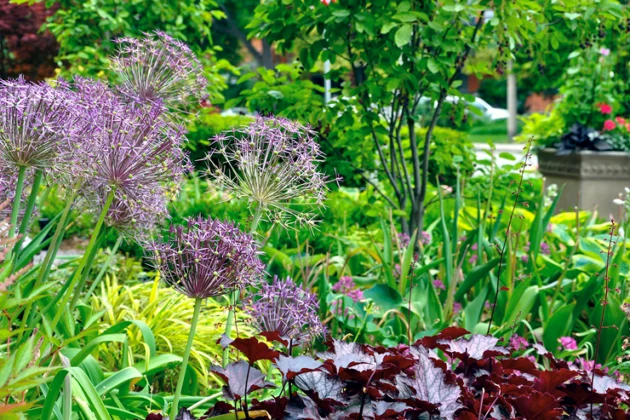
What we account for here
Wellesley properties vary widely, from tight in-town lots to larger parcels with established beds and irrigation already in place. Before running a single line, we look at existing water pressure, soil composition, and how planting beds are laid out so zones actually match plant needs rather than a generic grid.
- Existing irrigation and water source capacity
- Soil type and drainage across beds
- Bed layout and future planting changes
Deer pressure on plant selection and emitter placement
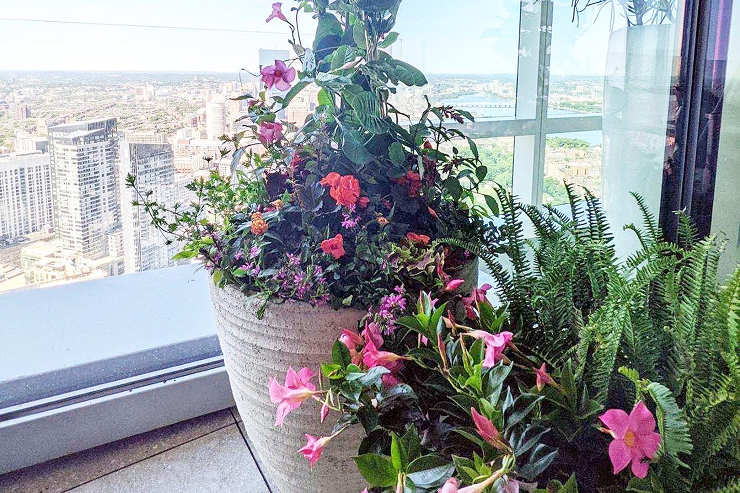
Wellesley’s deer population is well established, and it shapes what actually gets planted here more than most homeowners realize. We coordinate emitter placement with deer-resistant plant palettes — heavier watering for the hydrangea and hosta beds tucked behind fencing or close to the house, lighter, targeted drip for the perimeter plantings that are chosen specifically because deer leave them alone. Getting this wrong means either overwatering plants that don’t need it or under-serving the beds a homeowner is relying on to actually survive the season.
Mature canopy and root competition
Century-old shade trees on these properties compete hard with understory plantings for water, and a generic irrigation zone treats them the same. We separate tree-root zones from perennial bed zones wherever the layout allows, and we place emitters at the drip line of major trees rather than at the trunk, matching how the root system actually draws water. This protects tree health over the long term instead of just keeping the beds green for one season.
Wellesley College microclimate variation
Properties near the college campus sit in a slightly different air and light pattern than homes further out toward Wellesley Farms or the Hunnewell estate area — more shade from campus-adjacent tree cover, cooler pockets, and slower soil drying. We adjust run times and zone grouping property by property rather than applying a single Wellesley-wide schedule, because a system calibrated for a sunny Wellesley Hills lawn will overwater a shaded bed two miles away near the college.
Historic and formal garden layouts
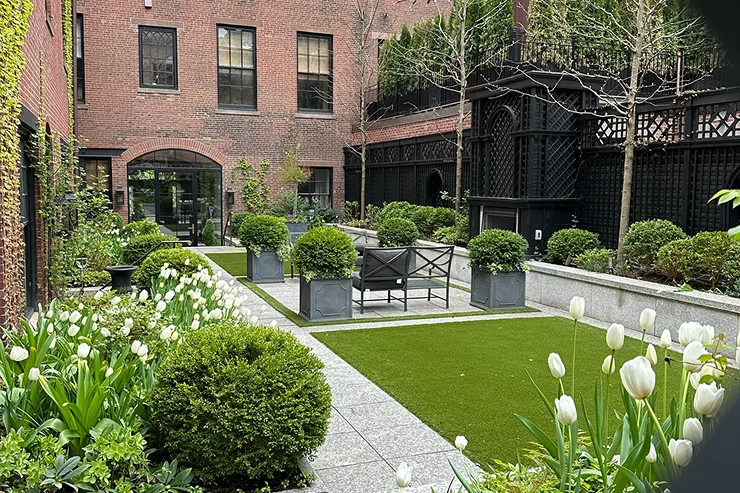
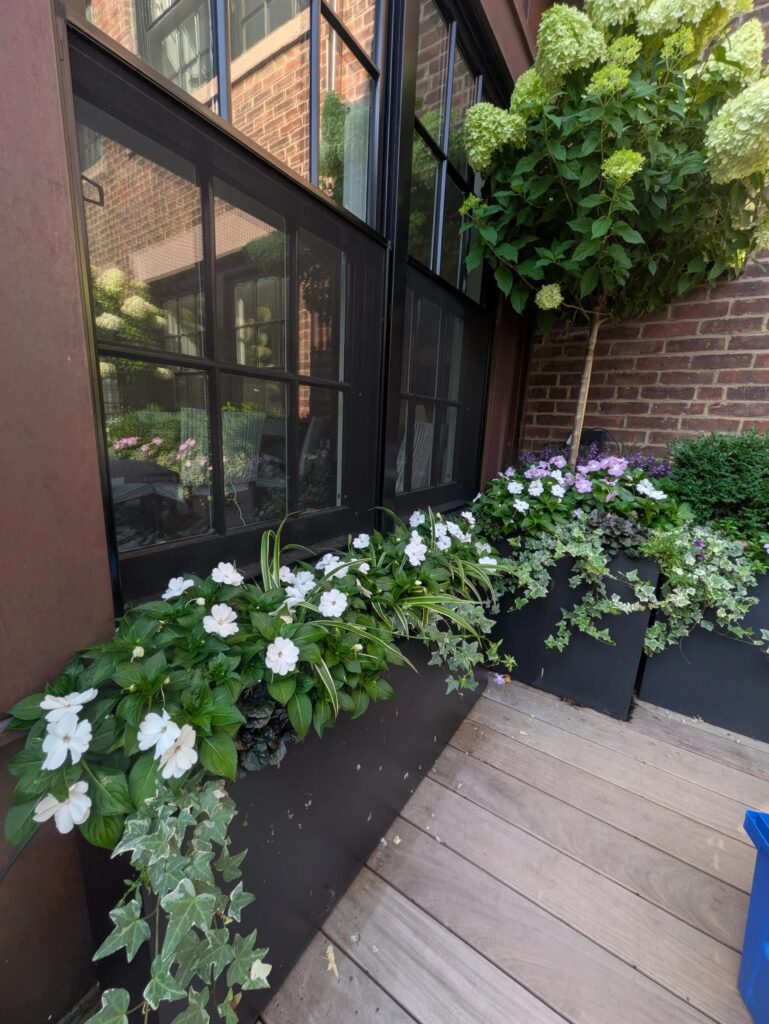
A number of the estate gardens we install into were designed decades ago with formal bones — boxwood parterres, symmetrical borders, allées of specimen trees. We route drip lines to preserve those sightlines and that symmetry, keeping tubing and emitters invisible under mulch and foliage so the system disappears into the garden rather than becoming a visible retrofit.
Recent Wellesley work
A recent project on an estate-style property near the Wellesley Hills area involved converting an aging spray-head system around the foundation beds and a mature specimen tree border to a fully zoned drip layout, tied into the existing controller and calibrated separately for the shaded north side of the house versus the open south-facing perennial beds. Another recent installation supported a formal boxwood and rose garden closer to the town center, where emitter spacing had to match the tight, symmetrical planting pattern exactly so the watering was invisible from the terrace above it.
Other services we provide in Wellesley
Drip irrigation is rarely the only piece of work on these properties. We also handle full garden services in Wellesley, including garden design and installation for estate-scale beds, fine gardening and ongoing seasonal maintenance, container and window box planting for entries and terraces, roof deck and terrace planting where the property has one, and low-voltage landscape lighting to extend the garden into evening hours. Most Wellesley clients start with one service and bring us back for the rest of the property once they see how the first project is handled.
Start with a consultation
We visit the property, walk the beds with you, and map zones against your existing plantings, soil, and sun pattern before proposing a system. From Wellesley it is a 14.6-mile drive to Wellesley, and we schedule consultations for estate properties throughout the town, from Wellesley Hills to the college area. Call Rouvalis Gardens to set up a site visit — we’ll tell you honestly whether your existing irrigation can be adapted or whether a new drip layout makes more sense for the garden you actually have.
What Our Customers Say
Frequently Asked Questions
Will drip irrigation work with the mature trees on my Wellesley property?
Yes, and it works better than spray irrigation in these situations. We separate zones for tree root areas from perennial and shrub beds, placing emitters at the drip line of mature trees rather than the trunk, so large trees and understory plantings both get water suited to how their roots actually draw it.
Does drip irrigation help with deer damage in Wellesley gardens?
Drip irrigation does not deter deer directly, but it lets us water deer-resistant plant palettes precisely, which supports the plant choices that actually keep deer pressure manageable. We coordinate emitter placement with your plant selection so the beds deer tend to leave alone are watered appropriately and the vulnerable ones behind fencing get what they need.
Can drip irrigation be added to an existing sprinkler system?
In most cases yes. We tie new drip zones into an existing controller so you are running one integrated system rather than two, and we can convert existing spray heads in shrub and perennial beds to drip while leaving turf areas on their current spray zones.
How does soil vary across Wellesley properties?
It varies more than most homeowners expect. Lots closer to the Charles River watershed edge near Wellesley College tend toward heavier clay-loam, while higher ground toward Wellesley Hills often drains faster. We test infiltration before designing zones so watering matches the actual soil in each bed, not a townwide assumption.
How far is Wellesley from your Wellesley location?
It is about 14.6 miles from our Wellesley address to Wellesley. We schedule regular visits throughout the town for irrigation installation, ongoing maintenance, and the rest of our garden services.