- Serving Boston and the Greater Boston Area

- Home
- Services
- Garden Design Services
- Landscape Design
- Urban Garden Design
- Rooftop Garden Installation
- Roof Deck Planting
- Container Gardening Services
- Seasonal Container Planting
- Window Boxes
- Fine Gardening
- Garden Maintenance
- Planting Maintenance
- Flower & Plant Installation
- Drip Irrigation Installation
- Landscape Lighting
- Service Areas
Charlestown, MA
- Garden Services in Charlestown, MA
- Garden Design in Charlestown, MA
- Landscape Design in Charlestown, MA
- Urban Garden Design in Charlestown, MA
- Rooftop Garden Installation in Charlestown, MA
- Roof Deck Planting in Charlestown, MA
- Container Gardening in Charlestown, MA
- Seasonal Container Planting in Charlestown, MA
- Flower & Plant Installation in Charlestown, MA
- Window Boxes in Charlestown, MA
- Fine Gardening in Charlestown, MA
- Garden Maintenance in Charlestown, MA
- Planting & Maintenance in Charlestown, MA
- Drip Irrigation Installation in Charlestown, MA
- Landscape Lighting in Charlestown, MA
North End, MA
- Garden Services in north-end, MA
- Garden Design in north-end, MA
- Landscape Design in north-end, MA
- Urban Garden Design in north-end, MA
- Rooftop Garden Installation in north-end, MA
- Roof Deck Planting in north-end, MA
- Container Gardening in north-end, MA
- Seasonal Container Planting in north-end, MA
- Flower & Plant Installation in north-end, MA
- Window Boxes in north-end, MA
- Fine Gardening in north-end, MA
- Garden Maintenance in north-end, MA
- Planting & Maintenance in north-end, MA
- Drip Irrigation Installation in north-end, MA
- Landscape Lighting in north-end, MA
Downtown Boston, MA
- Garden Services in downtown boston, MA
- Garden Design in downtown boston, MA
- Landscape Design in downtown boston, MA
- Urban Garden Design in downtown boston, MA
- Rooftop Garden Installation in downtown boston, MA
- Roof Deck Planting in downtown boston, MA
- Container Gardening in downtown boston, MA
- Seasonal Container Planting in downtown boston, MA
- Flower & Plant Installation in downtown boston, MA
- Window Boxes in downtown boston, MA
- Fine Gardening in downtown boston, MA
- Garden Maintenance in downtown boston, MA
- Planting & Maintenance in downtown boston, MA
- Drip Irrigation Installation in downtown boston, MA
- Landscape Lighting in downtown boston, MA
Beacon Hill, MA
- Garden Services in beacon hill, MA
- Garden Design in beacon hill, MA
- Landscape Design in beacon hill, MA
- Urban Garden Design in beacon hill, MA
- Rooftop Garden Installation in beacon hill, MA
- Roof Deck Planting in beacon hill, MA
- Container Gardening in beacon hill, MA
- Seasonal Container Planting in beacon hill, MA
- Flower & Plant Installation in beacon hill, MA
- Window Boxes in beacon hill, MA
- Fine Gardening in beacon hill, MA
- Garden Maintenance in beacon hill, MA
- Planting & Maintenance in beacon hill, MA
- Drip Irrigation Installation in beacon hill, MA
- Landscape Lighting in beacon hill, MA
Boston, MA
- Garden Services in boston, MA
- Garden Design in boston, MA
- Landscape Design in boston, MA
- Urban Garden Design in boston, MA
- Rooftop Garden Installation in boston, MA
- Roof Deck Planting in boston, MA
- Container Gardening in boston, MA
- Seasonal Container Planting in boston, MA
- Flower & Plant Installation in boston, MA
- Window Boxes in boston, MA
- Fine Gardening in boston, MA
- Garden Maintenance in boston, MA
- Planting & Maintenance in boston, MA
- Drip Irrigation Installation in boston, MA
- Landscape Lighting in boston, MA
seaport, MA
- Garden Services in seaport, MA
- Garden Design in seaport, MA
- Landscape Design in seaport, MA
- Urban Garden Design in seaport, MA
- Rooftop Garden Installation in seaport, MA
- Roof Deck Planting in seaport, MA
- Container Gardening in seaport, MA
- Seasonal Container Planting in seaport, MA
- Flower & Plant Installation in seaport, MA
- Window Boxes in seaport, MA
- Fine Gardening in seaport, MA
- Garden Maintenance in seaport, MA
- Planting & Maintenance in seaport, MA
- Drip Irrigation Installation in seaport, MA
- Landscape Lighting in seaport, MA
back bay, MA
- Garden Services in back bay, MA
- Garden Design in back bay, MA
- Landscape Design in back bay, MA
- Urban Garden Design in back bay, MA
- Rooftop Garden Installation in back bay, MA
- Roof Deck Planting in back bay, MA
- Container Gardening in back bay, MA
- Seasonal Container Planting in back bay, MA
- Flower & Plant Installation in back bay, MA
- Window Boxes in back bay, MA
- Fine Gardening in back bay, MA
- Garden Maintenance in back bay, MA
- Planting & Maintenance in back bay, MA
- Drip Irrigation Installation in back bay, MA
- Landscape Lighting in back bay, MA
cambridge, MA
- Garden Services in cambridge, MA
- Garden Design in cambridge, MA
- Landscape Design in cambridge, MA
- Urban Garden Design in cambridge, MA
- Rooftop Garden Installation in cambridge, MA
- Roof Deck Planting in cambridge, MA
- Container Gardening in cambridge, MA
- Seasonal Container Planting in cambridge, MA
- Flower & Plant Installation in cambridge, MA
- Window Boxes in cambridge, MA
- Fine Gardening in cambridge, MA
- Garden Maintenance in cambridge, MA
- Planting & Maintenance in cambridge, MA
- Drip Irrigation Installation in cambridge, MA
- Landscape Lighting in cambridge, MA
south-end, MA
- Garden Services in south-end, MA
- Garden Design in south-end, MA
- Landscape Design in south-end, MA
- Urban Garden Design in south-end, MA
- Rooftop Garden Installation in south-end, MA
- Roof Deck Planting in south-end, MA
- Container Gardening in south-end, MA
- Seasonal Container Planting in south-end, MA
- Flower & Plant Installation in south-end, MA
- Window Boxes in south-end, MA
- Fine Gardening in south-end, MA
- Garden Maintenance in south-end, MA
- Planting & Maintenance in south-end, MA
- Drip Irrigation Installation in south-end, MA
- Landscape Lighting in south-end, MA
brookline, MA
- Garden Services in brookline, MA
- Garden Design in brookline, MA
- Landscape Design in brookline, MA
- Urban Garden Design in brookline, MA
- Rooftop Garden Installation in brookline, MA
- Roof Deck Planting in brookline, MA
- Container Gardening in brookline, MA
- Seasonal Container Planting in brookline, MA
- Flower & Plant Installation in brookline, MA
- Window Boxes in brookline, MA
- Fine Gardening in brookline, MA
- Garden Maintenance in brookline, MA
- Planting & Maintenance in brookline, MA
- Drip Irrigation Installation in brookline, MA
- Landscape Lighting in brookline, MA
winchester, MA
- Garden Services in winchester, MA
- Garden Design in winchester, MA
- Landscape Design in winchester, MA
- Urban Garden Design in winchester, MA
- Rooftop Garden Installation in winchester, MA
- Roof Deck Planting in winchester, MA
- Container Gardening in winchester, MA
- Seasonal Container Planting in winchester, MA
- Flower & Plant Installation in winchester, MA
- Window Boxes in winchester, MA
- Fine Gardening in winchester, MA
- Garden Maintenance in winchester, MA
- Planting & Maintenance in winchester, MA
- Drip Irrigation Installation in winchester, MA
- Landscape Lighting in winchester, MA
newton, MA
- Garden Services in newton, MA
- Garden Design in newton, MA
- Landscape Design in newton, MA
- Urban Garden Design in newton, MA
- Rooftop Garden Installation in newton, MA
- Roof Deck Planting in newton, MA
- Container Gardening in newton, MA
- Seasonal Container Planting in newton, MA
- Flower & Plant Installation in newton, MA
- Window Boxes in newton, MA
- Fine Gardening in newton, MA
- Garden Maintenance in newton, MA
- Planting & Maintenance in newton, MA
- Drip Irrigation Installation in newton, MA
- Landscape Lighting in newton, MA
lexington, MA
- Garden Services in lexington, MA
- Garden Design in lexington, MA
- Landscape Design in lexington, MA
- Urban Garden Design in lexington, MA
- Rooftop Garden Installation in lexington, MA
- Roof Deck Planting in lexington, MA
- Container Gardening in lexington, MA
- Seasonal Container Planting newton, MA
- Flower & Plant Installation in lexington, MA
- Window Boxes in lexington, MA
- Fine Gardening in lexington, MA
- Garden Maintenance in lexington, MA
- Planting & Maintenance in lexington, MA
- Drip Irrigation Installation in lexington, MA
- Landscape Lighting in lexington, MA
weston, MA
- Garden Services in weston, MA
- Garden Design in weston, MA
- Landscape Design in weston, MA
- Urban Garden Design in weston, MA
- Rooftop Garden Installation in weston, MA
- Roof Deck Planting in weston, MA
- Container Gardening in weston, MA
- Seasonal Container Planting weston, MA
- Flower & Plant Installation in weston, MA
- Window Boxes in weston, MA
- Fine Gardening in weston, MA
- Garden Maintenance in weston, MA
- Planting & Maintenance in weston, MA
- Drip Irrigation Installation in weston, MA
- Landscape Lighting in weston, MA
wellesley, MA
- Garden Services in wellesley, MA
- Garden Design in wellesley, MA
- Landscape Design in wellesley, MA
- Urban Garden Design in wellesley, MA
- Rooftop Garden Installation in wellesley, MA
- Roof Deck Planting in wellesley, MA
- Container Gardening in wellesley, MA
- Seasonal Container Planting wellesley, MA
- Flower & Plant Installation in wellesley, MA
- Window Boxes in wellesley, MA
- Fine Gardening in wellesley, MA
- Garden Maintenance in wellesley, MA
- Planting & Maintenance in wellesley, MA
- Drip Irrigation Installation in wellesley, MA
- Landscape Lighting in wellesley, MA
- Portfolio
- About us
- Blog
- Contact
- Flower Delivery
Flower & Plant Installation in Wellesley, MA
If deer have already stripped last spring’s tulips to stubs, or the shade under a hundred-year-old beech has finally beaten the hostas, the plant list has to change before the design does. Wellesley’s estate lots carry real horticultural history — clipped boxwood parterres, perennial borders laid out decades ago, allées of mature oak and maple — and any new planting has to sit inside that tradition without pretending the deer pressure or the canopy shade isn’t there. Rouvalis Gardens installs flower and plant programs built around what a Wellesley property actually grows, not what a catalog photo suggests it should.

What Flower & Plant Installation looks like in Wellesley
Most of the work here starts with a walk of the existing beds, because Wellesley properties rarely start from bare ground. There is usually a formal structure already in place — a boxwood-edged parterre off the terrace, a perennial border along a stone wall, foundation planting original to the house — and the job is to install into that framework rather than override it. That means matching bed geometry that may be a century old, working around root plates from mature trees that can’t be disturbed, and choosing a flower and shrub palette that reads as an addition to the garden’s history rather than a departure from it.
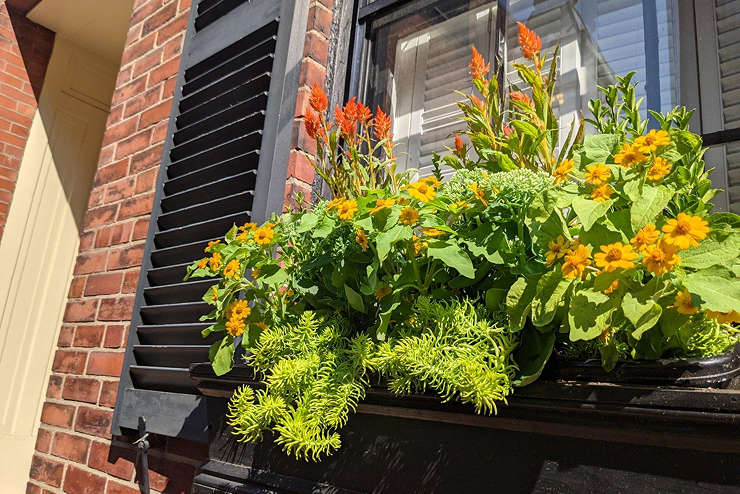
Light is uneven across most of these lots. A south-facing terrace bed near the driveway might run full sun all afternoon, while a bed twenty feet away under the canopy edge gets two hours of dappled light and nothing more. We plant each bed to its actual exposure, which on a single Wellesley property can mean four or five different palettes in play at once — sun-loving perennials and annuals on the open lawn edges, shade-tolerant hosta, astilbe, and heuchera combinations under the trees, and transitional plantings where the two zones meet.
Soil on older Wellesley estates has usually been amended and re-amended over decades, but not always evenly — a bed that got heavy compost twenty years ago behaves differently than one that hasn’t been touched since. We test and adjust bed by bed rather than treating the property as one soil type. And because so many of these homes fall under some form of neighborhood association or historic design review, we plan visible plantings — anything facing the street or a shared drive — with an eye toward what a review board expects to see: restrained color, traditional form, nothing that reads as a departure from the streetscape.
What we account for here
What we account for here
Deer pressure on unfenced properties
Wellesley’s wooded lots and greenbelt corridors keep deer populations high, and most estate properties are only partially fenced, if at all. We build flower and shrub selections around genuinely deer-resistant species — boxwood, salvia, catmint, and other plants deer generally avoid — rather than installing a beautiful bed in April and losing it to browsing by June. Where a client wants a plant deer do eat, we place it inside a fenced courtyard or use targeted repellent applications rather than avoiding the plant altogether.
Mature canopy and root competition
Old-growth oak, beech, and maple canopy defines much of Wellesley’s landscape character, and it comes with heavy surface root systems that compete hard for water and nutrients. We install shade-tolerant plant communities in raised or amended pockets around these root zones instead of tilling in ways that damage the tree, and we irrigate those beds separately from the sun beds since the water demand is entirely different.
The Wellesley College microclimate
Properties near the Wellesley College campus and Lake Waban sit in a slightly cooler, more humid microclimate than the rest of town — morning fog holds longer, and frost pockets form in low spots near the water. We adjust planting dates and cold-hardiness margins for these properties rather than using a townwide average, which matters most for tender annuals and any spring planting scheduled close to the last frost date.
Formal garden traditions and design review
Many Wellesley estates carry formal garden bones — clipped hedges, symmetrical beds, a defined color story — that predates the current owner, and some fall under association or historic design guidelines for street-facing work. We work within those established lines rather than reinventing the garden, and where a design review process applies, we plan visible installations to match its expectations for scale, color, and plant selection.
Recent Wellesley work
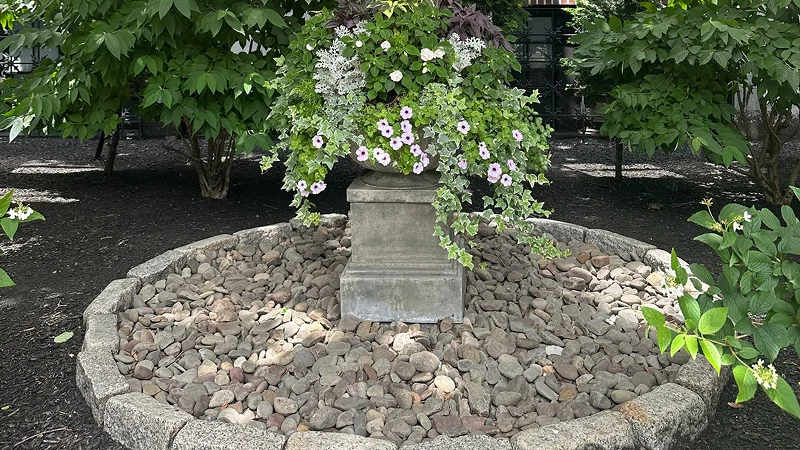
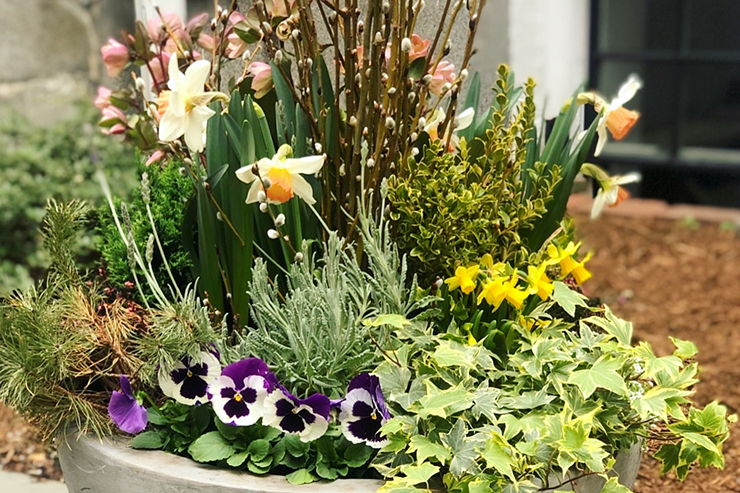
Recent work in Wellesley has included restoring a long perennial border that had gone patchy after years of deer browsing, replacing the vulnerable species with resistant alternatives while keeping the original bloom sequence intact. We’ve also installed shade-garden pockets around mature canopy on estate lots where turf had thinned to bare dirt, and refreshed formal terrace containers each season to match a property’s existing boxwood and hedge structure. As a matter of client privacy we don’t publish addresses or names, but the pattern across Wellesley is consistent: work with the existing formal tradition, solve for deer and shade honestly, and keep street-facing beds review-ready.
Other services we provide in Wellesley
Flower and plant installation is usually the visible first step on a Wellesley property, but most estates need more than a seasonal planting to stay in shape. Our garden services in Wellesley cover the fine gardening and maintenance work that keeps formal beds, hedges, and lawns looking intentional through the growing season, plus design and installation for entirely new garden areas. Many Wellesley homes also have terraces, pool decks, or side courtyards suited to containers and window boxes for a portable pop of seasonal color where in-ground planting isn’t practical or isn’t allowed under a design review. Drip irrigation is close to standard on these properties given how uneven the sun-and-shade exposure runs across a single lot, and low-voltage landscape lighting is a natural next step for illuminating specimen trees, stone walls, and formal beds once the planting is in.
Start with a consultation
Rouvalis Gardens is based at 5 Crescent St in Wellesley, about 14.6 miles from Wellesley, and we schedule Wellesley visits by appointment rather than working from a fixed weekly route. Call to set up a walkthrough of the property — we’ll assess existing bed structure, deer pressure, canopy shade, and any design review requirements on-site, then follow up with a planting plan and a straightforward proposal. There’s no obligation to move forward after the consultation, and no pressure to decide on the spot.
Planning your Wellesley installation
Every Wellesley property comes with its own mix of sun exposure, soil, and sightlines from the street, so we start by walking the space and noting what will actually support healthy growth season over season. From foundation beds along a colonial-style front lawn to shaded planting strips near mature trees, the plan is built around conditions we can see, not a generic layout.
Rounding out your Wellesley landscape
Flower and plant installation tends to work best as part of a broader landscape plan for Wellesley homes on Colonial-era lots and newer estate properties alike. Beyond seasonal beds and containers, we support the surrounding landscape with services that keep everything looking cohesive from the street to the backyard.
Depending on your property, that might include:
- Garden bed design and renovation for front entries and backyards
- Ongoing fine gardening and seasonal maintenance
- Mulching, edging, and bed cleanup in spring and fall
- Irrigation adjustments to support new plantings
- Tree and shrub pruning to keep beds properly framed
- Landscape lighting for evening curb appeal
If you’re weighing several of these together, a short on-site consultation is the easiest way to sort out what your Wellesley property actually needs.
Ready when you are, Wellesley
Every Wellesley property has its own rhythm of sun, soil, and street presence, so we start by looking at the actual site rather than a template plan. A quick conversation about your beds, containers, or entry plantings gives us enough to sketch options and timing.
- Walk the planting areas together
- Talk through seasonal color and plant choices
- Leave with a clear installation date
What Our Customers Say
Frequently Asked Questions
Can you install flowers that survive Wellesley's deer population without a fence?
On unfenced properties we build the palette around plants deer generally avoid — boxwood, catmint, salvia, and similar species — rather than fighting browsing pressure with repellent alone. If a client wants deer-favored plants like hosta or tulips, we usually recommend placing them in a fenced courtyard or using consistent repellent treatment, since even the best-timed spray isn't foolproof on an open lot.
Do you work around historic or association design review requirements for street-facing beds?
Yes. Many Wellesley properties fall under some form of neighborhood association guideline or historic review for anything visible from the street, and we plan those beds — color, scale, plant selection — to match what a review process typically expects, rather than designing in isolation and hoping it passes.
How do you handle planting under mature trees without damaging the root system?
We avoid deep tilling near surface roots and instead build up shade-tolerant plant pockets in amended soil layered over the root zone. Irrigation for these areas runs separately from open-lawn beds, since water demand under a mature canopy is different from a full-sun border.
Does the Wellesley College area need different planting timing than the rest of town?
Properties near the campus and Lake Waban sit in a slightly cooler, more humid microclimate — fog lingers longer and frost pockets form in low areas near the water. We adjust planting dates and cold-hardiness choices for those addresses rather than using a townwide schedule.
How far is Wellesley from your Wellesley location?
About 14.6 miles. We schedule Wellesley installations and consultations by appointment rather than on a fixed daily route, so call ahead to arrange a site visit.