- Serving Boston and the Greater Boston Area

- Home
- Services
- Garden Design Services
- Landscape Design
- Urban Garden Design
- Rooftop Garden Installation
- Roof Deck Planting
- Container Gardening Services
- Seasonal Container Planting
- Window Boxes
- Fine Gardening
- Garden Maintenance
- Planting Maintenance
- Flower & Plant Installation
- Drip Irrigation Installation
- Landscape Lighting
- Service Areas
Charlestown, MA
- Garden Services in Charlestown, MA
- Garden Design in Charlestown, MA
- Landscape Design in Charlestown, MA
- Urban Garden Design in Charlestown, MA
- Rooftop Garden Installation in Charlestown, MA
- Roof Deck Planting in Charlestown, MA
- Container Gardening in Charlestown, MA
- Seasonal Container Planting in Charlestown, MA
- Flower & Plant Installation in Charlestown, MA
- Window Boxes in Charlestown, MA
- Fine Gardening in Charlestown, MA
- Garden Maintenance in Charlestown, MA
- Planting & Maintenance in Charlestown, MA
- Drip Irrigation Installation in Charlestown, MA
- Landscape Lighting in Charlestown, MA
North End, MA
- Garden Services in north-end, MA
- Garden Design in north-end, MA
- Landscape Design in north-end, MA
- Urban Garden Design in north-end, MA
- Rooftop Garden Installation in north-end, MA
- Roof Deck Planting in north-end, MA
- Container Gardening in north-end, MA
- Seasonal Container Planting in north-end, MA
- Flower & Plant Installation in north-end, MA
- Window Boxes in north-end, MA
- Fine Gardening in north-end, MA
- Garden Maintenance in north-end, MA
- Planting & Maintenance in north-end, MA
- Drip Irrigation Installation in north-end, MA
- Landscape Lighting in north-end, MA
Downtown Boston, MA
- Garden Services in downtown boston, MA
- Garden Design in downtown boston, MA
- Landscape Design in downtown boston, MA
- Urban Garden Design in downtown boston, MA
- Rooftop Garden Installation in downtown boston, MA
- Roof Deck Planting in downtown boston, MA
- Container Gardening in downtown boston, MA
- Seasonal Container Planting in downtown boston, MA
- Flower & Plant Installation in downtown boston, MA
- Window Boxes in downtown boston, MA
- Fine Gardening in downtown boston, MA
- Garden Maintenance in downtown boston, MA
- Planting & Maintenance in downtown boston, MA
- Drip Irrigation Installation in downtown boston, MA
- Landscape Lighting in downtown boston, MA
Beacon Hill, MA
- Garden Services in beacon hill, MA
- Garden Design in beacon hill, MA
- Landscape Design in beacon hill, MA
- Urban Garden Design in beacon hill, MA
- Rooftop Garden Installation in beacon hill, MA
- Roof Deck Planting in beacon hill, MA
- Container Gardening in beacon hill, MA
- Seasonal Container Planting in beacon hill, MA
- Flower & Plant Installation in beacon hill, MA
- Window Boxes in beacon hill, MA
- Fine Gardening in beacon hill, MA
- Garden Maintenance in beacon hill, MA
- Planting & Maintenance in beacon hill, MA
- Drip Irrigation Installation in beacon hill, MA
- Landscape Lighting in beacon hill, MA
Boston, MA
- Garden Services in boston, MA
- Garden Design in boston, MA
- Landscape Design in boston, MA
- Urban Garden Design in boston, MA
- Rooftop Garden Installation in boston, MA
- Roof Deck Planting in boston, MA
- Container Gardening in boston, MA
- Seasonal Container Planting in boston, MA
- Flower & Plant Installation in boston, MA
- Window Boxes in boston, MA
- Fine Gardening in boston, MA
- Garden Maintenance in boston, MA
- Planting & Maintenance in boston, MA
- Drip Irrigation Installation in boston, MA
- Landscape Lighting in boston, MA
seaport, MA
- Garden Services in seaport, MA
- Garden Design in seaport, MA
- Landscape Design in seaport, MA
- Urban Garden Design in seaport, MA
- Rooftop Garden Installation in seaport, MA
- Roof Deck Planting in seaport, MA
- Container Gardening in seaport, MA
- Seasonal Container Planting in seaport, MA
- Flower & Plant Installation in seaport, MA
- Window Boxes in seaport, MA
- Fine Gardening in seaport, MA
- Garden Maintenance in seaport, MA
- Planting & Maintenance in seaport, MA
- Drip Irrigation Installation in seaport, MA
- Landscape Lighting in seaport, MA
back bay, MA
- Garden Services in back bay, MA
- Garden Design in back bay, MA
- Landscape Design in back bay, MA
- Urban Garden Design in back bay, MA
- Rooftop Garden Installation in back bay, MA
- Roof Deck Planting in back bay, MA
- Container Gardening in back bay, MA
- Seasonal Container Planting in back bay, MA
- Flower & Plant Installation in back bay, MA
- Window Boxes in back bay, MA
- Fine Gardening in back bay, MA
- Garden Maintenance in back bay, MA
- Planting & Maintenance in back bay, MA
- Drip Irrigation Installation in back bay, MA
- Landscape Lighting in back bay, MA
cambridge, MA
- Garden Services in cambridge, MA
- Garden Design in cambridge, MA
- Landscape Design in cambridge, MA
- Urban Garden Design in cambridge, MA
- Rooftop Garden Installation in cambridge, MA
- Roof Deck Planting in cambridge, MA
- Container Gardening in cambridge, MA
- Seasonal Container Planting in cambridge, MA
- Flower & Plant Installation in cambridge, MA
- Window Boxes in cambridge, MA
- Fine Gardening in cambridge, MA
- Garden Maintenance in cambridge, MA
- Planting & Maintenance in cambridge, MA
- Drip Irrigation Installation in cambridge, MA
- Landscape Lighting in cambridge, MA
south-end, MA
- Garden Services in south-end, MA
- Garden Design in south-end, MA
- Landscape Design in south-end, MA
- Urban Garden Design in south-end, MA
- Rooftop Garden Installation in south-end, MA
- Roof Deck Planting in south-end, MA
- Container Gardening in south-end, MA
- Seasonal Container Planting in south-end, MA
- Flower & Plant Installation in south-end, MA
- Window Boxes in south-end, MA
- Fine Gardening in south-end, MA
- Garden Maintenance in south-end, MA
- Planting & Maintenance in south-end, MA
- Drip Irrigation Installation in south-end, MA
- Landscape Lighting in south-end, MA
brookline, MA
- Garden Services in brookline, MA
- Garden Design in brookline, MA
- Landscape Design in brookline, MA
- Urban Garden Design in brookline, MA
- Rooftop Garden Installation in brookline, MA
- Roof Deck Planting in brookline, MA
- Container Gardening in brookline, MA
- Seasonal Container Planting in brookline, MA
- Flower & Plant Installation in brookline, MA
- Window Boxes in brookline, MA
- Fine Gardening in brookline, MA
- Garden Maintenance in brookline, MA
- Planting & Maintenance in brookline, MA
- Drip Irrigation Installation in brookline, MA
- Landscape Lighting in brookline, MA
winchester, MA
- Garden Services in winchester, MA
- Garden Design in winchester, MA
- Landscape Design in winchester, MA
- Urban Garden Design in winchester, MA
- Rooftop Garden Installation in winchester, MA
- Roof Deck Planting in winchester, MA
- Container Gardening in winchester, MA
- Seasonal Container Planting in winchester, MA
- Flower & Plant Installation in winchester, MA
- Window Boxes in winchester, MA
- Fine Gardening in winchester, MA
- Garden Maintenance in winchester, MA
- Planting & Maintenance in winchester, MA
- Drip Irrigation Installation in winchester, MA
- Landscape Lighting in winchester, MA
newton, MA
- Garden Services in newton, MA
- Garden Design in newton, MA
- Landscape Design in newton, MA
- Urban Garden Design in newton, MA
- Rooftop Garden Installation in newton, MA
- Roof Deck Planting in newton, MA
- Container Gardening in newton, MA
- Seasonal Container Planting in newton, MA
- Flower & Plant Installation in newton, MA
- Window Boxes in newton, MA
- Fine Gardening in newton, MA
- Garden Maintenance in newton, MA
- Planting & Maintenance in newton, MA
- Drip Irrigation Installation in newton, MA
- Landscape Lighting in newton, MA
lexington, MA
- Garden Services in lexington, MA
- Garden Design in lexington, MA
- Landscape Design in lexington, MA
- Urban Garden Design in lexington, MA
- Rooftop Garden Installation in lexington, MA
- Roof Deck Planting in lexington, MA
- Container Gardening in lexington, MA
- Seasonal Container Planting newton, MA
- Flower & Plant Installation in lexington, MA
- Window Boxes in lexington, MA
- Fine Gardening in lexington, MA
- Garden Maintenance in lexington, MA
- Planting & Maintenance in lexington, MA
- Drip Irrigation Installation in lexington, MA
- Landscape Lighting in lexington, MA
weston, MA
- Garden Services in weston, MA
- Garden Design in weston, MA
- Landscape Design in weston, MA
- Urban Garden Design in weston, MA
- Rooftop Garden Installation in weston, MA
- Roof Deck Planting in weston, MA
- Container Gardening in weston, MA
- Seasonal Container Planting weston, MA
- Flower & Plant Installation in weston, MA
- Window Boxes in weston, MA
- Fine Gardening in weston, MA
- Garden Maintenance in weston, MA
- Planting & Maintenance in weston, MA
- Drip Irrigation Installation in weston, MA
- Landscape Lighting in weston, MA
wellesley, MA
- Garden Services in wellesley, MA
- Garden Design in wellesley, MA
- Landscape Design in wellesley, MA
- Urban Garden Design in wellesley, MA
- Rooftop Garden Installation in wellesley, MA
- Roof Deck Planting in wellesley, MA
- Container Gardening in wellesley, MA
- Seasonal Container Planting wellesley, MA
- Flower & Plant Installation in wellesley, MA
- Window Boxes in wellesley, MA
- Fine Gardening in wellesley, MA
- Garden Maintenance in wellesley, MA
- Planting & Maintenance in wellesley, MA
- Drip Irrigation Installation in wellesley, MA
- Landscape Lighting in wellesley, MA
- Portfolio
- About us
- Blog
- Contact
- Flower Delivery
Drip Irrigation Installation in Seaport, MA
A roof terrace forty stories above the harbor loses moisture at a rate no hand watering schedule can match. Wind off the water pulls water out of containers within hours, not days, and building loads mean soil volumes are shallow by design, leaving almost no reserve to buffer a missed watering. On Seaport terraces, drip irrigation is not a convenience item added at the end of a planting plan — it is the mechanism that keeps that plan alive through a July heat wave or a windy October, and it needs to be sized for the building it sits on, not just the plants in it.

What Drip Irrigation Installation looks like in Seaport
Most of the properties we work on here are new construction — glass-and-steel towers with amenity roof decks, private terrace residences, and podium-level courtyards built over parking or retail. That newness changes the job. There is rarely existing irrigation to retrofit; we are typically the first system a terrace has ever had, which means the layout, zoning, and water source all get decided from scratch, working with what the building’s engineering actually allows.
Structural load is the first constraint on every Seaport project. Building management sets a hard limit on saturated soil weight per square foot, and that number drives container selection, soil depth, and how much water we can afford to hold in the root zone at any one time. Drip lines let us deliver precise, small volumes on a tight schedule rather than saturating containers the way a hose or sprinkler head would, which keeps us inside the load envelope the structural engineer signed off on.
Wind is the second constant. Seaport terraces sit exposed to harbor gusts with little to break them, and that wind dries container soil far faster than the same planting would dry at street level a few blocks inland. We run higher-frequency, shorter-duration drip cycles here than we would in a sheltered Beacon Hill courtyard, and we favor pressure-compensating emitters so flow stays even across a terrace where wind can push a standard emitter off its target. Salt carried on that same wind is the third factor — it settles on foliage and in soil, and it pushes us toward drip over overhead spray, since drip keeps water at the root and off the leaf surface where salt residue does the most damage.
Water access is usually the practical hurdle. Many Seaport roof decks have a single hose bib or a dedicated amenity-deck spigot serving multiple tenant terraces, so we design the zoning and tubing runs around that one source, with backflow prevention and freeze-ready shutoffs built in from day one rather than added after a first winter reveals the gap.
What we account for here
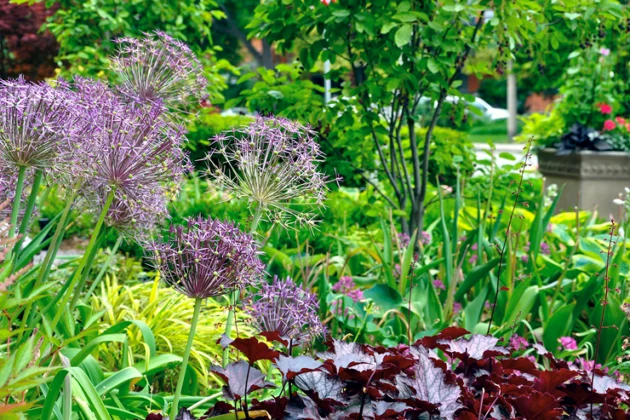
What we account for here
Seaport’s mix of rooftop terraces, podium decks, and streetscape planters means every drip system has to answer to the building it sits on. We look at irrigation zoning against sun exposure on glass-heavy facades, drainage paths on hardscape, and how tubing gets secured without damaging membranes or finishes.
- Zone layout matched to plant type and exposure
- Tubing routes that avoid tripping hazards
- Timer settings suited to the microclimate
Building load limits on planters and soil
Property management companies in Seaport enforce documented weight limits on every rooftop and terrace, and those numbers are non-negotiable. We calculate saturated container weight before we select a single pot, and we set drip schedules that avoid the kind of deep saturation a manual watering routine would otherwise cause, keeping the whole planting scheme inside the load the building was engineered to carry.
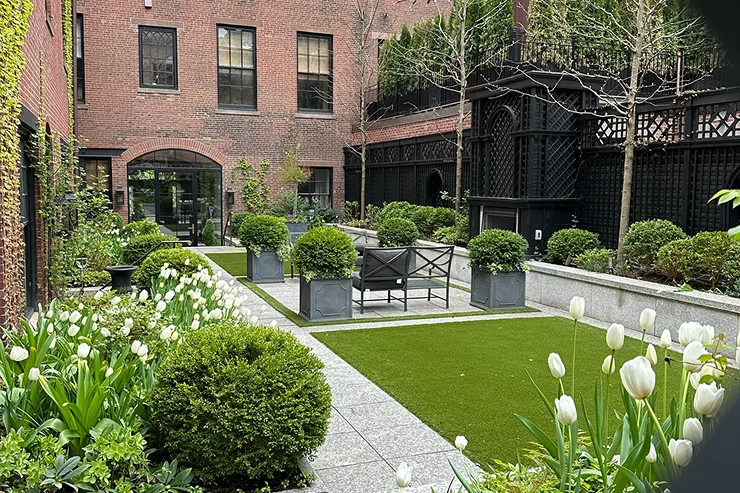
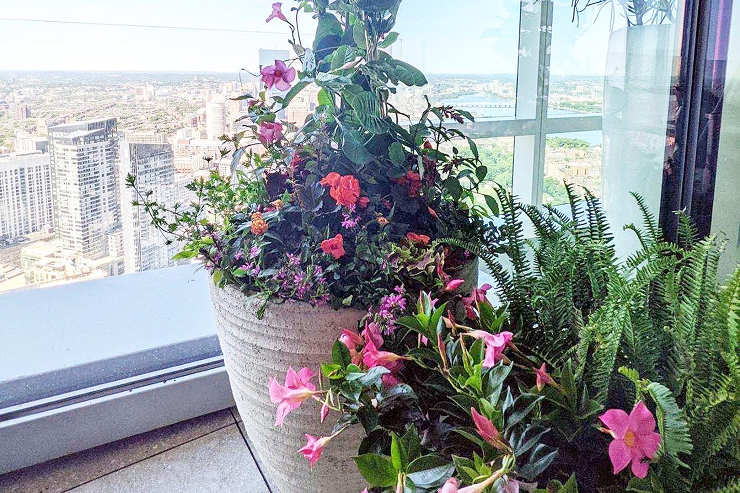
Wind-driven evaporation off the harbor
A terrace facing the harbor channel sees steadier, stronger wind than almost anywhere else we work in Boston. We compensate with shorter, more frequent cycles, pressure-compensating drip emitters that hold flow steady despite gusts, and container groupings positioned to give plants some mutual wind shelter where the layout allows it.
Salt exposure on new-build terraces
Salt-laden air off the Navy Yard and the harbor settles on foliage and in growing medium faster on an open, elevated Seaport deck than at ground level. Drip delivery keeps irrigation water at the root zone instead of on the leaf surface, and we specify soil amendments and plant palettes that tolerate salt exposure rather than fight it season after season.
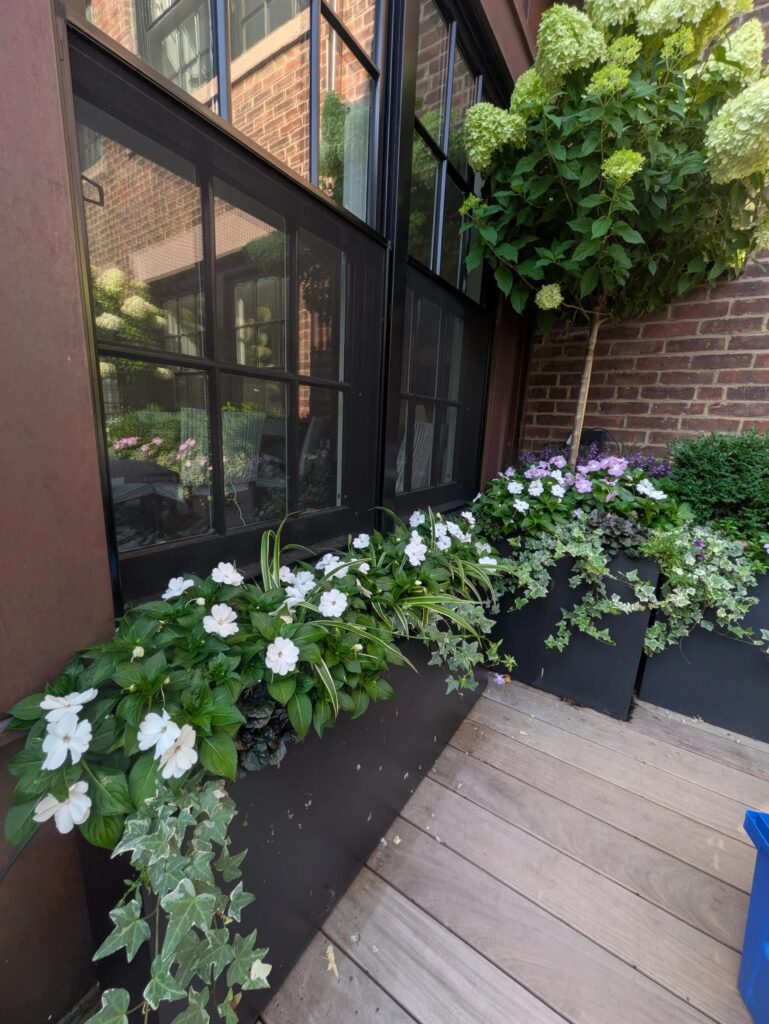
Single-source water access and shared amenity decks
Many Seaport towers route all terrace irrigation through one building-managed water source, shared across several units or a common amenity deck. We design zoning, tubing runs, and shutoff points around that single point of access, and we coordinate installation timing with building management and concierge staff so work happens without disrupting residents or amenity-deck hours.
Recent Seaport work
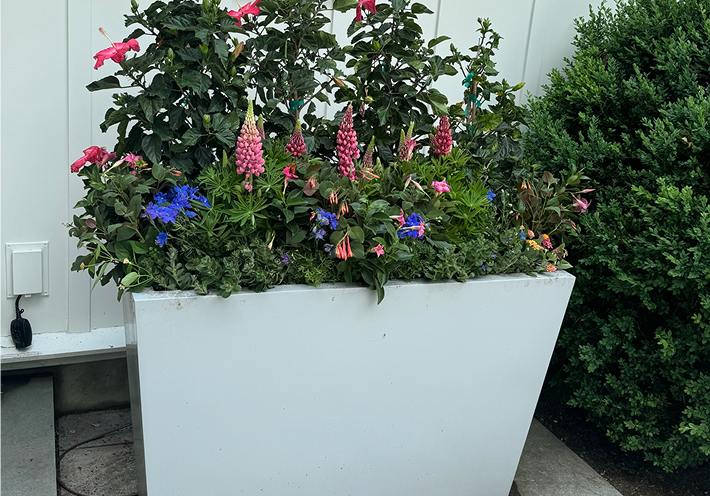
A recent project involved a private terrace residence on a new-construction tower, where we replaced a hand-watering routine that had already stressed several container plantings within one summer. We reworked the layout into zoned drip runs sized to the building’s load limit, added pressure-compensating emitters to counter the wind off the harbor, and set the controller to a cycle schedule built specifically around that exposure. The result was a planting scheme that held through the following season without the daily watering visits the original setup had demanded.
Other services we provide in Seaport
Drip irrigation is one piece of a larger scope of work we handle across Seaport’s residential towers and commercial properties. That includes full garden design and installation for terraces and courtyards, ongoing fine gardening and maintenance visits scheduled around building access hours, containers and window boxes sized for high-wind exposure, and dedicated roof deck and terrace planting built to structural load limits from the start. We also install low-voltage landscape lighting on the same terraces, wired to work alongside irrigation rather than around it. For the full scope of what we do in the neighborhood, see our garden services in Seaport, and if your property sits closer to Back Bay, our drip irrigation installation in Boston and drip irrigation installation in Back Bay pages cover those conditions specifically.
Start with a consultation in Seaport
Seaport sits roughly 2.4 miles from our Seaport location at 5 Crescent St, and we visit terraces and roof decks throughout the neighborhood on a regular basis. Call us to schedule a site visit — we will review your building’s load documentation, water access point, and existing plantings before recommending a system. After that call, expect a straightforward walk-through, a written plan sized to your terrace and budget, and an installation scheduled around your building’s access rules.
What Our Customers Say
Frequently Asked Questions
Do Seaport buildings require irrigation on roof terraces?
Most Seaport property managers and condo associations require an automated watering system for any terrace or roof deck planting, since hand watering is unreliable given the wind exposure and the liability of a missed cycle on a high-value planting scheme. We coordinate directly with building management to confirm requirements before installation.
How does wind off the harbor affect drip irrigation scheduling?
Wind pulls moisture out of container soil far faster than it does at street level, so we run shorter, more frequent cycles on Seaport terraces than we would on a sheltered site, and we use pressure-compensating emitters so flow stays consistent even in gusty conditions.
Can drip irrigation work within our building's weight limit?
Yes. Drip systems deliver small, controlled volumes rather than saturating soil the way a hose does, which is exactly why they are the preferred method on load-restricted rooftops. We calculate saturated soil weight against your building's documented limit before finalizing container sizes and system design.
What happens to irrigation lines over a Seaport winter?
We install freeze-ready shutoffs and drain the system before the first hard freeze, since exposed rooftop tubing is vulnerable to cracking in cold, wind-exposed conditions. We handle the seasonal shutdown and spring startup as part of ongoing maintenance.
How far is Seaport from your Seaport location?
About 2.4 miles. We service Seaport terraces and roof decks regularly and can typically schedule a consultation within a short window of your call.