- Serving Boston and the Greater Boston Area

- Home
- Services
- Garden Design Services
- Landscape Design
- Urban Garden Design
- Rooftop Garden Installation
- Roof Deck Planting
- Container Gardening Services
- Seasonal Container Planting
- Window Boxes
- Fine Gardening
- Garden Maintenance
- Planting Maintenance
- Flower & Plant Installation
- Drip Irrigation Installation
- Landscape Lighting
- Service Areas
Charlestown, MA
- Garden Services in Charlestown, MA
- Garden Design in Charlestown, MA
- Landscape Design in Charlestown, MA
- Urban Garden Design in Charlestown, MA
- Rooftop Garden Installation in Charlestown, MA
- Roof Deck Planting in Charlestown, MA
- Container Gardening in Charlestown, MA
- Seasonal Container Planting in Charlestown, MA
- Flower & Plant Installation in Charlestown, MA
- Window Boxes in Charlestown, MA
- Fine Gardening in Charlestown, MA
- Garden Maintenance in Charlestown, MA
- Planting & Maintenance in Charlestown, MA
- Drip Irrigation Installation in Charlestown, MA
- Landscape Lighting in Charlestown, MA
North End, MA
- Garden Services in north-end, MA
- Garden Design in north-end, MA
- Landscape Design in north-end, MA
- Urban Garden Design in north-end, MA
- Rooftop Garden Installation in north-end, MA
- Roof Deck Planting in north-end, MA
- Container Gardening in north-end, MA
- Seasonal Container Planting in north-end, MA
- Flower & Plant Installation in north-end, MA
- Window Boxes in north-end, MA
- Fine Gardening in north-end, MA
- Garden Maintenance in north-end, MA
- Planting & Maintenance in north-end, MA
- Drip Irrigation Installation in north-end, MA
- Landscape Lighting in north-end, MA
Downtown Boston, MA
- Garden Services in downtown boston, MA
- Garden Design in downtown boston, MA
- Landscape Design in downtown boston, MA
- Urban Garden Design in downtown boston, MA
- Rooftop Garden Installation in downtown boston, MA
- Roof Deck Planting in downtown boston, MA
- Container Gardening in downtown boston, MA
- Seasonal Container Planting in downtown boston, MA
- Flower & Plant Installation in downtown boston, MA
- Window Boxes in downtown boston, MA
- Fine Gardening in downtown boston, MA
- Garden Maintenance in downtown boston, MA
- Planting & Maintenance in downtown boston, MA
- Drip Irrigation Installation in downtown boston, MA
- Landscape Lighting in downtown boston, MA
Beacon Hill, MA
- Garden Services in beacon hill, MA
- Garden Design in beacon hill, MA
- Landscape Design in beacon hill, MA
- Urban Garden Design in beacon hill, MA
- Rooftop Garden Installation in beacon hill, MA
- Roof Deck Planting in beacon hill, MA
- Container Gardening in beacon hill, MA
- Seasonal Container Planting in beacon hill, MA
- Flower & Plant Installation in beacon hill, MA
- Window Boxes in beacon hill, MA
- Fine Gardening in beacon hill, MA
- Garden Maintenance in beacon hill, MA
- Planting & Maintenance in beacon hill, MA
- Drip Irrigation Installation in beacon hill, MA
- Landscape Lighting in beacon hill, MA
Boston, MA
- Garden Services in boston, MA
- Garden Design in boston, MA
- Landscape Design in boston, MA
- Urban Garden Design in boston, MA
- Rooftop Garden Installation in boston, MA
- Roof Deck Planting in boston, MA
- Container Gardening in boston, MA
- Seasonal Container Planting in boston, MA
- Flower & Plant Installation in boston, MA
- Window Boxes in boston, MA
- Fine Gardening in boston, MA
- Garden Maintenance in boston, MA
- Planting & Maintenance in boston, MA
- Drip Irrigation Installation in boston, MA
- Landscape Lighting in boston, MA
seaport, MA
- Garden Services in seaport, MA
- Garden Design in seaport, MA
- Landscape Design in seaport, MA
- Urban Garden Design in seaport, MA
- Rooftop Garden Installation in seaport, MA
- Roof Deck Planting in seaport, MA
- Container Gardening in seaport, MA
- Seasonal Container Planting in seaport, MA
- Flower & Plant Installation in seaport, MA
- Window Boxes in seaport, MA
- Fine Gardening in seaport, MA
- Garden Maintenance in seaport, MA
- Planting & Maintenance in seaport, MA
- Drip Irrigation Installation in seaport, MA
- Landscape Lighting in seaport, MA
back bay, MA
- Garden Services in back bay, MA
- Garden Design in back bay, MA
- Landscape Design in back bay, MA
- Urban Garden Design in back bay, MA
- Rooftop Garden Installation in back bay, MA
- Roof Deck Planting in back bay, MA
- Container Gardening in back bay, MA
- Seasonal Container Planting in back bay, MA
- Flower & Plant Installation in back bay, MA
- Window Boxes in back bay, MA
- Fine Gardening in back bay, MA
- Garden Maintenance in back bay, MA
- Planting & Maintenance in back bay, MA
- Drip Irrigation Installation in back bay, MA
- Landscape Lighting in back bay, MA
cambridge, MA
- Garden Services in cambridge, MA
- Garden Design in cambridge, MA
- Landscape Design in cambridge, MA
- Urban Garden Design in cambridge, MA
- Rooftop Garden Installation in cambridge, MA
- Roof Deck Planting in cambridge, MA
- Container Gardening in cambridge, MA
- Seasonal Container Planting in cambridge, MA
- Flower & Plant Installation in cambridge, MA
- Window Boxes in cambridge, MA
- Fine Gardening in cambridge, MA
- Garden Maintenance in cambridge, MA
- Planting & Maintenance in cambridge, MA
- Drip Irrigation Installation in cambridge, MA
- Landscape Lighting in cambridge, MA
south-end, MA
- Garden Services in south-end, MA
- Garden Design in south-end, MA
- Landscape Design in south-end, MA
- Urban Garden Design in south-end, MA
- Rooftop Garden Installation in south-end, MA
- Roof Deck Planting in south-end, MA
- Container Gardening in south-end, MA
- Seasonal Container Planting in south-end, MA
- Flower & Plant Installation in south-end, MA
- Window Boxes in south-end, MA
- Fine Gardening in south-end, MA
- Garden Maintenance in south-end, MA
- Planting & Maintenance in south-end, MA
- Drip Irrigation Installation in south-end, MA
- Landscape Lighting in south-end, MA
brookline, MA
- Garden Services in brookline, MA
- Garden Design in brookline, MA
- Landscape Design in brookline, MA
- Urban Garden Design in brookline, MA
- Rooftop Garden Installation in brookline, MA
- Roof Deck Planting in brookline, MA
- Container Gardening in brookline, MA
- Seasonal Container Planting in brookline, MA
- Flower & Plant Installation in brookline, MA
- Window Boxes in brookline, MA
- Fine Gardening in brookline, MA
- Garden Maintenance in brookline, MA
- Planting & Maintenance in brookline, MA
- Drip Irrigation Installation in brookline, MA
- Landscape Lighting in brookline, MA
winchester, MA
- Garden Services in winchester, MA
- Garden Design in winchester, MA
- Landscape Design in winchester, MA
- Urban Garden Design in winchester, MA
- Rooftop Garden Installation in winchester, MA
- Roof Deck Planting in winchester, MA
- Container Gardening in winchester, MA
- Seasonal Container Planting in winchester, MA
- Flower & Plant Installation in winchester, MA
- Window Boxes in winchester, MA
- Fine Gardening in winchester, MA
- Garden Maintenance in winchester, MA
- Planting & Maintenance in winchester, MA
- Drip Irrigation Installation in winchester, MA
- Landscape Lighting in winchester, MA
newton, MA
- Garden Services in newton, MA
- Garden Design in newton, MA
- Landscape Design in newton, MA
- Urban Garden Design in newton, MA
- Rooftop Garden Installation in newton, MA
- Roof Deck Planting in newton, MA
- Container Gardening in newton, MA
- Seasonal Container Planting in newton, MA
- Flower & Plant Installation in newton, MA
- Window Boxes in newton, MA
- Fine Gardening in newton, MA
- Garden Maintenance in newton, MA
- Planting & Maintenance in newton, MA
- Drip Irrigation Installation in newton, MA
- Landscape Lighting in newton, MA
lexington, MA
- Garden Services in lexington, MA
- Garden Design in lexington, MA
- Landscape Design in lexington, MA
- Urban Garden Design in lexington, MA
- Rooftop Garden Installation in lexington, MA
- Roof Deck Planting in lexington, MA
- Container Gardening in lexington, MA
- Seasonal Container Planting newton, MA
- Flower & Plant Installation in lexington, MA
- Window Boxes in lexington, MA
- Fine Gardening in lexington, MA
- Garden Maintenance in lexington, MA
- Planting & Maintenance in lexington, MA
- Drip Irrigation Installation in lexington, MA
- Landscape Lighting in lexington, MA
weston, MA
- Garden Services in weston, MA
- Garden Design in weston, MA
- Landscape Design in weston, MA
- Urban Garden Design in weston, MA
- Rooftop Garden Installation in weston, MA
- Roof Deck Planting in weston, MA
- Container Gardening in weston, MA
- Seasonal Container Planting weston, MA
- Flower & Plant Installation in weston, MA
- Window Boxes in weston, MA
- Fine Gardening in weston, MA
- Garden Maintenance in weston, MA
- Planting & Maintenance in weston, MA
- Drip Irrigation Installation in weston, MA
- Landscape Lighting in weston, MA
wellesley, MA
- Garden Services in wellesley, MA
- Garden Design in wellesley, MA
- Landscape Design in wellesley, MA
- Urban Garden Design in wellesley, MA
- Rooftop Garden Installation in wellesley, MA
- Roof Deck Planting in wellesley, MA
- Container Gardening in wellesley, MA
- Seasonal Container Planting wellesley, MA
- Flower & Plant Installation in wellesley, MA
- Window Boxes in wellesley, MA
- Fine Gardening in wellesley, MA
- Garden Maintenance in wellesley, MA
- Planting & Maintenance in wellesley, MA
- Drip Irrigation Installation in wellesley, MA
- Landscape Lighting in wellesley, MA
- Portfolio
- About us
- Blog
- Contact
- Flower Delivery
Flower & Plant Installation in Lexington, MA
A planting plan for a Lexington property has to answer three questions before a single plant goes in the ground: will the Historic Districts Commission have an opinion about anything visible from Massachusetts Avenue or Battle Green, will the exposed, open-sun front yard common to Colonial-era lots cook a spring installation by July, and will deer clear the bed by August. These aren’t hypotheticals in Lexington — they’re the starting conditions on most of the properties we work on here. Rouvalis Gardens installs flower and plant programs across town with all three built into the plan from the first site visit, not patched in after something fails.

What Flower & Plant Installation looks like in Lexington
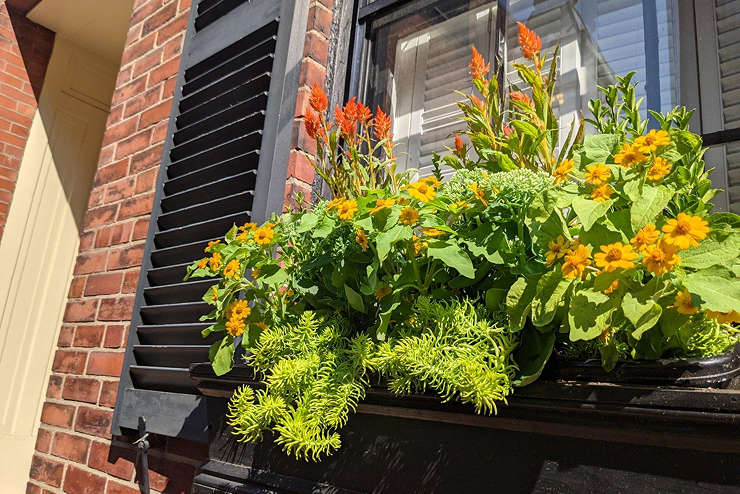
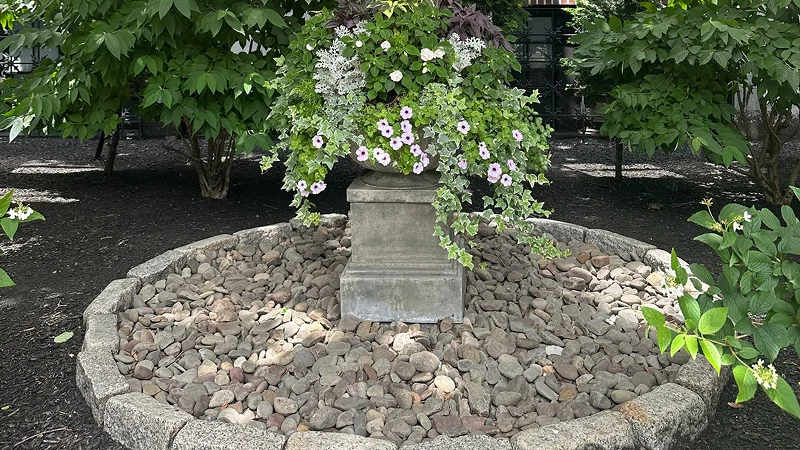
Lexington’s building stock skews old and prominent — many houses date to the 18th and early 19th centuries, sit close to the street, and fall within or adjacent to the town’s historic district overlays. That means the front-facing beds, the ones a passerby or a commission review actually sees, get treated differently than the rear garden. We favor plant palettes and container styles that read as appropriate to the architecture: boxwood, hydrangea, seasonal color in restrained combinations, urns and planters in forms that don’t fight the facade. Where a client wants something bolder, we usually reserve it for the back or side yard, away from street sightlines.
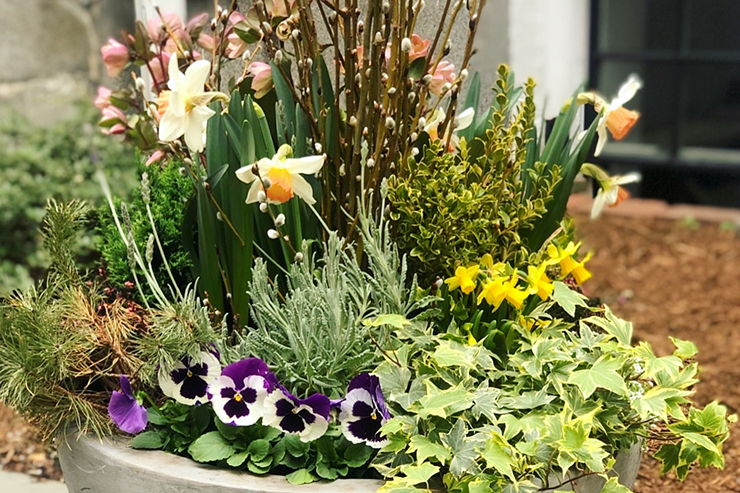
Sun exposure is the second variable that shapes every plan here. Many Lexington lots were cleared generations ago and never fully re-treed, which leaves large front lawns and foundation beds in full, unbroken sun for most of the day. That’s an advantage for certain flowering perennials and for containers that need heat to perform, but it’s punishing on anything installed without adequate root establishment or irrigation. We size drip lines and soaker zones to the actual sun load of the bed, not a generic average, and we adjust planting timing so root systems have a chance to settle before peak heat arrives.
Then there’s deer. Lexington’s mix of larger lots, conservation land, and green corridors running through neighborhoods like Turning Mill and the areas near Willard’s Woods means deer traffic is a daily reality for a large share of our clients, not an occasional nuisance. Every installation plan gets screened against a deer-resistant plant list first, and where a client wants something deer find appealing — hosta, daylily, tulip — we talk through fencing, repellent programs, or accepting it as a seasonal replant rather than pretending the problem away.
What we account for here
What we account for here
Every Lexington property has its own quirks, from town setback rules to established plantings that need to stay protected during installation. We walk the site first, note irrigation access, sun patterns, and existing beds, then plan plant placement around what’s already working rather than starting from scratch unnecessarily.
Historic district review on street-facing installations
Properties within Lexington’s local historic districts, and many just outside them on prominent streets, get extra scrutiny on anything visible from the public way — plantings included, in some cases, alongside structures and hardscape. We keep street-facing beds and containers in a palette and form that reads as period-appropriate, and where a client’s project intersects an actual review requirement, we design with that constraint stated up front rather than discovered after installation.
Full sun exposure on open, historic lots
Front lawns and foundation beds on many Colonial-era Lexington properties sit in open sun with little canopy cover. We spec heat- and drought-tolerant plant selections for these zones, install drip irrigation sized to the actual exposure, and schedule planting early enough in the season for roots to establish before the hottest stretch of summer.
Deer pressure from adjacent conservation land
Yards near Willard’s Woods, the Minuteman corridor, and other green space see regular deer traffic. We build plant lists around deer-resistant selections as the default, and for clients who want species deer typically browse, we scope fencing or a repellent program alongside the installation so the plan survives past the first season.
Soil condition on older, established lots
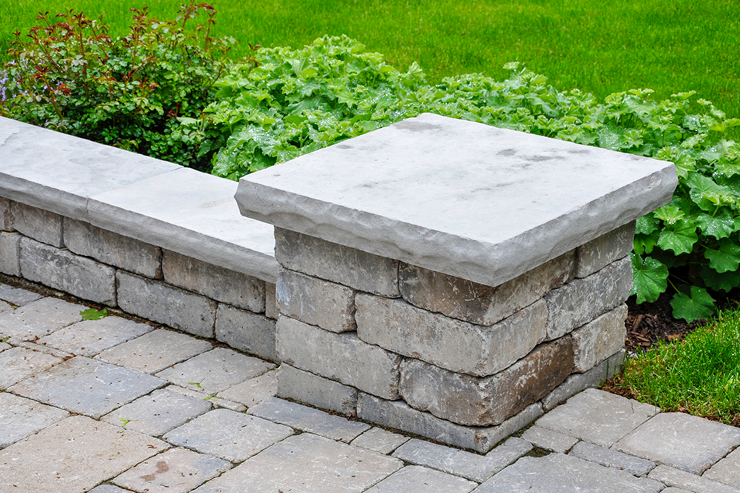
Many Lexington properties have decades of turf and foundation planting history, which often means compacted or depleted soil under the surface. We test and amend bed soil before installation rather than planting directly into it, so new plantings aren’t fighting the ground they’re set in from day one.
Recent Lexington work
Recent projects in Lexington have included a front-yard container and perennial refresh on a historic-district property near the center, planned around commission-visible sightlines, and a full deer-resistant perennial bed installation on a larger lot near the conservation land buffer, paired with a new drip irrigation zone. Both are typical of the work we take on here rather than exceptions to it.
Other services we provide in Lexington
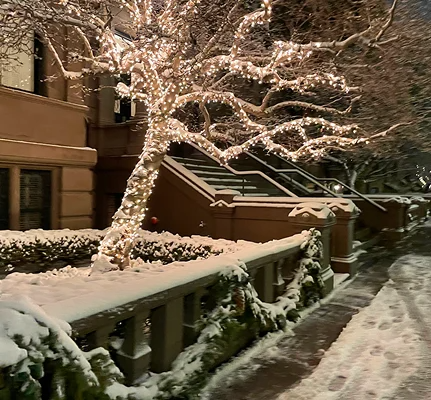
Flower and plant installation is usually one piece of a broader plan for Lexington properties. We also handle full garden design and fine gardening in Lexington, ongoing seasonal maintenance to keep new plantings deer-checked and weeded through the year, container and window box programs for front entries and porches, drip irrigation design sized to the sun exposure common on these lots, and low-voltage landscape lighting to bring evening definition to a front garden without disturbing a historic facade. Roof deck and terrace planting comes up less often in Lexington’s mostly single-family stock, but we install it where the property calls for it.
Start with a consultation
Rouvalis Gardens is based at 5 Crescent St in Lexington, about 10.2 miles from Lexington, and we schedule on-site consultations across town on a regular basis. Call to set up a walkthrough of the property — we’ll look at sun exposure, deer pressure, and any historic review requirements on site, then follow up with a written plan and installation timeline. There’s no obligation attached to the first visit.
What Our Customers Say
Frequently Asked Questions
Does the Lexington Historic Districts Commission review plantings, not just structures?
Review authority in Lexington's local historic districts typically focuses on structures, fences, and features visible from the public way, but plantings that function as screening or that accompany a structural change can come into scope. We design street-facing beds conservatively and flag any project where review may apply before installation begins.
What plants actually hold up against Lexington's deer population?
Boxwood, most ornamental grasses, lavender, catmint, Russian sage, and many ferns are reliably left alone. Hosta, daylily, and tulip are the most commonly browsed and usually need fencing or a repellent program if a client wants them included.
Do you install irrigation as part of a planting project, or only separately?
We size and install drip irrigation as part of most Lexington installations, particularly on full-sun lots, because establishing new plantings without a reliable water source in those conditions is a common cause of first-season failure.
How far in advance should a spring installation be scheduled?
We recommend booking the site visit in late winter for spring installation, which gives us time to plan around any historic review requirement and to get plants in the ground early enough to establish roots before summer heat sets in.
Do you work on properties outside the formal historic district boundaries?
Yes. Many Lexington properties sit outside the mapped historic districts but share the same architectural character and neighborhood expectations, so we apply the same design judgment on palette and form regardless of whether formal review applies.