- Serving Boston and the Greater Boston Area

- Home
- Services
- Garden Design Services
- Landscape Design
- Urban Garden Design
- Rooftop Garden Installation
- Roof Deck Planting
- Container Gardening Services
- Seasonal Container Planting
- Window Boxes
- Fine Gardening
- Garden Maintenance
- Planting Maintenance
- Flower & Plant Installation
- Drip Irrigation Installation
- Landscape Lighting
- Service Areas
Charlestown, MA
- Garden Services in Charlestown, MA
- Garden Design in Charlestown, MA
- Landscape Design in Charlestown, MA
- Urban Garden Design in Charlestown, MA
- Rooftop Garden Installation in Charlestown, MA
- Roof Deck Planting in Charlestown, MA
- Container Gardening in Charlestown, MA
- Seasonal Container Planting in Charlestown, MA
- Flower & Plant Installation in Charlestown, MA
- Window Boxes in Charlestown, MA
- Fine Gardening in Charlestown, MA
- Garden Maintenance in Charlestown, MA
- Planting & Maintenance in Charlestown, MA
- Drip Irrigation Installation in Charlestown, MA
- Landscape Lighting in Charlestown, MA
North End, MA
- Garden Services in north-end, MA
- Garden Design in north-end, MA
- Landscape Design in north-end, MA
- Urban Garden Design in north-end, MA
- Rooftop Garden Installation in north-end, MA
- Roof Deck Planting in north-end, MA
- Container Gardening in north-end, MA
- Seasonal Container Planting in north-end, MA
- Flower & Plant Installation in north-end, MA
- Window Boxes in north-end, MA
- Fine Gardening in north-end, MA
- Garden Maintenance in north-end, MA
- Planting & Maintenance in north-end, MA
- Drip Irrigation Installation in north-end, MA
- Landscape Lighting in north-end, MA
Downtown Boston, MA
- Garden Services in downtown boston, MA
- Garden Design in downtown boston, MA
- Landscape Design in downtown boston, MA
- Urban Garden Design in downtown boston, MA
- Rooftop Garden Installation in downtown boston, MA
- Roof Deck Planting in downtown boston, MA
- Container Gardening in downtown boston, MA
- Seasonal Container Planting in downtown boston, MA
- Flower & Plant Installation in downtown boston, MA
- Window Boxes in downtown boston, MA
- Fine Gardening in downtown boston, MA
- Garden Maintenance in downtown boston, MA
- Planting & Maintenance in downtown boston, MA
- Drip Irrigation Installation in downtown boston, MA
- Landscape Lighting in downtown boston, MA
Beacon Hill, MA
- Garden Services in beacon hill, MA
- Garden Design in beacon hill, MA
- Landscape Design in beacon hill, MA
- Urban Garden Design in beacon hill, MA
- Rooftop Garden Installation in beacon hill, MA
- Roof Deck Planting in beacon hill, MA
- Container Gardening in beacon hill, MA
- Seasonal Container Planting in beacon hill, MA
- Flower & Plant Installation in beacon hill, MA
- Window Boxes in beacon hill, MA
- Fine Gardening in beacon hill, MA
- Garden Maintenance in beacon hill, MA
- Planting & Maintenance in beacon hill, MA
- Drip Irrigation Installation in beacon hill, MA
- Landscape Lighting in beacon hill, MA
Boston, MA
- Garden Services in boston, MA
- Garden Design in boston, MA
- Landscape Design in boston, MA
- Urban Garden Design in boston, MA
- Rooftop Garden Installation in boston, MA
- Roof Deck Planting in boston, MA
- Container Gardening in boston, MA
- Seasonal Container Planting in boston, MA
- Flower & Plant Installation in boston, MA
- Window Boxes in boston, MA
- Fine Gardening in boston, MA
- Garden Maintenance in boston, MA
- Planting & Maintenance in boston, MA
- Drip Irrigation Installation in boston, MA
- Landscape Lighting in boston, MA
seaport, MA
- Garden Services in seaport, MA
- Garden Design in seaport, MA
- Landscape Design in seaport, MA
- Urban Garden Design in seaport, MA
- Rooftop Garden Installation in seaport, MA
- Roof Deck Planting in seaport, MA
- Container Gardening in seaport, MA
- Seasonal Container Planting in seaport, MA
- Flower & Plant Installation in seaport, MA
- Window Boxes in seaport, MA
- Fine Gardening in seaport, MA
- Garden Maintenance in seaport, MA
- Planting & Maintenance in seaport, MA
- Drip Irrigation Installation in seaport, MA
- Landscape Lighting in seaport, MA
back bay, MA
- Garden Services in back bay, MA
- Garden Design in back bay, MA
- Landscape Design in back bay, MA
- Urban Garden Design in back bay, MA
- Rooftop Garden Installation in back bay, MA
- Roof Deck Planting in back bay, MA
- Container Gardening in back bay, MA
- Seasonal Container Planting in back bay, MA
- Flower & Plant Installation in back bay, MA
- Window Boxes in back bay, MA
- Fine Gardening in back bay, MA
- Garden Maintenance in back bay, MA
- Planting & Maintenance in back bay, MA
- Drip Irrigation Installation in back bay, MA
- Landscape Lighting in back bay, MA
cambridge, MA
- Garden Services in cambridge, MA
- Garden Design in cambridge, MA
- Landscape Design in cambridge, MA
- Urban Garden Design in cambridge, MA
- Rooftop Garden Installation in cambridge, MA
- Roof Deck Planting in cambridge, MA
- Container Gardening in cambridge, MA
- Seasonal Container Planting in cambridge, MA
- Flower & Plant Installation in cambridge, MA
- Window Boxes in cambridge, MA
- Fine Gardening in cambridge, MA
- Garden Maintenance in cambridge, MA
- Planting & Maintenance in cambridge, MA
- Drip Irrigation Installation in cambridge, MA
- Landscape Lighting in cambridge, MA
south-end, MA
- Garden Services in south-end, MA
- Garden Design in south-end, MA
- Landscape Design in south-end, MA
- Urban Garden Design in south-end, MA
- Rooftop Garden Installation in south-end, MA
- Roof Deck Planting in south-end, MA
- Container Gardening in south-end, MA
- Seasonal Container Planting in south-end, MA
- Flower & Plant Installation in south-end, MA
- Window Boxes in south-end, MA
- Fine Gardening in south-end, MA
- Garden Maintenance in south-end, MA
- Planting & Maintenance in south-end, MA
- Drip Irrigation Installation in south-end, MA
- Landscape Lighting in south-end, MA
brookline, MA
- Garden Services in brookline, MA
- Garden Design in brookline, MA
- Landscape Design in brookline, MA
- Urban Garden Design in brookline, MA
- Rooftop Garden Installation in brookline, MA
- Roof Deck Planting in brookline, MA
- Container Gardening in brookline, MA
- Seasonal Container Planting in brookline, MA
- Flower & Plant Installation in brookline, MA
- Window Boxes in brookline, MA
- Fine Gardening in brookline, MA
- Garden Maintenance in brookline, MA
- Planting & Maintenance in brookline, MA
- Drip Irrigation Installation in brookline, MA
- Landscape Lighting in brookline, MA
winchester, MA
- Garden Services in winchester, MA
- Garden Design in winchester, MA
- Landscape Design in winchester, MA
- Urban Garden Design in winchester, MA
- Rooftop Garden Installation in winchester, MA
- Roof Deck Planting in winchester, MA
- Container Gardening in winchester, MA
- Seasonal Container Planting in winchester, MA
- Flower & Plant Installation in winchester, MA
- Window Boxes in winchester, MA
- Fine Gardening in winchester, MA
- Garden Maintenance in winchester, MA
- Planting & Maintenance in winchester, MA
- Drip Irrigation Installation in winchester, MA
- Landscape Lighting in winchester, MA
newton, MA
- Garden Services in newton, MA
- Garden Design in newton, MA
- Landscape Design in newton, MA
- Urban Garden Design in newton, MA
- Rooftop Garden Installation in newton, MA
- Roof Deck Planting in newton, MA
- Container Gardening in newton, MA
- Seasonal Container Planting in newton, MA
- Flower & Plant Installation in newton, MA
- Window Boxes in newton, MA
- Fine Gardening in newton, MA
- Garden Maintenance in newton, MA
- Planting & Maintenance in newton, MA
- Drip Irrigation Installation in newton, MA
- Landscape Lighting in newton, MA
lexington, MA
- Garden Services in lexington, MA
- Garden Design in lexington, MA
- Landscape Design in lexington, MA
- Urban Garden Design in lexington, MA
- Rooftop Garden Installation in lexington, MA
- Roof Deck Planting in lexington, MA
- Container Gardening in lexington, MA
- Seasonal Container Planting newton, MA
- Flower & Plant Installation in lexington, MA
- Window Boxes in lexington, MA
- Fine Gardening in lexington, MA
- Garden Maintenance in lexington, MA
- Planting & Maintenance in lexington, MA
- Drip Irrigation Installation in lexington, MA
- Landscape Lighting in lexington, MA
weston, MA
- Garden Services in weston, MA
- Garden Design in weston, MA
- Landscape Design in weston, MA
- Urban Garden Design in weston, MA
- Rooftop Garden Installation in weston, MA
- Roof Deck Planting in weston, MA
- Container Gardening in weston, MA
- Seasonal Container Planting weston, MA
- Flower & Plant Installation in weston, MA
- Window Boxes in weston, MA
- Fine Gardening in weston, MA
- Garden Maintenance in weston, MA
- Planting & Maintenance in weston, MA
- Drip Irrigation Installation in weston, MA
- Landscape Lighting in weston, MA
wellesley, MA
- Garden Services in wellesley, MA
- Garden Design in wellesley, MA
- Landscape Design in wellesley, MA
- Urban Garden Design in wellesley, MA
- Rooftop Garden Installation in wellesley, MA
- Roof Deck Planting in wellesley, MA
- Container Gardening in wellesley, MA
- Seasonal Container Planting wellesley, MA
- Flower & Plant Installation in wellesley, MA
- Window Boxes in wellesley, MA
- Fine Gardening in wellesley, MA
- Garden Maintenance in wellesley, MA
- Planting & Maintenance in wellesley, MA
- Drip Irrigation Installation in wellesley, MA
- Landscape Lighting in wellesley, MA
- Portfolio
- About us
- Blog
- Contact
- Flower Delivery
Drip Irrigation Installation in Newton, MA
Newton’s older neighborhoods — Newton Centre, Waban, Chestnut Hill, Auburndale — are built around narrow village lots where the original foundation plantings have had fifty or sixty years to mature into deep shade. Overhead spray irrigation on these lots waters the driveway and the neighbor’s fence line as much as the actual bed, and it does nothing for the understory shrubs and hostas that deer have already pruned back once this season. Drip irrigation solves both problems at once: water goes to the root zone of each plant, not the canopy, and the system runs quietly enough that it does not interfere with deer-deterrent plantings or netting installed around vulnerable specimens.

What Drip Irrigation Installation looks like in Newton
Most of the calls we get from Newton start the same way: a bed of hydrangeas, azaleas, or a rhododendron hedge along the foundation that looks tired by August no matter how often someone drags a hose out. The cause is almost always shade competing with root systems from mature street trees — oaks, maples, and beeches that Newton’s tree ordinance protects and that homeowners are, correctly, reluctant to prune aggressively for irrigation access. We design drip layouts that thread between existing root flare zones rather than trenching through them, using shallow hand-dug lines and, where the ordinance requires it, working around protected root zones entirely with surface-run tubing disguised under mulch.
Village lots in Newton also tend to be tight — narrow side yards, close-set garages, stone walls from the original build. We run point-of-connection off an existing hose bib or a dedicated line from the main where access allows, and we size the zones to the actual plant groupings on the property rather than treating the whole bed as one watering unit. A shade-loving hosta collection and a sun-exposed perennial border ten feet away have different water needs, and a single zone waters one of them wrong every time. We also build in deer-safe emitter placement, keeping tubing and drippers low and inconspicuous so they don’t become chew targets or trip hazards near garden paths that see foot traffic from dog walkers and grandchildren alike.
What we account for here
What we account for here
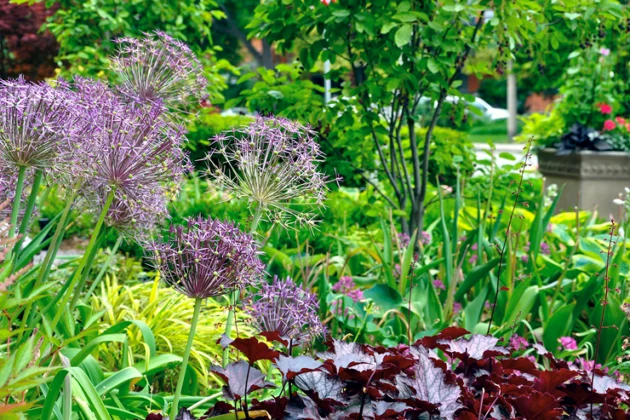
Four constraints come up on nearly every Newton project, and each one changes how the system gets designed and installed.
Newton's tree preservation rules
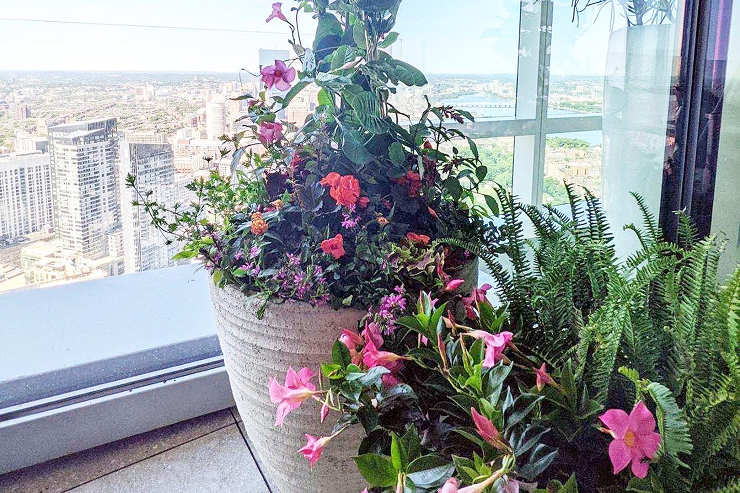
Newton’s tree ordinance governs removal and, in many cases, root disturbance near protected trees over a certain diameter. Before any trenching begins on a property with mature street trees or significant specimens near the install zone, we map root flare and avoid disturbance within the protected radius. Where trenching isn’t an option, we run drip line above grade under mulch instead of below it — slower to install, but it keeps the project compliant and keeps the tree healthy.
Deep shade from established canopy
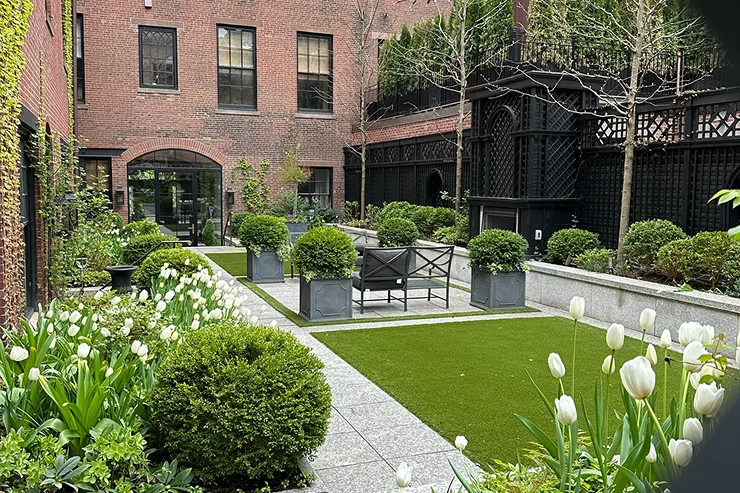
Foundation plantings under sixty-year canopy don’t dry out the way sun beds do, so overwatering is as much a risk as underwatering. We zone shaded beds separately from sun-exposed areas and set run times accordingly, which is one of the main reasons a single-zone hose-end timer never solves the problem long term.
Deer pressure on ornamental beds
Newton’s deer population is heavy enough that many clients are already netting or spraying repellent on hostas, hydrangeas, and arborvitae. We route tubing and stake emitters so they sit low and out of the way of browsing animals, and we avoid surface runs across paths deer use to move through the property, which keeps lines from getting disturbed.
Narrow side-yard access
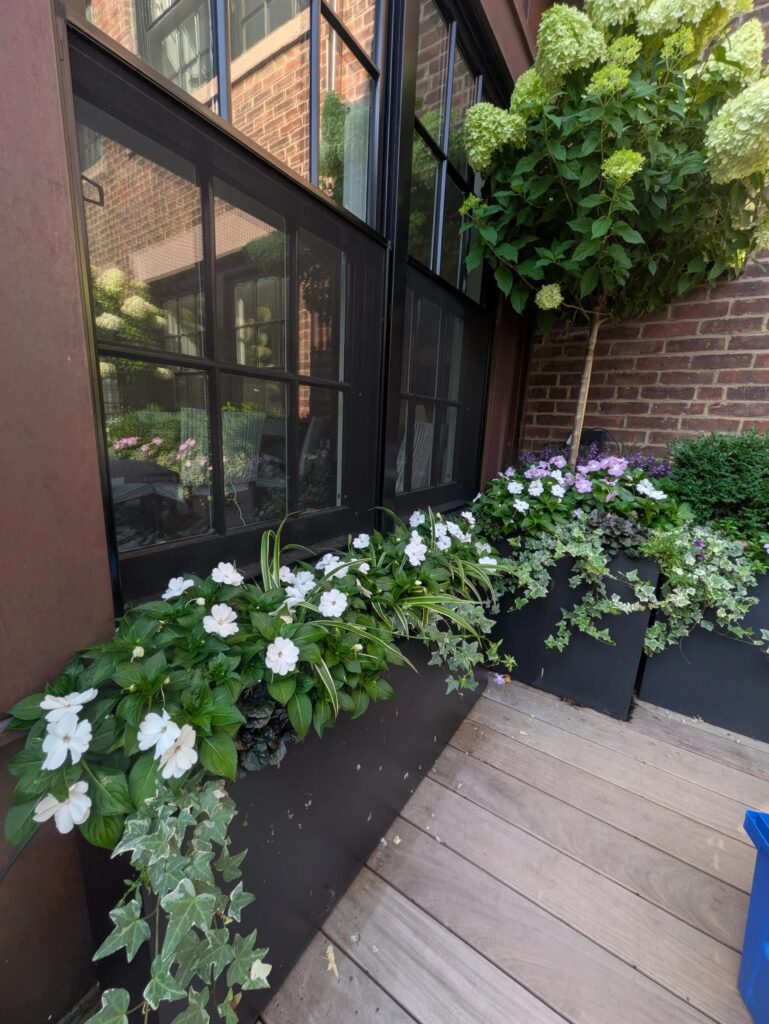
Many Newton lots have six to eight feet of clearance between the house and a fence or neighboring structure. We plan trenching and material staging to fit that footprint before the crew ever arrives, so there’s no scrambling to reroute a line once we’re on site and discover the gate won’t take a wheelbarrow.
Recent Newton work
A recent project in a Waban village lot involved converting an aging spray system to zoned drip across three separate foundation beds — one in deep shade under a mature beech, one mixed-sun perennial border, and one newly planted deer-resistant hedge along the property line. The work required hand-digging around the beech’s root flare per the tree ordinance and staging all material through a narrow side gate, since the driveway didn’t offer a second access point. The result was three independently timed zones instead of one blanket system, cutting water waste in the shaded bed and finally giving the sun border what it actually needed.
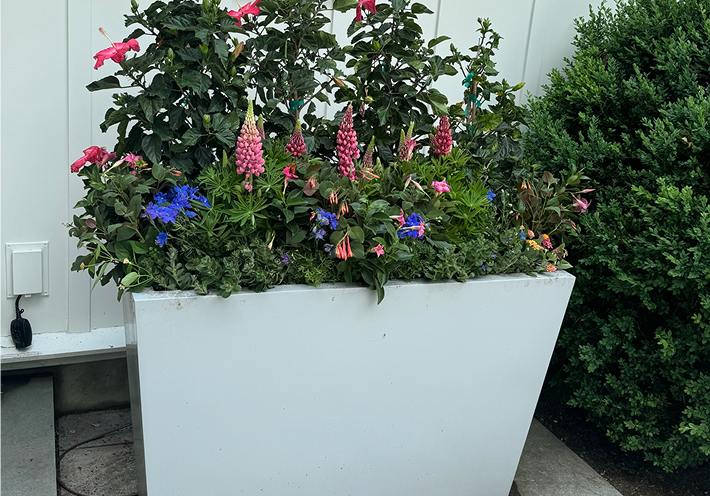
Other services we provide in Newton
Drip irrigation is usually one piece of a larger garden plan for Newton properties, and most of what we install works alongside it. We handle full garden design and installation in Newton for homeowners reworking foundation beds from the ground up, along with ongoing fine gardening and maintenance for properties that want the beds kept to a standard once they’re planted. Many Newton homes also bring us in for containers and window boxes on front entries and porches, roof deck and terrace planting where lot size pushes gardens vertical, and low-voltage landscape lighting to extend evening use of a yard without floodlighting the whole property. If your project centers on downtown Boston instead, our Boston drip irrigation installation page covers rooftop and courtyard conditions specific to that market.
Start with a consultation in Newton
Newton is roughly a twenty-minute drive from our Newton location at 5 Crescent St, and we schedule on-site consultations there regularly. Call to set up a walkthrough of your beds — we’ll look at existing plant groupings, canopy cover, deer activity, and any tree ordinance considerations before proposing a zoned layout. After the call, the next step is a site visit, a written proposal with zone breakdown, and a scheduled install date, typically within a few weeks depending on the season.
What Our Customers Say
Frequently Asked Questions
Does Newton's tree ordinance affect where drip lines can be trenched?
Yes. Trenching within the protected root zone of qualifying trees requires care and, in some cases, avoidance entirely. We map root flare before digging and use above-grade, mulch-covered tubing runs where trenching isn't appropriate, which keeps the project compliant with the town's requirements.
Will drip irrigation attract deer to a bed?
No. Drip tubing and emitters don't create standing water or spray patterns that draw wildlife, and we route lines low and out of browsing paths specifically to avoid disturbance from deer traffic, which is heavy in many Newton neighborhoods.
Can drip irrigation work in deep shade under mature trees?
Yes, and it's often the better option there. Shaded beds need less water and different timing than sun-exposed areas, so we zone them separately rather than running one system across both conditions.
How long does a typical Newton installation take?
Most single-property installs run one to two days depending on the number of zones, access constraints, and whether any sections require hand-digging around protected tree roots.
Do you work on village lots with limited side-yard access?
Regularly. We plan material staging and trenching routes around narrow gates and tight side yards before the crew arrives, which is standard for the lot sizes common in Newton Centre, Waban, and Auburndale.