- Serving Boston and the Greater Boston Area

- Home
- Services
- Garden Design Services
- Landscape Design
- Urban Garden Design
- Rooftop Garden Installation
- Roof Deck Planting
- Container Gardening Services
- Seasonal Container Planting
- Window Boxes
- Fine Gardening
- Garden Maintenance
- Planting Maintenance
- Flower & Plant Installation
- Drip Irrigation Installation
- Landscape Lighting
- Service Areas
Charlestown, MA
- Garden Services in Charlestown, MA
- Garden Design in Charlestown, MA
- Landscape Design in Charlestown, MA
- Urban Garden Design in Charlestown, MA
- Rooftop Garden Installation in Charlestown, MA
- Roof Deck Planting in Charlestown, MA
- Container Gardening in Charlestown, MA
- Seasonal Container Planting in Charlestown, MA
- Flower & Plant Installation in Charlestown, MA
- Window Boxes in Charlestown, MA
- Fine Gardening in Charlestown, MA
- Garden Maintenance in Charlestown, MA
- Planting & Maintenance in Charlestown, MA
- Drip Irrigation Installation in Charlestown, MA
- Landscape Lighting in Charlestown, MA
North End, MA
- Garden Services in north-end, MA
- Garden Design in north-end, MA
- Landscape Design in north-end, MA
- Urban Garden Design in north-end, MA
- Rooftop Garden Installation in north-end, MA
- Roof Deck Planting in north-end, MA
- Container Gardening in north-end, MA
- Seasonal Container Planting in north-end, MA
- Flower & Plant Installation in north-end, MA
- Window Boxes in north-end, MA
- Fine Gardening in north-end, MA
- Garden Maintenance in north-end, MA
- Planting & Maintenance in north-end, MA
- Drip Irrigation Installation in north-end, MA
- Landscape Lighting in north-end, MA
Downtown Boston, MA
- Garden Services in downtown boston, MA
- Garden Design in downtown boston, MA
- Landscape Design in downtown boston, MA
- Urban Garden Design in downtown boston, MA
- Rooftop Garden Installation in downtown boston, MA
- Roof Deck Planting in downtown boston, MA
- Container Gardening in downtown boston, MA
- Seasonal Container Planting in downtown boston, MA
- Flower & Plant Installation in downtown boston, MA
- Window Boxes in downtown boston, MA
- Fine Gardening in downtown boston, MA
- Garden Maintenance in downtown boston, MA
- Planting & Maintenance in downtown boston, MA
- Drip Irrigation Installation in downtown boston, MA
- Landscape Lighting in downtown boston, MA
Beacon Hill, MA
- Garden Services in beacon hill, MA
- Garden Design in beacon hill, MA
- Landscape Design in beacon hill, MA
- Urban Garden Design in beacon hill, MA
- Rooftop Garden Installation in beacon hill, MA
- Roof Deck Planting in beacon hill, MA
- Container Gardening in beacon hill, MA
- Seasonal Container Planting in beacon hill, MA
- Flower & Plant Installation in beacon hill, MA
- Window Boxes in beacon hill, MA
- Fine Gardening in beacon hill, MA
- Garden Maintenance in beacon hill, MA
- Planting & Maintenance in beacon hill, MA
- Drip Irrigation Installation in beacon hill, MA
- Landscape Lighting in beacon hill, MA
Boston, MA
- Garden Services in boston, MA
- Garden Design in boston, MA
- Landscape Design in boston, MA
- Urban Garden Design in boston, MA
- Rooftop Garden Installation in boston, MA
- Roof Deck Planting in boston, MA
- Container Gardening in boston, MA
- Seasonal Container Planting in boston, MA
- Flower & Plant Installation in boston, MA
- Window Boxes in boston, MA
- Fine Gardening in boston, MA
- Garden Maintenance in boston, MA
- Planting & Maintenance in boston, MA
- Drip Irrigation Installation in boston, MA
- Landscape Lighting in boston, MA
seaport, MA
- Garden Services in seaport, MA
- Garden Design in seaport, MA
- Landscape Design in seaport, MA
- Urban Garden Design in seaport, MA
- Rooftop Garden Installation in seaport, MA
- Roof Deck Planting in seaport, MA
- Container Gardening in seaport, MA
- Seasonal Container Planting in seaport, MA
- Flower & Plant Installation in seaport, MA
- Window Boxes in seaport, MA
- Fine Gardening in seaport, MA
- Garden Maintenance in seaport, MA
- Planting & Maintenance in seaport, MA
- Drip Irrigation Installation in seaport, MA
- Landscape Lighting in seaport, MA
back bay, MA
- Garden Services in back bay, MA
- Garden Design in back bay, MA
- Landscape Design in back bay, MA
- Urban Garden Design in back bay, MA
- Rooftop Garden Installation in back bay, MA
- Roof Deck Planting in back bay, MA
- Container Gardening in back bay, MA
- Seasonal Container Planting in back bay, MA
- Flower & Plant Installation in back bay, MA
- Window Boxes in back bay, MA
- Fine Gardening in back bay, MA
- Garden Maintenance in back bay, MA
- Planting & Maintenance in back bay, MA
- Drip Irrigation Installation in back bay, MA
- Landscape Lighting in back bay, MA
cambridge, MA
- Garden Services in cambridge, MA
- Garden Design in cambridge, MA
- Landscape Design in cambridge, MA
- Urban Garden Design in cambridge, MA
- Rooftop Garden Installation in cambridge, MA
- Roof Deck Planting in cambridge, MA
- Container Gardening in cambridge, MA
- Seasonal Container Planting in cambridge, MA
- Flower & Plant Installation in cambridge, MA
- Window Boxes in cambridge, MA
- Fine Gardening in cambridge, MA
- Garden Maintenance in cambridge, MA
- Planting & Maintenance in cambridge, MA
- Drip Irrigation Installation in cambridge, MA
- Landscape Lighting in cambridge, MA
south-end, MA
- Garden Services in south-end, MA
- Garden Design in south-end, MA
- Landscape Design in south-end, MA
- Urban Garden Design in south-end, MA
- Rooftop Garden Installation in south-end, MA
- Roof Deck Planting in south-end, MA
- Container Gardening in south-end, MA
- Seasonal Container Planting in south-end, MA
- Flower & Plant Installation in south-end, MA
- Window Boxes in south-end, MA
- Fine Gardening in south-end, MA
- Garden Maintenance in south-end, MA
- Planting & Maintenance in south-end, MA
- Drip Irrigation Installation in south-end, MA
- Landscape Lighting in south-end, MA
brookline, MA
- Garden Services in brookline, MA
- Garden Design in brookline, MA
- Landscape Design in brookline, MA
- Urban Garden Design in brookline, MA
- Rooftop Garden Installation in brookline, MA
- Roof Deck Planting in brookline, MA
- Container Gardening in brookline, MA
- Seasonal Container Planting in brookline, MA
- Flower & Plant Installation in brookline, MA
- Window Boxes in brookline, MA
- Fine Gardening in brookline, MA
- Garden Maintenance in brookline, MA
- Planting & Maintenance in brookline, MA
- Drip Irrigation Installation in brookline, MA
- Landscape Lighting in brookline, MA
winchester, MA
- Garden Services in winchester, MA
- Garden Design in winchester, MA
- Landscape Design in winchester, MA
- Urban Garden Design in winchester, MA
- Rooftop Garden Installation in winchester, MA
- Roof Deck Planting in winchester, MA
- Container Gardening in winchester, MA
- Seasonal Container Planting in winchester, MA
- Flower & Plant Installation in winchester, MA
- Window Boxes in winchester, MA
- Fine Gardening in winchester, MA
- Garden Maintenance in winchester, MA
- Planting & Maintenance in winchester, MA
- Drip Irrigation Installation in winchester, MA
- Landscape Lighting in winchester, MA
newton, MA
- Garden Services in newton, MA
- Garden Design in newton, MA
- Landscape Design in newton, MA
- Urban Garden Design in newton, MA
- Rooftop Garden Installation in newton, MA
- Roof Deck Planting in newton, MA
- Container Gardening in newton, MA
- Seasonal Container Planting in newton, MA
- Flower & Plant Installation in newton, MA
- Window Boxes in newton, MA
- Fine Gardening in newton, MA
- Garden Maintenance in newton, MA
- Planting & Maintenance in newton, MA
- Drip Irrigation Installation in newton, MA
- Landscape Lighting in newton, MA
lexington, MA
- Garden Services in lexington, MA
- Garden Design in lexington, MA
- Landscape Design in lexington, MA
- Urban Garden Design in lexington, MA
- Rooftop Garden Installation in lexington, MA
- Roof Deck Planting in lexington, MA
- Container Gardening in lexington, MA
- Seasonal Container Planting newton, MA
- Flower & Plant Installation in lexington, MA
- Window Boxes in lexington, MA
- Fine Gardening in lexington, MA
- Garden Maintenance in lexington, MA
- Planting & Maintenance in lexington, MA
- Drip Irrigation Installation in lexington, MA
- Landscape Lighting in lexington, MA
weston, MA
- Garden Services in weston, MA
- Garden Design in weston, MA
- Landscape Design in weston, MA
- Urban Garden Design in weston, MA
- Rooftop Garden Installation in weston, MA
- Roof Deck Planting in weston, MA
- Container Gardening in weston, MA
- Seasonal Container Planting weston, MA
- Flower & Plant Installation in weston, MA
- Window Boxes in weston, MA
- Fine Gardening in weston, MA
- Garden Maintenance in weston, MA
- Planting & Maintenance in weston, MA
- Drip Irrigation Installation in weston, MA
- Landscape Lighting in weston, MA
wellesley, MA
- Garden Services in wellesley, MA
- Garden Design in wellesley, MA
- Landscape Design in wellesley, MA
- Urban Garden Design in wellesley, MA
- Rooftop Garden Installation in wellesley, MA
- Roof Deck Planting in wellesley, MA
- Container Gardening in wellesley, MA
- Seasonal Container Planting wellesley, MA
- Flower & Plant Installation in wellesley, MA
- Window Boxes in wellesley, MA
- Fine Gardening in wellesley, MA
- Garden Maintenance in wellesley, MA
- Planting & Maintenance in wellesley, MA
- Drip Irrigation Installation in wellesley, MA
- Landscape Lighting in wellesley, MA
- Portfolio
- About us
- Blog
- Contact
- Flower Delivery
Garden Design in Boston, MA
A well-designed garden solves a specific set of Boston problems before a single plant goes in the ground: uneven historic-lot soil, limited southern light between brick party walls, high water tables in low-lying neighbourhoods, and design review boards that scrutinize anything visible from the street. Rouvalis Gardens designs and installs private gardens, roof decks, and terraces for homeowners and property managers across Boston’s historic neighbourhoods and the western suburbs. Expect a site visit, a fixed design proposal, and an installation timeline measured in weeks. This service suits owners who want a finished, permanent garden — not a seasonal rotation — and who are prepared to invest accordingly.
Call (617) 720-2266 to arrange a site visit, or read on for what the process involves.

What's included
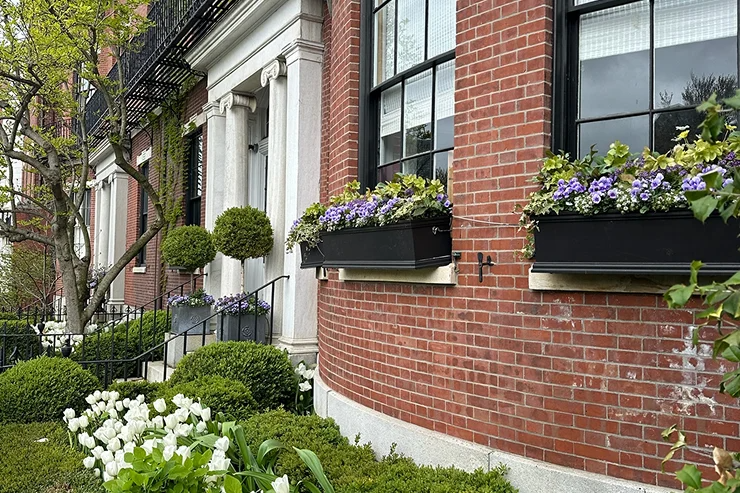
Site assessment and design concept
A principal designer walks the property in person — not a satellite-photo estimate. This covers sun exposure by season, drainage patterns, soil condition, sightlines from inside the house, and any constraints imposed by shared walls, party fences, or access routes. Existing structures — retaining walls, old brick paths, fencing left by a previous owner — are evaluated for what can be kept versus what is quietly failing and will need to come out. The output is a scaled design concept with a plant palette, materials, and a firm cost range, so there are no surprises once installation starts.
Soil preparation and amendment
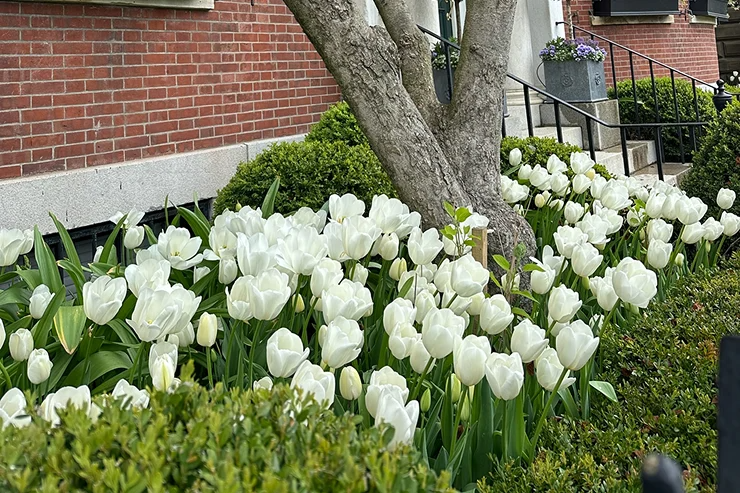
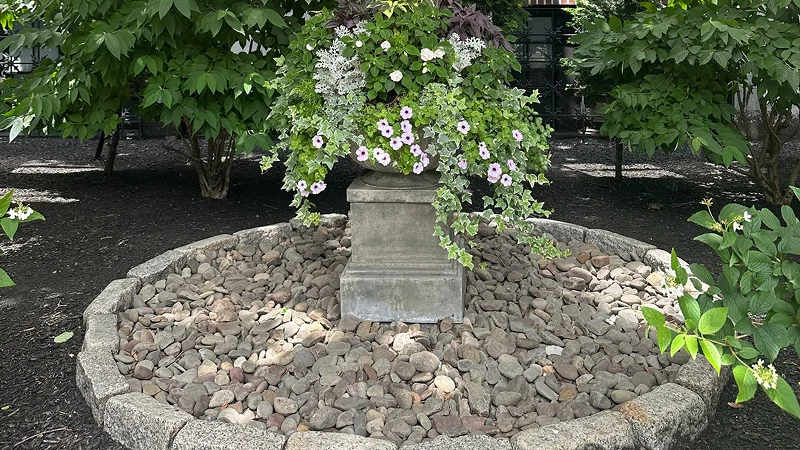
Planting plan and installation
Structural and hardscape coordination
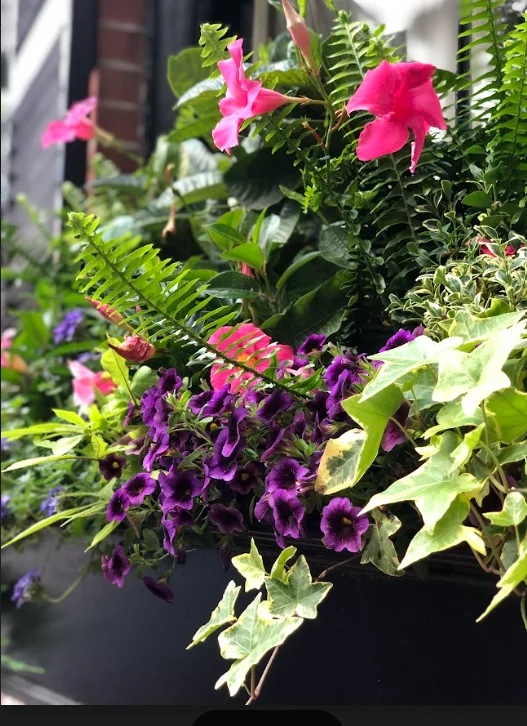
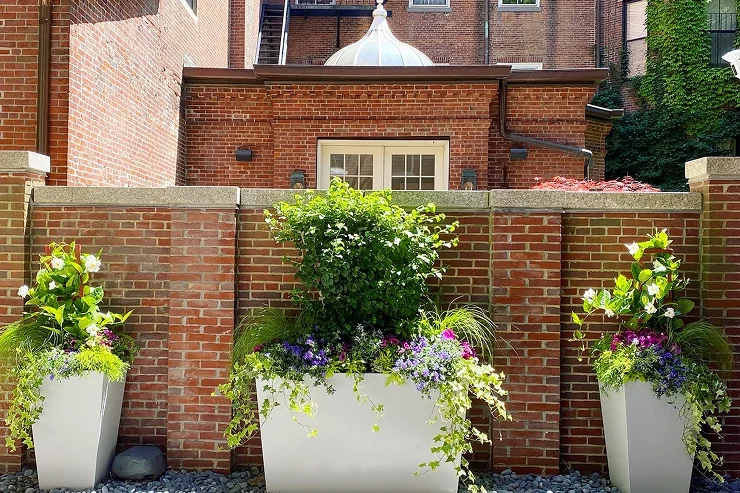
Drip irrigation integration
Low-voltage landscape lighting integration
Where the design calls for it, low-voltage fixtures are placed to highlight structure — a specimen tree, a stone wall, a path — rather than flooding the whole yard. Transformers and wiring are run during installation, not retrofitted afterward, which keeps trenching and disruption to a single pass through the garden. On rear gardens with alley-only access, this sequencing matters more than usual, since a second visit to open up finished beds for wiring is a real cost in both time and disruption to a shared right-of-way.
Not every project needs all six components. A roof deck may skip soil amendment entirely and lean heavily on structural coordination and irrigation; a small entry garden may need none of the structural work. The design concept determines which components apply, and the proposal only prices what the site actually requires.
Why Garden Design matters in Boston specifically
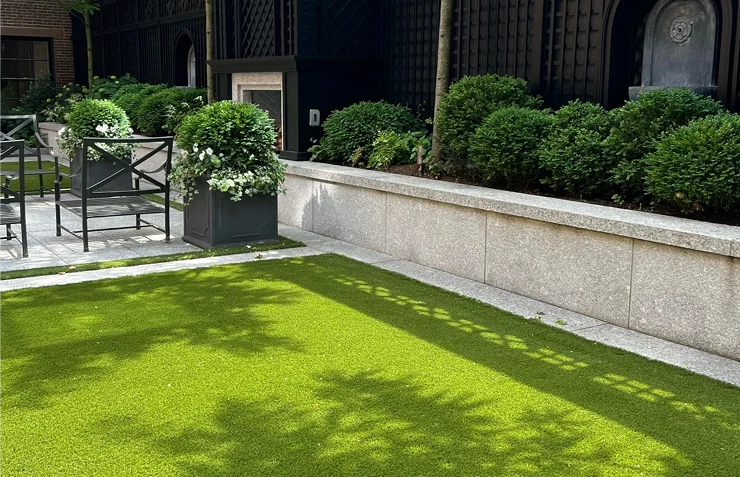
Historic commission review. Properties in Beacon Hill, Back Bay, the South End, and Charlestown frequently fall under historic district commission jurisdiction, which can extend to anything visible from a public way — fencing, gates, paving materials, and in some cases plant material near the street-facing facade. Each commission has its own guidelines and its own review calendar, and a submission that misses a filing deadline can add a month or more to a project regardless of how straightforward the design itself is. A design that looks right on paper but was never checked against the applicable commission’s guidelines can stall a project for months while it goes back for revision. Design proposals for these addresses account for what will pass review before installation is scheduled, not after, and where a submission is required, that filing is built into the project timeline from the outset.
Rear gardens reachable only through alleys. Many townhouse gardens in these neighbourhoods have no vehicle access from the street — the only way in is a narrow rear alley, sometimes shared with several other properties and sometimes gated. This changes what equipment can be used, how soil and materials are brought in (often by hand or wheelbarrow over multiple trips rather than a single delivery truck), and how a project is sequenced to avoid blocking a shared right-of-way for the whole block for days at a time. Estimating a project without accounting for this is a common reason installation timelines from other firms run long.
Root competition from mature street trees. Boston’s older neighbourhoods have a significant canopy of mature street and yard trees, often a century old or more, and their root systems extend well beyond the trunk and the visible canopy, often into the planting beds a new garden is meant to occupy. Digging into an established root zone without a plan can damage the tree and undermine the new planting at the same time. Design and planting decisions account for this competition for water and nutrients, both to protect the existing tree — which in many of these neighbourhoods is itself protected under local ordinance — and to choose new plantings that will actually establish alongside it rather than fail quietly over a season or two.
Our process
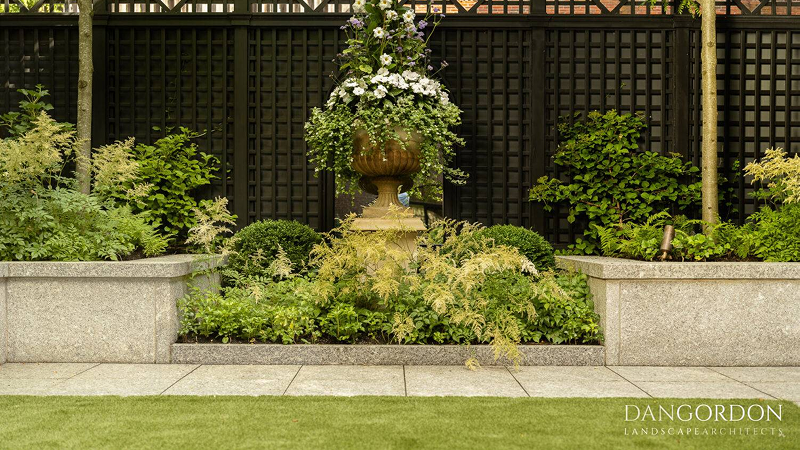
- Site visit and assessment. A designer visits the property, evaluates sun, soil, drainage, and access constraints, and discusses how the space is actually used. Deliverable: a written site assessment.
- Design concept and proposal. A scaled design is developed with a plant palette, materials, and a fixed cost range. Deliverable: a design concept document and firm proposal for review.
- Revisions and historic review coordination. Where a property falls under commission jurisdiction, the design is checked against applicable guidelines and adjusted before installation is scheduled. Deliverable: a final approved design ready for permitting where required.
- Installation. Soil preparation, planting, hardscape coordination, irrigation, and lighting are installed in sequence, with access logistics planned in advance for alley- or lift-access properties. Deliverable: a completed, walked-through garden with a maintenance handoff.
- First-season follow-up. A check-in visit during the first growing season catches any establishment issues early, while they are still simple to correct. Deliverable: a follow-up visit and adjustment notes.
Where we do this work
Rouvalis Gardens designs and installs gardens across Boston’s historic neighbourhoods and the western suburbs, including Beacon Hill, Back Bay, the South End, and Charlestown, where fill-land soil, historic commission review, and alley-only access shape nearly every project. Work also extends into the North End, Jamaica Plain, and West Roxbury, along with Brookline, Cambridge, and Somerville. In the western suburbs, Rouvalis Gardens works with property owners in Newton, Wellesley, Weston, Lincoln, and Dover, where larger lots bring a different set of design considerations — more room to work with, but often more mature tree canopy and more complex grading.
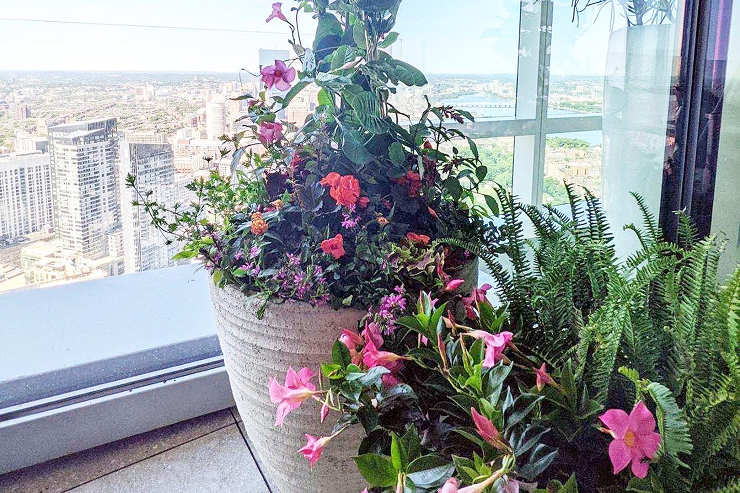
Related services
Garden design is often the starting point for other work Rouvalis Gardens provides. If the property already has a garden but needs the plantings refreshed rather than redesigned from scratch, see Planting & Maintenance. For roof decks and terraces specifically, see Rooftop Garden Installation. For pots, window boxes, and entryway containers, see Seasonal Container Planting and Flower & Plant Installation. For a recurring seasonal planting refresh once a garden is established, see the Seasonal Color Program.