- Serving Boston and the Greater Boston Area

- Home
- Services
- Garden Design Services
- Landscape Design
- Urban Garden Design
- Rooftop Garden Installation
- Roof Deck Planting
- Container Gardening Services
- Seasonal Container Planting
- Window Boxes
- Fine Gardening
- Garden Maintenance
- Planting Maintenance
- Flower & Plant Installation
- Drip Irrigation Installation
- Landscape Lighting
- Service Areas
Charlestown, MA
- Garden Services in Charlestown, MA
- Garden Design in Charlestown, MA
- Landscape Design in Charlestown, MA
- Urban Garden Design in Charlestown, MA
- Rooftop Garden Installation in Charlestown, MA
- Roof Deck Planting in Charlestown, MA
- Container Gardening in Charlestown, MA
- Seasonal Container Planting in Charlestown, MA
- Flower & Plant Installation in Charlestown, MA
- Window Boxes in Charlestown, MA
- Fine Gardening in Charlestown, MA
- Garden Maintenance in Charlestown, MA
- Planting & Maintenance in Charlestown, MA
- Drip Irrigation Installation in Charlestown, MA
- Landscape Lighting in Charlestown, MA
North End, MA
- Garden Services in north-end, MA
- Garden Design in north-end, MA
- Landscape Design in north-end, MA
- Urban Garden Design in north-end, MA
- Rooftop Garden Installation in north-end, MA
- Roof Deck Planting in north-end, MA
- Container Gardening in north-end, MA
- Seasonal Container Planting in north-end, MA
- Flower & Plant Installation in north-end, MA
- Window Boxes in north-end, MA
- Fine Gardening in north-end, MA
- Garden Maintenance in north-end, MA
- Planting & Maintenance in north-end, MA
- Drip Irrigation Installation in north-end, MA
- Landscape Lighting in north-end, MA
Downtown Boston, MA
- Garden Services in downtown boston, MA
- Garden Design in downtown boston, MA
- Landscape Design in downtown boston, MA
- Urban Garden Design in downtown boston, MA
- Rooftop Garden Installation in downtown boston, MA
- Roof Deck Planting in downtown boston, MA
- Container Gardening in downtown boston, MA
- Seasonal Container Planting in downtown boston, MA
- Flower & Plant Installation in downtown boston, MA
- Window Boxes in downtown boston, MA
- Fine Gardening in downtown boston, MA
- Garden Maintenance in downtown boston, MA
- Planting & Maintenance in downtown boston, MA
- Drip Irrigation Installation in downtown boston, MA
- Landscape Lighting in downtown boston, MA
Beacon Hill, MA
- Garden Services in beacon hill, MA
- Garden Design in beacon hill, MA
- Landscape Design in beacon hill, MA
- Urban Garden Design in beacon hill, MA
- Rooftop Garden Installation in beacon hill, MA
- Roof Deck Planting in beacon hill, MA
- Container Gardening in beacon hill, MA
- Seasonal Container Planting in beacon hill, MA
- Flower & Plant Installation in beacon hill, MA
- Window Boxes in beacon hill, MA
- Fine Gardening in beacon hill, MA
- Garden Maintenance in beacon hill, MA
- Planting & Maintenance in beacon hill, MA
- Drip Irrigation Installation in beacon hill, MA
- Landscape Lighting in beacon hill, MA
Boston, MA
- Garden Services in boston, MA
- Garden Design in boston, MA
- Landscape Design in boston, MA
- Urban Garden Design in boston, MA
- Rooftop Garden Installation in boston, MA
- Roof Deck Planting in boston, MA
- Container Gardening in boston, MA
- Seasonal Container Planting in boston, MA
- Flower & Plant Installation in boston, MA
- Window Boxes in boston, MA
- Fine Gardening in boston, MA
- Garden Maintenance in boston, MA
- Planting & Maintenance in boston, MA
- Drip Irrigation Installation in boston, MA
- Landscape Lighting in boston, MA
seaport, MA
- Garden Services in seaport, MA
- Garden Design in seaport, MA
- Landscape Design in seaport, MA
- Urban Garden Design in seaport, MA
- Rooftop Garden Installation in seaport, MA
- Roof Deck Planting in seaport, MA
- Container Gardening in seaport, MA
- Seasonal Container Planting in seaport, MA
- Flower & Plant Installation in seaport, MA
- Window Boxes in seaport, MA
- Fine Gardening in seaport, MA
- Garden Maintenance in seaport, MA
- Planting & Maintenance in seaport, MA
- Drip Irrigation Installation in seaport, MA
- Landscape Lighting in seaport, MA
back bay, MA
- Garden Services in back bay, MA
- Garden Design in back bay, MA
- Landscape Design in back bay, MA
- Urban Garden Design in back bay, MA
- Rooftop Garden Installation in back bay, MA
- Roof Deck Planting in back bay, MA
- Container Gardening in back bay, MA
- Seasonal Container Planting in back bay, MA
- Flower & Plant Installation in back bay, MA
- Window Boxes in back bay, MA
- Fine Gardening in back bay, MA
- Garden Maintenance in back bay, MA
- Planting & Maintenance in back bay, MA
- Drip Irrigation Installation in back bay, MA
- Landscape Lighting in back bay, MA
cambridge, MA
- Garden Services in cambridge, MA
- Garden Design in cambridge, MA
- Landscape Design in cambridge, MA
- Urban Garden Design in cambridge, MA
- Rooftop Garden Installation in cambridge, MA
- Roof Deck Planting in cambridge, MA
- Container Gardening in cambridge, MA
- Seasonal Container Planting in cambridge, MA
- Flower & Plant Installation in cambridge, MA
- Window Boxes in cambridge, MA
- Fine Gardening in cambridge, MA
- Garden Maintenance in cambridge, MA
- Planting & Maintenance in cambridge, MA
- Drip Irrigation Installation in cambridge, MA
- Landscape Lighting in cambridge, MA
south-end, MA
- Garden Services in south-end, MA
- Garden Design in south-end, MA
- Landscape Design in south-end, MA
- Urban Garden Design in south-end, MA
- Rooftop Garden Installation in south-end, MA
- Roof Deck Planting in south-end, MA
- Container Gardening in south-end, MA
- Seasonal Container Planting in south-end, MA
- Flower & Plant Installation in south-end, MA
- Window Boxes in south-end, MA
- Fine Gardening in south-end, MA
- Garden Maintenance in south-end, MA
- Planting & Maintenance in south-end, MA
- Drip Irrigation Installation in south-end, MA
- Landscape Lighting in south-end, MA
brookline, MA
- Garden Services in brookline, MA
- Garden Design in brookline, MA
- Landscape Design in brookline, MA
- Urban Garden Design in brookline, MA
- Rooftop Garden Installation in brookline, MA
- Roof Deck Planting in brookline, MA
- Container Gardening in brookline, MA
- Seasonal Container Planting in brookline, MA
- Flower & Plant Installation in brookline, MA
- Window Boxes in brookline, MA
- Fine Gardening in brookline, MA
- Garden Maintenance in brookline, MA
- Planting & Maintenance in brookline, MA
- Drip Irrigation Installation in brookline, MA
- Landscape Lighting in brookline, MA
winchester, MA
- Garden Services in winchester, MA
- Garden Design in winchester, MA
- Landscape Design in winchester, MA
- Urban Garden Design in winchester, MA
- Rooftop Garden Installation in winchester, MA
- Roof Deck Planting in winchester, MA
- Container Gardening in winchester, MA
- Seasonal Container Planting in winchester, MA
- Flower & Plant Installation in winchester, MA
- Window Boxes in winchester, MA
- Fine Gardening in winchester, MA
- Garden Maintenance in winchester, MA
- Planting & Maintenance in winchester, MA
- Drip Irrigation Installation in winchester, MA
- Landscape Lighting in winchester, MA
newton, MA
- Garden Services in newton, MA
- Garden Design in newton, MA
- Landscape Design in newton, MA
- Urban Garden Design in newton, MA
- Rooftop Garden Installation in newton, MA
- Roof Deck Planting in newton, MA
- Container Gardening in newton, MA
- Seasonal Container Planting in newton, MA
- Flower & Plant Installation in newton, MA
- Window Boxes in newton, MA
- Fine Gardening in newton, MA
- Garden Maintenance in newton, MA
- Planting & Maintenance in newton, MA
- Drip Irrigation Installation in newton, MA
- Landscape Lighting in newton, MA
lexington, MA
- Garden Services in lexington, MA
- Garden Design in lexington, MA
- Landscape Design in lexington, MA
- Urban Garden Design in lexington, MA
- Rooftop Garden Installation in lexington, MA
- Roof Deck Planting in lexington, MA
- Container Gardening in lexington, MA
- Seasonal Container Planting newton, MA
- Flower & Plant Installation in lexington, MA
- Window Boxes in lexington, MA
- Fine Gardening in lexington, MA
- Garden Maintenance in lexington, MA
- Planting & Maintenance in lexington, MA
- Drip Irrigation Installation in lexington, MA
- Landscape Lighting in lexington, MA
weston, MA
- Garden Services in weston, MA
- Garden Design in weston, MA
- Landscape Design in weston, MA
- Urban Garden Design in weston, MA
- Rooftop Garden Installation in weston, MA
- Roof Deck Planting in weston, MA
- Container Gardening in weston, MA
- Seasonal Container Planting weston, MA
- Flower & Plant Installation in weston, MA
- Window Boxes in weston, MA
- Fine Gardening in weston, MA
- Garden Maintenance in weston, MA
- Planting & Maintenance in weston, MA
- Drip Irrigation Installation in weston, MA
- Landscape Lighting in weston, MA
wellesley, MA
- Garden Services in wellesley, MA
- Garden Design in wellesley, MA
- Landscape Design in wellesley, MA
- Urban Garden Design in wellesley, MA
- Rooftop Garden Installation in wellesley, MA
- Roof Deck Planting in wellesley, MA
- Container Gardening in wellesley, MA
- Seasonal Container Planting wellesley, MA
- Flower & Plant Installation in wellesley, MA
- Window Boxes in wellesley, MA
- Fine Gardening in wellesley, MA
- Garden Maintenance in wellesley, MA
- Planting & Maintenance in wellesley, MA
- Drip Irrigation Installation in wellesley, MA
- Landscape Lighting in wellesley, MA
- Portfolio
- About us
- Blog
- Contact
- Flower Delivery
Fine Gardening in North End, MA
There is almost no ground-level soil in the North End, which means fine gardening here happens almost entirely above the street — on roof decks, fire escapes and window boxes bolted to brick facades built before cars existed. Alleys were laid out for foot traffic and handcarts, not soil delivery trucks or a crew hauling a dozen glazed pots up three flights. Add the wind that funnels between narrow streets and off the harbor, and a container that would sit happily in a Back Bay garden can dry out or tip in the North End within a week. Fine gardening in this neighborhood is really a set of engineering decisions dressed up as a planting plan.

What Fine Gardening looks like in North End
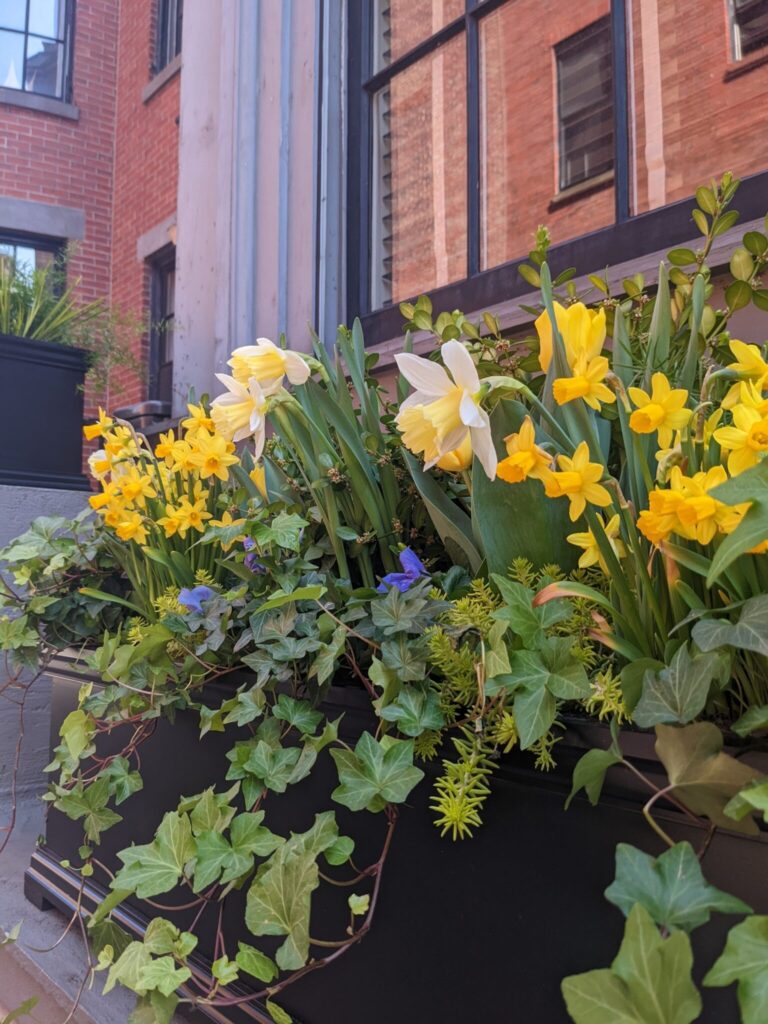
On a street like Hanover or Salem, the garden is whatever surface can hold a pot: a windowsill, a fire-escape landing, a shared roof deck three or four stories up. There is rarely a yard to fall back on, so every plant earns its spot through repeat performance — it has to look finished from April through the first hard frost, because there is no bed of perennials elsewhere on the property picking up the slack.
Light is inconsistent in a way that catches people off guard. A window box on a north-facing tenement wall on Prince Street gets almost no direct sun, while a roof deck two buildings over bakes in full exposure with nothing to break it. We plan plant selection block by block, sometimes wall by wall, rather than applying one planting scheme across a whole property.
Wind is the constant. Funnel effects between the tight streets, plus the open exposure once you’re up on a roof deck near the waterfront, mean lightweight pots move, tall perennials shred, and soil dries faster than the eye tells you. We build root systems and container weight to handle that from the start rather than fighting it season after season.
Then there’s access. Many North End buildings have no elevator, no loading dock, and an alley too narrow for a full-size truck. Getting a yard of soil, a set of cedar planters, or an irrigation kit to a third-floor roof deck takes planning most gardening companies never have to think through. We do — it’s a routine part of quoting a North End job, not an afterthought.
Historic character matters here too. Many facades fall under North End–specific guidelines or sit close enough to a historic overlay that visible street-side plantings need a lighter, more traditional hand — no bright plastic, no oversized modern containers announcing themselves from the sidewalk.
What we account for here
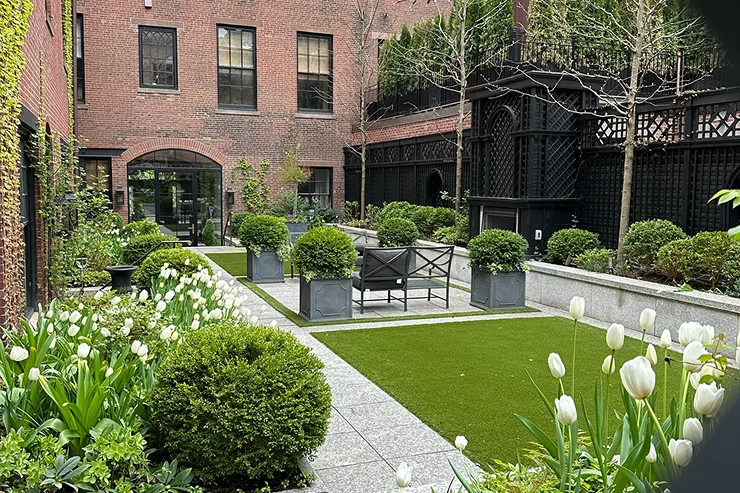
What we account for here
Four constraints show up on nearly every North End property we work on, and each one changes how we plan and install.
No ground soil to fall back on
Almost every planting in the North End lives in a container, a window box, or a built roof-deck bed with imported growing medium. We spec lightweight, well-draining soil mixes rated for rooftop loads and size root systems to the container, not the other way around, so plants aren’t fighting for root space by July.
Wind off the harbor and between the buildings
We choose plant material with flexible stems and lower wind resistance for exposed decks, stake and weight containers so a gust doesn’t send a fifty-pound pot sliding, and group taller plantings to break wind rather than take it head-on.
Access through narrow alleys and walk-up buildings
We plan material delivery in stages — smaller loads, sometimes hand-carried — and schedule installs around building elevator or stair-only realities so a job doesn’t stall halfway up three flights.
Historic and streetscape sensitivity
For anything visible from the sidewalk, we favor container styles, colors and plant palettes that read as appropriate to the North End’s historic streetscape, keeping the work in step with neighborhood character rather than working against it.
Recent North End work
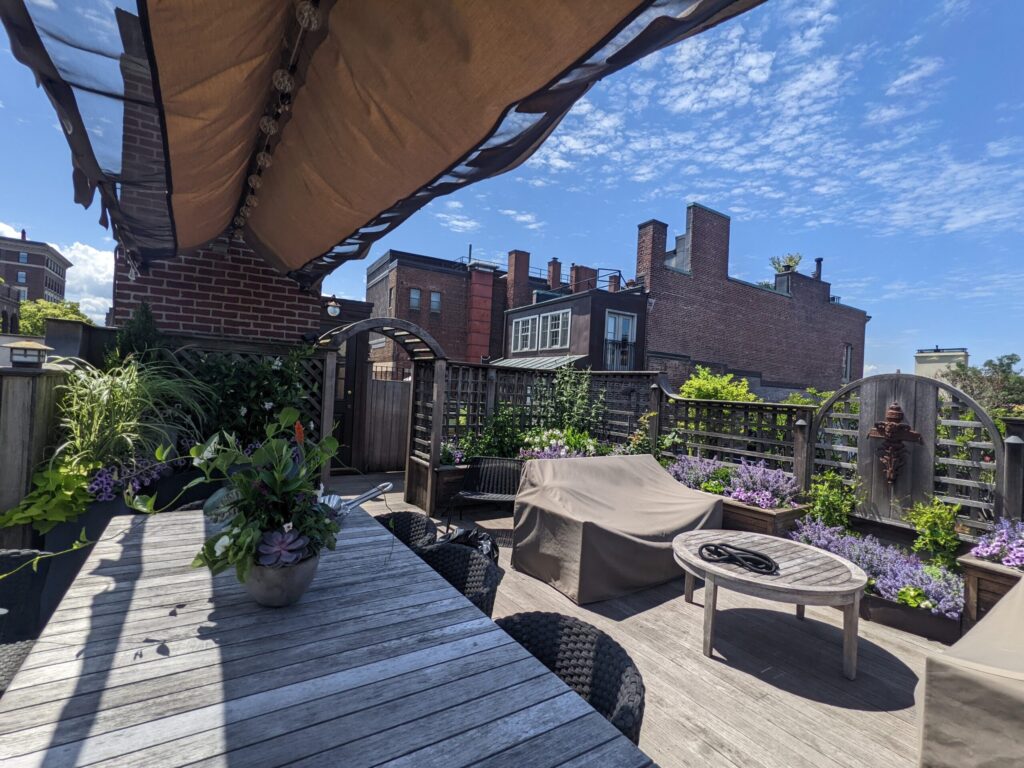
A typical recent job type in this neighborhood: a rebuild of a walk-up building’s fire-escape and window-box plantings, replacing tired soil and leggy annuals with a wind-tolerant mix suited to a north-facing brick wall, paired with a lightweight roof-deck container scheme two floors above for the same owner. That combination — street-facing containers held to a quieter historic palette, and a roof deck above treated as its own microclimate — is close to the standard North End brief we see. We haven’t run a public case study for this neighborhood yet, but the pattern above reflects the work we’re actually doing on these streets.
Other services we provide in North End
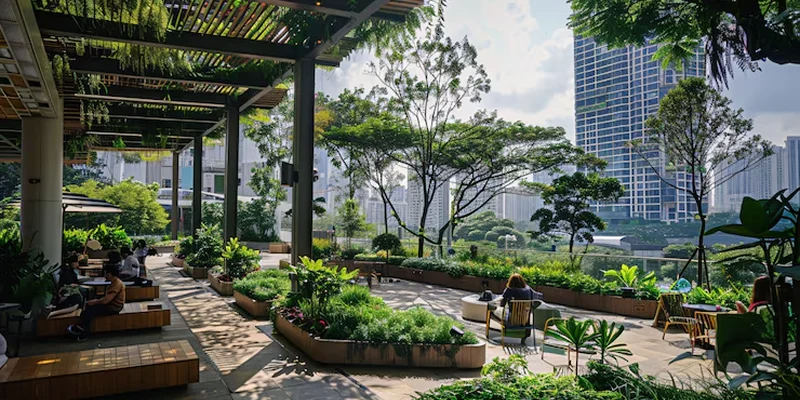
Fine gardening rarely stands alone on a North End property, so most clients pair it with other services we run in the neighborhood. That includes full garden design and installation for a new roof deck or courtyard buildout, custom containers and window boxes sized for narrow ledges and fire escapes, and dedicated roof deck and terrace planting for the buildings where the deck is the only real outdoor space. Where a container schedule needs consistent moisture without daily hand-watering, we install drip irrigation run off a rooftop or window-box supply line, and for evening use we add low-voltage landscape lighting that stays subtle enough for a historic streetscape. For a full look at everything we offer on these blocks, see our garden services in North End overview, or compare our citywide approach on the fine gardening in Boston page.
Book fine gardening in North End
North End is about 1.2 miles from our North End base at 5 Crescent St, and we know these alleys, walk-ups and roof decks well enough to quote them accurately over the phone before we ever see the property. Call to set up a consultation — we’ll ask about access, sun exposure and any historic guidelines that apply to your building, then schedule a visit to walk the actual space before proposing a plan. If you’re comparing neighborhoods, we also run this exact service in Downtown Boston and North End.
Working within North End's tight footprint
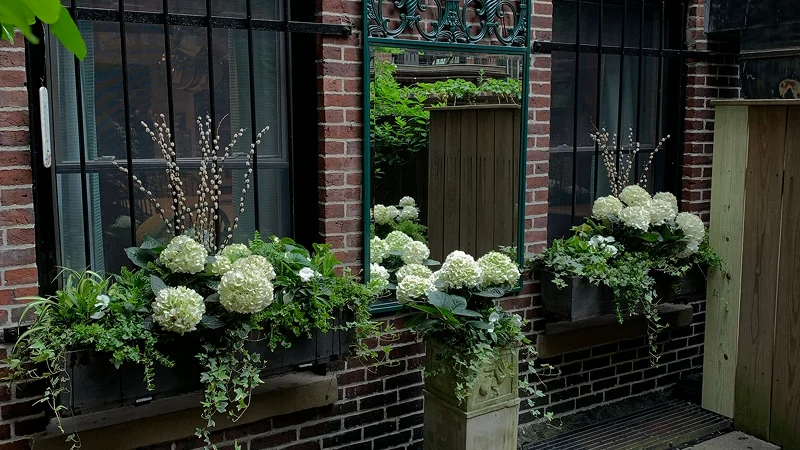
North End properties rarely come with room to spare, and fine gardening here has to respect that from the start. A narrow side alley, a handful of pots on a shared stoop, or a small back patio tucked behind a triple-decker all call for the same careful approach: work that fits the space without crowding neighbors or blocking foot traffic on busy sidewalks.
We plan visits around the rhythm of the neighborhood, keeping tools and debris contained and clearing away trimmings the same day. Container plantings get swapped with the season, soil gets refreshed, and anything visible from the street is handled with an eye toward how it reads from the sidewalk, not just up close.
Beyond fine gardening: the fuller North End picture
Fine gardening sits alongside several other services we bring to North End’s brick rowhouses, hidden courtyards, and rooftop spaces. Many clients pair it with container and window box planting, a natural fit for stoops and ledges where there’s no soil bed to work with. For the rooftop decks tucked above narrow buildings, terrace and roof deck planting accounts for wind exposure and weight limits unique to this neighbourhood’s older structures.
Where hand-watering isn’t practical in a tight alley or shared courtyard, drip irrigation keeps plantings consistent without dragging hoses through a building. And once the beds and pots are dialed in, low-voltage lighting extends use of small outdoor spaces into the evening, which matters when square footage is limited.
- Container and window box planting
- Terrace and roof deck planting
- Drip irrigation installation
- Low-voltage landscape lighting
Ready for a fine gardening partner in North End?
Whether it’s a courtyard planting bed, a rooftop container garden, or a narrow strip along a historic North End building, your garden deserves attentive, knowledgeable hands. Reach out to schedule a walkthrough, and we’ll assess soil, light, and space before recommending a care plan suited to your property.
You’ll receive a clear proposal outlining ongoing maintenance, seasonal refreshes, and any special considerations your North End garden requires.
What Our Customers Say
Frequently Asked Questions
Can you actually get materials up to a North End roof deck?
Yes, but it takes planning most companies skip. We stage deliveries in smaller loads sized to walk-up stairwells and narrow alleys, and schedule the install around each building's real access — elevator, stairs-only, or hand-carry — so the job doesn't stall partway up.
Will window boxes and fire-escape planters survive the wind here?
With the right plant selection and container weight, yes. We choose wind-tolerant plant material, size and weight containers so gusts off the harbor and through the narrow streets don't tip or shred them, and group taller plants to break wind rather than absorb it directly.
Do North End's historic guidelines affect what I can put in a window box?
Often, yes, especially on street-facing facades. Many North End buildings fall under historic-district considerations that favor traditional container styles and restrained color palettes over anything that reads as modern or oversized from the sidewalk. We design within those expectations from the start.
My roof deck gets full sun but my window boxes below get almost none. Can one plan cover both?
Not with one planting scheme. North End buildings routinely have wildly different light conditions floor to floor and wall to wall, so we plan the roof deck and the street-level containers separately, matching plant choice to the actual light each surface gets.
How often does fine gardening maintenance happen once it's installed?
It depends on the container mix and exposure, but most North End roof decks and window boxes need a maintenance visit every one to two weeks through the growing season, since containers dry out faster than in-ground beds and wind stress shows up quickly if it's not caught.