- Serving Boston and the Greater Boston Area

- Home
- Services
- Garden Design Services
- Landscape Design
- Urban Garden Design
- Rooftop Garden Installation
- Roof Deck Planting
- Container Gardening Services
- Seasonal Container Planting
- Window Boxes
- Fine Gardening
- Garden Maintenance
- Planting Maintenance
- Flower & Plant Installation
- Drip Irrigation Installation
- Landscape Lighting
- Service Areas
Charlestown, MA
- Garden Services in Charlestown, MA
- Garden Design in Charlestown, MA
- Landscape Design in Charlestown, MA
- Urban Garden Design in Charlestown, MA
- Rooftop Garden Installation in Charlestown, MA
- Roof Deck Planting in Charlestown, MA
- Container Gardening in Charlestown, MA
- Seasonal Container Planting in Charlestown, MA
- Flower & Plant Installation in Charlestown, MA
- Window Boxes in Charlestown, MA
- Fine Gardening in Charlestown, MA
- Garden Maintenance in Charlestown, MA
- Planting & Maintenance in Charlestown, MA
- Drip Irrigation Installation in Charlestown, MA
- Landscape Lighting in Charlestown, MA
North End, MA
- Garden Services in north-end, MA
- Garden Design in north-end, MA
- Landscape Design in north-end, MA
- Urban Garden Design in north-end, MA
- Rooftop Garden Installation in north-end, MA
- Roof Deck Planting in north-end, MA
- Container Gardening in north-end, MA
- Seasonal Container Planting in north-end, MA
- Flower & Plant Installation in north-end, MA
- Window Boxes in north-end, MA
- Fine Gardening in north-end, MA
- Garden Maintenance in north-end, MA
- Planting & Maintenance in north-end, MA
- Drip Irrigation Installation in north-end, MA
- Landscape Lighting in north-end, MA
Downtown Boston, MA
- Garden Services in downtown boston, MA
- Garden Design in downtown boston, MA
- Landscape Design in downtown boston, MA
- Urban Garden Design in downtown boston, MA
- Rooftop Garden Installation in downtown boston, MA
- Roof Deck Planting in downtown boston, MA
- Container Gardening in downtown boston, MA
- Seasonal Container Planting in downtown boston, MA
- Flower & Plant Installation in downtown boston, MA
- Window Boxes in downtown boston, MA
- Fine Gardening in downtown boston, MA
- Garden Maintenance in downtown boston, MA
- Planting & Maintenance in downtown boston, MA
- Drip Irrigation Installation in downtown boston, MA
- Landscape Lighting in downtown boston, MA
Beacon Hill, MA
- Garden Services in beacon hill, MA
- Garden Design in beacon hill, MA
- Landscape Design in beacon hill, MA
- Urban Garden Design in beacon hill, MA
- Rooftop Garden Installation in beacon hill, MA
- Roof Deck Planting in beacon hill, MA
- Container Gardening in beacon hill, MA
- Seasonal Container Planting in beacon hill, MA
- Flower & Plant Installation in beacon hill, MA
- Window Boxes in beacon hill, MA
- Fine Gardening in beacon hill, MA
- Garden Maintenance in beacon hill, MA
- Planting & Maintenance in beacon hill, MA
- Drip Irrigation Installation in beacon hill, MA
- Landscape Lighting in beacon hill, MA
Boston, MA
- Garden Services in boston, MA
- Garden Design in boston, MA
- Landscape Design in boston, MA
- Urban Garden Design in boston, MA
- Rooftop Garden Installation in boston, MA
- Roof Deck Planting in boston, MA
- Container Gardening in boston, MA
- Seasonal Container Planting in boston, MA
- Flower & Plant Installation in boston, MA
- Window Boxes in boston, MA
- Fine Gardening in boston, MA
- Garden Maintenance in boston, MA
- Planting & Maintenance in boston, MA
- Drip Irrigation Installation in boston, MA
- Landscape Lighting in boston, MA
seaport, MA
- Garden Services in seaport, MA
- Garden Design in seaport, MA
- Landscape Design in seaport, MA
- Urban Garden Design in seaport, MA
- Rooftop Garden Installation in seaport, MA
- Roof Deck Planting in seaport, MA
- Container Gardening in seaport, MA
- Seasonal Container Planting in seaport, MA
- Flower & Plant Installation in seaport, MA
- Window Boxes in seaport, MA
- Fine Gardening in seaport, MA
- Garden Maintenance in seaport, MA
- Planting & Maintenance in seaport, MA
- Drip Irrigation Installation in seaport, MA
- Landscape Lighting in seaport, MA
back bay, MA
- Garden Services in back bay, MA
- Garden Design in back bay, MA
- Landscape Design in back bay, MA
- Urban Garden Design in back bay, MA
- Rooftop Garden Installation in back bay, MA
- Roof Deck Planting in back bay, MA
- Container Gardening in back bay, MA
- Seasonal Container Planting in back bay, MA
- Flower & Plant Installation in back bay, MA
- Window Boxes in back bay, MA
- Fine Gardening in back bay, MA
- Garden Maintenance in back bay, MA
- Planting & Maintenance in back bay, MA
- Drip Irrigation Installation in back bay, MA
- Landscape Lighting in back bay, MA
cambridge, MA
- Garden Services in cambridge, MA
- Garden Design in cambridge, MA
- Landscape Design in cambridge, MA
- Urban Garden Design in cambridge, MA
- Rooftop Garden Installation in cambridge, MA
- Roof Deck Planting in cambridge, MA
- Container Gardening in cambridge, MA
- Seasonal Container Planting in cambridge, MA
- Flower & Plant Installation in cambridge, MA
- Window Boxes in cambridge, MA
- Fine Gardening in cambridge, MA
- Garden Maintenance in cambridge, MA
- Planting & Maintenance in cambridge, MA
- Drip Irrigation Installation in cambridge, MA
- Landscape Lighting in cambridge, MA
south-end, MA
- Garden Services in south-end, MA
- Garden Design in south-end, MA
- Landscape Design in south-end, MA
- Urban Garden Design in south-end, MA
- Rooftop Garden Installation in south-end, MA
- Roof Deck Planting in south-end, MA
- Container Gardening in south-end, MA
- Seasonal Container Planting in south-end, MA
- Flower & Plant Installation in south-end, MA
- Window Boxes in south-end, MA
- Fine Gardening in south-end, MA
- Garden Maintenance in south-end, MA
- Planting & Maintenance in south-end, MA
- Drip Irrigation Installation in south-end, MA
- Landscape Lighting in south-end, MA
brookline, MA
- Garden Services in brookline, MA
- Garden Design in brookline, MA
- Landscape Design in brookline, MA
- Urban Garden Design in brookline, MA
- Rooftop Garden Installation in brookline, MA
- Roof Deck Planting in brookline, MA
- Container Gardening in brookline, MA
- Seasonal Container Planting in brookline, MA
- Flower & Plant Installation in brookline, MA
- Window Boxes in brookline, MA
- Fine Gardening in brookline, MA
- Garden Maintenance in brookline, MA
- Planting & Maintenance in brookline, MA
- Drip Irrigation Installation in brookline, MA
- Landscape Lighting in brookline, MA
winchester, MA
- Garden Services in winchester, MA
- Garden Design in winchester, MA
- Landscape Design in winchester, MA
- Urban Garden Design in winchester, MA
- Rooftop Garden Installation in winchester, MA
- Roof Deck Planting in winchester, MA
- Container Gardening in winchester, MA
- Seasonal Container Planting in winchester, MA
- Flower & Plant Installation in winchester, MA
- Window Boxes in winchester, MA
- Fine Gardening in winchester, MA
- Garden Maintenance in winchester, MA
- Planting & Maintenance in winchester, MA
- Drip Irrigation Installation in winchester, MA
- Landscape Lighting in winchester, MA
newton, MA
- Garden Services in newton, MA
- Garden Design in newton, MA
- Landscape Design in newton, MA
- Urban Garden Design in newton, MA
- Rooftop Garden Installation in newton, MA
- Roof Deck Planting in newton, MA
- Container Gardening in newton, MA
- Seasonal Container Planting in newton, MA
- Flower & Plant Installation in newton, MA
- Window Boxes in newton, MA
- Fine Gardening in newton, MA
- Garden Maintenance in newton, MA
- Planting & Maintenance in newton, MA
- Drip Irrigation Installation in newton, MA
- Landscape Lighting in newton, MA
lexington, MA
- Garden Services in lexington, MA
- Garden Design in lexington, MA
- Landscape Design in lexington, MA
- Urban Garden Design in lexington, MA
- Rooftop Garden Installation in lexington, MA
- Roof Deck Planting in lexington, MA
- Container Gardening in lexington, MA
- Seasonal Container Planting newton, MA
- Flower & Plant Installation in lexington, MA
- Window Boxes in lexington, MA
- Fine Gardening in lexington, MA
- Garden Maintenance in lexington, MA
- Planting & Maintenance in lexington, MA
- Drip Irrigation Installation in lexington, MA
- Landscape Lighting in lexington, MA
weston, MA
- Garden Services in weston, MA
- Garden Design in weston, MA
- Landscape Design in weston, MA
- Urban Garden Design in weston, MA
- Rooftop Garden Installation in weston, MA
- Roof Deck Planting in weston, MA
- Container Gardening in weston, MA
- Seasonal Container Planting weston, MA
- Flower & Plant Installation in weston, MA
- Window Boxes in weston, MA
- Fine Gardening in weston, MA
- Garden Maintenance in weston, MA
- Planting & Maintenance in weston, MA
- Drip Irrigation Installation in weston, MA
- Landscape Lighting in weston, MA
wellesley, MA
- Garden Services in wellesley, MA
- Garden Design in wellesley, MA
- Landscape Design in wellesley, MA
- Urban Garden Design in wellesley, MA
- Rooftop Garden Installation in wellesley, MA
- Roof Deck Planting in wellesley, MA
- Container Gardening in wellesley, MA
- Seasonal Container Planting wellesley, MA
- Flower & Plant Installation in wellesley, MA
- Window Boxes in wellesley, MA
- Fine Gardening in wellesley, MA
- Garden Maintenance in wellesley, MA
- Planting & Maintenance in wellesley, MA
- Drip Irrigation Installation in wellesley, MA
- Landscape Lighting in wellesley, MA
- Portfolio
- About us
- Blog
- Contact
- Flower Delivery
Flower & Plant Installation in Newton, MA
Most Newton properties inherited their foundation plantings from a previous owner, and by the time we’re called the beds are overgrown, deer-browsed, or too shaded to hold color. Between the village character of Newtonville, West Newton, and Waban, and the tree ordinance that governs what can come out along the street, a straightforward flower installation here usually starts with an honest look at what the site will actually support. We plan around the deer, the shade, and the town’s rules before we plan around color.

What Flower & Plant Installation looks like in Newton
A typical Newton project begins at the foundation line, where decades of boxwood, yew, and hydrangea have grown together into a dense, uneven mass. Before adding anything new, we assess which of those existing shrubs are structurally sound and which are past the point of shaping. Village lots in areas like Auburndale and Chestnut Hill tend to be narrow, with mature trees close to the house, so the planting bed is often working in dappled or full shade for most of the day. That changes the plant palette considerably — this is not the wide-open, full-sun border you’d design in a newer subdivision.
Deer pressure is the other constant. Newton’s tree canopy and proximity to the Charles River reservation corridor mean deer move through yards regularly, especially in the Waban and Oak Hill sections. We select and site plants with that browsing pattern in mind rather than installing something attractive in April and replacing it by June.
Access is usually manageable on Newton’s residential streets, but many homes sit close to their neighbors with limited side-yard clearance, so we plan material delivery and bed preparation around narrow driveways and shared easements. Soil on older village lots is frequently compacted and root-bound from adjacent street trees, which means amendment happens before a single plant goes in the ground, not after. And because Newton enforces a tree ordinance affecting removals of significant trees on both public and private property, any planting plan that would require taking down an established tree — even a scraggly one crowding a bed — goes through that review first. We handle the permitting conversation as part of the design process, not as a surprise after installation day.
What we account for here
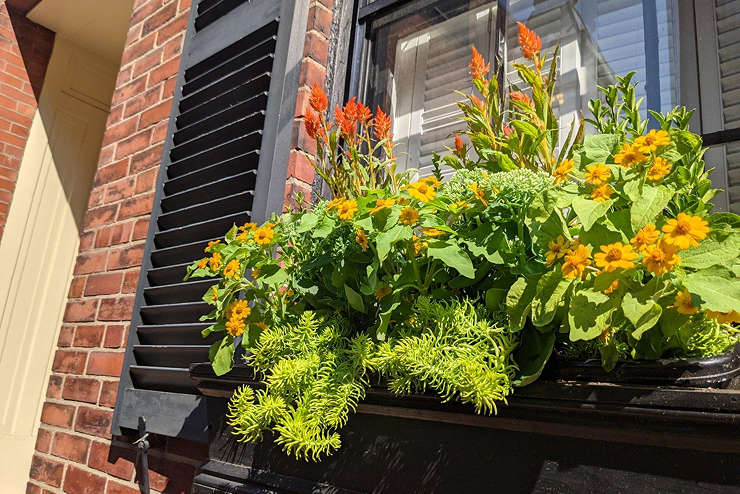
What we account for here
Deer browsing pressure
We favor deer-resistant plant families — boxwood, hellebore, allium, catmint, and select hydrangea varieties — and reserve the more vulnerable, showier plants for spots close to the house or protected by existing hardscape, rather than fighting deer with repellent sprays alone.
Established shade from mature trees
Many Newton lots have 60- to 100-year-old canopy trees that cast heavy shade for most of the growing season. We build plant lists around true shade performers — astilbe, heuchera, ferns, and shade-tolerant hydrangea — instead of forcing sun-loving annuals into a spot that will disappoint by midsummer.
Tree ordinance and removal review
Newton’s ordinance covers significant trees on both private and public property, and removals tied to a planting or renovation plan can require a permit and review. We flag any tree that a design might affect early, so the project timeline accounts for that review rather than stalling mid-installation.
Compacted, root-bound village soil
Older Newton lots often have soil that’s been compressed by decades of foot traffic and competing tree roots. We test and amend before planting, and in the tightest root zones we adjust the plant selection to species that tolerate root competition rather than fighting it with heavy excavation near mature trees.
Recent Newton work
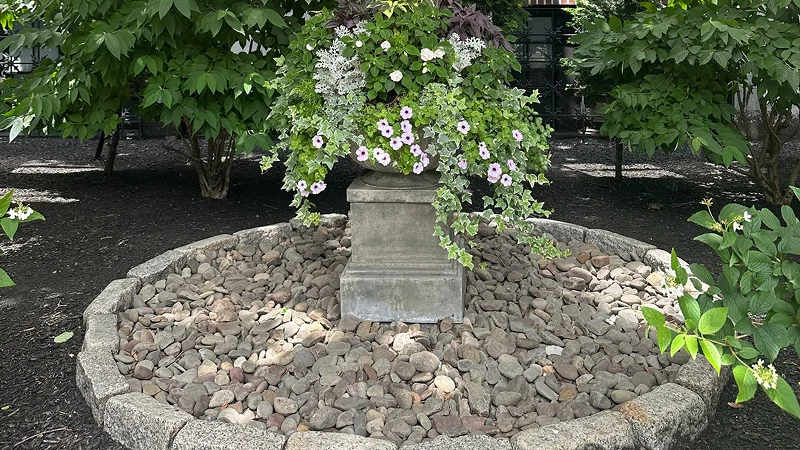
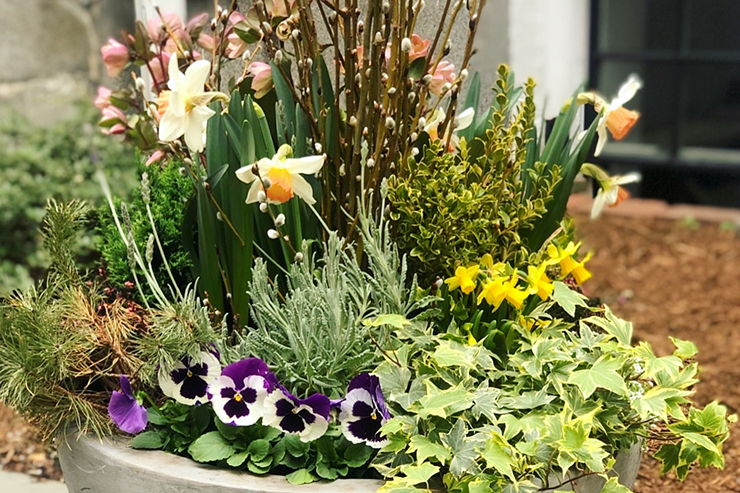
Recent work in Newton has generally fallen into two categories: renovating tired foundation beds on older colonials in Newtonville and West Newton where the original plantings had outgrown their space, and building shade-tolerant, deer-resistant borders for backyards near the Waban and Oak Hill conservation areas. In both cases, the plan started with removing what wasn’t working, correcting the soil, and installing a plant palette selected specifically for the site’s light and deer exposure rather than a standard nursery mix.
Other services we provide in Newton
Flower and plant installation is often the first piece of a broader Newton project. Many clients pair it with our garden services in Newton, which cover ongoing fine gardening and seasonal maintenance once beds are established. Village lots with limited planting real estate also benefit from containers and window boxes on porches and entries, and homes with decks or terraces often add roof deck and terrace planting to extend the garden vertically. For beds that struggle in dry shade under mature trees, drip irrigation keeps new plantings established without daily hand-watering, and low-voltage landscape lighting is a common follow-on for highlighting foundation plantings and specimen trees once they’re in.
How the process works once you call
We start with a site visit to walk the property, note existing conditions — light, drainage, deer trails, tree canopy — and talk through what you want the space to do. From there we put together a plant and layout plan specific to that lot, flag anything that needs town review, and give you a clear installation timeline. Once approved, our crew handles bed prep, plant installation, and cleanup in a single coordinated visit or phased schedule, depending on scope.
Why Newton lots need a different plan than nearby towns
It’s tempting to treat flower and plant installation as a uniform service, but a Newton village lot behaves differently from a wide-open Wellesley property or a walled Beacon Hill courtyard. The combination of mature street trees, tight side-yard access, active deer populations, and a tree ordinance that requires review before certain removals means the planning phase carries more weight here than the planting phase itself. Skipping that step is the most common reason installations underperform within a season.
Start with a consultation
The clearest next step is a short conversation about your property — what’s struggling, what’s overgrown, and what you’d like the space to do instead. We’ll ask about sun exposure, any deer activity you’ve noticed, and whether any existing trees are part of the picture, then schedule a site visit from there. Call to set up a consultation and get a plan specific to your Newton lot rather than a generic estimate.
Ready when you are
Every Newton property has its own light, soil, and sightlines, so we start by talking through what you want the space to feel like across the seasons. From there we recommend plant varieties, arrange the installation date, and set expectations for ongoing care.
- Seasonal color rotations
- Container and bed plantings
- Entryway and patio arrangements
Reach out and we’ll set up a time to walk your property together.
What Our Customers Say
Frequently Asked Questions
Will deer eat new plantings in Newton?
They can, especially near the Waban, Oak Hill, and Charles River corridor areas where deer move through regularly. We design around this by choosing deer-resistant species for exposed areas and reserving more vulnerable plants for spots closer to the house or protected by hardscape.
Do I need a permit to remove a tree before planting in Newton?
It depends on the tree. Newton's tree ordinance covers significant trees on both private and public property, and removals connected to a landscape project can require review. We identify any affected trees during the design phase so permitting doesn't delay installation.
Can you work with heavy shade from mature trees?
Yes, and on many Newton lots it's the primary design constraint. We build plant lists around proven shade performers rather than substituting sun-loving plants that will thin out by midsummer.
What if my foundation beds are already overgrown?
Most Newton projects start exactly there. We assess which existing shrubs are worth keeping and shaping and which have outgrown their space, then rebuild the bed with a plant selection suited to current light and soil conditions.
How far is Newton from your Newton location?
About 8.6 miles. We regularly work throughout Newton's villages, including Newtonville, West Newton, Waban, and Auburndale.