- Serving Boston and the Greater Boston Area

- Home
- Services
- Garden Design Services
- Landscape Design
- Urban Garden Design
- Rooftop Garden Installation
- Roof Deck Planting
- Container Gardening Services
- Seasonal Container Planting
- Window Boxes
- Fine Gardening
- Garden Maintenance
- Planting Maintenance
- Flower & Plant Installation
- Drip Irrigation Installation
- Landscape Lighting
- Service Areas
Charlestown, MA
- Garden Services in Charlestown, MA
- Garden Design in Charlestown, MA
- Landscape Design in Charlestown, MA
- Urban Garden Design in Charlestown, MA
- Rooftop Garden Installation in Charlestown, MA
- Roof Deck Planting in Charlestown, MA
- Container Gardening in Charlestown, MA
- Seasonal Container Planting in Charlestown, MA
- Flower & Plant Installation in Charlestown, MA
- Window Boxes in Charlestown, MA
- Fine Gardening in Charlestown, MA
- Garden Maintenance in Charlestown, MA
- Planting & Maintenance in Charlestown, MA
- Drip Irrigation Installation in Charlestown, MA
- Landscape Lighting in Charlestown, MA
North End, MA
- Garden Services in north-end, MA
- Garden Design in north-end, MA
- Landscape Design in north-end, MA
- Urban Garden Design in north-end, MA
- Rooftop Garden Installation in north-end, MA
- Roof Deck Planting in north-end, MA
- Container Gardening in north-end, MA
- Seasonal Container Planting in north-end, MA
- Flower & Plant Installation in north-end, MA
- Window Boxes in north-end, MA
- Fine Gardening in north-end, MA
- Garden Maintenance in north-end, MA
- Planting & Maintenance in north-end, MA
- Drip Irrigation Installation in north-end, MA
- Landscape Lighting in north-end, MA
Downtown Boston, MA
- Garden Services in downtown boston, MA
- Garden Design in downtown boston, MA
- Landscape Design in downtown boston, MA
- Urban Garden Design in downtown boston, MA
- Rooftop Garden Installation in downtown boston, MA
- Roof Deck Planting in downtown boston, MA
- Container Gardening in downtown boston, MA
- Seasonal Container Planting in downtown boston, MA
- Flower & Plant Installation in downtown boston, MA
- Window Boxes in downtown boston, MA
- Fine Gardening in downtown boston, MA
- Garden Maintenance in downtown boston, MA
- Planting & Maintenance in downtown boston, MA
- Drip Irrigation Installation in downtown boston, MA
- Landscape Lighting in downtown boston, MA
Beacon Hill, MA
- Garden Services in beacon hill, MA
- Garden Design in beacon hill, MA
- Landscape Design in beacon hill, MA
- Urban Garden Design in beacon hill, MA
- Rooftop Garden Installation in beacon hill, MA
- Roof Deck Planting in beacon hill, MA
- Container Gardening in beacon hill, MA
- Seasonal Container Planting in beacon hill, MA
- Flower & Plant Installation in beacon hill, MA
- Window Boxes in beacon hill, MA
- Fine Gardening in beacon hill, MA
- Garden Maintenance in beacon hill, MA
- Planting & Maintenance in beacon hill, MA
- Drip Irrigation Installation in beacon hill, MA
- Landscape Lighting in beacon hill, MA
Boston, MA
- Garden Services in boston, MA
- Garden Design in boston, MA
- Landscape Design in boston, MA
- Urban Garden Design in boston, MA
- Rooftop Garden Installation in boston, MA
- Roof Deck Planting in boston, MA
- Container Gardening in boston, MA
- Seasonal Container Planting in boston, MA
- Flower & Plant Installation in boston, MA
- Window Boxes in boston, MA
- Fine Gardening in boston, MA
- Garden Maintenance in boston, MA
- Planting & Maintenance in boston, MA
- Drip Irrigation Installation in boston, MA
- Landscape Lighting in boston, MA
seaport, MA
- Garden Services in seaport, MA
- Garden Design in seaport, MA
- Landscape Design in seaport, MA
- Urban Garden Design in seaport, MA
- Rooftop Garden Installation in seaport, MA
- Roof Deck Planting in seaport, MA
- Container Gardening in seaport, MA
- Seasonal Container Planting in seaport, MA
- Flower & Plant Installation in seaport, MA
- Window Boxes in seaport, MA
- Fine Gardening in seaport, MA
- Garden Maintenance in seaport, MA
- Planting & Maintenance in seaport, MA
- Drip Irrigation Installation in seaport, MA
- Landscape Lighting in seaport, MA
back bay, MA
- Garden Services in back bay, MA
- Garden Design in back bay, MA
- Landscape Design in back bay, MA
- Urban Garden Design in back bay, MA
- Rooftop Garden Installation in back bay, MA
- Roof Deck Planting in back bay, MA
- Container Gardening in back bay, MA
- Seasonal Container Planting in back bay, MA
- Flower & Plant Installation in back bay, MA
- Window Boxes in back bay, MA
- Fine Gardening in back bay, MA
- Garden Maintenance in back bay, MA
- Planting & Maintenance in back bay, MA
- Drip Irrigation Installation in back bay, MA
- Landscape Lighting in back bay, MA
cambridge, MA
- Garden Services in cambridge, MA
- Garden Design in cambridge, MA
- Landscape Design in cambridge, MA
- Urban Garden Design in cambridge, MA
- Rooftop Garden Installation in cambridge, MA
- Roof Deck Planting in cambridge, MA
- Container Gardening in cambridge, MA
- Seasonal Container Planting in cambridge, MA
- Flower & Plant Installation in cambridge, MA
- Window Boxes in cambridge, MA
- Fine Gardening in cambridge, MA
- Garden Maintenance in cambridge, MA
- Planting & Maintenance in cambridge, MA
- Drip Irrigation Installation in cambridge, MA
- Landscape Lighting in cambridge, MA
south-end, MA
- Garden Services in south-end, MA
- Garden Design in south-end, MA
- Landscape Design in south-end, MA
- Urban Garden Design in south-end, MA
- Rooftop Garden Installation in south-end, MA
- Roof Deck Planting in south-end, MA
- Container Gardening in south-end, MA
- Seasonal Container Planting in south-end, MA
- Flower & Plant Installation in south-end, MA
- Window Boxes in south-end, MA
- Fine Gardening in south-end, MA
- Garden Maintenance in south-end, MA
- Planting & Maintenance in south-end, MA
- Drip Irrigation Installation in south-end, MA
- Landscape Lighting in south-end, MA
brookline, MA
- Garden Services in brookline, MA
- Garden Design in brookline, MA
- Landscape Design in brookline, MA
- Urban Garden Design in brookline, MA
- Rooftop Garden Installation in brookline, MA
- Roof Deck Planting in brookline, MA
- Container Gardening in brookline, MA
- Seasonal Container Planting in brookline, MA
- Flower & Plant Installation in brookline, MA
- Window Boxes in brookline, MA
- Fine Gardening in brookline, MA
- Garden Maintenance in brookline, MA
- Planting & Maintenance in brookline, MA
- Drip Irrigation Installation in brookline, MA
- Landscape Lighting in brookline, MA
winchester, MA
- Garden Services in winchester, MA
- Garden Design in winchester, MA
- Landscape Design in winchester, MA
- Urban Garden Design in winchester, MA
- Rooftop Garden Installation in winchester, MA
- Roof Deck Planting in winchester, MA
- Container Gardening in winchester, MA
- Seasonal Container Planting in winchester, MA
- Flower & Plant Installation in winchester, MA
- Window Boxes in winchester, MA
- Fine Gardening in winchester, MA
- Garden Maintenance in winchester, MA
- Planting & Maintenance in winchester, MA
- Drip Irrigation Installation in winchester, MA
- Landscape Lighting in winchester, MA
newton, MA
- Garden Services in newton, MA
- Garden Design in newton, MA
- Landscape Design in newton, MA
- Urban Garden Design in newton, MA
- Rooftop Garden Installation in newton, MA
- Roof Deck Planting in newton, MA
- Container Gardening in newton, MA
- Seasonal Container Planting in newton, MA
- Flower & Plant Installation in newton, MA
- Window Boxes in newton, MA
- Fine Gardening in newton, MA
- Garden Maintenance in newton, MA
- Planting & Maintenance in newton, MA
- Drip Irrigation Installation in newton, MA
- Landscape Lighting in newton, MA
lexington, MA
- Garden Services in lexington, MA
- Garden Design in lexington, MA
- Landscape Design in lexington, MA
- Urban Garden Design in lexington, MA
- Rooftop Garden Installation in lexington, MA
- Roof Deck Planting in lexington, MA
- Container Gardening in lexington, MA
- Seasonal Container Planting newton, MA
- Flower & Plant Installation in lexington, MA
- Window Boxes in lexington, MA
- Fine Gardening in lexington, MA
- Garden Maintenance in lexington, MA
- Planting & Maintenance in lexington, MA
- Drip Irrigation Installation in lexington, MA
- Landscape Lighting in lexington, MA
weston, MA
- Garden Services in weston, MA
- Garden Design in weston, MA
- Landscape Design in weston, MA
- Urban Garden Design in weston, MA
- Rooftop Garden Installation in weston, MA
- Roof Deck Planting in weston, MA
- Container Gardening in weston, MA
- Seasonal Container Planting weston, MA
- Flower & Plant Installation in weston, MA
- Window Boxes in weston, MA
- Fine Gardening in weston, MA
- Garden Maintenance in weston, MA
- Planting & Maintenance in weston, MA
- Drip Irrigation Installation in weston, MA
- Landscape Lighting in weston, MA
wellesley, MA
- Garden Services in wellesley, MA
- Garden Design in wellesley, MA
- Landscape Design in wellesley, MA
- Urban Garden Design in wellesley, MA
- Rooftop Garden Installation in wellesley, MA
- Roof Deck Planting in wellesley, MA
- Container Gardening in wellesley, MA
- Seasonal Container Planting wellesley, MA
- Flower & Plant Installation in wellesley, MA
- Window Boxes in wellesley, MA
- Fine Gardening in wellesley, MA
- Garden Maintenance in wellesley, MA
- Planting & Maintenance in wellesley, MA
- Drip Irrigation Installation in wellesley, MA
- Landscape Lighting in wellesley, MA
- Portfolio
- About us
- Blog
- Contact
- Flower Delivery
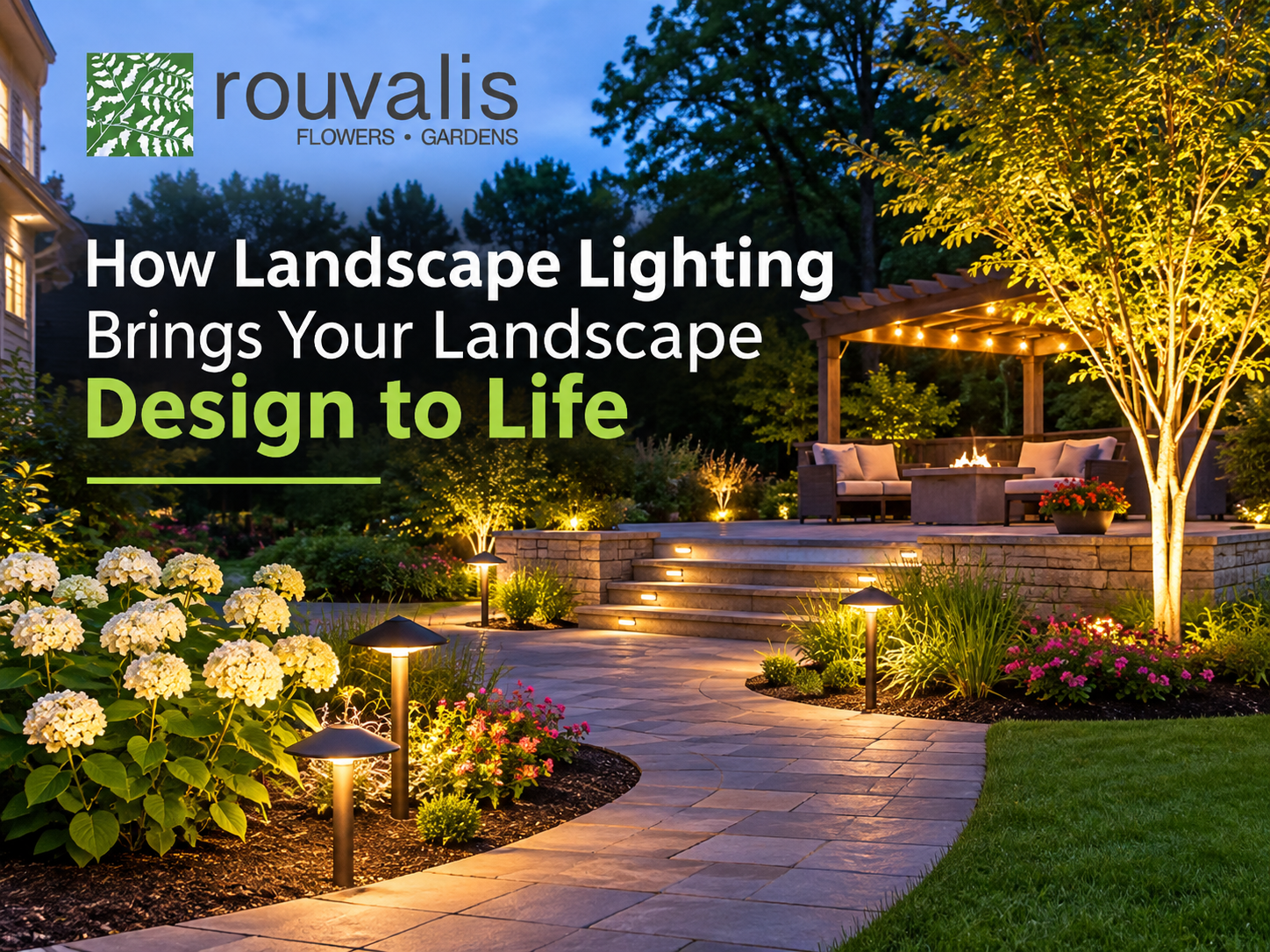
How Landscape Lighting Brings Your Landscape Design to Life
A beautiful garden shouldn’t vanish when the sun goes down. Thoughtful landscape lighting design extends your outdoor space into the evening, highlights the plants, stonework, and architecture you’ve invested in, and makes your property safer and more welcoming. At Rouvalis Gardens, we see lighting as the layer that completes a landscape, turning a well-planned yard into one you can enjoy at every hour.
What Is Landscape Lighting Design?
Landscape lighting design is the planned placement of fixtures, light levels, color temperatures, and controls that highlight an outdoor space’s best features while keeping it safe and usable after dark. Good landscape lighting design is less about brightness and more about layering. It uses soft pools of light, subtle contrast, and shadow to create depth, so the eye is guided through the space rather than blinded by it.
Why Lighting Is the Finishing Layer of Your Landscape Design
Plants, patios, walls, and water features all look different at night. Lighting is what lets them keep working for you after sunset. Well-planned lighting can:
- Add drama and dimension by revealing the texture of bark, foliage, stone, and brick
- Improve safety along steps, paths, driveways, and entries
- Extend usable living space so patios, decks, and gardens work well into the evening
- Enhance curb appeal and make your home feel welcoming from the street
- Support security by removing dark corners without harsh glare
- Increase property value by showcasing the landscape investment you’ve already made
Lighting Techniques That Bring a Landscape to Life
Most professional designs combine several techniques rather than relying on one:
- Uplighting: Fixtures at the base of trees, columns, or walls create height and drama.
- Downlighting (moonlighting): Fixtures mounted high in a tree cast a soft, natural glow over the ground below.
- Path lighting: Low fixtures define walkways and garden beds safely and elegantly.
- Accent lighting: Focused beams pick out sculptures, specimen plants, or architectural details.
- Wall washing: Even light across a wall or fence adds depth and a sense of enclosure.
- Step and deck lighting: Discreet lights built into risers and railings improve safety without clutter.
Landscape Lighting Newton, MA: Showcasing Mature Gardens
Newton properties often feature established trees, layered plantings, and traditional architecture. Landscape lighting Newton, MA homeowners choose works best when it respects that maturity. Uplighting specimen trees, washing stone walls, and softly marking paths and entries can bring out a garden’s character without overwhelming it. A well-planned landscape lighting design here emphasizes the structure you already have, so the garden feels richer at night rather than simply brighter.
Landscape Design Charlestown, MA: Lighting Compact Spaces
Charlestown courtyards, rear gardens, and roof terraces are often small, which makes every fixture count. For landscape design Charlestown, MA properties, lighting does a lot of work in a little space. Warm accent lights on planters, a glow along brick walls, and discreet step lighting can make a compact area feel larger and more layered. Careful landscape lighting design keeps the scale intimate, with no glare into neighboring windows and no cluttered fixtures.
Landscape Lighting Seaport, MA: Modern Terraces and Entertaining Spaces
Seaport residences and commercial properties favor clean lines, terraces, and outdoor gathering areas. Landscape lighting Seaport, MA projects call for sleek, low-profile fixtures that complement modern architecture and withstand coastal weather and wind. Dimmable lighting, concealed fixtures, and warm tones suit these entertaining spaces, and thoughtful landscape lighting design turns a hard-edged terrace into an inviting evening retreat.
How to Plan Your Landscape Lighting Design
A strong lighting plan starts with the landscape itself:
- Walk the property at dusk. Note which features deserve attention and where it feels dark or unsafe.
- Decide on priorities. Safety, entertaining, security, and showpiece highlighting call for different approaches.
- Choose warm, efficient LEDs. Warm white tones flatter plants and stone, and LEDs use little energy and last for years.
- Layer your light. Combine path, accent, and ambient lighting rather than lighting everything equally.
- Add smart controls. Timers, dimmers, and app control let you set scenes and adjust seasonally.
- Plan for growth and maintenance. Plants grow, so fixtures need to be adjusted and kept clear over time.
Why Work With a Designer Who Sees the Whole Landscape
Lighting works best when it’s planned alongside plantings, hardscape, and structure, not added at the end. Rouvalis Gardens approaches landscape lighting design as part of the full landscape, so fixtures are placed to complement your plants, materials, and the way you actually use your space.
Final Thoughts
Lighting is what lets your landscape keep performing after dark. With the right layers, warm tones, and placement, plants gain depth, patios become evening destinations, and paths feel safe and inviting. Whether you’re in Newton, Charlestown, or the Seaport, a thoughtful plan makes the difference between simply lit and truly designed. Ready to see your landscape in a new light? Reach out to Rouvalis Gardens today to start planning.
Frequently Asked Questions
What is the best type of lighting for a landscape?
Low-voltage LED lighting is the most popular choice. It’s energy efficient, long lasting, safe to install outdoors, and available in warm tones that flatter plants and stone.
How much does landscape lighting cost?
Cost depends on property size, the number and type of fixtures, wiring, and controls. A smaller courtyard costs far less than a large estate. A professional consultation is the best way to get an accurate estimate.
Does landscape lighting increase home value?
It can. Lighting boosts curb appeal, safety, and usable outdoor space, all of which appeal to buyers.
How many fixtures will my property need?
There’s no fixed number. A designer plans by feature and purpose, so a compact Charlestown terrace may need a handful of fixtures while a larger Newton property needs many more.
Can landscape lighting handle New England winters?
Yes. Quality outdoor-rated fixtures are built for snow, ice, and temperature swings, and winter evenings are when well-lit landscapes shine.
How do I get started?
Contact Rouvalis Gardens to schedule a consultation. We’ll review your property, talk through your goals, and recommend a lighting approach that fits your landscape and budget.