- Serving Boston and the Greater Boston Area

- Home
- Services
- Garden Design Services
- Landscape Design
- Urban Garden Design
- Rooftop Garden Installation
- Roof Deck Planting
- Container Gardening Services
- Seasonal Container Planting
- Window Boxes
- Fine Gardening
- Garden Maintenance
- Planting Maintenance
- Flower & Plant Installation
- Drip Irrigation Installation
- Landscape Lighting
- Service Areas
Charlestown, MA
- Garden Services in Charlestown, MA
- Garden Design in Charlestown, MA
- Landscape Design in Charlestown, MA
- Urban Garden Design in Charlestown, MA
- Rooftop Garden Installation in Charlestown, MA
- Roof Deck Planting in Charlestown, MA
- Container Gardening in Charlestown, MA
- Seasonal Container Planting in Charlestown, MA
- Flower & Plant Installation in Charlestown, MA
- Window Boxes in Charlestown, MA
- Fine Gardening in Charlestown, MA
- Garden Maintenance in Charlestown, MA
- Planting & Maintenance in Charlestown, MA
- Drip Irrigation Installation in Charlestown, MA
- Landscape Lighting in Charlestown, MA
North End, MA
- Garden Services in north-end, MA
- Garden Design in north-end, MA
- Landscape Design in north-end, MA
- Urban Garden Design in north-end, MA
- Rooftop Garden Installation in north-end, MA
- Roof Deck Planting in north-end, MA
- Container Gardening in north-end, MA
- Seasonal Container Planting in north-end, MA
- Flower & Plant Installation in north-end, MA
- Window Boxes in north-end, MA
- Fine Gardening in north-end, MA
- Garden Maintenance in north-end, MA
- Planting & Maintenance in north-end, MA
- Drip Irrigation Installation in north-end, MA
- Landscape Lighting in north-end, MA
Downtown Boston, MA
- Garden Services in downtown boston, MA
- Garden Design in downtown boston, MA
- Landscape Design in downtown boston, MA
- Urban Garden Design in downtown boston, MA
- Rooftop Garden Installation in downtown boston, MA
- Roof Deck Planting in downtown boston, MA
- Container Gardening in downtown boston, MA
- Seasonal Container Planting in downtown boston, MA
- Flower & Plant Installation in downtown boston, MA
- Window Boxes in downtown boston, MA
- Fine Gardening in downtown boston, MA
- Garden Maintenance in downtown boston, MA
- Planting & Maintenance in downtown boston, MA
- Drip Irrigation Installation in downtown boston, MA
- Landscape Lighting in downtown boston, MA
Beacon Hill, MA
- Garden Services in beacon hill, MA
- Garden Design in beacon hill, MA
- Landscape Design in beacon hill, MA
- Urban Garden Design in beacon hill, MA
- Rooftop Garden Installation in beacon hill, MA
- Roof Deck Planting in beacon hill, MA
- Container Gardening in beacon hill, MA
- Seasonal Container Planting in beacon hill, MA
- Flower & Plant Installation in beacon hill, MA
- Window Boxes in beacon hill, MA
- Fine Gardening in beacon hill, MA
- Garden Maintenance in beacon hill, MA
- Planting & Maintenance in beacon hill, MA
- Drip Irrigation Installation in beacon hill, MA
- Landscape Lighting in beacon hill, MA
Boston, MA
- Garden Services in boston, MA
- Garden Design in boston, MA
- Landscape Design in boston, MA
- Urban Garden Design in boston, MA
- Rooftop Garden Installation in boston, MA
- Roof Deck Planting in boston, MA
- Container Gardening in boston, MA
- Seasonal Container Planting in boston, MA
- Flower & Plant Installation in boston, MA
- Window Boxes in boston, MA
- Fine Gardening in boston, MA
- Garden Maintenance in boston, MA
- Planting & Maintenance in boston, MA
- Drip Irrigation Installation in boston, MA
- Landscape Lighting in boston, MA
seaport, MA
- Garden Services in seaport, MA
- Garden Design in seaport, MA
- Landscape Design in seaport, MA
- Urban Garden Design in seaport, MA
- Rooftop Garden Installation in seaport, MA
- Roof Deck Planting in seaport, MA
- Container Gardening in seaport, MA
- Seasonal Container Planting in seaport, MA
- Flower & Plant Installation in seaport, MA
- Window Boxes in seaport, MA
- Fine Gardening in seaport, MA
- Garden Maintenance in seaport, MA
- Planting & Maintenance in seaport, MA
- Drip Irrigation Installation in seaport, MA
- Landscape Lighting in seaport, MA
back bay, MA
- Garden Services in back bay, MA
- Garden Design in back bay, MA
- Landscape Design in back bay, MA
- Urban Garden Design in back bay, MA
- Rooftop Garden Installation in back bay, MA
- Roof Deck Planting in back bay, MA
- Container Gardening in back bay, MA
- Seasonal Container Planting in back bay, MA
- Flower & Plant Installation in back bay, MA
- Window Boxes in back bay, MA
- Fine Gardening in back bay, MA
- Garden Maintenance in back bay, MA
- Planting & Maintenance in back bay, MA
- Drip Irrigation Installation in back bay, MA
- Landscape Lighting in back bay, MA
cambridge, MA
- Garden Services in cambridge, MA
- Garden Design in cambridge, MA
- Landscape Design in cambridge, MA
- Urban Garden Design in cambridge, MA
- Rooftop Garden Installation in cambridge, MA
- Roof Deck Planting in cambridge, MA
- Container Gardening in cambridge, MA
- Seasonal Container Planting in cambridge, MA
- Flower & Plant Installation in cambridge, MA
- Window Boxes in cambridge, MA
- Fine Gardening in cambridge, MA
- Garden Maintenance in cambridge, MA
- Planting & Maintenance in cambridge, MA
- Drip Irrigation Installation in cambridge, MA
- Landscape Lighting in cambridge, MA
south-end, MA
- Garden Services in south-end, MA
- Garden Design in south-end, MA
- Landscape Design in south-end, MA
- Urban Garden Design in south-end, MA
- Rooftop Garden Installation in south-end, MA
- Roof Deck Planting in south-end, MA
- Container Gardening in south-end, MA
- Seasonal Container Planting in south-end, MA
- Flower & Plant Installation in south-end, MA
- Window Boxes in south-end, MA
- Fine Gardening in south-end, MA
- Garden Maintenance in south-end, MA
- Planting & Maintenance in south-end, MA
- Drip Irrigation Installation in south-end, MA
- Landscape Lighting in south-end, MA
brookline, MA
- Garden Services in brookline, MA
- Garden Design in brookline, MA
- Landscape Design in brookline, MA
- Urban Garden Design in brookline, MA
- Rooftop Garden Installation in brookline, MA
- Roof Deck Planting in brookline, MA
- Container Gardening in brookline, MA
- Seasonal Container Planting in brookline, MA
- Flower & Plant Installation in brookline, MA
- Window Boxes in brookline, MA
- Fine Gardening in brookline, MA
- Garden Maintenance in brookline, MA
- Planting & Maintenance in brookline, MA
- Drip Irrigation Installation in brookline, MA
- Landscape Lighting in brookline, MA
winchester, MA
- Garden Services in winchester, MA
- Garden Design in winchester, MA
- Landscape Design in winchester, MA
- Urban Garden Design in winchester, MA
- Rooftop Garden Installation in winchester, MA
- Roof Deck Planting in winchester, MA
- Container Gardening in winchester, MA
- Seasonal Container Planting in winchester, MA
- Flower & Plant Installation in winchester, MA
- Window Boxes in winchester, MA
- Fine Gardening in winchester, MA
- Garden Maintenance in winchester, MA
- Planting & Maintenance in winchester, MA
- Drip Irrigation Installation in winchester, MA
- Landscape Lighting in winchester, MA
newton, MA
- Garden Services in newton, MA
- Garden Design in newton, MA
- Landscape Design in newton, MA
- Urban Garden Design in newton, MA
- Rooftop Garden Installation in newton, MA
- Roof Deck Planting in newton, MA
- Container Gardening in newton, MA
- Seasonal Container Planting in newton, MA
- Flower & Plant Installation in newton, MA
- Window Boxes in newton, MA
- Fine Gardening in newton, MA
- Garden Maintenance in newton, MA
- Planting & Maintenance in newton, MA
- Drip Irrigation Installation in newton, MA
- Landscape Lighting in newton, MA
lexington, MA
- Garden Services in lexington, MA
- Garden Design in lexington, MA
- Landscape Design in lexington, MA
- Urban Garden Design in lexington, MA
- Rooftop Garden Installation in lexington, MA
- Roof Deck Planting in lexington, MA
- Container Gardening in lexington, MA
- Seasonal Container Planting newton, MA
- Flower & Plant Installation in lexington, MA
- Window Boxes in lexington, MA
- Fine Gardening in lexington, MA
- Garden Maintenance in lexington, MA
- Planting & Maintenance in lexington, MA
- Drip Irrigation Installation in lexington, MA
- Landscape Lighting in lexington, MA
weston, MA
- Garden Services in weston, MA
- Garden Design in weston, MA
- Landscape Design in weston, MA
- Urban Garden Design in weston, MA
- Rooftop Garden Installation in weston, MA
- Roof Deck Planting in weston, MA
- Container Gardening in weston, MA
- Seasonal Container Planting weston, MA
- Flower & Plant Installation in weston, MA
- Window Boxes in weston, MA
- Fine Gardening in weston, MA
- Garden Maintenance in weston, MA
- Planting & Maintenance in weston, MA
- Drip Irrigation Installation in weston, MA
- Landscape Lighting in weston, MA
wellesley, MA
- Garden Services in wellesley, MA
- Garden Design in wellesley, MA
- Landscape Design in wellesley, MA
- Urban Garden Design in wellesley, MA
- Rooftop Garden Installation in wellesley, MA
- Roof Deck Planting in wellesley, MA
- Container Gardening in wellesley, MA
- Seasonal Container Planting wellesley, MA
- Flower & Plant Installation in wellesley, MA
- Window Boxes in wellesley, MA
- Fine Gardening in wellesley, MA
- Garden Maintenance in wellesley, MA
- Planting & Maintenance in wellesley, MA
- Drip Irrigation Installation in wellesley, MA
- Landscape Lighting in wellesley, MA
- Portfolio
- About us
- Blog
- Contact
- Flower Delivery
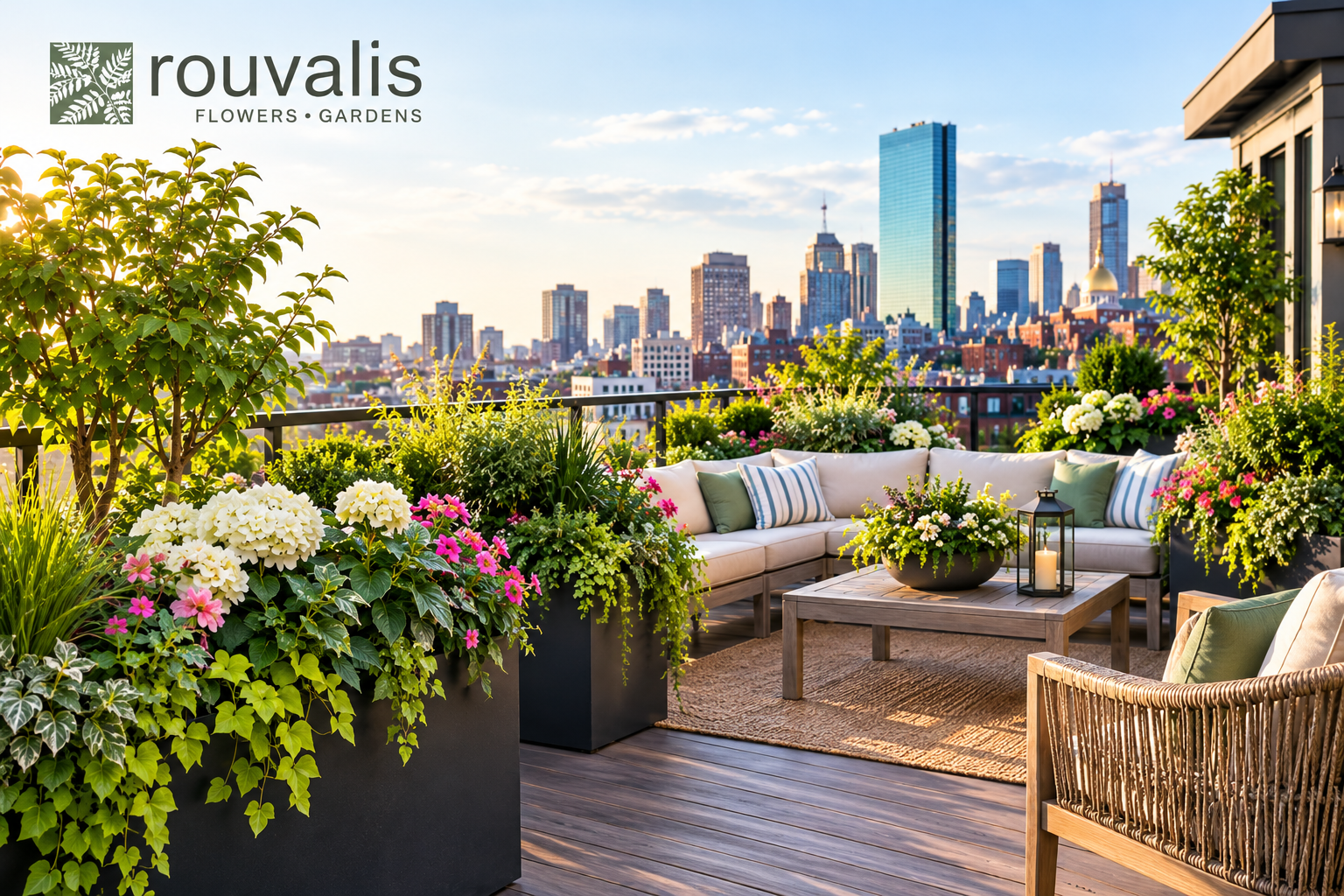
Roof Deck Planting: How to Turn Your Boston-Area Rooftop Into a Living Garden
Roof deck planting is the fastest way to turn an unused stretch of pavers and membrane into a private, living garden above the city. For homeowners, condo boards and property managers around Boston, a planted rooftop adds shade, cools the surface, softens street noise and creates a place you will actually use. At Rouvalis Gardens, we design and install rooftop gardens built for New England wind, winter and heat.
A successful rooftop garden starts with a structural load check, then a protected waterproofing layer, lightweight soil, wind-tolerant plants and drip irrigation. Most residential projects take two to six weeks from approved design to final planting.
What Is a Planted Roof Deck?
A planted roof deck is an outdoor living space where containers, raised planters or built-in beds sit on top of a protected roof system. Unlike a full green roof, it keeps usable decking and seating while adding layers of greenery around them. You get the comfort of a deck with the beauty of a garden.
Why Roof Deck Planting Pays Off
Greenery on a rooftop does more than look good. The benefits show up in comfort, value and maintenance costs.
- Lower heat: Plants and soil shade the surface, which can make the deck and the rooms below noticeably cooler in summer.
- Privacy: Tall grasses and evergreen screens block sightlines from neighboring buildings.
- Noise reduction: Soil and foliage absorb sound that would otherwise bounce off hard surfaces.
- Stormwater control: Planters hold rainfall and release it slowly, easing pressure on drains.
- Property value: A well-designed outdoor room is a strong selling point in dense neighborhoods.
- Well-being: Time among plants lowers stress, even when the garden is only a few steps from your kitchen.
Roof Deck Planting Seaport, MA: Built for Wind, Salt and Sun
Rooftops in the Seaport face a tougher environment than most Boston neighborhoods. Open exposure to the harbor means strong, constant wind, salt-laden air and intense afternoon sun. Plants that look perfect at a nursery can desiccate within weeks in these conditions.
For roof deck planting Seaport, MA, we specify salt-tolerant, low-profile and deep-rooted plants, along with windbreak planters, secured containers and soil blends that resist blowing out. Irrigation is non-negotiable here, because exposed roofs dry out faster than ground-level gardens. Good design for waterfront buildings also considers building rules, parapet height and fastening methods so every planter stays put in a nor’easter.
Rooftop Garden Installation in Cambridge, MA
Cambridge rooftops range from three-decker decks to modern condo terraces. Space is usually tight, and many buildings are older, so load capacity and drainage take priority. Our rooftop garden installation Cambridge, MA focuses on lightweight planting media, modular planters and layouts that keep weight over structural supports.
Cambridge clients often want edible plantings, so we regularly include herbs, dwarf fruit and pollinator-friendly perennials. These add flavor and bring bees and butterflies to an otherwise paved block.
Rooftop Garden Installation in Brookline, MA
Brookline homes tend to have a more residential feel, with brownstone-style roof decks, multi-family buildings and private terraces. Clients here usually want privacy, seasonal color and low maintenance. Our rooftop garden installation Brookline, MA blends evergreen structure with flowering perennials, so the deck looks good in January as well as July.
Many Brookline properties also sit in historic or tightly regulated areas. We plan layouts that respect sightlines, height limits and building guidelines from the start, which avoids costly redesigns.
Our Roof Deck Planting Process
A rooftop is not a backyard, so every project follows a careful sequence.
- Site assessment: We measure the space, document sun and wind exposure and review access routes for materials.
- Structural and waterproofing review: We confirm the roof can carry the added weight and coordinate with your engineer or roofer when needed. Protecting the membrane comes first.
- Design: You receive a planting plan with layout, plant palette, planter materials and irrigation approach.
- Installation: Our crew hoists soil, planters and plants, installs drainage layers and irrigation and plants the garden.
- Care plan: We explain watering, feeding and seasonal tasks, or maintain the garden for you through the year.
From the first walkthrough to the final watering, Rouvalis Gardens keeps the process simple so you always know what happens next.
Best Plants for Roof Deck Planting in New England
Plants on a rooftop need to handle wind, reflected heat and shallow soil, plus freezing winters. The most reliable choices include:
- Ornamental grasses: Little bluestem, feather reed grass and switchgrass add movement and tolerate wind.
- Sedums and succulents: Shallow roots and excellent drought tolerance make them ideal for sunny, exposed spots.
- Native perennials: Coneflower, black-eyed Susan and aster support pollinators and return each year.
- Evergreens: Dwarf juniper, boxwood and compact spruce give winter structure and privacy.
- Herbs: Thyme, rosemary, sage and chives thrive in containers and stay close to the kitchen.
We avoid shallow-rooted, thirsty plants that struggle in containers. Matching the plant to the microclimate of your roof matters far more than choosing the most expensive specimens.
What Affects Cost and Maintenance?
Pricing depends on roof size, access, structural requirements, planter materials, irrigation and plant selection. A compact terrace with container plantings costs far less than a full deck with built-in beds and automated watering. Crane or hoist access can also change the budget significantly.
Maintenance is lighter than most people expect. Expect seasonal cleanup, periodic feeding, irrigation checks in spring and winterizing in late fall. A planting plan built around hardy, low-demand species keeps the workload manageable.
Final Thoughts
Roof deck planting transforms an overlooked surface into a garden that cools your home, supports pollinators and gives you a private escape in the middle of the city. The difference between a rooftop that thrives and one that struggles comes down to planning: structure, waterproofing, drainage, irrigation and plants chosen for your exact exposure. Whether you are in the windy Seaport, a tight Cambridge terrace or a Brookline roof deck, the right design makes the space beautiful and easy to maintain.
If you are ready to start, Rouvalis Gardens would love to walk your roof, talk through your goals and build a plan that fits your space and budget.
Frequently Asked Questions
How much does roof deck planting cost?
Costs vary widely with roof size, access, planter type, irrigation and plant choices. Small container-based gardens are the most affordable, while custom built-in beds with automated irrigation sit at the higher end. A site visit is the only way to give an accurate estimate.
Is roof deck planting safe for my roof?
Yes, when it is designed correctly. Safety depends on load capacity, protected waterproofing, drainage and proper planter placement. We review these factors before any soil or planter goes up.
What plants grow best on a rooftop in Massachusetts?
Wind- and drought-tolerant plants such as ornamental grasses, sedums, native perennials, dwarf evergreens and herbs perform best. Your exposure, building height and soil depth guide the final selection.
Do I need a permit?
Requirements depend on your city, building type and the scale of the work. Condo and multi-family properties may also need association approval. We help you understand what is needed early in the planning stage.
How long does installation take?
Most residential rooftop projects take two to six weeks, including design and approvals. The planting itself is often completed in a few days.
Can I grow vegetables on my roof deck?
Absolutely. Tomatoes, peppers, lettuce, beans and herbs grow well in properly sized containers with consistent watering and full sun.
Do you serve Seaport, Cambridge and Brookline?
Yes. We install and maintain rooftop gardens across Boston, Cambridge, Brookline and surrounding communities.