- Serving Boston and the Greater Boston Area

- Home
- Services
- Garden Design Services
- Landscape Design
- Urban Garden Design
- Rooftop Garden Installation
- Roof Deck Planting
- Container Gardening Services
- Seasonal Container Planting
- Window Boxes
- Fine Gardening
- Garden Maintenance
- Planting Maintenance
- Flower & Plant Installation
- Drip Irrigation Installation
- Landscape Lighting
- Service Areas
Charlestown, MA
- Garden Services in Charlestown, MA
- Garden Design in Charlestown, MA
- Landscape Design in Charlestown, MA
- Urban Garden Design in Charlestown, MA
- Rooftop Garden Installation in Charlestown, MA
- Roof Deck Planting in Charlestown, MA
- Container Gardening in Charlestown, MA
- Seasonal Container Planting in Charlestown, MA
- Flower & Plant Installation in Charlestown, MA
- Window Boxes in Charlestown, MA
- Fine Gardening in Charlestown, MA
- Garden Maintenance in Charlestown, MA
- Planting & Maintenance in Charlestown, MA
- Drip Irrigation Installation in Charlestown, MA
- Landscape Lighting in Charlestown, MA
North End, MA
- Garden Services in north-end, MA
- Garden Design in north-end, MA
- Landscape Design in north-end, MA
- Urban Garden Design in north-end, MA
- Rooftop Garden Installation in north-end, MA
- Roof Deck Planting in north-end, MA
- Container Gardening in north-end, MA
- Seasonal Container Planting in north-end, MA
- Flower & Plant Installation in north-end, MA
- Window Boxes in north-end, MA
- Fine Gardening in north-end, MA
- Garden Maintenance in north-end, MA
- Planting & Maintenance in north-end, MA
- Drip Irrigation Installation in north-end, MA
- Landscape Lighting in north-end, MA
Downtown Boston, MA
- Garden Services in downtown boston, MA
- Garden Design in downtown boston, MA
- Landscape Design in downtown boston, MA
- Urban Garden Design in downtown boston, MA
- Rooftop Garden Installation in downtown boston, MA
- Roof Deck Planting in downtown boston, MA
- Container Gardening in downtown boston, MA
- Seasonal Container Planting in downtown boston, MA
- Flower & Plant Installation in downtown boston, MA
- Window Boxes in downtown boston, MA
- Fine Gardening in downtown boston, MA
- Garden Maintenance in downtown boston, MA
- Planting & Maintenance in downtown boston, MA
- Drip Irrigation Installation in downtown boston, MA
- Landscape Lighting in downtown boston, MA
Beacon Hill, MA
- Garden Services in beacon hill, MA
- Garden Design in beacon hill, MA
- Landscape Design in beacon hill, MA
- Urban Garden Design in beacon hill, MA
- Rooftop Garden Installation in beacon hill, MA
- Roof Deck Planting in beacon hill, MA
- Container Gardening in beacon hill, MA
- Seasonal Container Planting in beacon hill, MA
- Flower & Plant Installation in beacon hill, MA
- Window Boxes in beacon hill, MA
- Fine Gardening in beacon hill, MA
- Garden Maintenance in beacon hill, MA
- Planting & Maintenance in beacon hill, MA
- Drip Irrigation Installation in beacon hill, MA
- Landscape Lighting in beacon hill, MA
Boston, MA
- Garden Services in boston, MA
- Garden Design in boston, MA
- Landscape Design in boston, MA
- Urban Garden Design in boston, MA
- Rooftop Garden Installation in boston, MA
- Roof Deck Planting in boston, MA
- Container Gardening in boston, MA
- Seasonal Container Planting in boston, MA
- Flower & Plant Installation in boston, MA
- Window Boxes in boston, MA
- Fine Gardening in boston, MA
- Garden Maintenance in boston, MA
- Planting & Maintenance in boston, MA
- Drip Irrigation Installation in boston, MA
- Landscape Lighting in boston, MA
seaport, MA
- Garden Services in seaport, MA
- Garden Design in seaport, MA
- Landscape Design in seaport, MA
- Urban Garden Design in seaport, MA
- Rooftop Garden Installation in seaport, MA
- Roof Deck Planting in seaport, MA
- Container Gardening in seaport, MA
- Seasonal Container Planting in seaport, MA
- Flower & Plant Installation in seaport, MA
- Window Boxes in seaport, MA
- Fine Gardening in seaport, MA
- Garden Maintenance in seaport, MA
- Planting & Maintenance in seaport, MA
- Drip Irrigation Installation in seaport, MA
- Landscape Lighting in seaport, MA
back bay, MA
- Garden Services in back bay, MA
- Garden Design in back bay, MA
- Landscape Design in back bay, MA
- Urban Garden Design in back bay, MA
- Rooftop Garden Installation in back bay, MA
- Roof Deck Planting in back bay, MA
- Container Gardening in back bay, MA
- Seasonal Container Planting in back bay, MA
- Flower & Plant Installation in back bay, MA
- Window Boxes in back bay, MA
- Fine Gardening in back bay, MA
- Garden Maintenance in back bay, MA
- Planting & Maintenance in back bay, MA
- Drip Irrigation Installation in back bay, MA
- Landscape Lighting in back bay, MA
cambridge, MA
- Garden Services in cambridge, MA
- Garden Design in cambridge, MA
- Landscape Design in cambridge, MA
- Urban Garden Design in cambridge, MA
- Rooftop Garden Installation in cambridge, MA
- Roof Deck Planting in cambridge, MA
- Container Gardening in cambridge, MA
- Seasonal Container Planting in cambridge, MA
- Flower & Plant Installation in cambridge, MA
- Window Boxes in cambridge, MA
- Fine Gardening in cambridge, MA
- Garden Maintenance in cambridge, MA
- Planting & Maintenance in cambridge, MA
- Drip Irrigation Installation in cambridge, MA
- Landscape Lighting in cambridge, MA
south-end, MA
- Garden Services in south-end, MA
- Garden Design in south-end, MA
- Landscape Design in south-end, MA
- Urban Garden Design in south-end, MA
- Rooftop Garden Installation in south-end, MA
- Roof Deck Planting in south-end, MA
- Container Gardening in south-end, MA
- Seasonal Container Planting in south-end, MA
- Flower & Plant Installation in south-end, MA
- Window Boxes in south-end, MA
- Fine Gardening in south-end, MA
- Garden Maintenance in south-end, MA
- Planting & Maintenance in south-end, MA
- Drip Irrigation Installation in south-end, MA
- Landscape Lighting in south-end, MA
brookline, MA
- Garden Services in brookline, MA
- Garden Design in brookline, MA
- Landscape Design in brookline, MA
- Urban Garden Design in brookline, MA
- Rooftop Garden Installation in brookline, MA
- Roof Deck Planting in brookline, MA
- Container Gardening in brookline, MA
- Seasonal Container Planting in brookline, MA
- Flower & Plant Installation in brookline, MA
- Window Boxes in brookline, MA
- Fine Gardening in brookline, MA
- Garden Maintenance in brookline, MA
- Planting & Maintenance in brookline, MA
- Drip Irrigation Installation in brookline, MA
- Landscape Lighting in brookline, MA
winchester, MA
- Garden Services in winchester, MA
- Garden Design in winchester, MA
- Landscape Design in winchester, MA
- Urban Garden Design in winchester, MA
- Rooftop Garden Installation in winchester, MA
- Roof Deck Planting in winchester, MA
- Container Gardening in winchester, MA
- Seasonal Container Planting in winchester, MA
- Flower & Plant Installation in winchester, MA
- Window Boxes in winchester, MA
- Fine Gardening in winchester, MA
- Garden Maintenance in winchester, MA
- Planting & Maintenance in winchester, MA
- Drip Irrigation Installation in winchester, MA
- Landscape Lighting in winchester, MA
newton, MA
- Garden Services in newton, MA
- Garden Design in newton, MA
- Landscape Design in newton, MA
- Urban Garden Design in newton, MA
- Rooftop Garden Installation in newton, MA
- Roof Deck Planting in newton, MA
- Container Gardening in newton, MA
- Seasonal Container Planting in newton, MA
- Flower & Plant Installation in newton, MA
- Window Boxes in newton, MA
- Fine Gardening in newton, MA
- Garden Maintenance in newton, MA
- Planting & Maintenance in newton, MA
- Drip Irrigation Installation in newton, MA
- Landscape Lighting in newton, MA
lexington, MA
- Garden Services in lexington, MA
- Garden Design in lexington, MA
- Landscape Design in lexington, MA
- Urban Garden Design in lexington, MA
- Rooftop Garden Installation in lexington, MA
- Roof Deck Planting in lexington, MA
- Container Gardening in lexington, MA
- Seasonal Container Planting newton, MA
- Flower & Plant Installation in lexington, MA
- Window Boxes in lexington, MA
- Fine Gardening in lexington, MA
- Garden Maintenance in lexington, MA
- Planting & Maintenance in lexington, MA
- Drip Irrigation Installation in lexington, MA
- Landscape Lighting in lexington, MA
weston, MA
- Garden Services in weston, MA
- Garden Design in weston, MA
- Landscape Design in weston, MA
- Urban Garden Design in weston, MA
- Rooftop Garden Installation in weston, MA
- Roof Deck Planting in weston, MA
- Container Gardening in weston, MA
- Seasonal Container Planting weston, MA
- Flower & Plant Installation in weston, MA
- Window Boxes in weston, MA
- Fine Gardening in weston, MA
- Garden Maintenance in weston, MA
- Planting & Maintenance in weston, MA
- Drip Irrigation Installation in weston, MA
- Landscape Lighting in weston, MA
wellesley, MA
- Garden Services in wellesley, MA
- Garden Design in wellesley, MA
- Landscape Design in wellesley, MA
- Urban Garden Design in wellesley, MA
- Rooftop Garden Installation in wellesley, MA
- Roof Deck Planting in wellesley, MA
- Container Gardening in wellesley, MA
- Seasonal Container Planting wellesley, MA
- Flower & Plant Installation in wellesley, MA
- Window Boxes in wellesley, MA
- Fine Gardening in wellesley, MA
- Garden Maintenance in wellesley, MA
- Planting & Maintenance in wellesley, MA
- Drip Irrigation Installation in wellesley, MA
- Landscape Lighting in wellesley, MA
- Portfolio
- About us
- Blog
- Contact
- Flower Delivery
Drip Irrigation Installation in Lexington, MA
If your Lexington property sits under historic district review, faces open sun most of the day, and loses plantings to deer every season, standard sprinkler retrofits are usually the wrong answer before you even start. Drip irrigation solves all three problems at once: it delivers water at the root zone with no spray pattern to argue over with a commission, it holds beds through the long unshaded stretches common on colonial-era lots, and it lets us route lines to protect the plantings deer tend to leave alone rather than the ones they strip. The right system here is designed around the property’s history and its wildlife, not just its square footage.

What Drip Irrigation Installation looks like in Lexington
Lexington’s housing stock is dominated by colonial and Georgian revival homes, many within or adjacent to the town’s historic districts, where any visible alteration to a street-facing yard can trigger a review. Drip irrigation is naturally suited to that constraint: the tubing runs at or below grade, concealed under mulch or groundcover, with no risers, no spray heads, and nothing visible from the road. For a front dooryard garden or a foundation planting along a historic facade, that matters more than the irrigation performance itself — it means the system can go in without a hearing.
Open sun is the second defining condition. Many Lexington lots, particularly the larger colonial parcels off Massachusetts Avenue and around the Battle Green corridor, were cleared generations ago and still carry full southern exposure across the front lawn and perennial beds. Full sun accelerates soil drying, which punishes new plantings and stresses established hedgerows during July and August dry spells. Drip lines let us set zones and run times specific to sun-exposed beds versus the shadier north sides of the house, instead of running one irrigation schedule for the whole property and overwatering half of it.
Deer pressure runs high across Lexington’s residential neighborhoods, especially near the conservation land and wooded lot lines common in the western and southern parts of town. Deer don’t interact with drip tubing directly, but they do dictate what we plant and where we concentrate irrigation investment — boxwood, hosta, and hydrangea beds that deer target repeatedly need consistent, deep watering to recover between browsing events, and that’s a drip-system strength, not a sprinkler one. We factor deer behavior into zone design from the start, not as an afterthought once plants start disappearing.
What we account for here
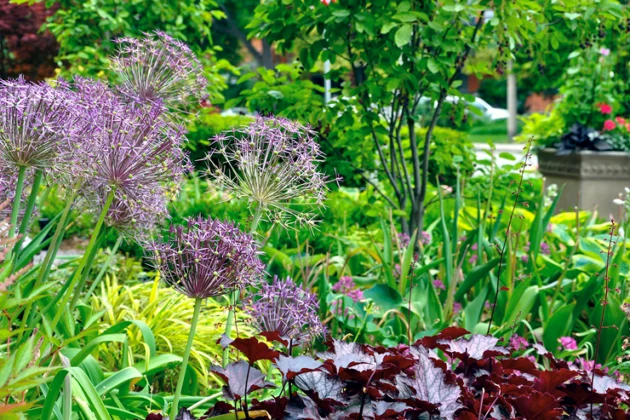
What we account for here
Every Lexington property brings its own mix of soil, slope, and plant groupings, and we factor each into the drip design before any tubing goes down. That means mapping zones by water need, sizing emitters for established trees versus new perennial beds, and routing lines to avoid walkways, irrigation heads, and utility markings already on the lot.
- Zoning by sun exposure and plant type
- Emitter spacing and flow rates
- Backflow and pressure requirements
Historic district and Battle Green area review
Properties within Lexington’s Battle Green Historic District, or falling under the town’s Historic Districts Commission for street-facing changes, need irrigation that leaves no visible trace. We install drip tubing beneath mulch and existing beds rather than above-grade sprinkler risers, and we route any required backflow or controller hardware to the side or rear of the house wherever the property allows. Where a project does require commission sign-off because of a visible component, we provide the documentation needed and keep the design conservative from the first sketch.
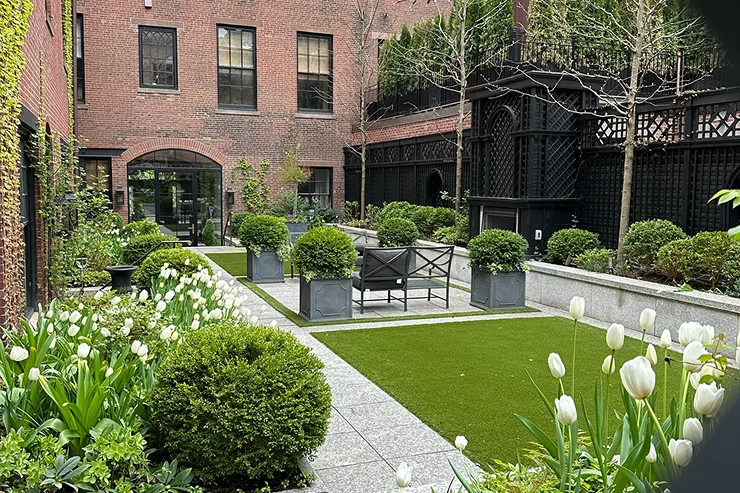
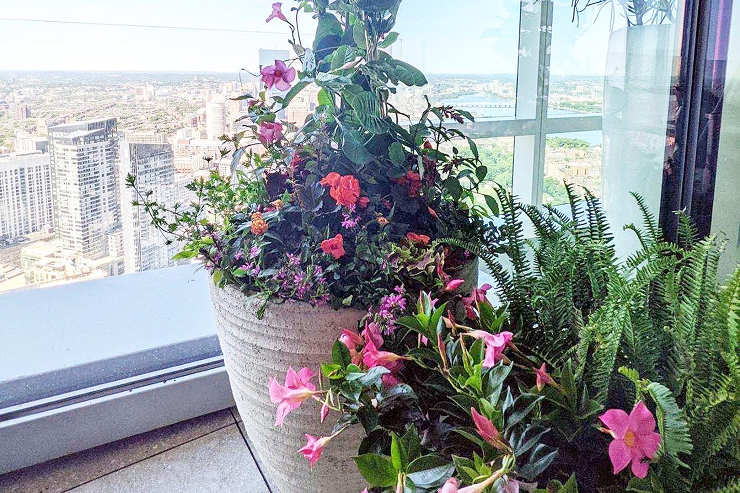
Full-sun exposure on open colonial lots
Large, unshaded front lawns and perennial borders — typical of the deep-set colonial lots along Massachusetts Avenue, Hancock Street, and the neighborhoods around the Minute Man corridor — dry out faster and need longer, more frequent watering cycles than shaded plantings on the same property. We zone drip lines separately for sun-exposed beds so those areas get the volume they need without overwatering the shadier sides of the house, which keeps root systems healthy and reduces disease pressure from excess moisture where it isn’t needed.
Deer browsing near conservation land and wooded lot lines
Lexington backs onto a significant amount of conservation land, and lots near those edges, along with wooded rear yards throughout town, see consistent deer activity. Deer-browsed plants — boxwood, arborvitae, hosta, hydrangea — need dependable root-zone watering to push new growth back after damage, so we prioritize drip coverage on those beds and build in the flexibility to adjust zones if a planting plan shifts toward more deer-resistant species over time.
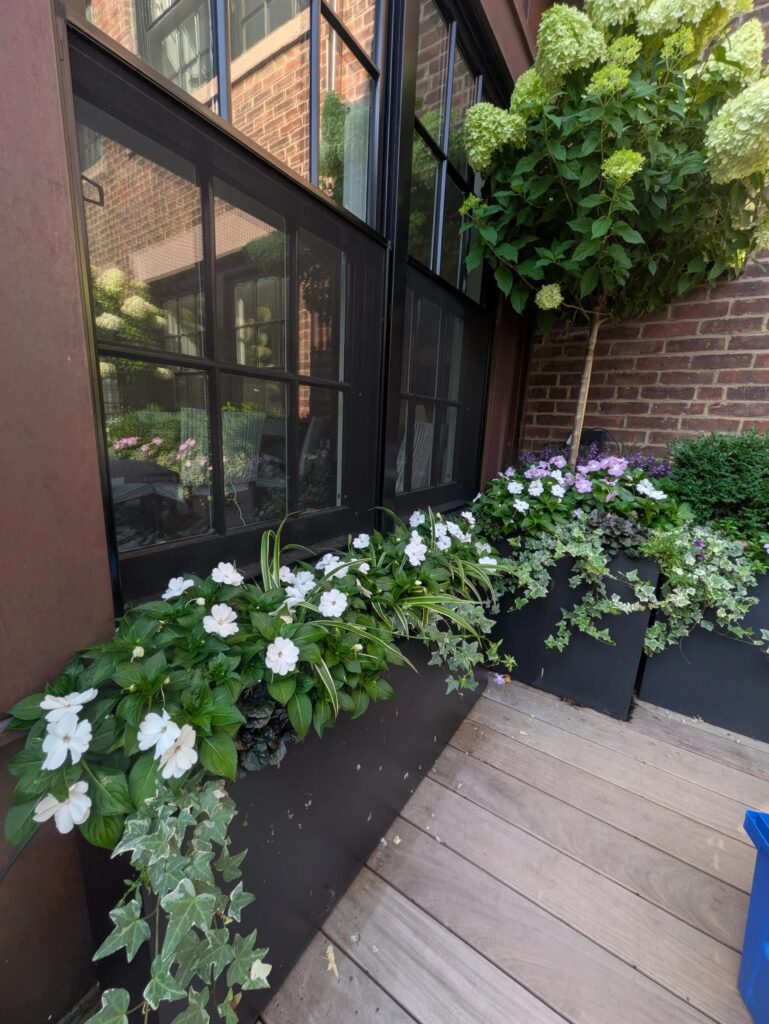
Older well and municipal water infrastructure
Some Lexington properties, particularly older estates, still run on private wells or have infrastructure that predates current town water service, which changes pressure and flow assumptions for any irrigation design. We test the water source and pressure at the property before finalizing zone counts and emitter spacing, rather than assuming a standard municipal setup, so the system performs consistently instead of underdelivering to the far end of a zone.
Recent Lexington work
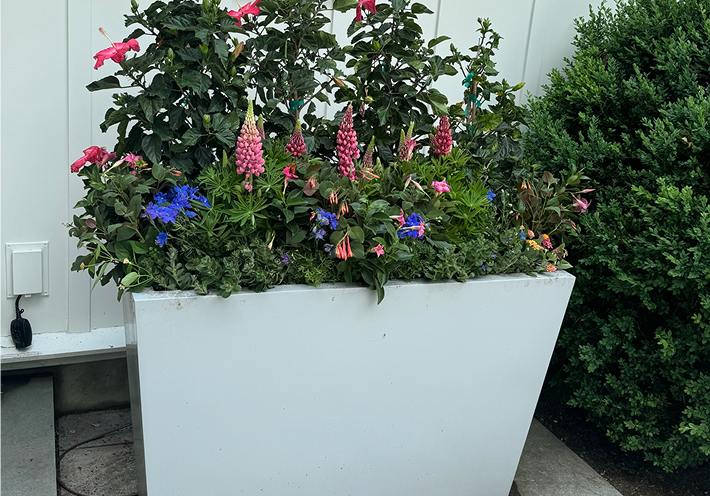
Recent work in Lexington has centered on drip retrofits for front dooryard gardens on historic-district properties, where the goal was full irrigation coverage with zero visible hardware from the street, and on perennial border systems for open-sun colonial lots where uneven watering had left some beds thriving and others scorched by August. We’ve also built out zoned systems for rear-yard plantings near wooded lot lines, designed specifically to support recovery watering for deer-browsed shrubs through the growing season. Each of these was sized to the specific bed layout and sun pattern on site rather than a standard template.
Other services we provide in Lexington
Drip irrigation is usually one piece of a broader plan for Lexington properties. We also provide garden design and installation in Lexington for homeowners planning new beds or reworking existing ones around a historic facade, along with fine gardening and season-long maintenance to keep plantings healthy once they’re in the ground. For properties with entries, porches, or terraces, we build and maintain containers and window boxes suited to a colonial or Georgian street presence, and for larger lots we handle roof deck and terrace planting where the layout calls for it. Many Lexington clients pair irrigation work with low-voltage landscape lighting, since both are typically installed at the same time to avoid disturbing new beds twice. We coordinate all of it as one project rather than a series of separate visits.
Start with a consultation in Lexington
Lexington is about 10.2 miles from our Lexington location, and most consultations start with a walk of the property to look at sun exposure, existing beds, water source, and anything relevant to historic district review before we propose a zone plan. Call to set up a site visit — we’ll assess the property, talk through what a drip system would look like given your specific conditions, and give you a straightforward proposal with no pressure to move faster than you want to. If you’re also considering work in Weston or Newton, or comparing notes on how we handle this in Boston, we’re happy to talk through those differences too.
What Our Customers Say
Frequently Asked Questions
Will drip irrigation be visible from the street on a historic-district property?
No. Drip tubing runs at or below grade, concealed under mulch or groundcover, with no risers or spray heads. For properties in Lexington's Battle Green Historic District or under Historic Districts Commission review, this is usually the deciding factor in choosing drip over a conventional sprinkler system.
Does drip irrigation help with deer damage to plantings?
Not directly — deer will still browse what they browse — but consistent root-zone watering helps deer-targeted plants like hydrangea, hosta, and boxwood recover faster between browsing events. We design zones around the beds that see the heaviest deer pressure so those plantings get reliable, deep watering.
How does full sun on an open colonial lot affect the system design?
Sun-exposed beds dry out faster and need separate, longer watering cycles than shaded areas on the same property. We zone the system so full-sun plantings get adequate volume without overwatering shadier sides of the house.
Do you work with private well water, which some older Lexington homes still use?
Yes. We test water pressure and flow at the source before designing zone counts and emitter spacing, since well systems and older infrastructure don't always match standard municipal water assumptions.
How far is Lexington from your Lexington location?
About 10.2 miles. We regularly work in Lexington and can schedule a site visit to assess sun exposure, existing beds, and any historic review considerations before proposing a system.