- Serving Boston and the Greater Boston Area

- Home
- Services
- Garden Design Services
- Landscape Design
- Urban Garden Design
- Rooftop Garden Installation
- Roof Deck Planting
- Container Gardening Services
- Seasonal Container Planting
- Window Boxes
- Fine Gardening
- Garden Maintenance
- Planting Maintenance
- Flower & Plant Installation
- Drip Irrigation Installation
- Landscape Lighting
- Service Areas
Charlestown, MA
- Garden Services in Charlestown, MA
- Garden Design in Charlestown, MA
- Landscape Design in Charlestown, MA
- Urban Garden Design in Charlestown, MA
- Rooftop Garden Installation in Charlestown, MA
- Roof Deck Planting in Charlestown, MA
- Container Gardening in Charlestown, MA
- Seasonal Container Planting in Charlestown, MA
- Flower & Plant Installation in Charlestown, MA
- Window Boxes in Charlestown, MA
- Fine Gardening in Charlestown, MA
- Garden Maintenance in Charlestown, MA
- Planting & Maintenance in Charlestown, MA
- Drip Irrigation Installation in Charlestown, MA
- Landscape Lighting in Charlestown, MA
North End, MA
- Garden Services in north-end, MA
- Garden Design in north-end, MA
- Landscape Design in north-end, MA
- Urban Garden Design in north-end, MA
- Rooftop Garden Installation in north-end, MA
- Roof Deck Planting in north-end, MA
- Container Gardening in north-end, MA
- Seasonal Container Planting in north-end, MA
- Flower & Plant Installation in north-end, MA
- Window Boxes in north-end, MA
- Fine Gardening in north-end, MA
- Garden Maintenance in north-end, MA
- Planting & Maintenance in north-end, MA
- Drip Irrigation Installation in north-end, MA
- Landscape Lighting in north-end, MA
Downtown Boston, MA
- Garden Services in downtown boston, MA
- Garden Design in downtown boston, MA
- Landscape Design in downtown boston, MA
- Urban Garden Design in downtown boston, MA
- Rooftop Garden Installation in downtown boston, MA
- Roof Deck Planting in downtown boston, MA
- Container Gardening in downtown boston, MA
- Seasonal Container Planting in downtown boston, MA
- Flower & Plant Installation in downtown boston, MA
- Window Boxes in downtown boston, MA
- Fine Gardening in downtown boston, MA
- Garden Maintenance in downtown boston, MA
- Planting & Maintenance in downtown boston, MA
- Drip Irrigation Installation in downtown boston, MA
- Landscape Lighting in downtown boston, MA
Beacon Hill, MA
- Garden Services in beacon hill, MA
- Garden Design in beacon hill, MA
- Landscape Design in beacon hill, MA
- Urban Garden Design in beacon hill, MA
- Rooftop Garden Installation in beacon hill, MA
- Roof Deck Planting in beacon hill, MA
- Container Gardening in beacon hill, MA
- Seasonal Container Planting in beacon hill, MA
- Flower & Plant Installation in beacon hill, MA
- Window Boxes in beacon hill, MA
- Fine Gardening in beacon hill, MA
- Garden Maintenance in beacon hill, MA
- Planting & Maintenance in beacon hill, MA
- Drip Irrigation Installation in beacon hill, MA
- Landscape Lighting in beacon hill, MA
Boston, MA
- Garden Services in boston, MA
- Garden Design in boston, MA
- Landscape Design in boston, MA
- Urban Garden Design in boston, MA
- Rooftop Garden Installation in boston, MA
- Roof Deck Planting in boston, MA
- Container Gardening in boston, MA
- Seasonal Container Planting in boston, MA
- Flower & Plant Installation in boston, MA
- Window Boxes in boston, MA
- Fine Gardening in boston, MA
- Garden Maintenance in boston, MA
- Planting & Maintenance in boston, MA
- Drip Irrigation Installation in boston, MA
- Landscape Lighting in boston, MA
seaport, MA
- Garden Services in seaport, MA
- Garden Design in seaport, MA
- Landscape Design in seaport, MA
- Urban Garden Design in seaport, MA
- Rooftop Garden Installation in seaport, MA
- Roof Deck Planting in seaport, MA
- Container Gardening in seaport, MA
- Seasonal Container Planting in seaport, MA
- Flower & Plant Installation in seaport, MA
- Window Boxes in seaport, MA
- Fine Gardening in seaport, MA
- Garden Maintenance in seaport, MA
- Planting & Maintenance in seaport, MA
- Drip Irrigation Installation in seaport, MA
- Landscape Lighting in seaport, MA
back bay, MA
- Garden Services in back bay, MA
- Garden Design in back bay, MA
- Landscape Design in back bay, MA
- Urban Garden Design in back bay, MA
- Rooftop Garden Installation in back bay, MA
- Roof Deck Planting in back bay, MA
- Container Gardening in back bay, MA
- Seasonal Container Planting in back bay, MA
- Flower & Plant Installation in back bay, MA
- Window Boxes in back bay, MA
- Fine Gardening in back bay, MA
- Garden Maintenance in back bay, MA
- Planting & Maintenance in back bay, MA
- Drip Irrigation Installation in back bay, MA
- Landscape Lighting in back bay, MA
cambridge, MA
- Garden Services in cambridge, MA
- Garden Design in cambridge, MA
- Landscape Design in cambridge, MA
- Urban Garden Design in cambridge, MA
- Rooftop Garden Installation in cambridge, MA
- Roof Deck Planting in cambridge, MA
- Container Gardening in cambridge, MA
- Seasonal Container Planting in cambridge, MA
- Flower & Plant Installation in cambridge, MA
- Window Boxes in cambridge, MA
- Fine Gardening in cambridge, MA
- Garden Maintenance in cambridge, MA
- Planting & Maintenance in cambridge, MA
- Drip Irrigation Installation in cambridge, MA
- Landscape Lighting in cambridge, MA
south-end, MA
- Garden Services in south-end, MA
- Garden Design in south-end, MA
- Landscape Design in south-end, MA
- Urban Garden Design in south-end, MA
- Rooftop Garden Installation in south-end, MA
- Roof Deck Planting in south-end, MA
- Container Gardening in south-end, MA
- Seasonal Container Planting in south-end, MA
- Flower & Plant Installation in south-end, MA
- Window Boxes in south-end, MA
- Fine Gardening in south-end, MA
- Garden Maintenance in south-end, MA
- Planting & Maintenance in south-end, MA
- Drip Irrigation Installation in south-end, MA
- Landscape Lighting in south-end, MA
brookline, MA
- Garden Services in brookline, MA
- Garden Design in brookline, MA
- Landscape Design in brookline, MA
- Urban Garden Design in brookline, MA
- Rooftop Garden Installation in brookline, MA
- Roof Deck Planting in brookline, MA
- Container Gardening in brookline, MA
- Seasonal Container Planting in brookline, MA
- Flower & Plant Installation in brookline, MA
- Window Boxes in brookline, MA
- Fine Gardening in brookline, MA
- Garden Maintenance in brookline, MA
- Planting & Maintenance in brookline, MA
- Drip Irrigation Installation in brookline, MA
- Landscape Lighting in brookline, MA
winchester, MA
- Garden Services in winchester, MA
- Garden Design in winchester, MA
- Landscape Design in winchester, MA
- Urban Garden Design in winchester, MA
- Rooftop Garden Installation in winchester, MA
- Roof Deck Planting in winchester, MA
- Container Gardening in winchester, MA
- Seasonal Container Planting in winchester, MA
- Flower & Plant Installation in winchester, MA
- Window Boxes in winchester, MA
- Fine Gardening in winchester, MA
- Garden Maintenance in winchester, MA
- Planting & Maintenance in winchester, MA
- Drip Irrigation Installation in winchester, MA
- Landscape Lighting in winchester, MA
newton, MA
- Garden Services in newton, MA
- Garden Design in newton, MA
- Landscape Design in newton, MA
- Urban Garden Design in newton, MA
- Rooftop Garden Installation in newton, MA
- Roof Deck Planting in newton, MA
- Container Gardening in newton, MA
- Seasonal Container Planting in newton, MA
- Flower & Plant Installation in newton, MA
- Window Boxes in newton, MA
- Fine Gardening in newton, MA
- Garden Maintenance in newton, MA
- Planting & Maintenance in newton, MA
- Drip Irrigation Installation in newton, MA
- Landscape Lighting in newton, MA
lexington, MA
- Garden Services in lexington, MA
- Garden Design in lexington, MA
- Landscape Design in lexington, MA
- Urban Garden Design in lexington, MA
- Rooftop Garden Installation in lexington, MA
- Roof Deck Planting in lexington, MA
- Container Gardening in lexington, MA
- Seasonal Container Planting newton, MA
- Flower & Plant Installation in lexington, MA
- Window Boxes in lexington, MA
- Fine Gardening in lexington, MA
- Garden Maintenance in lexington, MA
- Planting & Maintenance in lexington, MA
- Drip Irrigation Installation in lexington, MA
- Landscape Lighting in lexington, MA
weston, MA
- Garden Services in weston, MA
- Garden Design in weston, MA
- Landscape Design in weston, MA
- Urban Garden Design in weston, MA
- Rooftop Garden Installation in weston, MA
- Roof Deck Planting in weston, MA
- Container Gardening in weston, MA
- Seasonal Container Planting weston, MA
- Flower & Plant Installation in weston, MA
- Window Boxes in weston, MA
- Fine Gardening in weston, MA
- Garden Maintenance in weston, MA
- Planting & Maintenance in weston, MA
- Drip Irrigation Installation in weston, MA
- Landscape Lighting in weston, MA
wellesley, MA
- Garden Services in wellesley, MA
- Garden Design in wellesley, MA
- Landscape Design in wellesley, MA
- Urban Garden Design in wellesley, MA
- Rooftop Garden Installation in wellesley, MA
- Roof Deck Planting in wellesley, MA
- Container Gardening in wellesley, MA
- Seasonal Container Planting wellesley, MA
- Flower & Plant Installation in wellesley, MA
- Window Boxes in wellesley, MA
- Fine Gardening in wellesley, MA
- Garden Maintenance in wellesley, MA
- Planting & Maintenance in wellesley, MA
- Drip Irrigation Installation in wellesley, MA
- Landscape Lighting in wellesley, MA
- Portfolio
- About us
- Blog
- Contact
- Flower Delivery
Drip Irrigation Installation in Winchester, MA
If your property sits near the Mystic Lakes, chances are you’re dealing with a mix of heavy shade under mature oaks, a slope that sheds water before it reaches the roots, and beds that deer treat as a standing buffet. A hose and a good intention will not fix any of that. Drip irrigation, run correctly on a graded lot and timed around what deer will and won’t eat around, is what actually keeps plantings alive through a Winchester summer.

What Drip Irrigation Installation looks like in Winchester
Winchester properties near the lakes tend to slope toward the water, which means standard spray irrigation runs off the top of the bed and pools at the bottom before it ever soaks in. We lay drip lines along the contour of the slope, in short zones, so water sits long enough to penetrate instead of sheeting downhill into the lawn or the lake buffer itself. That last point matters here more than almost anywhere else we work: runoff into the Mystic Lakes watershed is a real concern for conservation-minded homeowners, and a properly zoned drip system uses a fraction of the water a sprinkler head would, with none of it leaving the bed.
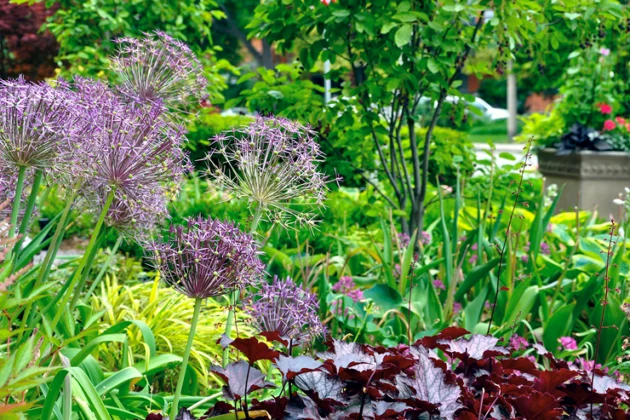
The oak canopy that gives these lots their character also changes how we design the system. Root competition under a mature oak is intense, and shallow, uniform drip grids get out-competed fast. We run deeper emitter spacing near established trees and separate the understory plantings — hostas, ferns, hydrangeas — onto their own zone with their own schedule, since they need consistent moisture that oak roots would otherwise intercept first.
Deer pressure around the lakes is constant enough that we design planting beds and irrigation together, not as two separate decisions. A drip system that keeps a deer-resistant palette (boxwood, andromeda, mountain laurel) properly hydrated does more for the long-term look of a property than trying to keep tender, deer-favored perennials alive against browsing pressure. We also route lines to avoid disturbing root flare on specimen trees, since many of these properties are old enough that the oaks predate the house.
What we account for here
What we account for here
Slope and grading
Lots that drop toward the lake need pressure-compensating emitters and shorter zone runs. Without compensation, the lowest points of a slope get flooded while the top stays dry — we size zones to the actual grade change, not a flat assumption.
Mature oak root systems
Established oaks pull moisture aggressively and can crack irrigation lines laid too shallow or too close to the trunk. We route around root flares and use deeper, wider emitter spacing so the tree and the understory plantings aren’t competing for the same water.
Deer browsing patterns
Systems are paired with plant selections that hold up to deer pressure, and where clients want to keep more vulnerable perennials, we can integrate irrigation timing with deterrent strategies so new growth isn’t watered right into a browsing window.
Lake-adjacent water use
For properties close to the Mystic Lakes, we favor low-flow drip over any spray-based system, both for water efficiency and to keep fertilizer or soil runoff out of the watershed — a detail several Winchester clients have specifically asked us to prioritize.
Recent Winchester work
A recurring project type near the lakes is a sloped rear yard, oak-shaded, where the previous irrigation setup was a flat spray grid installed before the trees matured. We’ve replaced these with zoned drip systems that follow the grade, protect root systems, and cut water use noticeably while finally keeping the shade beds consistently moist instead of alternating between soaked and bone-dry.
Other services we provide in Winchester
Drip irrigation is rarely a standalone request in Winchester — it’s usually one piece of a broader planting and grounds plan. We also provide full garden services in Winchester, including garden design and installation suited to sloped, wooded lots, fine gardening and ongoing maintenance for properties where deer pressure requires constant attention, containers and window boxes for front entries and terraces, roof deck and terrace planting for homes with lake or hillside views, and low-voltage landscape lighting to make the most of a heavily wooded, often dark property line after dusk. Clients frequently combine drip installation with a lighting or planting project to get the whole exterior handled in one visit rather than several.
Consultation and next steps
Every Winchester drip irrigation project starts with a site walk. We look at grade, canopy cover, existing beds, and where deer pressure has already shaped what’s growing and what isn’t, then design zones around those realities rather than a standard layout. From there we provide a clear scope and schedule installation, typically completing residential systems within a day or two depending on property size.
Why Winchester properties choose drip irrigation
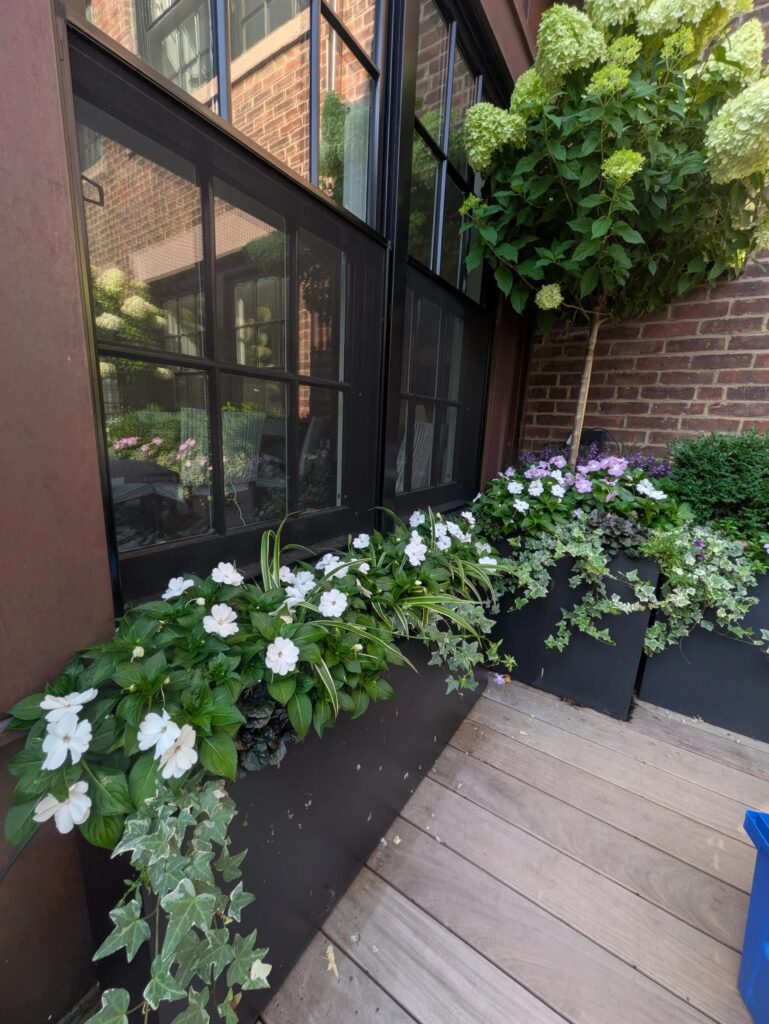
Many Winchester yards mix mature shade trees, foundation plantings, and sunny perennial beds within a small footprint. Drip irrigation delivers water directly to the root zone of each planting area, cutting down on runoff onto driveways and sidewalks while keeping beds consistently watered. It’s especially useful around stone walls, tight side yards, and raised beds where a traditional sprinkler head would spray more pavement than plant.
- Reduced water waste compared to overhead spray
- Even moisture for beds near trees and shrubs
- Tubing tucked beneath mulch, out of sight
Rounding out your Winchester property
Drip irrigation installation is rarely a standalone project, and most Winchester homeowners pair it with other work while crews are already on site. A new drip system often follows garden design and installation for a fresh planting bed, or supports established landscapes through fine gardening and seasonal maintenance. Properties with patios or entertaining spaces frequently add containers and window boxes fed by the same water lines, while low-voltage landscape lighting extends enjoyment of the garden into the evening hours.
- Garden design paired with new drip lines
- Ongoing maintenance to keep systems running efficiently
- Lighting and containers integrated with irrigation
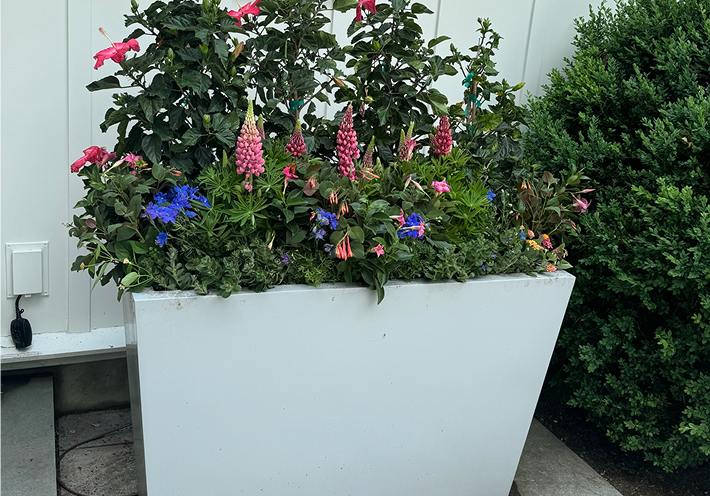
Get started with a Winchester site visit
Beds along the foundation, a vegetable garden, or newly planted shrubs all lose moisture differently, so we start every Winchester project by walking the property and mapping how water actually reaches each area. Call or request a consultation to set a time.
- We review your existing supply line and water pressure
- We note sun exposure, slope, and planting types
- You receive a written proposal before any digging begins
What Our Customers Say
Frequently Asked Questions
Does drip irrigation help with deer damage in Winchester?
Indirectly, yes. A well-hydrated deer-resistant plant palette holds up far better long term than trying to keep vulnerable perennials alive through repeated browsing. We design irrigation zones alongside plant selection so the two work together rather than fighting deer pressure with watering alone.
Will drip irrigation cause runoff into the Mystic Lakes?
No — that's actually one of the main reasons we recommend drip over spray systems for lakeside properties. Drip delivers water directly to the root zone at low pressure, so there's minimal to no runoff compared to a sprinkler head throwing water across a sloped lawn.
Can drip lines damage the roots of mature oak trees?
Not when installed correctly. We route lines around root flares and space emitters to avoid concentrating water directly against the trunk, which protects the tree while still supporting the shade plantings growing beneath it.
How does a sloped lot change the irrigation design?
Slope changes zone length and emitter type. We use pressure-compensating emitters and shorter runs so water reaches plants at the bottom of the slope evenly with the top, instead of pooling low and leaving the upper bed dry.
How far is Winchester from your Winchester location?
About 6.9 miles. We regularly work in Winchester and can typically schedule a site visit within a week of your call.