- Serving Boston and the Greater Boston Area

- Home
- Services
- Garden Design Services
- Landscape Design
- Urban Garden Design
- Rooftop Garden Installation
- Roof Deck Planting
- Container Gardening Services
- Seasonal Container Planting
- Window Boxes
- Fine Gardening
- Garden Maintenance
- Planting Maintenance
- Flower & Plant Installation
- Drip Irrigation Installation
- Landscape Lighting
- Service Areas
Charlestown, MA
- Garden Services in Charlestown, MA
- Garden Design in Charlestown, MA
- Landscape Design in Charlestown, MA
- Urban Garden Design in Charlestown, MA
- Rooftop Garden Installation in Charlestown, MA
- Roof Deck Planting in Charlestown, MA
- Container Gardening in Charlestown, MA
- Seasonal Container Planting in Charlestown, MA
- Flower & Plant Installation in Charlestown, MA
- Window Boxes in Charlestown, MA
- Fine Gardening in Charlestown, MA
- Garden Maintenance in Charlestown, MA
- Planting & Maintenance in Charlestown, MA
- Drip Irrigation Installation in Charlestown, MA
- Landscape Lighting in Charlestown, MA
North End, MA
- Garden Services in north-end, MA
- Garden Design in north-end, MA
- Landscape Design in north-end, MA
- Urban Garden Design in north-end, MA
- Rooftop Garden Installation in north-end, MA
- Roof Deck Planting in north-end, MA
- Container Gardening in north-end, MA
- Seasonal Container Planting in north-end, MA
- Flower & Plant Installation in north-end, MA
- Window Boxes in north-end, MA
- Fine Gardening in north-end, MA
- Garden Maintenance in north-end, MA
- Planting & Maintenance in north-end, MA
- Drip Irrigation Installation in north-end, MA
- Landscape Lighting in north-end, MA
Downtown Boston, MA
- Garden Services in downtown boston, MA
- Garden Design in downtown boston, MA
- Landscape Design in downtown boston, MA
- Urban Garden Design in downtown boston, MA
- Rooftop Garden Installation in downtown boston, MA
- Roof Deck Planting in downtown boston, MA
- Container Gardening in downtown boston, MA
- Seasonal Container Planting in downtown boston, MA
- Flower & Plant Installation in downtown boston, MA
- Window Boxes in downtown boston, MA
- Fine Gardening in downtown boston, MA
- Garden Maintenance in downtown boston, MA
- Planting & Maintenance in downtown boston, MA
- Drip Irrigation Installation in downtown boston, MA
- Landscape Lighting in downtown boston, MA
Beacon Hill, MA
- Garden Services in beacon hill, MA
- Garden Design in beacon hill, MA
- Landscape Design in beacon hill, MA
- Urban Garden Design in beacon hill, MA
- Rooftop Garden Installation in beacon hill, MA
- Roof Deck Planting in beacon hill, MA
- Container Gardening in beacon hill, MA
- Seasonal Container Planting in beacon hill, MA
- Flower & Plant Installation in beacon hill, MA
- Window Boxes in beacon hill, MA
- Fine Gardening in beacon hill, MA
- Garden Maintenance in beacon hill, MA
- Planting & Maintenance in beacon hill, MA
- Drip Irrigation Installation in beacon hill, MA
- Landscape Lighting in beacon hill, MA
Boston, MA
- Garden Services in boston, MA
- Garden Design in boston, MA
- Landscape Design in boston, MA
- Urban Garden Design in boston, MA
- Rooftop Garden Installation in boston, MA
- Roof Deck Planting in boston, MA
- Container Gardening in boston, MA
- Seasonal Container Planting in boston, MA
- Flower & Plant Installation in boston, MA
- Window Boxes in boston, MA
- Fine Gardening in boston, MA
- Garden Maintenance in boston, MA
- Planting & Maintenance in boston, MA
- Drip Irrigation Installation in boston, MA
- Landscape Lighting in boston, MA
seaport, MA
- Garden Services in seaport, MA
- Garden Design in seaport, MA
- Landscape Design in seaport, MA
- Urban Garden Design in seaport, MA
- Rooftop Garden Installation in seaport, MA
- Roof Deck Planting in seaport, MA
- Container Gardening in seaport, MA
- Seasonal Container Planting in seaport, MA
- Flower & Plant Installation in seaport, MA
- Window Boxes in seaport, MA
- Fine Gardening in seaport, MA
- Garden Maintenance in seaport, MA
- Planting & Maintenance in seaport, MA
- Drip Irrigation Installation in seaport, MA
- Landscape Lighting in seaport, MA
back bay, MA
- Garden Services in back bay, MA
- Garden Design in back bay, MA
- Landscape Design in back bay, MA
- Urban Garden Design in back bay, MA
- Rooftop Garden Installation in back bay, MA
- Roof Deck Planting in back bay, MA
- Container Gardening in back bay, MA
- Seasonal Container Planting in back bay, MA
- Flower & Plant Installation in back bay, MA
- Window Boxes in back bay, MA
- Fine Gardening in back bay, MA
- Garden Maintenance in back bay, MA
- Planting & Maintenance in back bay, MA
- Drip Irrigation Installation in back bay, MA
- Landscape Lighting in back bay, MA
cambridge, MA
- Garden Services in cambridge, MA
- Garden Design in cambridge, MA
- Landscape Design in cambridge, MA
- Urban Garden Design in cambridge, MA
- Rooftop Garden Installation in cambridge, MA
- Roof Deck Planting in cambridge, MA
- Container Gardening in cambridge, MA
- Seasonal Container Planting in cambridge, MA
- Flower & Plant Installation in cambridge, MA
- Window Boxes in cambridge, MA
- Fine Gardening in cambridge, MA
- Garden Maintenance in cambridge, MA
- Planting & Maintenance in cambridge, MA
- Drip Irrigation Installation in cambridge, MA
- Landscape Lighting in cambridge, MA
south-end, MA
- Garden Services in south-end, MA
- Garden Design in south-end, MA
- Landscape Design in south-end, MA
- Urban Garden Design in south-end, MA
- Rooftop Garden Installation in south-end, MA
- Roof Deck Planting in south-end, MA
- Container Gardening in south-end, MA
- Seasonal Container Planting in south-end, MA
- Flower & Plant Installation in south-end, MA
- Window Boxes in south-end, MA
- Fine Gardening in south-end, MA
- Garden Maintenance in south-end, MA
- Planting & Maintenance in south-end, MA
- Drip Irrigation Installation in south-end, MA
- Landscape Lighting in south-end, MA
brookline, MA
- Garden Services in brookline, MA
- Garden Design in brookline, MA
- Landscape Design in brookline, MA
- Urban Garden Design in brookline, MA
- Rooftop Garden Installation in brookline, MA
- Roof Deck Planting in brookline, MA
- Container Gardening in brookline, MA
- Seasonal Container Planting in brookline, MA
- Flower & Plant Installation in brookline, MA
- Window Boxes in brookline, MA
- Fine Gardening in brookline, MA
- Garden Maintenance in brookline, MA
- Planting & Maintenance in brookline, MA
- Drip Irrigation Installation in brookline, MA
- Landscape Lighting in brookline, MA
winchester, MA
- Garden Services in winchester, MA
- Garden Design in winchester, MA
- Landscape Design in winchester, MA
- Urban Garden Design in winchester, MA
- Rooftop Garden Installation in winchester, MA
- Roof Deck Planting in winchester, MA
- Container Gardening in winchester, MA
- Seasonal Container Planting in winchester, MA
- Flower & Plant Installation in winchester, MA
- Window Boxes in winchester, MA
- Fine Gardening in winchester, MA
- Garden Maintenance in winchester, MA
- Planting & Maintenance in winchester, MA
- Drip Irrigation Installation in winchester, MA
- Landscape Lighting in winchester, MA
newton, MA
- Garden Services in newton, MA
- Garden Design in newton, MA
- Landscape Design in newton, MA
- Urban Garden Design in newton, MA
- Rooftop Garden Installation in newton, MA
- Roof Deck Planting in newton, MA
- Container Gardening in newton, MA
- Seasonal Container Planting in newton, MA
- Flower & Plant Installation in newton, MA
- Window Boxes in newton, MA
- Fine Gardening in newton, MA
- Garden Maintenance in newton, MA
- Planting & Maintenance in newton, MA
- Drip Irrigation Installation in newton, MA
- Landscape Lighting in newton, MA
lexington, MA
- Garden Services in lexington, MA
- Garden Design in lexington, MA
- Landscape Design in lexington, MA
- Urban Garden Design in lexington, MA
- Rooftop Garden Installation in lexington, MA
- Roof Deck Planting in lexington, MA
- Container Gardening in lexington, MA
- Seasonal Container Planting newton, MA
- Flower & Plant Installation in lexington, MA
- Window Boxes in lexington, MA
- Fine Gardening in lexington, MA
- Garden Maintenance in lexington, MA
- Planting & Maintenance in lexington, MA
- Drip Irrigation Installation in lexington, MA
- Landscape Lighting in lexington, MA
weston, MA
- Garden Services in weston, MA
- Garden Design in weston, MA
- Landscape Design in weston, MA
- Urban Garden Design in weston, MA
- Rooftop Garden Installation in weston, MA
- Roof Deck Planting in weston, MA
- Container Gardening in weston, MA
- Seasonal Container Planting weston, MA
- Flower & Plant Installation in weston, MA
- Window Boxes in weston, MA
- Fine Gardening in weston, MA
- Garden Maintenance in weston, MA
- Planting & Maintenance in weston, MA
- Drip Irrigation Installation in weston, MA
- Landscape Lighting in weston, MA
wellesley, MA
- Garden Services in wellesley, MA
- Garden Design in wellesley, MA
- Landscape Design in wellesley, MA
- Urban Garden Design in wellesley, MA
- Rooftop Garden Installation in wellesley, MA
- Roof Deck Planting in wellesley, MA
- Container Gardening in wellesley, MA
- Seasonal Container Planting wellesley, MA
- Flower & Plant Installation in wellesley, MA
- Window Boxes in wellesley, MA
- Fine Gardening in wellesley, MA
- Garden Maintenance in wellesley, MA
- Planting & Maintenance in wellesley, MA
- Drip Irrigation Installation in wellesley, MA
- Landscape Lighting in wellesley, MA
- Portfolio
- About us
- Blog
- Contact
- Flower Delivery
Drip Irrigation Installation in Cambridge, MA
A drip system on a Cambridge lot has to solve for two conditions at once: deep shade from a mature street-tree canopy that leaves some beds perpetually damp, and small, densely planted side yards between triple-deckers where a sprinkler head would just soak the neighbor’s fence. Add a Cambridge Historical Commission district overlay on many blocks in Mid-Cambridge, Avon Hill, and around Brattle Street, and irrigation becomes as much a planning question as a plumbing one. We design each system around the specific tree, soil, and review situation on that lot rather than defaulting to a standard layout.

What Drip Irrigation Installation looks like in Cambridge
Most Cambridge properties we work on fall into one of two categories: a triple-decker with a narrow side yard and a small back plot shared awkwardly among units, or a Victorian or Colonial closer to Harvard or Central Square with a formal front bed facing the sidewalk and a more private garden behind it. Both come with heavy shade for a good part of the day, cast by the elms, maples, and honey locusts that line most Cambridge streets. That shade changes everything about how a drip system is designed. Areas under dense canopy need less water and slower emitters, while sun pockets near a south-facing wall or a recently opened gap in the tree line need a different zone entirely, or the plants in that pocket scorch while the shaded bed stays soggy.
Soil here is inconsistent lot to lot. Many Cambridge yards carry decades of construction fill, compacted clay from old foundations, or thin topsoil laid over rubble from additions and renovations. We check drainage before laying any line, because a drip system placed over compacted clay will pool at the surface and do more harm than a hose ever would. Access is its own constraint: side yards between triple-deckers are often three or four feet wide, shared with a neighbor’s fence line, and too tight for a trenching machine. Most of our Cambridge installs are done with hand tools and narrow-profile tubing routed along bed edges and under mulch rather than buried in a wide trench.
Where a property sits inside a Cambridge Historical Commission district, we plan any component visible from the street, backflow preventers, above-grade valve boxes, exposed tubing along a front walk, so it reads as unobtrusive as possible and doesn’t draw commission attention during a future review of unrelated work.
What we account for here
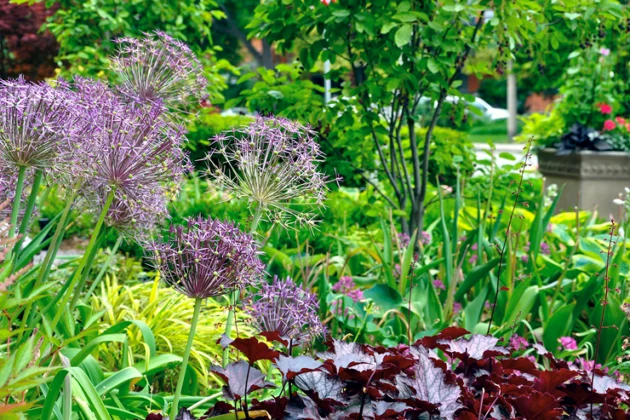
What we account for here
Cambridge properties rarely offer a blank slate. Triple-deckers with shared lot lines, condo courtyards, and older water service lines all shape how a drip system gets laid out and pressurized. Before installing anything, we look at:
- Existing spigot pressure and available flow
- Bed shapes around foundations, walkways, and fences
- Soil condition beneath mulch or turf
- Freeze exposure for shutoff and winterizing points
That groundwork keeps the system reliable season after season.
Street-tree canopy and uneven shade
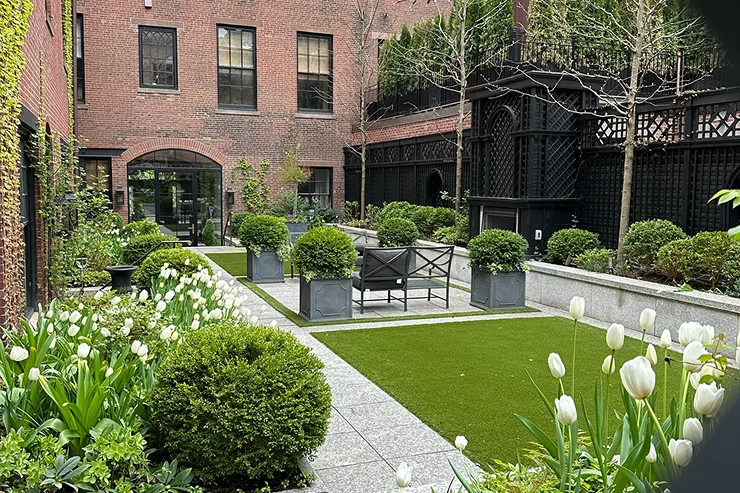
Cambridge’s public shade trees are a defining feature of blocks in Cambridgeport, North Cambridge, and Mid-Cambridge, but they create root competition and dry pockets right at the tree base while the surrounding bed stays wet. We zone drip lines to separate the areas directly under a canopy from the open beds nearby, and we route tubing to avoid disturbing surface roots that the city and the tree’s owner both have an interest in protecting.
Historical Commission districts on street-facing beds
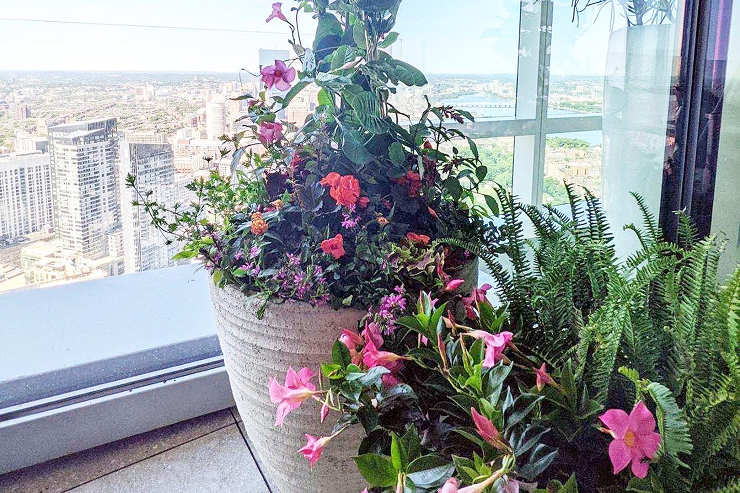
Front gardens on Commission-reviewed streets need irrigation components that stay out of sight. We keep backflow assemblies and valve manifolds off the street-facing elevation where possible, use low-profile in-line emitter tubing rather than exposed drip stakes near the sidewalk, and document the layout so it’s easy to reference if a future exterior project triggers a Commission review.
Narrow side yards and shared fences
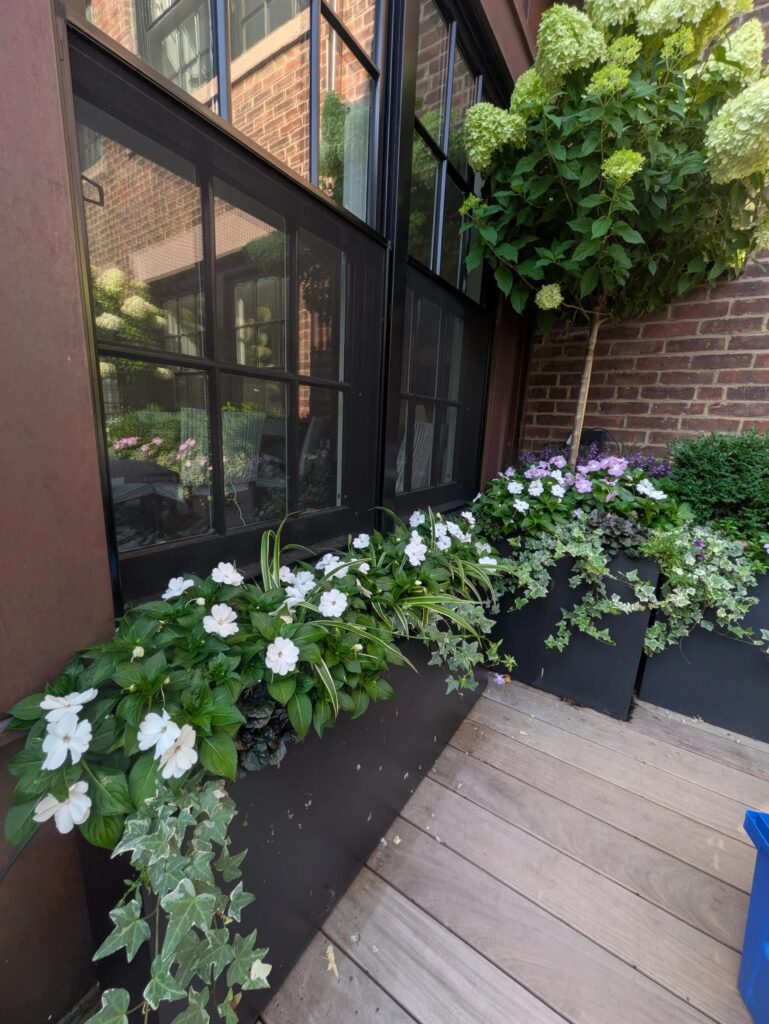
Triple-decker side yards are frequently the tightest working space on a Cambridge property, sometimes barely wide enough to pass through with a wheelbarrow. We install by hand in these spaces, running tubing along the base of the fence and under mulch rather than trenching, and we coordinate timing with neighbors sharing that access strip so the work doesn’t block a shared walkway for longer than necessary.
Inconsistent fill soil and drainage
A number of Cambridge lots sit on old construction fill or compacted clay left from additions built decades apart. Before running any line we test how each bed drains, and where drainage is poor we adjust emitter spacing and flow rate rather than installing a uniform system that will pool in the low spots and starve the high ones.
Recent Cambridge work
Recent projects in Cambridge have included fitting a zoned drip system into a Mid-Cambridge Victorian’s front bed without altering the street-facing appearance ahead of a Commission-reviewed renovation, and re-piping a triple-decker’s shared side yard so each unit’s small planting strip runs on its own zone instead of a single line that overwatered the shaded end and left the sunnier end dry. Both jobs were driven by the same problem: existing irrigation, where it existed at all, had been laid out without accounting for the tree canopy or the yard’s actual shape.
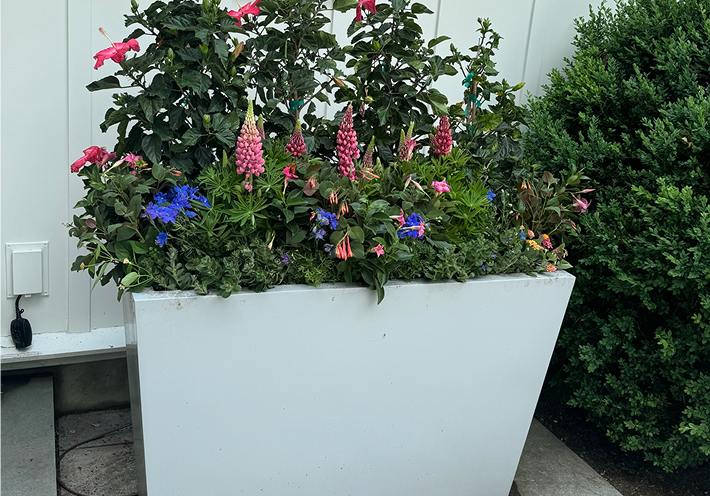
Other services we provide in Cambridge
Drip irrigation is usually one piece of a larger plan for a Cambridge property. We handle full garden services in Cambridge, including garden design and installation for front and back beds, fine gardening and ongoing maintenance suited to a shaded, tree-lined lot, container and window box plantings for townhouse facades, roof deck and terrace planting for the flat and pitched roofs common on triple-deckers, and low-voltage landscape lighting that highlights a front garden without adding visible hardware to a Commission-reviewed elevation. Clients working across neighborhoods also ask us about the same irrigation approach in the Boston service area, and about the parallel work we do with drip irrigation installation in the South End and Back Bay, which shares many of the same tight-access and historic-district considerations.
Start with a consultation in Cambridge
We’re 2.8 miles from our Cambridge shop to most of Cambridge, close enough that a site visit fits easily into a normal week, whatever your street’s access and review requirements happen to be. Call to schedule a consultation. We’ll walk the property, note the shade pattern, soil, and any Historical Commission constraints on the beds facing the street, and follow up with a system layout and a straightforward quote before any work begins.
What Our Customers Say
Frequently Asked Questions
Will a drip system need Cambridge Historical Commission approval?
Irrigation itself typically isn't a reviewed item, but if your property sits in a Commission district we design street-facing components, backflow preventers, valve boxes, exposed tubing, to stay unobtrusive so they don't complicate a future exterior review.
How does the street-tree canopy affect where lines go?
Cambridge's mature canopy creates dry root zones directly under trees and damp pockets in the surrounding bed. We zone those areas separately so the tree's root area and the open bed each get the right amount of water instead of one setting for both.
Can you install irrigation in a triple-decker's narrow side yard?
Yes. Most side yards between Cambridge triple-deckers are too tight for trenching equipment, so we install by hand along fence lines and under mulch, and we schedule around shared access with neighboring units.
How long does a typical Cambridge installation take?
A single front or back bed usually takes a day. A full-property system covering a triple-decker's side yard, back plot, and any container plantings generally takes two to three days depending on access and how many zones the shade pattern requires.
Do you service the irrigation system after installation?
Yes, seasonal start-up, mid-season adjustments as shade shifts with tree leaf-out, and fall shutdown can all be handled as part of our ongoing garden maintenance for Cambridge properties.