- Serving Boston and the Greater Boston Area

- Home
- Services
- Garden Design Services
- Landscape Design
- Urban Garden Design
- Rooftop Garden Installation
- Roof Deck Planting
- Container Gardening Services
- Seasonal Container Planting
- Window Boxes
- Fine Gardening
- Garden Maintenance
- Planting Maintenance
- Flower & Plant Installation
- Drip Irrigation Installation
- Landscape Lighting
- Service Areas
Charlestown, MA
- Garden Services in Charlestown, MA
- Garden Design in Charlestown, MA
- Landscape Design in Charlestown, MA
- Urban Garden Design in Charlestown, MA
- Rooftop Garden Installation in Charlestown, MA
- Roof Deck Planting in Charlestown, MA
- Container Gardening in Charlestown, MA
- Seasonal Container Planting in Charlestown, MA
- Flower & Plant Installation in Charlestown, MA
- Window Boxes in Charlestown, MA
- Fine Gardening in Charlestown, MA
- Garden Maintenance in Charlestown, MA
- Planting & Maintenance in Charlestown, MA
- Drip Irrigation Installation in Charlestown, MA
- Landscape Lighting in Charlestown, MA
North End, MA
- Garden Services in north-end, MA
- Garden Design in north-end, MA
- Landscape Design in north-end, MA
- Urban Garden Design in north-end, MA
- Rooftop Garden Installation in north-end, MA
- Roof Deck Planting in north-end, MA
- Container Gardening in north-end, MA
- Seasonal Container Planting in north-end, MA
- Flower & Plant Installation in north-end, MA
- Window Boxes in north-end, MA
- Fine Gardening in north-end, MA
- Garden Maintenance in north-end, MA
- Planting & Maintenance in north-end, MA
- Drip Irrigation Installation in north-end, MA
- Landscape Lighting in north-end, MA
Downtown Boston, MA
- Garden Services in downtown boston, MA
- Garden Design in downtown boston, MA
- Landscape Design in downtown boston, MA
- Urban Garden Design in downtown boston, MA
- Rooftop Garden Installation in downtown boston, MA
- Roof Deck Planting in downtown boston, MA
- Container Gardening in downtown boston, MA
- Seasonal Container Planting in downtown boston, MA
- Flower & Plant Installation in downtown boston, MA
- Window Boxes in downtown boston, MA
- Fine Gardening in downtown boston, MA
- Garden Maintenance in downtown boston, MA
- Planting & Maintenance in downtown boston, MA
- Drip Irrigation Installation in downtown boston, MA
- Landscape Lighting in downtown boston, MA
Beacon Hill, MA
- Garden Services in beacon hill, MA
- Garden Design in beacon hill, MA
- Landscape Design in beacon hill, MA
- Urban Garden Design in beacon hill, MA
- Rooftop Garden Installation in beacon hill, MA
- Roof Deck Planting in beacon hill, MA
- Container Gardening in beacon hill, MA
- Seasonal Container Planting in beacon hill, MA
- Flower & Plant Installation in beacon hill, MA
- Window Boxes in beacon hill, MA
- Fine Gardening in beacon hill, MA
- Garden Maintenance in beacon hill, MA
- Planting & Maintenance in beacon hill, MA
- Drip Irrigation Installation in beacon hill, MA
- Landscape Lighting in beacon hill, MA
Boston, MA
- Garden Services in boston, MA
- Garden Design in boston, MA
- Landscape Design in boston, MA
- Urban Garden Design in boston, MA
- Rooftop Garden Installation in boston, MA
- Roof Deck Planting in boston, MA
- Container Gardening in boston, MA
- Seasonal Container Planting in boston, MA
- Flower & Plant Installation in boston, MA
- Window Boxes in boston, MA
- Fine Gardening in boston, MA
- Garden Maintenance in boston, MA
- Planting & Maintenance in boston, MA
- Drip Irrigation Installation in boston, MA
- Landscape Lighting in boston, MA
seaport, MA
- Garden Services in seaport, MA
- Garden Design in seaport, MA
- Landscape Design in seaport, MA
- Urban Garden Design in seaport, MA
- Rooftop Garden Installation in seaport, MA
- Roof Deck Planting in seaport, MA
- Container Gardening in seaport, MA
- Seasonal Container Planting in seaport, MA
- Flower & Plant Installation in seaport, MA
- Window Boxes in seaport, MA
- Fine Gardening in seaport, MA
- Garden Maintenance in seaport, MA
- Planting & Maintenance in seaport, MA
- Drip Irrigation Installation in seaport, MA
- Landscape Lighting in seaport, MA
back bay, MA
- Garden Services in back bay, MA
- Garden Design in back bay, MA
- Landscape Design in back bay, MA
- Urban Garden Design in back bay, MA
- Rooftop Garden Installation in back bay, MA
- Roof Deck Planting in back bay, MA
- Container Gardening in back bay, MA
- Seasonal Container Planting in back bay, MA
- Flower & Plant Installation in back bay, MA
- Window Boxes in back bay, MA
- Fine Gardening in back bay, MA
- Garden Maintenance in back bay, MA
- Planting & Maintenance in back bay, MA
- Drip Irrigation Installation in back bay, MA
- Landscape Lighting in back bay, MA
cambridge, MA
- Garden Services in cambridge, MA
- Garden Design in cambridge, MA
- Landscape Design in cambridge, MA
- Urban Garden Design in cambridge, MA
- Rooftop Garden Installation in cambridge, MA
- Roof Deck Planting in cambridge, MA
- Container Gardening in cambridge, MA
- Seasonal Container Planting in cambridge, MA
- Flower & Plant Installation in cambridge, MA
- Window Boxes in cambridge, MA
- Fine Gardening in cambridge, MA
- Garden Maintenance in cambridge, MA
- Planting & Maintenance in cambridge, MA
- Drip Irrigation Installation in cambridge, MA
- Landscape Lighting in cambridge, MA
south-end, MA
- Garden Services in south-end, MA
- Garden Design in south-end, MA
- Landscape Design in south-end, MA
- Urban Garden Design in south-end, MA
- Rooftop Garden Installation in south-end, MA
- Roof Deck Planting in south-end, MA
- Container Gardening in south-end, MA
- Seasonal Container Planting in south-end, MA
- Flower & Plant Installation in south-end, MA
- Window Boxes in south-end, MA
- Fine Gardening in south-end, MA
- Garden Maintenance in south-end, MA
- Planting & Maintenance in south-end, MA
- Drip Irrigation Installation in south-end, MA
- Landscape Lighting in south-end, MA
brookline, MA
- Garden Services in brookline, MA
- Garden Design in brookline, MA
- Landscape Design in brookline, MA
- Urban Garden Design in brookline, MA
- Rooftop Garden Installation in brookline, MA
- Roof Deck Planting in brookline, MA
- Container Gardening in brookline, MA
- Seasonal Container Planting in brookline, MA
- Flower & Plant Installation in brookline, MA
- Window Boxes in brookline, MA
- Fine Gardening in brookline, MA
- Garden Maintenance in brookline, MA
- Planting & Maintenance in brookline, MA
- Drip Irrigation Installation in brookline, MA
- Landscape Lighting in brookline, MA
winchester, MA
- Garden Services in winchester, MA
- Garden Design in winchester, MA
- Landscape Design in winchester, MA
- Urban Garden Design in winchester, MA
- Rooftop Garden Installation in winchester, MA
- Roof Deck Planting in winchester, MA
- Container Gardening in winchester, MA
- Seasonal Container Planting in winchester, MA
- Flower & Plant Installation in winchester, MA
- Window Boxes in winchester, MA
- Fine Gardening in winchester, MA
- Garden Maintenance in winchester, MA
- Planting & Maintenance in winchester, MA
- Drip Irrigation Installation in winchester, MA
- Landscape Lighting in winchester, MA
newton, MA
- Garden Services in newton, MA
- Garden Design in newton, MA
- Landscape Design in newton, MA
- Urban Garden Design in newton, MA
- Rooftop Garden Installation in newton, MA
- Roof Deck Planting in newton, MA
- Container Gardening in newton, MA
- Seasonal Container Planting in newton, MA
- Flower & Plant Installation in newton, MA
- Window Boxes in newton, MA
- Fine Gardening in newton, MA
- Garden Maintenance in newton, MA
- Planting & Maintenance in newton, MA
- Drip Irrigation Installation in newton, MA
- Landscape Lighting in newton, MA
lexington, MA
- Garden Services in lexington, MA
- Garden Design in lexington, MA
- Landscape Design in lexington, MA
- Urban Garden Design in lexington, MA
- Rooftop Garden Installation in lexington, MA
- Roof Deck Planting in lexington, MA
- Container Gardening in lexington, MA
- Seasonal Container Planting newton, MA
- Flower & Plant Installation in lexington, MA
- Window Boxes in lexington, MA
- Fine Gardening in lexington, MA
- Garden Maintenance in lexington, MA
- Planting & Maintenance in lexington, MA
- Drip Irrigation Installation in lexington, MA
- Landscape Lighting in lexington, MA
weston, MA
- Garden Services in weston, MA
- Garden Design in weston, MA
- Landscape Design in weston, MA
- Urban Garden Design in weston, MA
- Rooftop Garden Installation in weston, MA
- Roof Deck Planting in weston, MA
- Container Gardening in weston, MA
- Seasonal Container Planting weston, MA
- Flower & Plant Installation in weston, MA
- Window Boxes in weston, MA
- Fine Gardening in weston, MA
- Garden Maintenance in weston, MA
- Planting & Maintenance in weston, MA
- Drip Irrigation Installation in weston, MA
- Landscape Lighting in weston, MA
wellesley, MA
- Garden Services in wellesley, MA
- Garden Design in wellesley, MA
- Landscape Design in wellesley, MA
- Urban Garden Design in wellesley, MA
- Rooftop Garden Installation in wellesley, MA
- Roof Deck Planting in wellesley, MA
- Container Gardening in wellesley, MA
- Seasonal Container Planting wellesley, MA
- Flower & Plant Installation in wellesley, MA
- Window Boxes in wellesley, MA
- Fine Gardening in wellesley, MA
- Garden Maintenance in wellesley, MA
- Planting & Maintenance in wellesley, MA
- Drip Irrigation Installation in wellesley, MA
- Landscape Lighting in wellesley, MA
- Portfolio
- About us
- Blog
- Contact
- Flower Delivery
Fine Gardening in Weston, MA
A two-acre lot under mature oak and white pine does not garden the way a quarter-acre in-town property does. In Weston, the questions that decide a planting plan are how much of the day a bed actually sees direct sun, how far the irrigation line has to travel from the house to reach the far border, and whether deer pressure will strip anything without a taste or texture they dislike. We answer those three questions before we design a single bed.

What Fine Gardening looks like in Weston
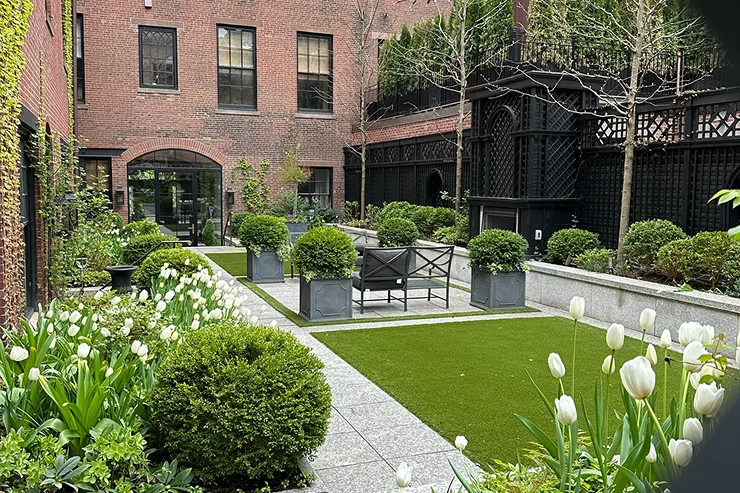
Fine gardening on a Weston estate lot starts with a walk of the whole property, not just the beds near the front door. Many of the homes we work on sit well back from the road, screened by exactly the kind of tree canopy that makes the lot desirable and makes gardening under it harder. Dappled or heavy shade covers a large share of the planting area on most of these properties, which rules out a good portion of the sun-loving perennial palette that reads as classic New England garden style. We build plant lists around what actually performs in filtered light — hellebores, epimedium, native ferns, hydrangea selections bred for shade tolerance, and woodland groundcovers that hold a bed together without needing four hours of direct sun to look full.
Deer are the other variable that shapes every decision. Weston’s wooded, low-density lots put most properties inside heavily used deer corridors, and a planting plan that ignores this fails within a season regardless of how well it was designed. We choose from a tested deer-resistant palette first, then use targeted repellent application and, where a client wants it, discreet fencing around vegetable or cutting beds — not around the whole property, which would work against the wooded aesthetic that drew the client to Weston in the first place.
Irrigation on these lots is a separate engineering problem from a Back Bay townhouse garden. Beds can sit a hundred feet or more from the house, run along a wooded drive, or wrap a pool house at the back of the property. We design drip zones and run times around that distance and around canopy shade, which changes evaporation rates and how often a zone actually needs to run. Getting this wrong either drowns a shaded bed or starves a sunny one on the same line.
What we account for here
What we account for here
Deer pressure across the whole lot
We start from a plant list of species deer reliably avoid or damage lightly, then layer in rotating repellent applications through the growing season for anything more tender. Fencing, when used, is scaled to protect specific beds rather than the entire property.
Extensive shade under mature canopy
Large trees are a Weston asset, not an obstacle to work around apologetically. We map light levels bed by bed across the season and select species suited to dappled, part, or full shade, so a garden under a stand of oaks still has structure, bloom sequence, and foliage contrast through the year.
Long irrigation runs from the house
Distance from the water source affects pressure, zoning, and how quickly a leak or clog gets noticed. We zone drip irrigation by both light exposure and distance, and we check line pressure at the far end of each run as part of routine maintenance, not just at installation.
Access on large, wooded lots
Long driveways, gated entries, and beds well removed from the street mean our crews plan equipment and material staging in advance so a maintenance visit does not mean dragging hoses or wheelbarrows across the whole property. On properties with historic barns, stone walls, or other features under local commission consideration, we also coordinate any visible planting changes with what the property’s review status allows.
Recent Weston work
A typical recent project in this neighborhood involves converting a shade-starved foundation bed under old-growth trees into a layered woodland planting — hellebores and epimedium at the front edge, hydrangea and viburnum through the middle, with a drip zone re-run specifically to reach that bed’s distance from the house at consistent pressure. Deer-resistant substitutions were built in at every layer rather than treated as an afterthought once the first season’s damage showed up.
Other services we provide in Weston
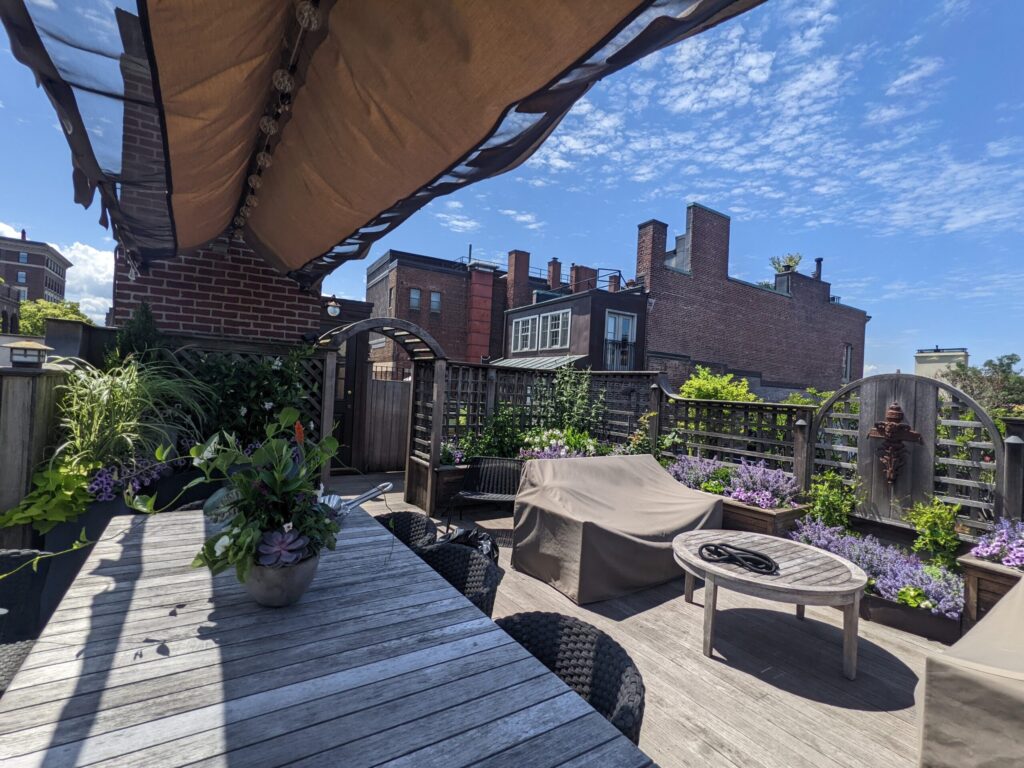
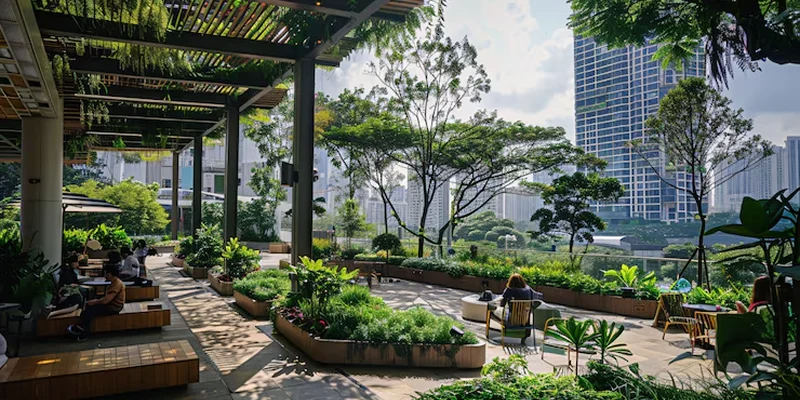
Fine gardening is one piece of a broader Weston service list. We also handle full garden services in Weston, including garden design and installation for new beds and full-property renovations, containers and seasonal window boxes for entries and terraces, and roof deck or terrace planting where a property includes one. Drip irrigation design and repair is closely tied to the fine gardening work above, and many Weston clients pair it with low-voltage landscape lighting to make long driveways, stone walls, and specimen trees visible and safe to navigate after dark. We coordinate all of these as one ongoing relationship rather than a set of separate vendors, which matters more on a large lot than a small one.
How this compares across neighborhoods
Fine gardening looks different depending on lot size, canopy, and pressure from wildlife or salt exposure. For comparison, see how we approach fine gardening in Boston on tighter urban lots, or how the same service plays out on comparable wooded suburban lots in Wellesley and Lexington, both of which share Weston’s deer pressure and long-run irrigation challenges to varying degrees.
Working around Weston's historic and conservation land
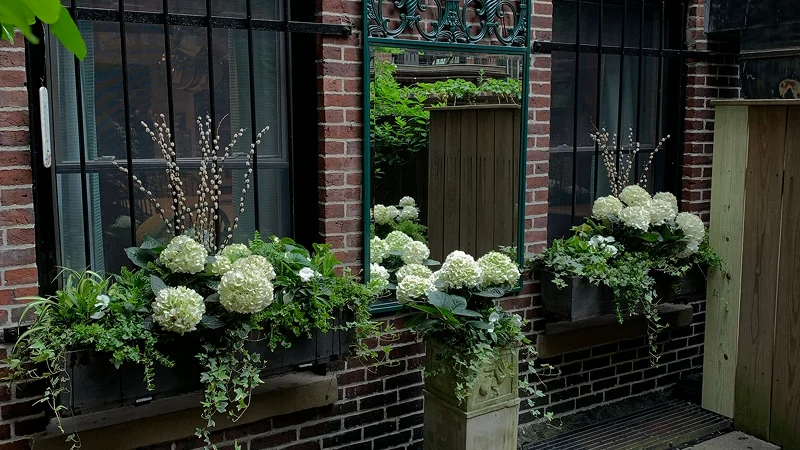
A number of Weston properties border conservation land or carry deed restrictions tied to the town’s land trust and historic district guidelines. Where that applies, we treat it the same way we treat any other site constraint — something to design around from the first visit, not something discovered after a planting plan is already drawn. Native and naturalized species get priority near conservation boundaries, both because they tend to thrive there and because they keep the planting consistent with the surrounding landscape rather than at odds with it.
Seasonal maintenance built for the property, not the calendar
A wooded Weston lot needs a different maintenance rhythm than a sunny open one. Leaf load from mature canopy affects bed cleanup timing in fall, shade reduces how often certain beds need watering even as irrigation runs get longer, and deer activity shifts with the seasons and with what neighboring properties are doing. Our maintenance visits are scheduled around what the specific property is doing that month, not a fixed regional calendar applied to every client the same way.
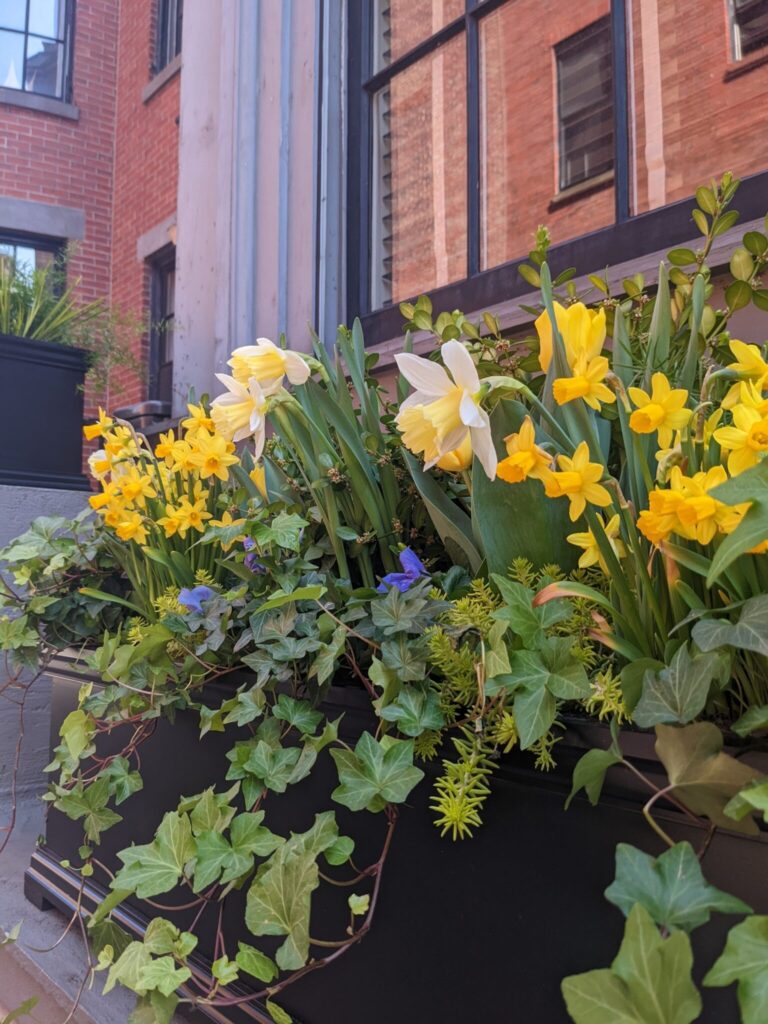
Book fine gardening in Weston
Weston is roughly 13.8 miles from our Weston base, and we schedule fine gardening visits there on a set route so travel time does not eat into the time your garden actually gets. Call us to set up a walk-through of the property. We will look at light, deer pressure, and irrigation reach the same way described above, and follow up with a written plan and a proposed maintenance schedule before any work begins.
What Our Customers Say
Frequently Asked Questions
Can a Weston garden actually be deer-resistant, or just deer-tolerant?
No planting is completely deer-proof, but a plan built from a tested deer-resistant palette, combined with seasonal repellent application and fencing around the most vulnerable beds, holds up well against typical Weston deer pressure. We tell clients up front which plants they're choosing to accept some risk on.
Will fine gardening work under heavy shade from mature trees?
Yes, and it should be designed for the shade rather than fighting it. Hellebores, epimedium, native ferns, and shade-bred hydrangea varieties all perform well under Weston's typical oak and pine canopy once the plant palette is matched to actual light levels rather than a generic sun-garden list.
How do you handle irrigation when beds are far from the house?
We zone drip irrigation by distance and by light exposure, since shaded beds and sunny beds on the same line need different run times. We also check pressure at the far end of long runs during routine maintenance so a drop in flow gets caught before plants show stress.
Do you need to work with Weston's historic district or land trust rules?
On properties near conservation land or under historic review, yes. We coordinate visible planting changes with whatever review is required and lean on native and naturalized species near conservation boundaries, which usually satisfies those guidelines while still giving the garden real structure.
How far is Weston from your Weston location?
About 13.8 miles. We run a set service route through the western suburbs so a Weston visit is scheduled efficiently rather than tacked on as an afterthought.