- Serving Boston and the Greater Boston Area

- Home
- Services
- Garden Design Services
- Landscape Design
- Urban Garden Design
- Rooftop Garden Installation
- Roof Deck Planting
- Container Gardening Services
- Seasonal Container Planting
- Window Boxes
- Fine Gardening
- Garden Maintenance
- Planting Maintenance
- Flower & Plant Installation
- Drip Irrigation Installation
- Landscape Lighting
- Service Areas
Charlestown, MA
- Garden Services in Charlestown, MA
- Garden Design in Charlestown, MA
- Landscape Design in Charlestown, MA
- Urban Garden Design in Charlestown, MA
- Rooftop Garden Installation in Charlestown, MA
- Roof Deck Planting in Charlestown, MA
- Container Gardening in Charlestown, MA
- Seasonal Container Planting in Charlestown, MA
- Flower & Plant Installation in Charlestown, MA
- Window Boxes in Charlestown, MA
- Fine Gardening in Charlestown, MA
- Garden Maintenance in Charlestown, MA
- Planting & Maintenance in Charlestown, MA
- Drip Irrigation Installation in Charlestown, MA
- Landscape Lighting in Charlestown, MA
North End, MA
- Garden Services in north-end, MA
- Garden Design in north-end, MA
- Landscape Design in north-end, MA
- Urban Garden Design in north-end, MA
- Rooftop Garden Installation in north-end, MA
- Roof Deck Planting in north-end, MA
- Container Gardening in north-end, MA
- Seasonal Container Planting in north-end, MA
- Flower & Plant Installation in north-end, MA
- Window Boxes in north-end, MA
- Fine Gardening in north-end, MA
- Garden Maintenance in north-end, MA
- Planting & Maintenance in north-end, MA
- Drip Irrigation Installation in north-end, MA
- Landscape Lighting in north-end, MA
Downtown Boston, MA
- Garden Services in downtown boston, MA
- Garden Design in downtown boston, MA
- Landscape Design in downtown boston, MA
- Urban Garden Design in downtown boston, MA
- Rooftop Garden Installation in downtown boston, MA
- Roof Deck Planting in downtown boston, MA
- Container Gardening in downtown boston, MA
- Seasonal Container Planting in downtown boston, MA
- Flower & Plant Installation in downtown boston, MA
- Window Boxes in downtown boston, MA
- Fine Gardening in downtown boston, MA
- Garden Maintenance in downtown boston, MA
- Planting & Maintenance in downtown boston, MA
- Drip Irrigation Installation in downtown boston, MA
- Landscape Lighting in downtown boston, MA
Beacon Hill, MA
- Garden Services in beacon hill, MA
- Garden Design in beacon hill, MA
- Landscape Design in beacon hill, MA
- Urban Garden Design in beacon hill, MA
- Rooftop Garden Installation in beacon hill, MA
- Roof Deck Planting in beacon hill, MA
- Container Gardening in beacon hill, MA
- Seasonal Container Planting in beacon hill, MA
- Flower & Plant Installation in beacon hill, MA
- Window Boxes in beacon hill, MA
- Fine Gardening in beacon hill, MA
- Garden Maintenance in beacon hill, MA
- Planting & Maintenance in beacon hill, MA
- Drip Irrigation Installation in beacon hill, MA
- Landscape Lighting in beacon hill, MA
Boston, MA
- Garden Services in boston, MA
- Garden Design in boston, MA
- Landscape Design in boston, MA
- Urban Garden Design in boston, MA
- Rooftop Garden Installation in boston, MA
- Roof Deck Planting in boston, MA
- Container Gardening in boston, MA
- Seasonal Container Planting in boston, MA
- Flower & Plant Installation in boston, MA
- Window Boxes in boston, MA
- Fine Gardening in boston, MA
- Garden Maintenance in boston, MA
- Planting & Maintenance in boston, MA
- Drip Irrigation Installation in boston, MA
- Landscape Lighting in boston, MA
seaport, MA
- Garden Services in seaport, MA
- Garden Design in seaport, MA
- Landscape Design in seaport, MA
- Urban Garden Design in seaport, MA
- Rooftop Garden Installation in seaport, MA
- Roof Deck Planting in seaport, MA
- Container Gardening in seaport, MA
- Seasonal Container Planting in seaport, MA
- Flower & Plant Installation in seaport, MA
- Window Boxes in seaport, MA
- Fine Gardening in seaport, MA
- Garden Maintenance in seaport, MA
- Planting & Maintenance in seaport, MA
- Drip Irrigation Installation in seaport, MA
- Landscape Lighting in seaport, MA
back bay, MA
- Garden Services in back bay, MA
- Garden Design in back bay, MA
- Landscape Design in back bay, MA
- Urban Garden Design in back bay, MA
- Rooftop Garden Installation in back bay, MA
- Roof Deck Planting in back bay, MA
- Container Gardening in back bay, MA
- Seasonal Container Planting in back bay, MA
- Flower & Plant Installation in back bay, MA
- Window Boxes in back bay, MA
- Fine Gardening in back bay, MA
- Garden Maintenance in back bay, MA
- Planting & Maintenance in back bay, MA
- Drip Irrigation Installation in back bay, MA
- Landscape Lighting in back bay, MA
cambridge, MA
- Garden Services in cambridge, MA
- Garden Design in cambridge, MA
- Landscape Design in cambridge, MA
- Urban Garden Design in cambridge, MA
- Rooftop Garden Installation in cambridge, MA
- Roof Deck Planting in cambridge, MA
- Container Gardening in cambridge, MA
- Seasonal Container Planting in cambridge, MA
- Flower & Plant Installation in cambridge, MA
- Window Boxes in cambridge, MA
- Fine Gardening in cambridge, MA
- Garden Maintenance in cambridge, MA
- Planting & Maintenance in cambridge, MA
- Drip Irrigation Installation in cambridge, MA
- Landscape Lighting in cambridge, MA
south-end, MA
- Garden Services in south-end, MA
- Garden Design in south-end, MA
- Landscape Design in south-end, MA
- Urban Garden Design in south-end, MA
- Rooftop Garden Installation in south-end, MA
- Roof Deck Planting in south-end, MA
- Container Gardening in south-end, MA
- Seasonal Container Planting in south-end, MA
- Flower & Plant Installation in south-end, MA
- Window Boxes in south-end, MA
- Fine Gardening in south-end, MA
- Garden Maintenance in south-end, MA
- Planting & Maintenance in south-end, MA
- Drip Irrigation Installation in south-end, MA
- Landscape Lighting in south-end, MA
brookline, MA
- Garden Services in brookline, MA
- Garden Design in brookline, MA
- Landscape Design in brookline, MA
- Urban Garden Design in brookline, MA
- Rooftop Garden Installation in brookline, MA
- Roof Deck Planting in brookline, MA
- Container Gardening in brookline, MA
- Seasonal Container Planting in brookline, MA
- Flower & Plant Installation in brookline, MA
- Window Boxes in brookline, MA
- Fine Gardening in brookline, MA
- Garden Maintenance in brookline, MA
- Planting & Maintenance in brookline, MA
- Drip Irrigation Installation in brookline, MA
- Landscape Lighting in brookline, MA
winchester, MA
- Garden Services in winchester, MA
- Garden Design in winchester, MA
- Landscape Design in winchester, MA
- Urban Garden Design in winchester, MA
- Rooftop Garden Installation in winchester, MA
- Roof Deck Planting in winchester, MA
- Container Gardening in winchester, MA
- Seasonal Container Planting in winchester, MA
- Flower & Plant Installation in winchester, MA
- Window Boxes in winchester, MA
- Fine Gardening in winchester, MA
- Garden Maintenance in winchester, MA
- Planting & Maintenance in winchester, MA
- Drip Irrigation Installation in winchester, MA
- Landscape Lighting in winchester, MA
newton, MA
- Garden Services in newton, MA
- Garden Design in newton, MA
- Landscape Design in newton, MA
- Urban Garden Design in newton, MA
- Rooftop Garden Installation in newton, MA
- Roof Deck Planting in newton, MA
- Container Gardening in newton, MA
- Seasonal Container Planting in newton, MA
- Flower & Plant Installation in newton, MA
- Window Boxes in newton, MA
- Fine Gardening in newton, MA
- Garden Maintenance in newton, MA
- Planting & Maintenance in newton, MA
- Drip Irrigation Installation in newton, MA
- Landscape Lighting in newton, MA
lexington, MA
- Garden Services in lexington, MA
- Garden Design in lexington, MA
- Landscape Design in lexington, MA
- Urban Garden Design in lexington, MA
- Rooftop Garden Installation in lexington, MA
- Roof Deck Planting in lexington, MA
- Container Gardening in lexington, MA
- Seasonal Container Planting newton, MA
- Flower & Plant Installation in lexington, MA
- Window Boxes in lexington, MA
- Fine Gardening in lexington, MA
- Garden Maintenance in lexington, MA
- Planting & Maintenance in lexington, MA
- Drip Irrigation Installation in lexington, MA
- Landscape Lighting in lexington, MA
weston, MA
- Garden Services in weston, MA
- Garden Design in weston, MA
- Landscape Design in weston, MA
- Urban Garden Design in weston, MA
- Rooftop Garden Installation in weston, MA
- Roof Deck Planting in weston, MA
- Container Gardening in weston, MA
- Seasonal Container Planting weston, MA
- Flower & Plant Installation in weston, MA
- Window Boxes in weston, MA
- Fine Gardening in weston, MA
- Garden Maintenance in weston, MA
- Planting & Maintenance in weston, MA
- Drip Irrigation Installation in weston, MA
- Landscape Lighting in weston, MA
wellesley, MA
- Garden Services in wellesley, MA
- Garden Design in wellesley, MA
- Landscape Design in wellesley, MA
- Urban Garden Design in wellesley, MA
- Rooftop Garden Installation in wellesley, MA
- Roof Deck Planting in wellesley, MA
- Container Gardening in wellesley, MA
- Seasonal Container Planting wellesley, MA
- Flower & Plant Installation in wellesley, MA
- Window Boxes in wellesley, MA
- Fine Gardening in wellesley, MA
- Garden Maintenance in wellesley, MA
- Planting & Maintenance in wellesley, MA
- Drip Irrigation Installation in wellesley, MA
- Landscape Lighting in wellesley, MA
- Portfolio
- About us
- Blog
- Contact
- Flower Delivery
Fine Gardening in Cambridge, MA
A front bed under a hundred-year-old street maple in Cambridgeport will never grow the way a full-sun bed in the suburbs does, and planting it as though it will is the fastest way to waste a season. Between the triple-deckers of Cambridgeport and Area 4, the Victorians around Avon Hill, and the dense canopy that shades most front yards from May through October, fine gardening here is a problem of light, root competition, and often a district reviewer before it is a problem of style. We plan for all three before a single plant goes in the ground.

What Fine Gardening looks like in Cambridge
Fine gardening in Cambridge starts with an honest light survey, not a plant wish list. A yard behind a triple-decker on a narrow lot may get four hours of dappled sun in June and almost none by August once neighboring trees leaf out fully. We map light by season, not by a single site visit, and build plant palettes around what will actually perform in that specific pocket of shade — hellebores, epimedium, Solomon’s seal, and shade-tolerant hydrangeas do the work that sun-loving perennials cannot.
Soil is the second issue. Many Cambridge lots have been built up, regraded, and compacted over more than a century, and the ground within a few feet of a foundation is frequently a mix of construction fill and old mortar debris rather than anything resembling topsoil. We amend in place rather than assuming a clean bed, and we test drainage before committing to plants that will rot in a wet pocket by a downspout.
Street trees change the calculus again. A mature canopy tree on the city right-of-way means competing roots at the property line, and it means our crews prune and plant with an eye to what the city’s own tree maintenance will and won’t allow near the base. On top of all this, a meaningful share of Cambridge properties sit inside a local historic district, which means visible changes to the street-facing garden — new plantings that alter sightlines, hardscape, lighting fixtures — may need a straightforward review before installation. We build that into the timeline up front so it never becomes a surprise mid-project.
What we account for here
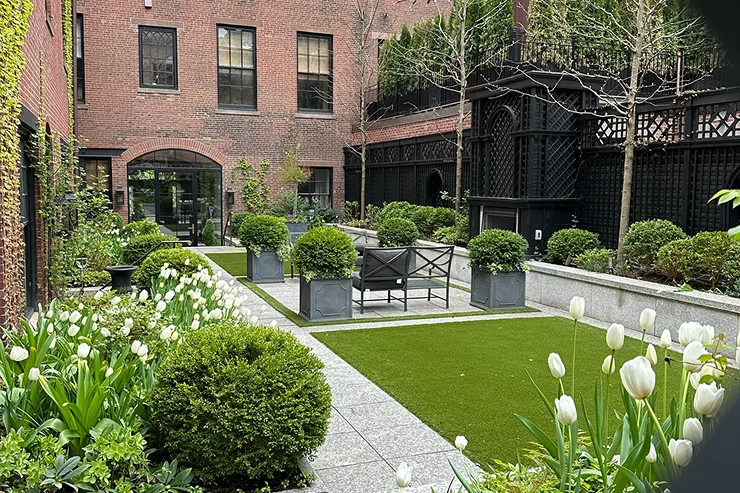
What we account for here
Heavy shade from mature street trees
Most Cambridge front yards and many backyards sit under a canopy that thickens every year. We select and rotate a shade-first plant list — woodland perennials, ferns, shade shrubs — rather than forcing sun perennials into a losing fight, and we reassess the palette as neighboring trees mature or come down.
Triple-decker access and tight side yards
Triple-decker lots are often long and narrow, with the only path to the back garden running through a shared driveway or a three-foot side yard. We plan equipment and material staging around that constraint from the estimate stage, so a project doesn’t stall on move-in day because a wheelbarrow won’t clear the gate.
Cambridge Historical Commission districts
Properties inside a local historic district may need commission input before street-facing plantings, fencing, or lighting changes go in. We flag this during the first site visit, prepare the plain paperwork the review typically requires, and sequence installation so the visible work happens only after any needed sign-off.
Foundation soil and drainage on older lots
Victorians and triple-deckers built in the late 1800s and early 1900s often have compacted, debris-laden soil close to the house and uneven grading that pools water against the foundation. We correct drainage and rebuild soil structure before planting, rather than masking the problem with mulch.
Recent Cambridge work
A representative project: a shaded triple-decker backyard in Cambridgeport where the previous owner’s sun-garden plantings had thinned to almost nothing under a maturing canopy. We reworked the beds with layered shade perennials and a small woodland understory, corrected a drainage issue at the foundation that had been quietly killing plants along that wall, and set the property on a seasonal maintenance schedule so the new garden establishes properly through its first two summers rather than being judged on year one alone.
Other services we provide in Cambridge
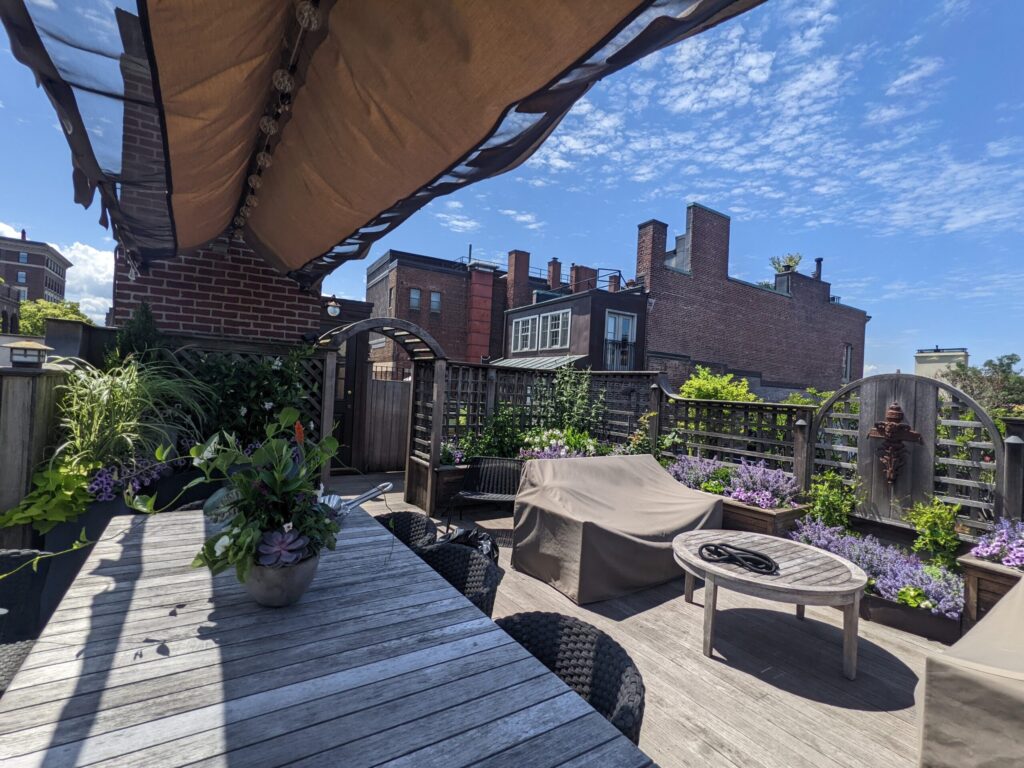
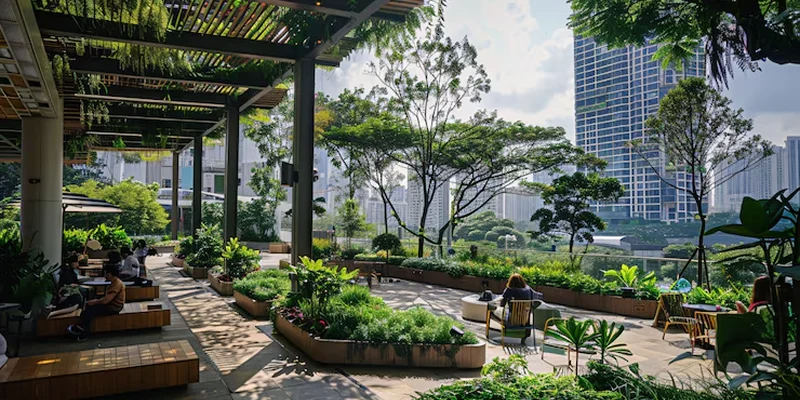
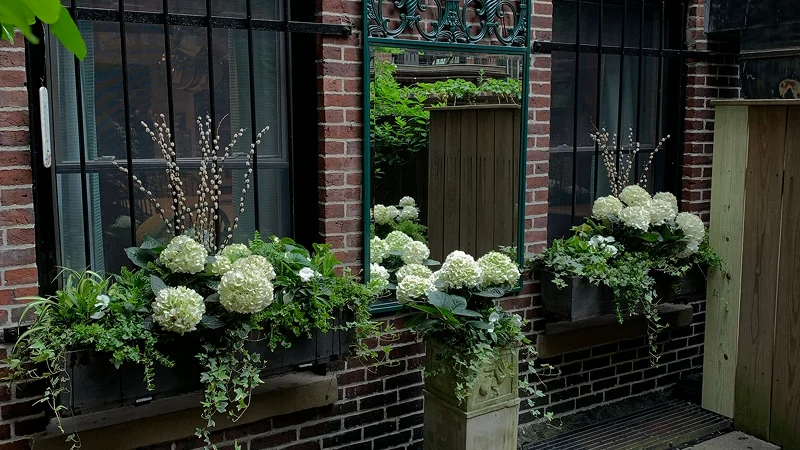
Fine gardening is one piece of a larger relationship for most Cambridge clients. We also handle full garden services in Cambridge, including design and installation for new beds, containers and window boxes suited to a triple-decker porch or a Victorian bay window, planting for the small roof decks and rear terraces common on renovated properties, drip irrigation runs that keep shaded and sunny beds on separate watering schedules, and low-voltage lighting that reads well on a street where the historical commission cares about fixture style. Clients often start with one service and expand once they see how the crew works.
Old foundations and tight side yards
Many Cambridge lots sit close to their neighbors, with narrow side yards squeezed between foundations that block morning or afternoon light depending on orientation. Soil near old brick and stone foundations often runs alkaline and compacted from decades of runoff and settling. We read each yard’s actual light pattern rather than assume, and we amend and plant to the soil in front of us: loosening compaction, correcting pH where needed, and choosing varieties suited to the shade a given wall actually casts.
A season in a Cambridge garden
Every Cambridge property we tend follows its own rhythm, but the underlying pattern is similar: a spring visit to assess what survived the winter and clear out what didn’t, followed by pruning decisions made plant by plant rather than on a fixed schedule. Through summer, that means deadheading, staking, and watching for stress before it shows. Containers near entries and along walkways get refreshed as displays fade. As the season turns, we cut back, mulch, and protect what needs protecting before the cold sets in.
Call and we can talk through what a season looks like for your particular garden.
Questions Cambridge clients ask us
Most conversations about fine gardening in Cambridge start with a specific worry rather than a general request, so here are a few we hear often.
- How soon will a bed actually look full? It depends on plant choice and the season we start in, but we’ll give you a realistic timeline before any digging begins.
- Can you work around a tenant’s schedule? Yes, we coordinate visit times for owner-occupied and rented Cambridge properties alike.
- Do you handle plants we already have? Often, existing shrubs and perennials can be worked into a refreshed plan rather than replaced outright.
- What happens over winter? We talk through dormant-season care so beds aren’t neglected between growing seasons.
If your question isn’t listed here, ask us directly when we visit your Cambridge property.
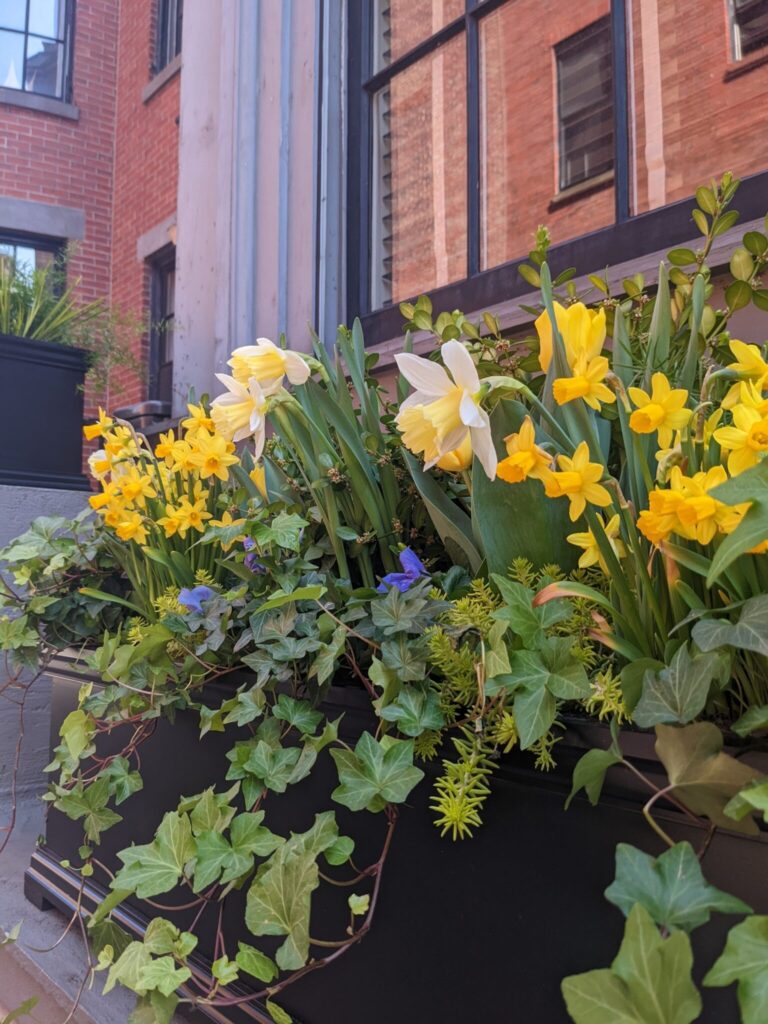
Schedule fine gardening for your Cambridge property
Ready for a garden that gets thoughtful, ongoing attention rather than a quick once-over? Reach out to set up a consultation and we’ll arrange a visit to your Cambridge property to walk the beds, discuss your goals and note any site quirks worth planning around.
From there, we’ll put together a written plan covering the seasonal maintenance, plantings and detail work needed to keep your garden looking its best throughout the year.
What Our Customers Say
Frequently Asked Questions
Does fine gardening in Cambridge need Historical Commission approval?
Only when the work is visible from the street and the property sits inside a local historic district. Interior and backyard work typically needs no review at all. We identify this during the first visit and handle the paperwork if it applies, so it doesn't slow down the rest of the project.
What plants actually work in a shaded Cambridge yard under mature trees?
Hellebores, epimedium, Solomon's seal, astilbe, shade-tolerant hydrangeas, and a range of ferns perform reliably under the heavy canopy typical of triple-decker and Victorian lots. We choose the exact palette based on how much dappled light a specific bed gets by mid-summer, not by early-spring light alone.
Can you work with the narrow side-yard access on a triple-decker?
Yes. We plan equipment and material staging around tight driveways and three-foot side yards before the project starts, so access is never discovered as a problem on installation day.
How often does a Cambridge garden need maintenance visits?
Most fine gardening clients here are on a biweekly schedule through the growing season, with adjustments for shaded beds that need less frequent deadheading but more attention to soil moisture and drainage.
Do you serve both sides of Cambridge — near MIT and near Harvard Square?
Yes, we work across Cambridge, from the denser triple-decker streets near Central and Inman Squares to the Victorian-heavy blocks around Avon Hill and West Cambridge.