- Serving Boston and the Greater Boston Area

- Home
- Services
- Garden Design Services
- Landscape Design
- Urban Garden Design
- Rooftop Garden Installation
- Roof Deck Planting
- Container Gardening Services
- Seasonal Container Planting
- Window Boxes
- Fine Gardening
- Garden Maintenance
- Planting Maintenance
- Flower & Plant Installation
- Drip Irrigation Installation
- Landscape Lighting
- Service Areas
Charlestown, MA
- Garden Services in Charlestown, MA
- Garden Design in Charlestown, MA
- Landscape Design in Charlestown, MA
- Urban Garden Design in Charlestown, MA
- Rooftop Garden Installation in Charlestown, MA
- Roof Deck Planting in Charlestown, MA
- Container Gardening in Charlestown, MA
- Seasonal Container Planting in Charlestown, MA
- Flower & Plant Installation in Charlestown, MA
- Window Boxes in Charlestown, MA
- Fine Gardening in Charlestown, MA
- Garden Maintenance in Charlestown, MA
- Planting & Maintenance in Charlestown, MA
- Drip Irrigation Installation in Charlestown, MA
- Landscape Lighting in Charlestown, MA
North End, MA
- Garden Services in north-end, MA
- Garden Design in north-end, MA
- Landscape Design in north-end, MA
- Urban Garden Design in north-end, MA
- Rooftop Garden Installation in north-end, MA
- Roof Deck Planting in north-end, MA
- Container Gardening in north-end, MA
- Seasonal Container Planting in north-end, MA
- Flower & Plant Installation in north-end, MA
- Window Boxes in north-end, MA
- Fine Gardening in north-end, MA
- Garden Maintenance in north-end, MA
- Planting & Maintenance in north-end, MA
- Drip Irrigation Installation in north-end, MA
- Landscape Lighting in north-end, MA
Downtown Boston, MA
- Garden Services in downtown boston, MA
- Garden Design in downtown boston, MA
- Landscape Design in downtown boston, MA
- Urban Garden Design in downtown boston, MA
- Rooftop Garden Installation in downtown boston, MA
- Roof Deck Planting in downtown boston, MA
- Container Gardening in downtown boston, MA
- Seasonal Container Planting in downtown boston, MA
- Flower & Plant Installation in downtown boston, MA
- Window Boxes in downtown boston, MA
- Fine Gardening in downtown boston, MA
- Garden Maintenance in downtown boston, MA
- Planting & Maintenance in downtown boston, MA
- Drip Irrigation Installation in downtown boston, MA
- Landscape Lighting in downtown boston, MA
Beacon Hill, MA
- Garden Services in beacon hill, MA
- Garden Design in beacon hill, MA
- Landscape Design in beacon hill, MA
- Urban Garden Design in beacon hill, MA
- Rooftop Garden Installation in beacon hill, MA
- Roof Deck Planting in beacon hill, MA
- Container Gardening in beacon hill, MA
- Seasonal Container Planting in beacon hill, MA
- Flower & Plant Installation in beacon hill, MA
- Window Boxes in beacon hill, MA
- Fine Gardening in beacon hill, MA
- Garden Maintenance in beacon hill, MA
- Planting & Maintenance in beacon hill, MA
- Drip Irrigation Installation in beacon hill, MA
- Landscape Lighting in beacon hill, MA
Boston, MA
- Garden Services in boston, MA
- Garden Design in boston, MA
- Landscape Design in boston, MA
- Urban Garden Design in boston, MA
- Rooftop Garden Installation in boston, MA
- Roof Deck Planting in boston, MA
- Container Gardening in boston, MA
- Seasonal Container Planting in boston, MA
- Flower & Plant Installation in boston, MA
- Window Boxes in boston, MA
- Fine Gardening in boston, MA
- Garden Maintenance in boston, MA
- Planting & Maintenance in boston, MA
- Drip Irrigation Installation in boston, MA
- Landscape Lighting in boston, MA
seaport, MA
- Garden Services in seaport, MA
- Garden Design in seaport, MA
- Landscape Design in seaport, MA
- Urban Garden Design in seaport, MA
- Rooftop Garden Installation in seaport, MA
- Roof Deck Planting in seaport, MA
- Container Gardening in seaport, MA
- Seasonal Container Planting in seaport, MA
- Flower & Plant Installation in seaport, MA
- Window Boxes in seaport, MA
- Fine Gardening in seaport, MA
- Garden Maintenance in seaport, MA
- Planting & Maintenance in seaport, MA
- Drip Irrigation Installation in seaport, MA
- Landscape Lighting in seaport, MA
back bay, MA
- Garden Services in back bay, MA
- Garden Design in back bay, MA
- Landscape Design in back bay, MA
- Urban Garden Design in back bay, MA
- Rooftop Garden Installation in back bay, MA
- Roof Deck Planting in back bay, MA
- Container Gardening in back bay, MA
- Seasonal Container Planting in back bay, MA
- Flower & Plant Installation in back bay, MA
- Window Boxes in back bay, MA
- Fine Gardening in back bay, MA
- Garden Maintenance in back bay, MA
- Planting & Maintenance in back bay, MA
- Drip Irrigation Installation in back bay, MA
- Landscape Lighting in back bay, MA
cambridge, MA
- Garden Services in cambridge, MA
- Garden Design in cambridge, MA
- Landscape Design in cambridge, MA
- Urban Garden Design in cambridge, MA
- Rooftop Garden Installation in cambridge, MA
- Roof Deck Planting in cambridge, MA
- Container Gardening in cambridge, MA
- Seasonal Container Planting in cambridge, MA
- Flower & Plant Installation in cambridge, MA
- Window Boxes in cambridge, MA
- Fine Gardening in cambridge, MA
- Garden Maintenance in cambridge, MA
- Planting & Maintenance in cambridge, MA
- Drip Irrigation Installation in cambridge, MA
- Landscape Lighting in cambridge, MA
south-end, MA
- Garden Services in south-end, MA
- Garden Design in south-end, MA
- Landscape Design in south-end, MA
- Urban Garden Design in south-end, MA
- Rooftop Garden Installation in south-end, MA
- Roof Deck Planting in south-end, MA
- Container Gardening in south-end, MA
- Seasonal Container Planting in south-end, MA
- Flower & Plant Installation in south-end, MA
- Window Boxes in south-end, MA
- Fine Gardening in south-end, MA
- Garden Maintenance in south-end, MA
- Planting & Maintenance in south-end, MA
- Drip Irrigation Installation in south-end, MA
- Landscape Lighting in south-end, MA
brookline, MA
- Garden Services in brookline, MA
- Garden Design in brookline, MA
- Landscape Design in brookline, MA
- Urban Garden Design in brookline, MA
- Rooftop Garden Installation in brookline, MA
- Roof Deck Planting in brookline, MA
- Container Gardening in brookline, MA
- Seasonal Container Planting in brookline, MA
- Flower & Plant Installation in brookline, MA
- Window Boxes in brookline, MA
- Fine Gardening in brookline, MA
- Garden Maintenance in brookline, MA
- Planting & Maintenance in brookline, MA
- Drip Irrigation Installation in brookline, MA
- Landscape Lighting in brookline, MA
winchester, MA
- Garden Services in winchester, MA
- Garden Design in winchester, MA
- Landscape Design in winchester, MA
- Urban Garden Design in winchester, MA
- Rooftop Garden Installation in winchester, MA
- Roof Deck Planting in winchester, MA
- Container Gardening in winchester, MA
- Seasonal Container Planting in winchester, MA
- Flower & Plant Installation in winchester, MA
- Window Boxes in winchester, MA
- Fine Gardening in winchester, MA
- Garden Maintenance in winchester, MA
- Planting & Maintenance in winchester, MA
- Drip Irrigation Installation in winchester, MA
- Landscape Lighting in winchester, MA
newton, MA
- Garden Services in newton, MA
- Garden Design in newton, MA
- Landscape Design in newton, MA
- Urban Garden Design in newton, MA
- Rooftop Garden Installation in newton, MA
- Roof Deck Planting in newton, MA
- Container Gardening in newton, MA
- Seasonal Container Planting in newton, MA
- Flower & Plant Installation in newton, MA
- Window Boxes in newton, MA
- Fine Gardening in newton, MA
- Garden Maintenance in newton, MA
- Planting & Maintenance in newton, MA
- Drip Irrigation Installation in newton, MA
- Landscape Lighting in newton, MA
lexington, MA
- Garden Services in lexington, MA
- Garden Design in lexington, MA
- Landscape Design in lexington, MA
- Urban Garden Design in lexington, MA
- Rooftop Garden Installation in lexington, MA
- Roof Deck Planting in lexington, MA
- Container Gardening in lexington, MA
- Seasonal Container Planting newton, MA
- Flower & Plant Installation in lexington, MA
- Window Boxes in lexington, MA
- Fine Gardening in lexington, MA
- Garden Maintenance in lexington, MA
- Planting & Maintenance in lexington, MA
- Drip Irrigation Installation in lexington, MA
- Landscape Lighting in lexington, MA
weston, MA
- Garden Services in weston, MA
- Garden Design in weston, MA
- Landscape Design in weston, MA
- Urban Garden Design in weston, MA
- Rooftop Garden Installation in weston, MA
- Roof Deck Planting in weston, MA
- Container Gardening in weston, MA
- Seasonal Container Planting weston, MA
- Flower & Plant Installation in weston, MA
- Window Boxes in weston, MA
- Fine Gardening in weston, MA
- Garden Maintenance in weston, MA
- Planting & Maintenance in weston, MA
- Drip Irrigation Installation in weston, MA
- Landscape Lighting in weston, MA
wellesley, MA
- Garden Services in wellesley, MA
- Garden Design in wellesley, MA
- Landscape Design in wellesley, MA
- Urban Garden Design in wellesley, MA
- Rooftop Garden Installation in wellesley, MA
- Roof Deck Planting in wellesley, MA
- Container Gardening in wellesley, MA
- Seasonal Container Planting wellesley, MA
- Flower & Plant Installation in wellesley, MA
- Window Boxes in wellesley, MA
- Fine Gardening in wellesley, MA
- Garden Maintenance in wellesley, MA
- Planting & Maintenance in wellesley, MA
- Drip Irrigation Installation in wellesley, MA
- Landscape Lighting in wellesley, MA
- Portfolio
- About us
- Blog
- Contact
- Flower Delivery
Fine Gardening in Seaport, MA
A roof terrace fourteen stories above Fort Point Channel is a different growing environment than a brick patio in the South End, and it needs to be planted like one. Wind off the harbor moves faster and drier at height, salt spray reaches farther than most people assume, and every planter on that deck sits on a load limit set by the building’s structural engineer, not by how much soil looks right. Fine gardening in Seaport starts with those three facts, and irrigation here is not a nice-to-have — without a drip system on a timer, a roof planting is dead within a week of any owner’s absence.

What Fine Gardening looks like in Seaport
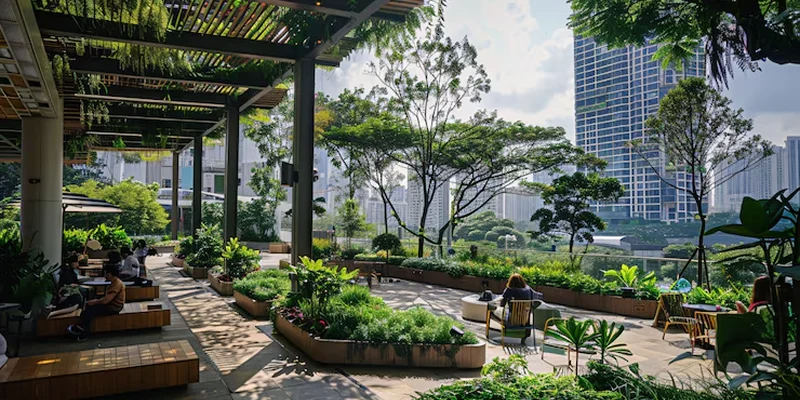
Most of our Seaport clients are in new-construction towers or converted warehouse buildings with amenity decks, private roof terraces, or podium-level courtyards over parking structures. The planting has to earn its place in a very engineered environment. Light is rarely the limiting factor — most Seaport decks get full sun most of the day, reflected and intensified off glass curtain walls and light-colored roofing membrane, which means heat stress is as much a concern as wind. Soil, in the traditional sense, doesn’t exist here at all: everything is planted in engineered lightweight mix inside containers or built-in planters sized to a specific weight allowance, which changes how we select root systems and how large a specimen can get before it has to be swapped rather than allowed to keep growing.
Access is its own planning problem. A roof terrace on Pier 4 or along Northern Avenue is reached by freight elevator on a booked window, not a side gate, so every visit — planting, seasonal changeover, or a mid-summer maintenance pass — is scheduled around building management and coordinated with concierge or engineering staff. Deer are not a Seaport issue the way they are in the western suburbs, but salt burn on new leaf growth functions similarly: it shows up fast, looks like drought stress, and gets misdiagnosed if you don’t already know what to look for at this elevation and this proximity to open water.
What we account for here
What we account for here
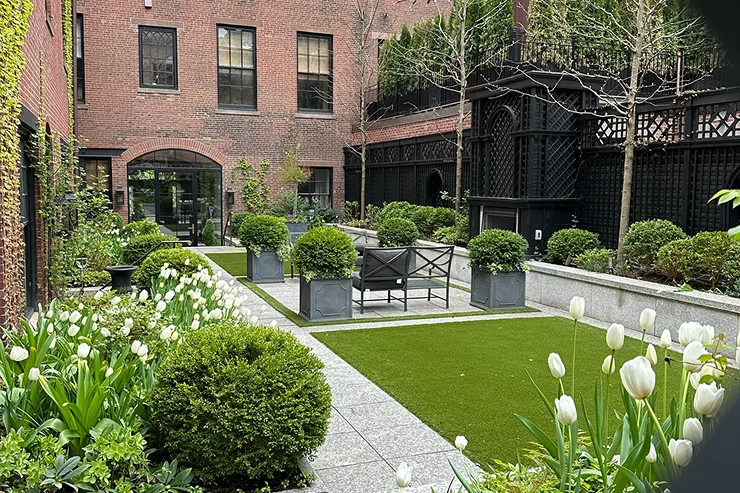
Seaport gardens live alongside rooftop decks, glass-walled lobbies, and tight service corridors shared with building staff. Before any pruning or planting begins, we look at sightlines from neighboring units, drainage toward waterfront walkways, and how foot traffic moves through the space during the day.
- Building access windows
- Drainage toward shared walkways
- Visibility from adjacent units
Wind and salt exposure at height
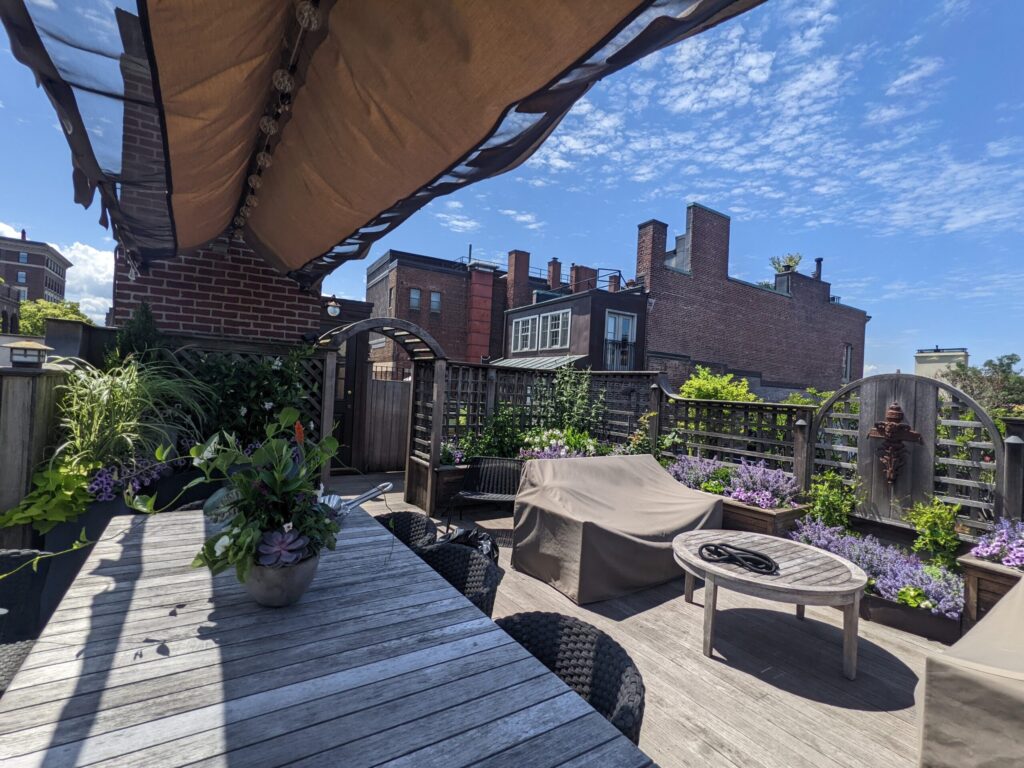
Seaport’s open sightlines to the harbor mean sustained wind speeds well above street level, carrying salt aerosol that settles on foliage and in the growing medium. We plant species with genuine tolerance for both — ornamental grasses, bayberry, certain junipers and hydrangea cultivars — rather than shrubs that read as coastal but scorch by August. Containers are positioned and, where needed, screened to break the worst of the exposure without violating sightline or railing-height rules.
Structural load limits on every planter
Roof decks and podium terraces in Seaport carry a fixed, engineer-specified load allowance, and it is non-negotiable. We work from the building’s load documentation before specifying container size, material, and soil volume, using lightweight aggregate mixes and fiberglass or resin containers instead of stone or heavy ceramic wherever the allowance is tight. Nothing gets added to a Seaport deck without that number checked first.
Mandatory irrigation, not optional irrigation
On a ground-level garden, drip irrigation is a convenience. On a Seaport roof, it is the difference between a planting that survives a hot week and one that does not — wind and reflected heat pull moisture out of lightweight mix far faster than out of native soil. Every fine gardening plan we install up here includes a properly zoned drip system on a timer, sized to the container volumes and checked each season as part of maintenance, because a missed manual watering here fails faster than almost anywhere else we work.
Elevator windows and building coordination
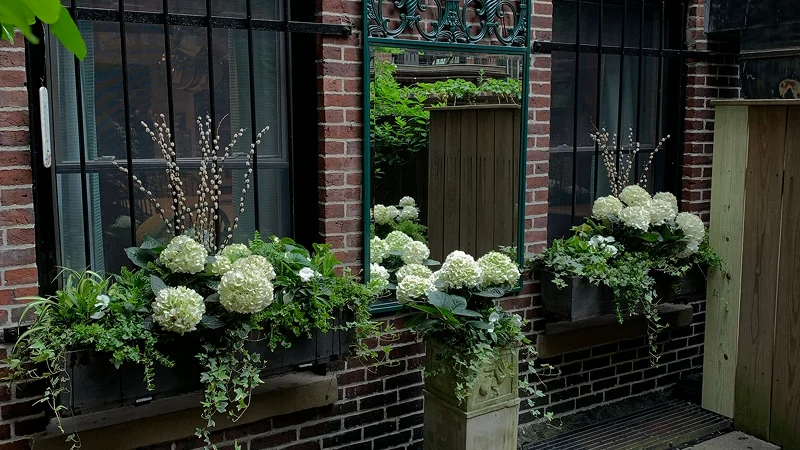
Every planting or maintenance visit to a Seaport terrace runs through a scheduled freight elevator window and, often, a certificate of insurance on file with the property manager. We build that lead time into our seasonal calendar so changeovers happen on the building’s terms without becoming a scramble the week before a client’s rooftop event.
Recent Seaport work
Typical recent work has included a full planting plan for a private roof terrace on a new residential tower, built entirely around the building’s posted load allowance and finished with a zoned drip system before first occupancy; and a seasonal container refresh program for a Fort Point building’s shared amenity deck, rotating hardy evergreen and grass-based plantings that hold up through the shoulder seasons when the wind off the channel is at its worst. We do not publish client names or addresses for these projects, in keeping with the privacy most Seaport buildings and owners expect.
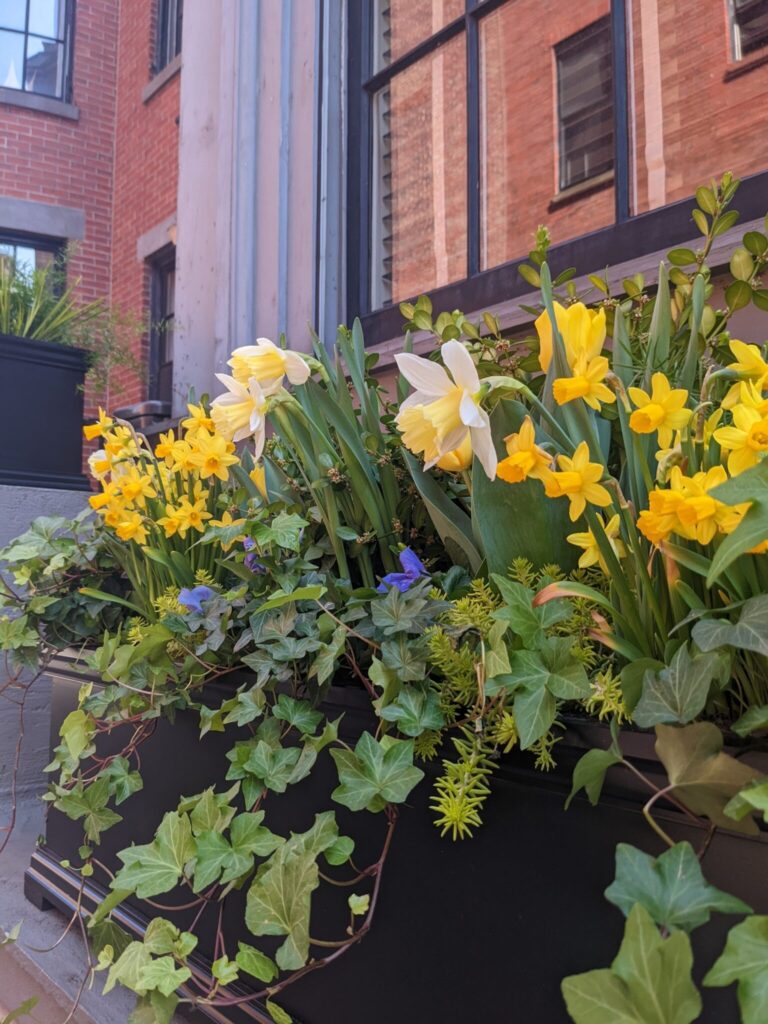
Other services we provide in Seaport
Fine gardening on a Seaport roof deck is rarely a standalone request. Most of our work here starts as a broader garden services engagement that includes the original design and installation, then moves into ongoing maintenance once the planting is established. Containers and window boxes are frequently the entire scope for a smaller terrace or a street-facing unit where a full planter bed isn’t possible. Drip irrigation is built into essentially every roof project we take on here, and low-voltage landscape lighting gets added often, both for evening use on private terraces and to satisfy building requirements for path and railing lighting after dark. Roof deck and terrace planting itself is the core discipline this neighborhood calls for more than any other part of our service area, given how much of Seaport’s outdoor space sits above the street rather than at it.
Book fine gardening in Seaport
Rouvalis Gardens is based at 5 Crescent St in Seaport, about 2.4 miles from the Seaport waterfront, and we schedule building-coordinated visits across the neighborhood regularly. Call to set up a consultation — we’ll ask about your building’s load documentation and elevator access windows up front, walk the deck or terrace with you, and follow up with a planting and irrigation plan sized to what your building actually allows. From there, installation and any ongoing maintenance visits are scheduled around your property management’s booking system, not the other way around.
What Our Customers Say
Frequently Asked Questions
Do you need special access to plant on a Seaport roof deck?
Yes. Most Seaport towers require freight elevator booking, a certificate of insurance on file, and coordination with building management or concierge staff before any planting or maintenance visit. We handle that scheduling as part of the job rather than treating it as a separate task.
Is irrigation really required, or can a roof terrace be hand-watered?
On the ground, hand-watering can work. On a Seaport roof, wind and reflected heat from glass and roofing membrane pull moisture out of lightweight growing mix fast enough that a missed day or two can cause visible stress. We install zoned drip irrigation on a timer as standard practice on these projects.
How do you know how much weight our terrace can hold?
We ask for the building's structural load documentation before specifying container sizes or soil volume. Every planting plan is built to that number, using lightweight aggregate mixes and resin or fiberglass containers rather than heavier materials when the allowance is limited.
Can plants actually survive the wind and salt exposure this high up?
Yes, with the right species selection. We favor plants with genuine coastal and wind tolerance — certain grasses, bayberry, and hardy hydrangea cultivars among others — rather than ones that merely look coastal but scorch by midsummer at this elevation.
Do you handle both the design and the ongoing care of a roof garden?
Yes. Most Seaport engagements start with design and installation, including irrigation, and continue into scheduled seasonal maintenance so the planting stays presentable through the wind and heat of a full year rather than just looking good on installation day.