- Serving Boston and the Greater Boston Area

- Home
- Services
- Garden Design Services
- Landscape Design
- Urban Garden Design
- Rooftop Garden Installation
- Roof Deck Planting
- Container Gardening Services
- Seasonal Container Planting
- Window Boxes
- Fine Gardening
- Garden Maintenance
- Planting Maintenance
- Flower & Plant Installation
- Drip Irrigation Installation
- Landscape Lighting
- Service Areas
Charlestown, MA
- Garden Services in Charlestown, MA
- Garden Design in Charlestown, MA
- Landscape Design in Charlestown, MA
- Urban Garden Design in Charlestown, MA
- Rooftop Garden Installation in Charlestown, MA
- Roof Deck Planting in Charlestown, MA
- Container Gardening in Charlestown, MA
- Seasonal Container Planting in Charlestown, MA
- Flower & Plant Installation in Charlestown, MA
- Window Boxes in Charlestown, MA
- Fine Gardening in Charlestown, MA
- Garden Maintenance in Charlestown, MA
- Planting & Maintenance in Charlestown, MA
- Drip Irrigation Installation in Charlestown, MA
- Landscape Lighting in Charlestown, MA
North End, MA
- Garden Services in north-end, MA
- Garden Design in north-end, MA
- Landscape Design in north-end, MA
- Urban Garden Design in north-end, MA
- Rooftop Garden Installation in north-end, MA
- Roof Deck Planting in north-end, MA
- Container Gardening in north-end, MA
- Seasonal Container Planting in north-end, MA
- Flower & Plant Installation in north-end, MA
- Window Boxes in north-end, MA
- Fine Gardening in north-end, MA
- Garden Maintenance in north-end, MA
- Planting & Maintenance in north-end, MA
- Drip Irrigation Installation in north-end, MA
- Landscape Lighting in north-end, MA
Downtown Boston, MA
- Garden Services in downtown boston, MA
- Garden Design in downtown boston, MA
- Landscape Design in downtown boston, MA
- Urban Garden Design in downtown boston, MA
- Rooftop Garden Installation in downtown boston, MA
- Roof Deck Planting in downtown boston, MA
- Container Gardening in downtown boston, MA
- Seasonal Container Planting in downtown boston, MA
- Flower & Plant Installation in downtown boston, MA
- Window Boxes in downtown boston, MA
- Fine Gardening in downtown boston, MA
- Garden Maintenance in downtown boston, MA
- Planting & Maintenance in downtown boston, MA
- Drip Irrigation Installation in downtown boston, MA
- Landscape Lighting in downtown boston, MA
Beacon Hill, MA
- Garden Services in beacon hill, MA
- Garden Design in beacon hill, MA
- Landscape Design in beacon hill, MA
- Urban Garden Design in beacon hill, MA
- Rooftop Garden Installation in beacon hill, MA
- Roof Deck Planting in beacon hill, MA
- Container Gardening in beacon hill, MA
- Seasonal Container Planting in beacon hill, MA
- Flower & Plant Installation in beacon hill, MA
- Window Boxes in beacon hill, MA
- Fine Gardening in beacon hill, MA
- Garden Maintenance in beacon hill, MA
- Planting & Maintenance in beacon hill, MA
- Drip Irrigation Installation in beacon hill, MA
- Landscape Lighting in beacon hill, MA
Boston, MA
- Garden Services in boston, MA
- Garden Design in boston, MA
- Landscape Design in boston, MA
- Urban Garden Design in boston, MA
- Rooftop Garden Installation in boston, MA
- Roof Deck Planting in boston, MA
- Container Gardening in boston, MA
- Seasonal Container Planting in boston, MA
- Flower & Plant Installation in boston, MA
- Window Boxes in boston, MA
- Fine Gardening in boston, MA
- Garden Maintenance in boston, MA
- Planting & Maintenance in boston, MA
- Drip Irrigation Installation in boston, MA
- Landscape Lighting in boston, MA
seaport, MA
- Garden Services in seaport, MA
- Garden Design in seaport, MA
- Landscape Design in seaport, MA
- Urban Garden Design in seaport, MA
- Rooftop Garden Installation in seaport, MA
- Roof Deck Planting in seaport, MA
- Container Gardening in seaport, MA
- Seasonal Container Planting in seaport, MA
- Flower & Plant Installation in seaport, MA
- Window Boxes in seaport, MA
- Fine Gardening in seaport, MA
- Garden Maintenance in seaport, MA
- Planting & Maintenance in seaport, MA
- Drip Irrigation Installation in seaport, MA
- Landscape Lighting in seaport, MA
back bay, MA
- Garden Services in back bay, MA
- Garden Design in back bay, MA
- Landscape Design in back bay, MA
- Urban Garden Design in back bay, MA
- Rooftop Garden Installation in back bay, MA
- Roof Deck Planting in back bay, MA
- Container Gardening in back bay, MA
- Seasonal Container Planting in back bay, MA
- Flower & Plant Installation in back bay, MA
- Window Boxes in back bay, MA
- Fine Gardening in back bay, MA
- Garden Maintenance in back bay, MA
- Planting & Maintenance in back bay, MA
- Drip Irrigation Installation in back bay, MA
- Landscape Lighting in back bay, MA
cambridge, MA
- Garden Services in cambridge, MA
- Garden Design in cambridge, MA
- Landscape Design in cambridge, MA
- Urban Garden Design in cambridge, MA
- Rooftop Garden Installation in cambridge, MA
- Roof Deck Planting in cambridge, MA
- Container Gardening in cambridge, MA
- Seasonal Container Planting in cambridge, MA
- Flower & Plant Installation in cambridge, MA
- Window Boxes in cambridge, MA
- Fine Gardening in cambridge, MA
- Garden Maintenance in cambridge, MA
- Planting & Maintenance in cambridge, MA
- Drip Irrigation Installation in cambridge, MA
- Landscape Lighting in cambridge, MA
south-end, MA
- Garden Services in south-end, MA
- Garden Design in south-end, MA
- Landscape Design in south-end, MA
- Urban Garden Design in south-end, MA
- Rooftop Garden Installation in south-end, MA
- Roof Deck Planting in south-end, MA
- Container Gardening in south-end, MA
- Seasonal Container Planting in south-end, MA
- Flower & Plant Installation in south-end, MA
- Window Boxes in south-end, MA
- Fine Gardening in south-end, MA
- Garden Maintenance in south-end, MA
- Planting & Maintenance in south-end, MA
- Drip Irrigation Installation in south-end, MA
- Landscape Lighting in south-end, MA
brookline, MA
- Garden Services in brookline, MA
- Garden Design in brookline, MA
- Landscape Design in brookline, MA
- Urban Garden Design in brookline, MA
- Rooftop Garden Installation in brookline, MA
- Roof Deck Planting in brookline, MA
- Container Gardening in brookline, MA
- Seasonal Container Planting in brookline, MA
- Flower & Plant Installation in brookline, MA
- Window Boxes in brookline, MA
- Fine Gardening in brookline, MA
- Garden Maintenance in brookline, MA
- Planting & Maintenance in brookline, MA
- Drip Irrigation Installation in brookline, MA
- Landscape Lighting in brookline, MA
winchester, MA
- Garden Services in winchester, MA
- Garden Design in winchester, MA
- Landscape Design in winchester, MA
- Urban Garden Design in winchester, MA
- Rooftop Garden Installation in winchester, MA
- Roof Deck Planting in winchester, MA
- Container Gardening in winchester, MA
- Seasonal Container Planting in winchester, MA
- Flower & Plant Installation in winchester, MA
- Window Boxes in winchester, MA
- Fine Gardening in winchester, MA
- Garden Maintenance in winchester, MA
- Planting & Maintenance in winchester, MA
- Drip Irrigation Installation in winchester, MA
- Landscape Lighting in winchester, MA
newton, MA
- Garden Services in newton, MA
- Garden Design in newton, MA
- Landscape Design in newton, MA
- Urban Garden Design in newton, MA
- Rooftop Garden Installation in newton, MA
- Roof Deck Planting in newton, MA
- Container Gardening in newton, MA
- Seasonal Container Planting in newton, MA
- Flower & Plant Installation in newton, MA
- Window Boxes in newton, MA
- Fine Gardening in newton, MA
- Garden Maintenance in newton, MA
- Planting & Maintenance in newton, MA
- Drip Irrigation Installation in newton, MA
- Landscape Lighting in newton, MA
lexington, MA
- Garden Services in lexington, MA
- Garden Design in lexington, MA
- Landscape Design in lexington, MA
- Urban Garden Design in lexington, MA
- Rooftop Garden Installation in lexington, MA
- Roof Deck Planting in lexington, MA
- Container Gardening in lexington, MA
- Seasonal Container Planting newton, MA
- Flower & Plant Installation in lexington, MA
- Window Boxes in lexington, MA
- Fine Gardening in lexington, MA
- Garden Maintenance in lexington, MA
- Planting & Maintenance in lexington, MA
- Drip Irrigation Installation in lexington, MA
- Landscape Lighting in lexington, MA
weston, MA
- Garden Services in weston, MA
- Garden Design in weston, MA
- Landscape Design in weston, MA
- Urban Garden Design in weston, MA
- Rooftop Garden Installation in weston, MA
- Roof Deck Planting in weston, MA
- Container Gardening in weston, MA
- Seasonal Container Planting weston, MA
- Flower & Plant Installation in weston, MA
- Window Boxes in weston, MA
- Fine Gardening in weston, MA
- Garden Maintenance in weston, MA
- Planting & Maintenance in weston, MA
- Drip Irrigation Installation in weston, MA
- Landscape Lighting in weston, MA
wellesley, MA
- Garden Services in wellesley, MA
- Garden Design in wellesley, MA
- Landscape Design in wellesley, MA
- Urban Garden Design in wellesley, MA
- Rooftop Garden Installation in wellesley, MA
- Roof Deck Planting in wellesley, MA
- Container Gardening in wellesley, MA
- Seasonal Container Planting wellesley, MA
- Flower & Plant Installation in wellesley, MA
- Window Boxes in wellesley, MA
- Fine Gardening in wellesley, MA
- Garden Maintenance in wellesley, MA
- Planting & Maintenance in wellesley, MA
- Drip Irrigation Installation in wellesley, MA
- Landscape Lighting in wellesley, MA
- Portfolio
- About us
- Blog
- Contact
- Flower Delivery
Fine Gardening in Beacon Hill, MA
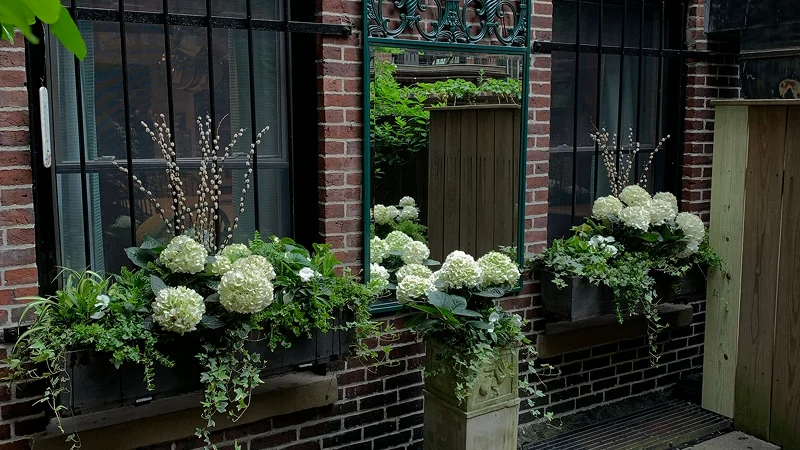
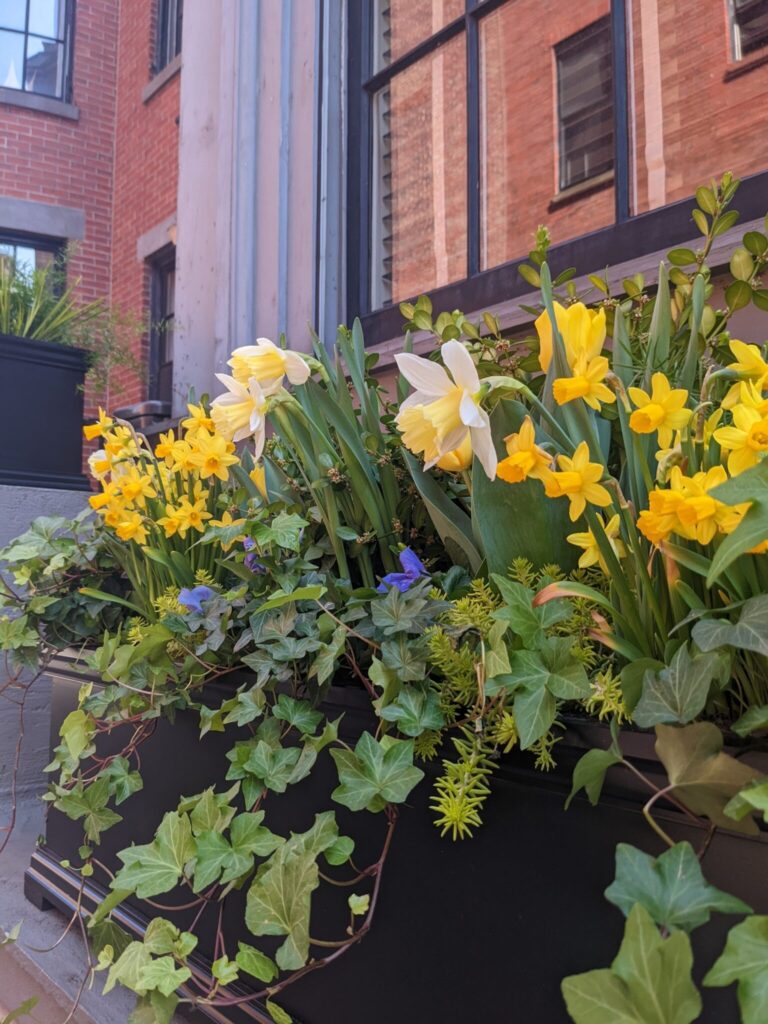
A window box on Mount Vernon Street lives a different life than one in the suburbs. The iron brackets are original to the house, the brick behind them holds heat well into the evening, and the sidewalk below is cobbled, uneven, and inspected by a neighbor if so much as a hose is left coiled wrong. Fine gardening here means working within the Beacon Hill Historic District Commission’s expectations, hauling everything in by hand or hand truck since no truck can idle on Chestnut or Willow, and choosing plants that can take a south wall’s reflected heat without scorching by August.

What Fine Gardening looks like in Beacon Hill
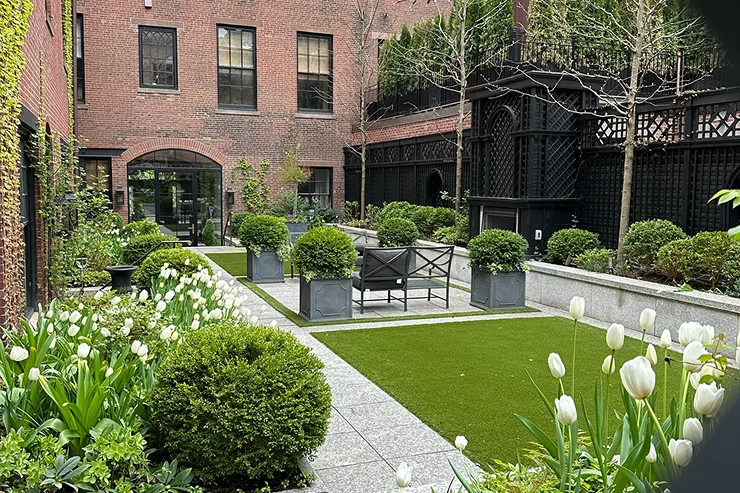
On a Beacon Hill property, fine gardening is less about square footage and more about density of detail. A typical job is a pair of iron window boxes on the parlor floor, a small brick-paved front garden behind a wrought-iron fence, and increasingly a roof deck or rear terrace that does the real growing. Each of those spaces has its own microclimate, and treating them as one garden — same soil mix, same watering schedule, same plant list — is how window boxes bake out by July and roof containers dry to dust by August.
We build the soil mix per container, favoring a lightweight, moisture-retentive blend on south and west exposures where brick radiates heat back into the root zone long after sunset. Plant selection leans toward proven urban performers: boxwood and dwarf hollies for winter structure, heat-tolerant annuals and grasses for the box work, and a rotating seasonal palette so the front of the house reads differently in May, August, and December, which matters on streets where every façade is on display. Deer are rarely the issue on Beacon Hill; foot traffic, reflected heat, and the difficulty of getting a hose to a fourth-floor window box are the real constraints, and we plan irrigation and access around them before we plan the plant list.
Because so many Beacon Hill lots have no rear vehicle access at all, maintenance visits are scheduled and routed like a small logistics problem: what comes in through the front door, what gets carried up a spiral stair to the roof, and what has to be pre-cut or pre-mixed at our Beacon Hill location before it ever reaches Chestnut Street. Getting that sequencing right the first time is most of what separates a garden that holds up through a Beacon Hill summer from one that needs constant rescue visits.
What we account for here
What we account for here
Historic District Commission review
Anything visible from the public way — window boxes, fences, front-garden hardscape, even the color of a planter — falls under Commission purview. We design within the material and color guidance the district expects, and we brief clients on what needs a filing and what does not, so nobody discovers a violation notice after the fact.
No vehicle access on the lanes
Chestnut, Willow, Acorn and the other narrow ways were laid out for foot and horse traffic, not delivery trucks. Soil, mulch, and plant material are staged and hand-carried in, which changes how we schedule a job and why we plan quantities carefully rather than over-ordering and leaving bags on a cobbled sidewalk.
South-facing brick heat load
Brick townhouse façades on the sunnier blocks absorb heat all day and release it well after dark, which pushes container soil temperatures and water needs above what a planting plan written for open ground would predict. We size containers, choose root-hardy species, and set irrigation cycles specifically for that radiant heat, not for average Boston summer conditions.
Iron window-box brackets and cobbled sidewalks
Many brackets are original ironwork, decades old, load-rated for a certain box size and weight when wet. We weigh proposed soil mixes and mature plantings against what the bracket can actually carry, and we work carefully around cobblestones that were never meant to hold a ladder or a wheeled cart steady.
Recent Beacon Hill work
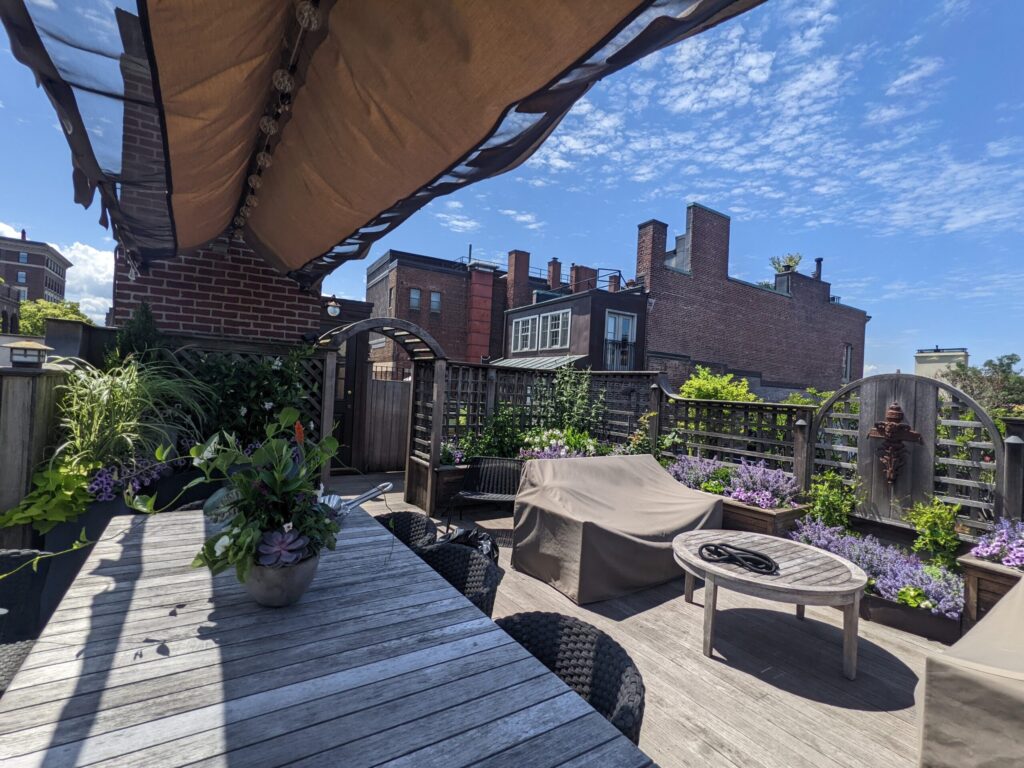
A recurring project type on the Hill is the paired front-window-box refresh: matching iron boxes on the parlor level replanted three to four times a year to track the seasons, coordinated with a small brick front garden below and, on many properties, a rear or roof terrace that gets the same attention out of public view. Another common call is a roof deck that was planted once at move-in and has since struggled with wind exposure and inconsistent watering — we rebuild the container palette and add drip irrigation so the space stops depending on someone remembering to carry a watering can up four flights.
Other services we provide in Beacon Hill
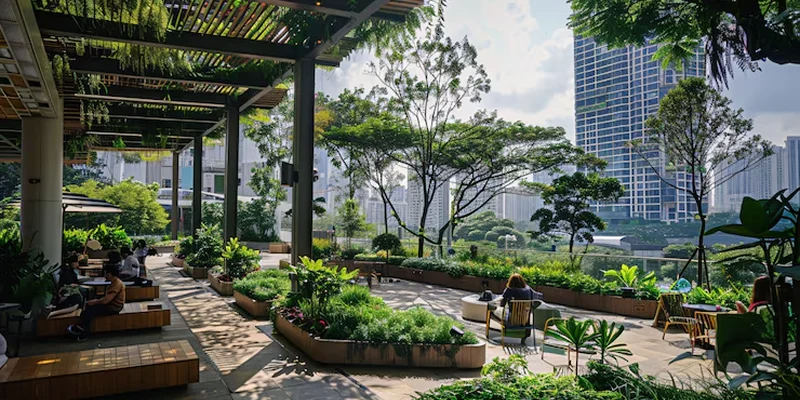
Fine gardening is usually one piece of a larger Beacon Hill property plan. We also handle general garden services for townhouses and courtyard gardens across the neighborhood, along with garden design and installation for front gardens and rear yards being reworked from scratch. Roof decks and terraces are a particular focus given how many Beacon Hill properties rely on them as the only real outdoor space, and we pair that work with drip irrigation systems built for container-heavy, hand-watered sites and low-voltage landscape lighting that meets Commission expectations for a historic streetscape after dark. Containers and window boxes remain the most visible service on the Hill, replanted seasonally to match a townhouse’s Commission-approved exterior. If a property sits further from the flat of the Hill, ongoing maintenance and cleanup rounds out the seasonal work.
Book fine gardening in Beacon Hill
Rouvalis Gardens is based at 5 Crescent St in Beacon Hill, 1.9 miles from Beacon Hill, and we route crews and material through the neighborhood’s access constraints on a regular basis. Call to schedule a walkthrough of your window boxes, front garden, or roof terrace. We assess Commission requirements, access logistics, and heat exposure on site, then return with a plan and a proposed schedule before any material is ordered.
How we approach a Beacon Hill garden
Beacon Hill properties tend to be small in footprint and large in visibility, so we treat every planting bed, window box, and brick-edged patch of ground as part of the streetscape. Our approach starts with an honest look at what the space gets in terms of light, foot traffic, and exposure to salt or road runoff, then builds a planting and maintenance plan around those realities rather than a generic template.
Ongoing care is scheduled to match the growing season, with pruning, weeding, and container refreshes timed so the garden looks kept rather than untouched or overworked. Anything visible from the sidewalk gets a second look before we consider the visit finished.
Other services we provide in Beacon Hill
Fine gardening is only one piece of caring for a Beacon Hill property. When a front garden or hidden courtyard needs more than upkeep, our garden design and installation in Beacon Hill covers the planning that narrow brick lanes and limited access require. Many entries rely on containers and window boxes in Beacon Hill, refreshed through the seasons to suit a townhouse facade, while homes with outdoor space above often need roof deck and terrace planting in Beacon Hill chosen for wind, sun, and weight limits.
For beds and pots that dry out fast between visits, drip irrigation in Beacon Hill keeps everything watered without dragging hoses through a historic hallway. And where evenings matter as much as afternoons, low-voltage landscape lighting in Beacon Hill makes a small courtyard or entry feel finished after dark. Together, these services round out what your garden needs beyond routine care.
Ready for consistent, hands-on garden care?
Beacon Hill’s tight courtyards and rooftop plantings reward attention, not guesswork. Reach out and we’ll arrange a visit to walk your beds, borders and containers before proposing a fine gardening plan suited to the space.
- On-site assessment of your plantings and site conditions
- A written plan covering seasonal tasks and ongoing visits
- Scheduling built around Beacon Hill’s access and street constraints
We’ll confirm details before any work begins.
What Our Customers Say
Frequently Asked Questions
Do window boxes on Beacon Hill need Historic District Commission approval?
The boxes and brackets themselves are typically part of the approved façade, but changes to their size, color, or material generally need a filing. Seasonal replanting within an existing approved box does not usually require review. We can tell you which side of that line a specific project falls on before work starts.
How do you get soil and plants to a house with no rear access or driveway?
Everything is staged off-site and hand-carried in through the front entrance or up interior stairs to a roof deck. We plan quantities and timing so material spends minimal time on the sidewalk and never blocks the lane.
Why do my south-facing window boxes dry out faster than my neighbor's?
Reflected heat off south-facing brick raises soil temperature well above ambient air temperature, which pulls moisture out of containers faster than open-ground planting beds. We adjust soil mix, container size, and watering frequency specifically for that exposure.
Can you work around cobblestone sidewalks and narrow lanes like Acorn Street?
Yes. We route equipment and material to avoid setting ladders or carts directly on uneven cobbles, and we schedule visits around the foot traffic these lanes see, particularly in tourist season.
How far is Rouvalis Gardens from Beacon Hill?
Our base at 5 Crescent St in Beacon Hill is 1.9 miles from Beacon Hill, close enough for regular maintenance visits and quick response if a window box or roof planting needs attention between scheduled rounds.