- Serving Boston and the Greater Boston Area

- Home
- Services
- Garden Design Services
- Landscape Design
- Urban Garden Design
- Rooftop Garden Installation
- Roof Deck Planting
- Container Gardening Services
- Seasonal Container Planting
- Window Boxes
- Fine Gardening
- Garden Maintenance
- Planting Maintenance
- Flower & Plant Installation
- Drip Irrigation Installation
- Landscape Lighting
- Service Areas
Charlestown, MA
- Garden Services in Charlestown, MA
- Garden Design in Charlestown, MA
- Landscape Design in Charlestown, MA
- Urban Garden Design in Charlestown, MA
- Rooftop Garden Installation in Charlestown, MA
- Roof Deck Planting in Charlestown, MA
- Container Gardening in Charlestown, MA
- Seasonal Container Planting in Charlestown, MA
- Flower & Plant Installation in Charlestown, MA
- Window Boxes in Charlestown, MA
- Fine Gardening in Charlestown, MA
- Garden Maintenance in Charlestown, MA
- Planting & Maintenance in Charlestown, MA
- Drip Irrigation Installation in Charlestown, MA
- Landscape Lighting in Charlestown, MA
North End, MA
- Garden Services in north-end, MA
- Garden Design in north-end, MA
- Landscape Design in north-end, MA
- Urban Garden Design in north-end, MA
- Rooftop Garden Installation in north-end, MA
- Roof Deck Planting in north-end, MA
- Container Gardening in north-end, MA
- Seasonal Container Planting in north-end, MA
- Flower & Plant Installation in north-end, MA
- Window Boxes in north-end, MA
- Fine Gardening in north-end, MA
- Garden Maintenance in north-end, MA
- Planting & Maintenance in north-end, MA
- Drip Irrigation Installation in north-end, MA
- Landscape Lighting in north-end, MA
Downtown Boston, MA
- Garden Services in downtown boston, MA
- Garden Design in downtown boston, MA
- Landscape Design in downtown boston, MA
- Urban Garden Design in downtown boston, MA
- Rooftop Garden Installation in downtown boston, MA
- Roof Deck Planting in downtown boston, MA
- Container Gardening in downtown boston, MA
- Seasonal Container Planting in downtown boston, MA
- Flower & Plant Installation in downtown boston, MA
- Window Boxes in downtown boston, MA
- Fine Gardening in downtown boston, MA
- Garden Maintenance in downtown boston, MA
- Planting & Maintenance in downtown boston, MA
- Drip Irrigation Installation in downtown boston, MA
- Landscape Lighting in downtown boston, MA
Beacon Hill, MA
- Garden Services in beacon hill, MA
- Garden Design in beacon hill, MA
- Landscape Design in beacon hill, MA
- Urban Garden Design in beacon hill, MA
- Rooftop Garden Installation in beacon hill, MA
- Roof Deck Planting in beacon hill, MA
- Container Gardening in beacon hill, MA
- Seasonal Container Planting in beacon hill, MA
- Flower & Plant Installation in beacon hill, MA
- Window Boxes in beacon hill, MA
- Fine Gardening in beacon hill, MA
- Garden Maintenance in beacon hill, MA
- Planting & Maintenance in beacon hill, MA
- Drip Irrigation Installation in beacon hill, MA
- Landscape Lighting in beacon hill, MA
Boston, MA
- Garden Services in boston, MA
- Garden Design in boston, MA
- Landscape Design in boston, MA
- Urban Garden Design in boston, MA
- Rooftop Garden Installation in boston, MA
- Roof Deck Planting in boston, MA
- Container Gardening in boston, MA
- Seasonal Container Planting in boston, MA
- Flower & Plant Installation in boston, MA
- Window Boxes in boston, MA
- Fine Gardening in boston, MA
- Garden Maintenance in boston, MA
- Planting & Maintenance in boston, MA
- Drip Irrigation Installation in boston, MA
- Landscape Lighting in boston, MA
seaport, MA
- Garden Services in seaport, MA
- Garden Design in seaport, MA
- Landscape Design in seaport, MA
- Urban Garden Design in seaport, MA
- Rooftop Garden Installation in seaport, MA
- Roof Deck Planting in seaport, MA
- Container Gardening in seaport, MA
- Seasonal Container Planting in seaport, MA
- Flower & Plant Installation in seaport, MA
- Window Boxes in seaport, MA
- Fine Gardening in seaport, MA
- Garden Maintenance in seaport, MA
- Planting & Maintenance in seaport, MA
- Drip Irrigation Installation in seaport, MA
- Landscape Lighting in seaport, MA
back bay, MA
- Garden Services in back bay, MA
- Garden Design in back bay, MA
- Landscape Design in back bay, MA
- Urban Garden Design in back bay, MA
- Rooftop Garden Installation in back bay, MA
- Roof Deck Planting in back bay, MA
- Container Gardening in back bay, MA
- Seasonal Container Planting in back bay, MA
- Flower & Plant Installation in back bay, MA
- Window Boxes in back bay, MA
- Fine Gardening in back bay, MA
- Garden Maintenance in back bay, MA
- Planting & Maintenance in back bay, MA
- Drip Irrigation Installation in back bay, MA
- Landscape Lighting in back bay, MA
cambridge, MA
- Garden Services in cambridge, MA
- Garden Design in cambridge, MA
- Landscape Design in cambridge, MA
- Urban Garden Design in cambridge, MA
- Rooftop Garden Installation in cambridge, MA
- Roof Deck Planting in cambridge, MA
- Container Gardening in cambridge, MA
- Seasonal Container Planting in cambridge, MA
- Flower & Plant Installation in cambridge, MA
- Window Boxes in cambridge, MA
- Fine Gardening in cambridge, MA
- Garden Maintenance in cambridge, MA
- Planting & Maintenance in cambridge, MA
- Drip Irrigation Installation in cambridge, MA
- Landscape Lighting in cambridge, MA
south-end, MA
- Garden Services in south-end, MA
- Garden Design in south-end, MA
- Landscape Design in south-end, MA
- Urban Garden Design in south-end, MA
- Rooftop Garden Installation in south-end, MA
- Roof Deck Planting in south-end, MA
- Container Gardening in south-end, MA
- Seasonal Container Planting in south-end, MA
- Flower & Plant Installation in south-end, MA
- Window Boxes in south-end, MA
- Fine Gardening in south-end, MA
- Garden Maintenance in south-end, MA
- Planting & Maintenance in south-end, MA
- Drip Irrigation Installation in south-end, MA
- Landscape Lighting in south-end, MA
brookline, MA
- Garden Services in brookline, MA
- Garden Design in brookline, MA
- Landscape Design in brookline, MA
- Urban Garden Design in brookline, MA
- Rooftop Garden Installation in brookline, MA
- Roof Deck Planting in brookline, MA
- Container Gardening in brookline, MA
- Seasonal Container Planting in brookline, MA
- Flower & Plant Installation in brookline, MA
- Window Boxes in brookline, MA
- Fine Gardening in brookline, MA
- Garden Maintenance in brookline, MA
- Planting & Maintenance in brookline, MA
- Drip Irrigation Installation in brookline, MA
- Landscape Lighting in brookline, MA
winchester, MA
- Garden Services in winchester, MA
- Garden Design in winchester, MA
- Landscape Design in winchester, MA
- Urban Garden Design in winchester, MA
- Rooftop Garden Installation in winchester, MA
- Roof Deck Planting in winchester, MA
- Container Gardening in winchester, MA
- Seasonal Container Planting in winchester, MA
- Flower & Plant Installation in winchester, MA
- Window Boxes in winchester, MA
- Fine Gardening in winchester, MA
- Garden Maintenance in winchester, MA
- Planting & Maintenance in winchester, MA
- Drip Irrigation Installation in winchester, MA
- Landscape Lighting in winchester, MA
newton, MA
- Garden Services in newton, MA
- Garden Design in newton, MA
- Landscape Design in newton, MA
- Urban Garden Design in newton, MA
- Rooftop Garden Installation in newton, MA
- Roof Deck Planting in newton, MA
- Container Gardening in newton, MA
- Seasonal Container Planting in newton, MA
- Flower & Plant Installation in newton, MA
- Window Boxes in newton, MA
- Fine Gardening in newton, MA
- Garden Maintenance in newton, MA
- Planting & Maintenance in newton, MA
- Drip Irrigation Installation in newton, MA
- Landscape Lighting in newton, MA
lexington, MA
- Garden Services in lexington, MA
- Garden Design in lexington, MA
- Landscape Design in lexington, MA
- Urban Garden Design in lexington, MA
- Rooftop Garden Installation in lexington, MA
- Roof Deck Planting in lexington, MA
- Container Gardening in lexington, MA
- Seasonal Container Planting newton, MA
- Flower & Plant Installation in lexington, MA
- Window Boxes in lexington, MA
- Fine Gardening in lexington, MA
- Garden Maintenance in lexington, MA
- Planting & Maintenance in lexington, MA
- Drip Irrigation Installation in lexington, MA
- Landscape Lighting in lexington, MA
weston, MA
- Garden Services in weston, MA
- Garden Design in weston, MA
- Landscape Design in weston, MA
- Urban Garden Design in weston, MA
- Rooftop Garden Installation in weston, MA
- Roof Deck Planting in weston, MA
- Container Gardening in weston, MA
- Seasonal Container Planting weston, MA
- Flower & Plant Installation in weston, MA
- Window Boxes in weston, MA
- Fine Gardening in weston, MA
- Garden Maintenance in weston, MA
- Planting & Maintenance in weston, MA
- Drip Irrigation Installation in weston, MA
- Landscape Lighting in weston, MA
wellesley, MA
- Garden Services in wellesley, MA
- Garden Design in wellesley, MA
- Landscape Design in wellesley, MA
- Urban Garden Design in wellesley, MA
- Rooftop Garden Installation in wellesley, MA
- Roof Deck Planting in wellesley, MA
- Container Gardening in wellesley, MA
- Seasonal Container Planting wellesley, MA
- Flower & Plant Installation in wellesley, MA
- Window Boxes in wellesley, MA
- Fine Gardening in wellesley, MA
- Garden Maintenance in wellesley, MA
- Planting & Maintenance in wellesley, MA
- Drip Irrigation Installation in wellesley, MA
- Landscape Lighting in wellesley, MA
- Portfolio
- About us
- Blog
- Contact
- Flower Delivery
Fine Gardening in Downtown Boston, MA
If your terrace is thirty stories above the Financial District, the question is not whether your plants get enough sun. It is whether they survive the wind tunnel that forms between towers on a February afternoon, and whether the building’s freight elevator has a window that will actually fit your crew and their tools. Downtown Boston fine gardening is a logistics problem first and a horticultural one second, and it has to be solved in that order.

What Fine Gardening looks like in Downtown Boston
Most of the gardens we maintain downtown are not gardens in the traditional sense — they are engineered planted environments sitting on a structural deck, a roof membrane, or a cantilevered balcony slab, often with a weight limit specified in the condo documents. Soil, in the ground-level sense, does not exist. Everything is container or raised-bed, which means every planting decision is also a weight, drainage, and irrigation decision.
Light is rarely the limiting factor. A 28th-floor terrace off Post Office Square gets more direct sun than most suburban yards, sometimes too much, reflected and intensified off glass curtain walls on three sides. The constraint is wind. Gusts funnel between the towers around Congress Street and the Rose Kennedy Greenway corridor at speeds that will shred broad-leafed tropicals and topple anything not ballasted or staked. We select plant material for wind tolerance first — ornamental grasses, dwarf conifers, boxwood, certain hydrangea cultivars bred for compact form — and we specify heavier, lower-profile containers rather than tall urns that catch gusts like sails.
Access shapes the schedule as much as the design. Buildings on Franklin, Summer, and Devonshire Streets run freight elevators on reservation systems, often with a two-hour delivery window and a loading dock that closes by early evening. We plan soil, mulch, and plant deliveries around each building’s specific booking rules, and we coordinate directly with property management so a crew is never standing in a lobby waiting on a service elevator that was double-booked. For larger installations, a hoist or crane day gets scheduled weeks out and requires sign-off from the building engineer on load path and timing.
What we account for here
What we account for here
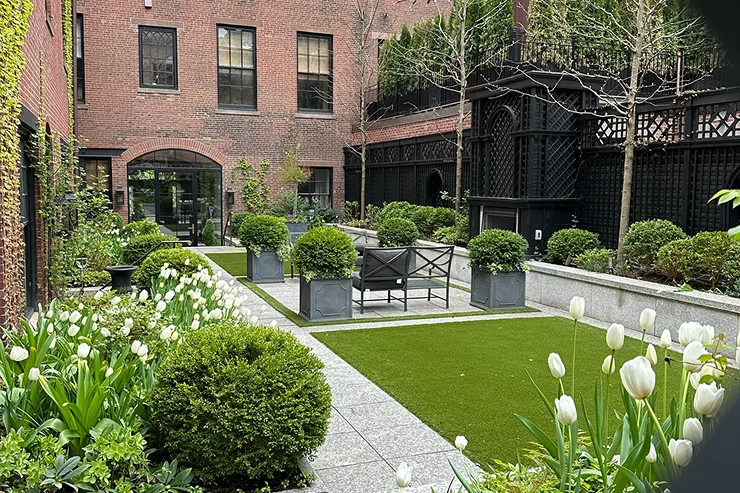
Downtown Boston plantings live in tight courtyards, roof terraces, and narrow streetside beds bordered by concrete and glass. We plan around foot traffic, limited soil volume, and reflected heat off surrounding buildings, choosing techniques and plant care routines that hold up to constant public exposure.
- Pedestrian and building access patterns
- Soil depth and container constraints
- Heat and glare from nearby facades
Building approvals and structural load limits
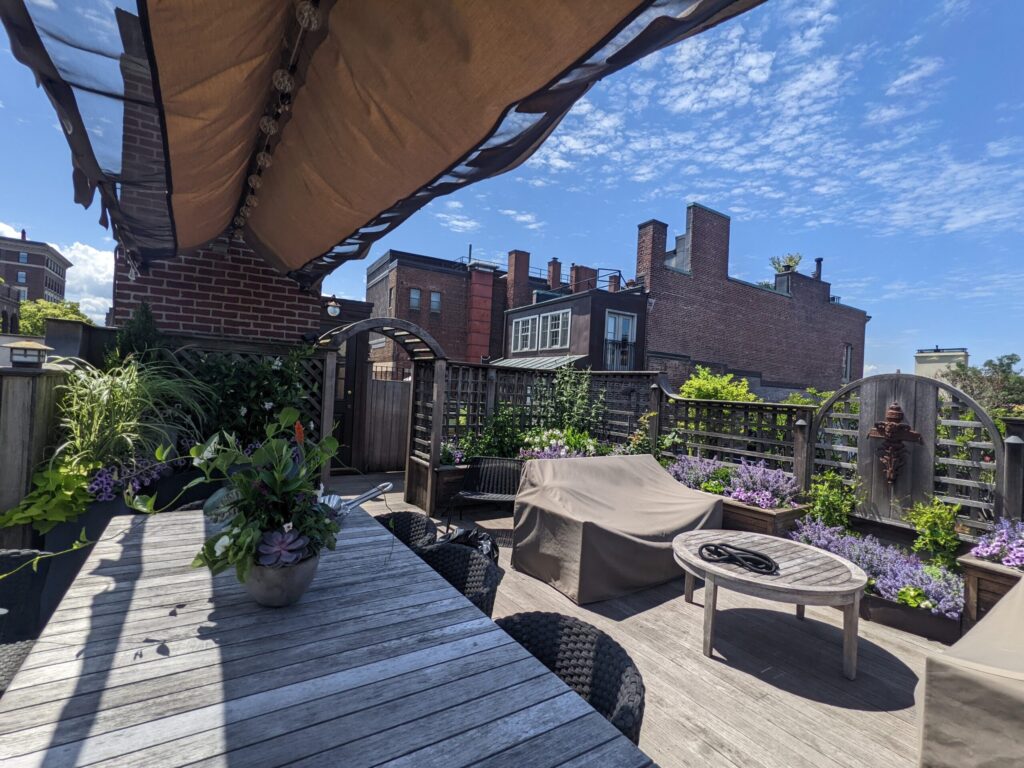
Almost every downtown property management office requires a planting and irrigation plan before work begins, and many decks carry a published live-load limit that dictates container size, growing-medium weight, and how much water-saturated soil the space can hold at once. We provide a materials list with weights per square foot when the building engineer asks for one, and we keep containers lightweight-aggregate wherever the load budget is tight.
Freight elevator and delivery-window logistics
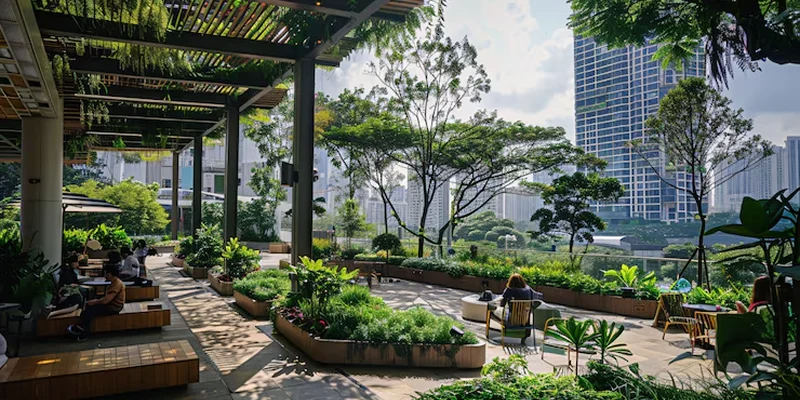
Soil and plant deliveries downtown do not happen at street level with a wheelbarrow. They happen through a loading dock, on a reserved freight elevator, inside a booked time slot that might run ninety minutes. We batch materials, pre-stage them off-site, and schedule crews so the entire install fits inside the window the building allows, rather than discovering mid-job that the elevator is needed for a resident’s move.
Wind exposure between the towers
A terrace at height in the Financial District or on the Greenway edge sees sustained wind that a ground-floor garden never experiences. We anchor larger containers, use windbreak plantings such as columnar hornbeam or clumping bamboo alternatives where space allows, and avoid top-heavy specimens that will need re-staking after every storm.
Irrigation without a hose bib in sight
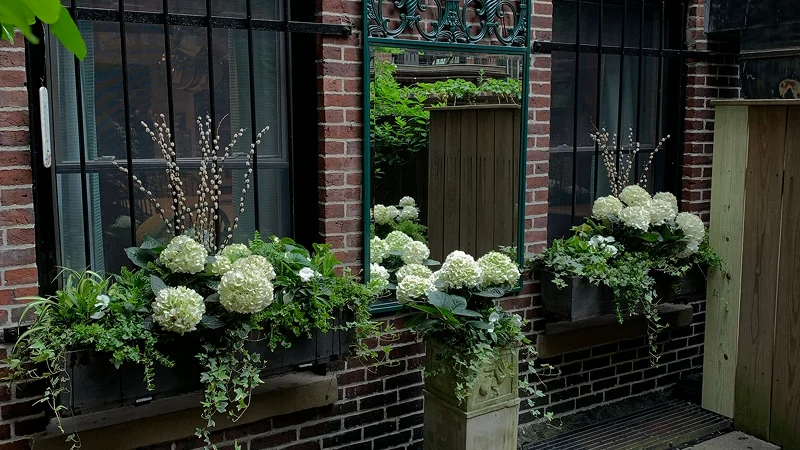
Many downtown roof decks have no dedicated water line, or a single spigot far from the planting zones. We design drip systems run off the nearest available source, on timers set for the wind and heat exposure specific to that deck, so containers do not dry out on the hot afternoons when reflected sun off glass raises surface temperatures well above the street.
Recent Downtown Boston work
A recurring project type for us downtown is the full-service roof deck refresh for a condominium or corporate tenant: replacing tired, undersized containers with properly weighted planters, reworking a drip line that was never sized for the deck’s actual sun and wind exposure, and adding low-voltage lighting so the space reads as finished after dark rather than going unused once the sun sets behind the next tower. We have also handled seasonal container rotations for building lobbies and entry plazas where a management company wants a consistent, well-kept look through spring, summer, and holiday changeovers without residents ever seeing a work crew during business hours.
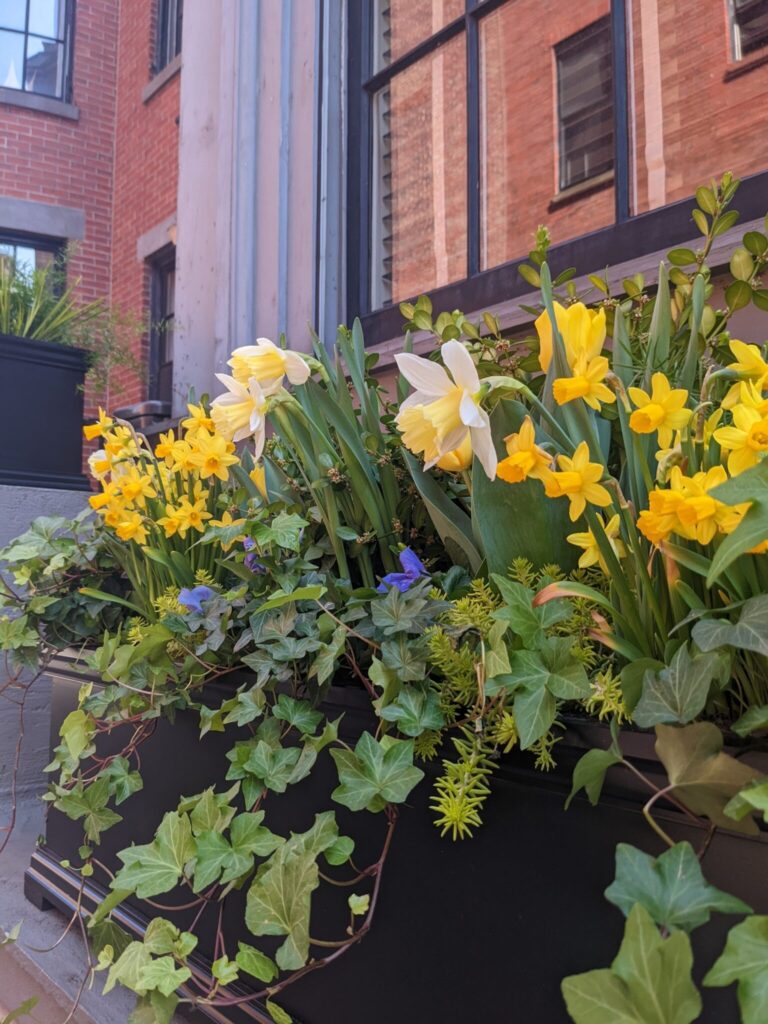
Other services we provide in Downtown Boston
Fine gardening is usually one piece of a larger relationship. We also handle garden design and installation for buildings planning a deck renovation from the ground up, seasonal container and window box programs for street-level entries and lobbies, and roof deck and terrace planting for penthouse and corporate amenity spaces where structural review is part of the design process. Where a deck has no reliable water access, we add drip irrigation sized for the specific load and layout, and for properties that use their terrace into the evening, we install low-voltage landscape lighting that meets building electrical requirements. All of it is coordinated with property management from the first site visit, so approvals, deliveries, and access are handled before a single plant arrives.
Book fine gardening in Downtown Boston
We are 1.6 miles from Downtown Boston out of our Downtown Boston location on Crescent Street, close enough to run a site visit, get building approvals sorted, and start work on a realistic timeline. Call to set up a consultation — we will walk the space, review any building requirements with your property manager if needed, and put together a plan built around the elevator windows, load limits, and wind exposure your specific terrace actually has. After that call, next steps are a site visit and a written plan before anything is ordered or delivered.
What Our Customers Say
Frequently Asked Questions
How do you get soil and plants up to a high-rise terrace?
Through the building's freight elevator and loading dock, coordinated with property management ahead of time. Most downtown buildings run a reservation system with a fixed delivery window, so we pre-stage materials and schedule crews to move everything through in one trip rather than tying up the elevator repeatedly.
Does my building's weight limit affect what you can plant?
Yes. Roof decks and terraces downtown typically have a published structural load limit, so we choose lightweight-aggregate containers and calculate soil weight per square foot before finalizing a planting plan. If your management company requires a materials list for review, we provide one.
Why does my terrace dry out so fast even though it gets plenty of sun?
Wind and reflected heat off surrounding glass towers pull moisture out of container soil much faster than a ground-level garden loses it. We design drip irrigation on timers set for that specific exposure rather than a generic watering schedule.
Can you work with my building's property management or engineer directly?
Yes, and we generally recommend it. We coordinate access, delivery windows, and any required load or planting approvals directly with the building team so you are not relaying paperwork back and forth.
Do you handle ongoing maintenance or just the initial install?
Both. Fine gardening downtown is largely an ongoing service — seasonal plant changeovers, irrigation checks, and wind or storm damage repair — since container gardens at height need more consistent attention than an in-ground bed.