- Serving Boston and the Greater Boston Area

- Home
- Services
- Garden Design Services
- Landscape Design
- Urban Garden Design
- Rooftop Garden Installation
- Roof Deck Planting
- Container Gardening Services
- Seasonal Container Planting
- Window Boxes
- Fine Gardening
- Garden Maintenance
- Planting Maintenance
- Flower & Plant Installation
- Drip Irrigation Installation
- Landscape Lighting
- Service Areas
Charlestown, MA
- Garden Services in Charlestown, MA
- Garden Design in Charlestown, MA
- Landscape Design in Charlestown, MA
- Urban Garden Design in Charlestown, MA
- Rooftop Garden Installation in Charlestown, MA
- Roof Deck Planting in Charlestown, MA
- Container Gardening in Charlestown, MA
- Seasonal Container Planting in Charlestown, MA
- Flower & Plant Installation in Charlestown, MA
- Window Boxes in Charlestown, MA
- Fine Gardening in Charlestown, MA
- Garden Maintenance in Charlestown, MA
- Planting & Maintenance in Charlestown, MA
- Drip Irrigation Installation in Charlestown, MA
- Landscape Lighting in Charlestown, MA
North End, MA
- Garden Services in north-end, MA
- Garden Design in north-end, MA
- Landscape Design in north-end, MA
- Urban Garden Design in north-end, MA
- Rooftop Garden Installation in north-end, MA
- Roof Deck Planting in north-end, MA
- Container Gardening in north-end, MA
- Seasonal Container Planting in north-end, MA
- Flower & Plant Installation in north-end, MA
- Window Boxes in north-end, MA
- Fine Gardening in north-end, MA
- Garden Maintenance in north-end, MA
- Planting & Maintenance in north-end, MA
- Drip Irrigation Installation in north-end, MA
- Landscape Lighting in north-end, MA
Downtown Boston, MA
- Garden Services in downtown boston, MA
- Garden Design in downtown boston, MA
- Landscape Design in downtown boston, MA
- Urban Garden Design in downtown boston, MA
- Rooftop Garden Installation in downtown boston, MA
- Roof Deck Planting in downtown boston, MA
- Container Gardening in downtown boston, MA
- Seasonal Container Planting in downtown boston, MA
- Flower & Plant Installation in downtown boston, MA
- Window Boxes in downtown boston, MA
- Fine Gardening in downtown boston, MA
- Garden Maintenance in downtown boston, MA
- Planting & Maintenance in downtown boston, MA
- Drip Irrigation Installation in downtown boston, MA
- Landscape Lighting in downtown boston, MA
Beacon Hill, MA
- Garden Services in beacon hill, MA
- Garden Design in beacon hill, MA
- Landscape Design in beacon hill, MA
- Urban Garden Design in beacon hill, MA
- Rooftop Garden Installation in beacon hill, MA
- Roof Deck Planting in beacon hill, MA
- Container Gardening in beacon hill, MA
- Seasonal Container Planting in beacon hill, MA
- Flower & Plant Installation in beacon hill, MA
- Window Boxes in beacon hill, MA
- Fine Gardening in beacon hill, MA
- Garden Maintenance in beacon hill, MA
- Planting & Maintenance in beacon hill, MA
- Drip Irrigation Installation in beacon hill, MA
- Landscape Lighting in beacon hill, MA
Boston, MA
- Garden Services in boston, MA
- Garden Design in boston, MA
- Landscape Design in boston, MA
- Urban Garden Design in boston, MA
- Rooftop Garden Installation in boston, MA
- Roof Deck Planting in boston, MA
- Container Gardening in boston, MA
- Seasonal Container Planting in boston, MA
- Flower & Plant Installation in boston, MA
- Window Boxes in boston, MA
- Fine Gardening in boston, MA
- Garden Maintenance in boston, MA
- Planting & Maintenance in boston, MA
- Drip Irrigation Installation in boston, MA
- Landscape Lighting in boston, MA
seaport, MA
- Garden Services in seaport, MA
- Garden Design in seaport, MA
- Landscape Design in seaport, MA
- Urban Garden Design in seaport, MA
- Rooftop Garden Installation in seaport, MA
- Roof Deck Planting in seaport, MA
- Container Gardening in seaport, MA
- Seasonal Container Planting in seaport, MA
- Flower & Plant Installation in seaport, MA
- Window Boxes in seaport, MA
- Fine Gardening in seaport, MA
- Garden Maintenance in seaport, MA
- Planting & Maintenance in seaport, MA
- Drip Irrigation Installation in seaport, MA
- Landscape Lighting in seaport, MA
back bay, MA
- Garden Services in back bay, MA
- Garden Design in back bay, MA
- Landscape Design in back bay, MA
- Urban Garden Design in back bay, MA
- Rooftop Garden Installation in back bay, MA
- Roof Deck Planting in back bay, MA
- Container Gardening in back bay, MA
- Seasonal Container Planting in back bay, MA
- Flower & Plant Installation in back bay, MA
- Window Boxes in back bay, MA
- Fine Gardening in back bay, MA
- Garden Maintenance in back bay, MA
- Planting & Maintenance in back bay, MA
- Drip Irrigation Installation in back bay, MA
- Landscape Lighting in back bay, MA
cambridge, MA
- Garden Services in cambridge, MA
- Garden Design in cambridge, MA
- Landscape Design in cambridge, MA
- Urban Garden Design in cambridge, MA
- Rooftop Garden Installation in cambridge, MA
- Roof Deck Planting in cambridge, MA
- Container Gardening in cambridge, MA
- Seasonal Container Planting in cambridge, MA
- Flower & Plant Installation in cambridge, MA
- Window Boxes in cambridge, MA
- Fine Gardening in cambridge, MA
- Garden Maintenance in cambridge, MA
- Planting & Maintenance in cambridge, MA
- Drip Irrigation Installation in cambridge, MA
- Landscape Lighting in cambridge, MA
south-end, MA
- Garden Services in south-end, MA
- Garden Design in south-end, MA
- Landscape Design in south-end, MA
- Urban Garden Design in south-end, MA
- Rooftop Garden Installation in south-end, MA
- Roof Deck Planting in south-end, MA
- Container Gardening in south-end, MA
- Seasonal Container Planting in south-end, MA
- Flower & Plant Installation in south-end, MA
- Window Boxes in south-end, MA
- Fine Gardening in south-end, MA
- Garden Maintenance in south-end, MA
- Planting & Maintenance in south-end, MA
- Drip Irrigation Installation in south-end, MA
- Landscape Lighting in south-end, MA
brookline, MA
- Garden Services in brookline, MA
- Garden Design in brookline, MA
- Landscape Design in brookline, MA
- Urban Garden Design in brookline, MA
- Rooftop Garden Installation in brookline, MA
- Roof Deck Planting in brookline, MA
- Container Gardening in brookline, MA
- Seasonal Container Planting in brookline, MA
- Flower & Plant Installation in brookline, MA
- Window Boxes in brookline, MA
- Fine Gardening in brookline, MA
- Garden Maintenance in brookline, MA
- Planting & Maintenance in brookline, MA
- Drip Irrigation Installation in brookline, MA
- Landscape Lighting in brookline, MA
winchester, MA
- Garden Services in winchester, MA
- Garden Design in winchester, MA
- Landscape Design in winchester, MA
- Urban Garden Design in winchester, MA
- Rooftop Garden Installation in winchester, MA
- Roof Deck Planting in winchester, MA
- Container Gardening in winchester, MA
- Seasonal Container Planting in winchester, MA
- Flower & Plant Installation in winchester, MA
- Window Boxes in winchester, MA
- Fine Gardening in winchester, MA
- Garden Maintenance in winchester, MA
- Planting & Maintenance in winchester, MA
- Drip Irrigation Installation in winchester, MA
- Landscape Lighting in winchester, MA
newton, MA
- Garden Services in newton, MA
- Garden Design in newton, MA
- Landscape Design in newton, MA
- Urban Garden Design in newton, MA
- Rooftop Garden Installation in newton, MA
- Roof Deck Planting in newton, MA
- Container Gardening in newton, MA
- Seasonal Container Planting in newton, MA
- Flower & Plant Installation in newton, MA
- Window Boxes in newton, MA
- Fine Gardening in newton, MA
- Garden Maintenance in newton, MA
- Planting & Maintenance in newton, MA
- Drip Irrigation Installation in newton, MA
- Landscape Lighting in newton, MA
lexington, MA
- Garden Services in lexington, MA
- Garden Design in lexington, MA
- Landscape Design in lexington, MA
- Urban Garden Design in lexington, MA
- Rooftop Garden Installation in lexington, MA
- Roof Deck Planting in lexington, MA
- Container Gardening in lexington, MA
- Seasonal Container Planting newton, MA
- Flower & Plant Installation in lexington, MA
- Window Boxes in lexington, MA
- Fine Gardening in lexington, MA
- Garden Maintenance in lexington, MA
- Planting & Maintenance in lexington, MA
- Drip Irrigation Installation in lexington, MA
- Landscape Lighting in lexington, MA
weston, MA
- Garden Services in weston, MA
- Garden Design in weston, MA
- Landscape Design in weston, MA
- Urban Garden Design in weston, MA
- Rooftop Garden Installation in weston, MA
- Roof Deck Planting in weston, MA
- Container Gardening in weston, MA
- Seasonal Container Planting weston, MA
- Flower & Plant Installation in weston, MA
- Window Boxes in weston, MA
- Fine Gardening in weston, MA
- Garden Maintenance in weston, MA
- Planting & Maintenance in weston, MA
- Drip Irrigation Installation in weston, MA
- Landscape Lighting in weston, MA
wellesley, MA
- Garden Services in wellesley, MA
- Garden Design in wellesley, MA
- Landscape Design in wellesley, MA
- Urban Garden Design in wellesley, MA
- Rooftop Garden Installation in wellesley, MA
- Roof Deck Planting in wellesley, MA
- Container Gardening in wellesley, MA
- Seasonal Container Planting wellesley, MA
- Flower & Plant Installation in wellesley, MA
- Window Boxes in wellesley, MA
- Fine Gardening in wellesley, MA
- Garden Maintenance in wellesley, MA
- Planting & Maintenance in wellesley, MA
- Drip Irrigation Installation in wellesley, MA
- Landscape Lighting in wellesley, MA
- Portfolio
- About us
- Blog
- Contact
- Flower Delivery
Flower & Plant Installation in North End, MA
In the North End, there is almost nowhere to put a plant in the ground. The neighbourhood’s density means your growing space is a roof deck four flights up, a fire-escape rail, or a window box bolted to 19th-century brick, and every one of those spaces takes a beating from wind funneling off the harbor and through the narrow streets. Materials for a real installation have to come in by hand, by cart, or by hoist, because a truck is not getting down Salutation Street or Battery Alley. Flower and plant installation here is really a logistics problem first and a horticultural one second.

What Flower & Plant Installation looks like in North End
Almost every project in the North End starts with a site walk that has nothing to do with plant selection and everything to do with getting materials to the space. We’re measuring stair widths, checking whether a freight elevator exists in the building, and figuring out whether soil, containers and stone go up by hand truck, by service elevator, or by a small hoist rigged from the roofline. On buildings without elevator access, we pre-build and pre-plant containers off-site in sections light enough to carry up a three- or four-story walk-up, then assemble on location.
Light is another variable that shifts block by block. A roof deck on Hanover Street can get full, unbroken sun for eight or nine hours in July, while a fire-escape planter tucked between two four-story buildings on a side street off Prince gets two hours of direct light and lives in reflected heat the rest of the day. We plant accordingly — heat-tolerant, wind-firm varieties for open roof exposures, and shade-adapted, moisture-retentive combinations for the alley-facing boxes.
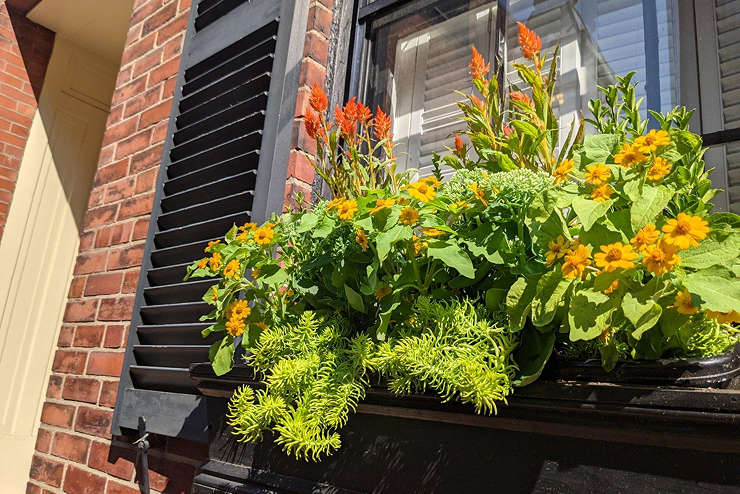
Because there is so little ground-level soil in this neighbourhood, container engineering matters more here than almost anywhere else we work. Every window box, rail planter and roof-deck urn is essentially its own isolated root environment, so drainage, soil volume and irrigation have to be right the first time — there is no surrounding earth to buffer a mistake. Many North End buildings also fall under design review for anything visible from the street, so we design planting schemes that read as historically appropriate from below while giving us the plant palette and container materials we need to make the installation last through a Boston summer and winter.
What we account for here
What we account for here
No ground soil to work with
Because nearly every planting surface in the North End is a container, raised bed on a deck, or fire-escape box, we treat soil volume and drainage as the entire foundation of the design. We spec container depth and root space to match what each species actually needs, since there is no surrounding ground to compensate for an undersized pot.
Wind exposure off the harbor and through narrow streets
Roof decks and upper-floor fire escapes here take sustained wind that a ground-floor garden in the Back Bay never sees. We select wind-firm plant material, anchor containers against tip-over, and use windbreak plantings and screening where the deck layout allows for it.
Near-impossible material access
Alleys off Hanover, Salem and Fleet Streets were laid out centuries before delivery trucks existed. We plan every install around what a hand truck, a stairwell, or a small hoist can actually move, and we pre-assemble containers off-site whenever building access is tight.
Historic and streetscape review
Anything visible from a public way in this neighbourhood may draw attention from the North End’s historic overlays. We design street-facing window boxes and railing plantings to look period-appropriate while still meeting the plant’s real growing requirements.
Recent North End work
A recurring project type here is a fourth-floor roof deck above a converted commercial building, where materials had to be walked up an interior stair in stages over two mornings before a single container went in. Another common brief is the fire-escape and window-box program for a row of three-story residences along a narrow side street, where the growing conditions swing from full sun to deep shade within twenty feet of frontage. Both are typical of the kind of tight-access, high-exposure work that defines flower and plant installation in this part of Boston.
Other services we provide in North End
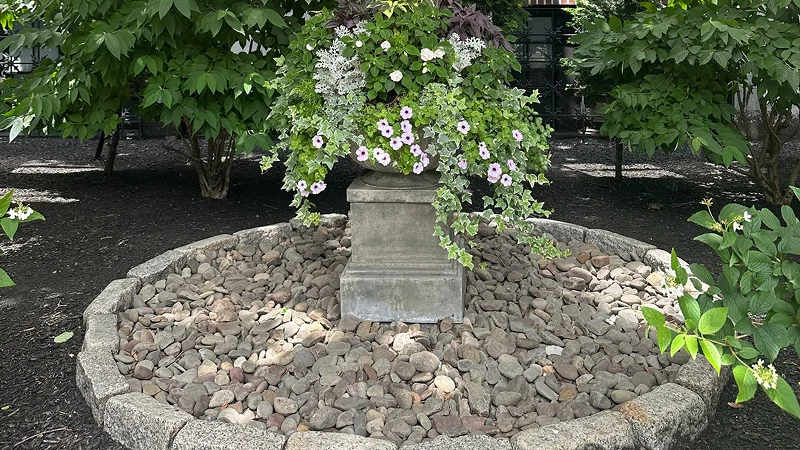
Flower and plant installation is usually the starting point, not the end of the relationship. Many North End clients move on to a fuller garden services program once the containers and window boxes are in, including seasonal rotations and fine maintenance for spaces that get hard use from wind and salt air. Roof decks and small terraces in this neighbourhood also tend to need drip irrigation run to each container individually, since there is no shared bed to water in one pass, along with low-voltage lighting to make a fourth-floor deck usable after dark. Where a building’s design review allows for it, we also handle the container and window-box hardware itself — brackets, liners and drainage systems built for masonry that predates modern fasteners.
How we plan around the neighbourhood's constraints
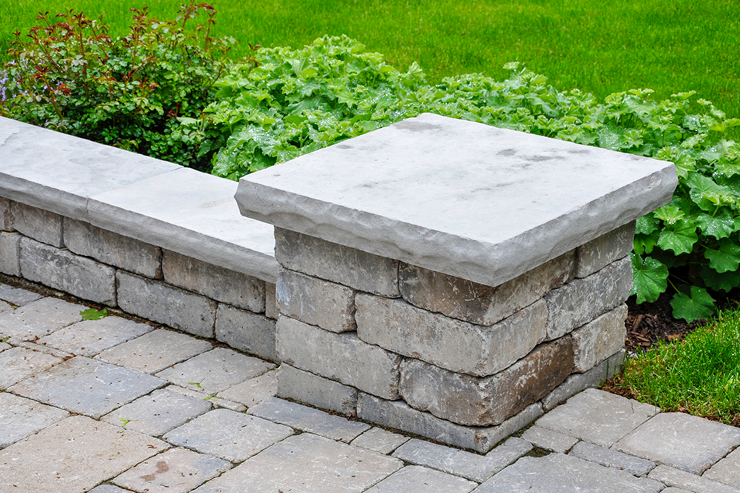
Every proposal we send for a North End address includes a materials logistics plan before it includes a plant list. That ordering is deliberate: if we can’t confirm how soil, containers and stone reach the space, the design is theoretical. We build in extra lead time for buildings without elevator access, price hoisting or hand-carry separately so there are no surprises, and schedule installs around the neighbourhood’s narrow-street parking and loading realities rather than around our own convenience.
Seasonal considerations specific to this neighbourhood
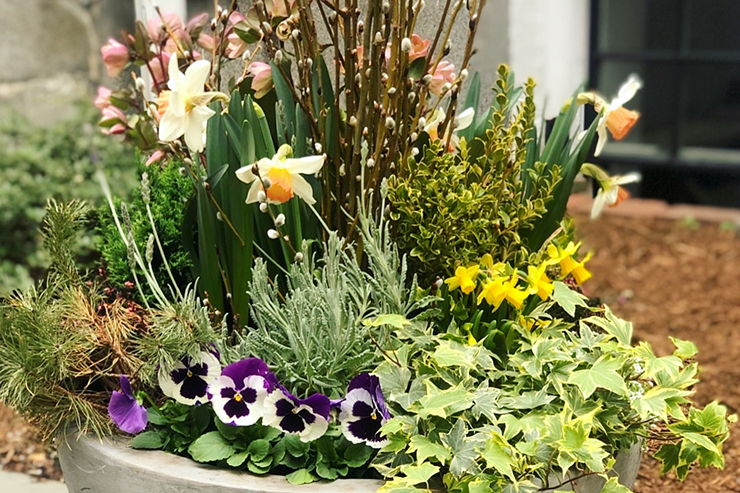
Container plantings in exposed, wind-heavy locations dry out faster and freeze harder than ground beds, so our seasonal changeovers in the North End run on a tighter clock than they would in a yard with in-ground soil. We swap spring displays earlier here to beat the first real heat off the rooftops, and we winterize containers with insulation and drainage checks before the first hard freeze, since a cracked container four stories up is a much bigger problem than one at ground level.
Start with a consultation
Call Rouvalis Gardens to set up a site walk for your North End roof deck, fire escape, or window boxes. We’re 1.2 miles away in North End, so we can typically get a designer out for an initial assessment within the week. On that first visit we walk the access route, take stock of light and wind exposure, and leave you with a straightforward scope and timeline before any materials are ordered. We also handle this same work just across the water in Downtown Boston and North End, and can speak to how North End’s access challenges compare if you’re weighing a second property.
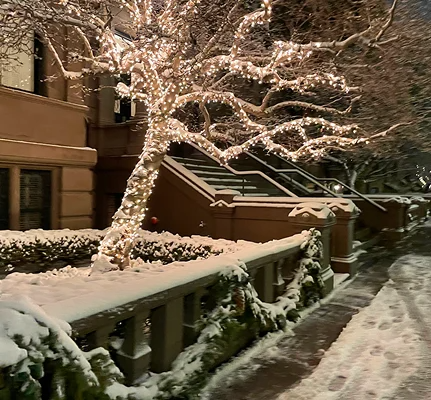
Ready when you are
Whether you’re refreshing window boxes on a narrow North End facade or planting a small courtyard tucked behind a brick storefront, we bring the same care to every install. We’ll talk through what’s realistic for the space, what will actually thrive in it, and how to keep everything looking sharp through the seasons.
- Container and window box plantings
- Small courtyard and patio installs
- Seasonal color changeovers
What Our Customers Say
Frequently Asked Questions
Can you get materials into a North End building without a freight elevator?
Yes. Most North End buildings are walk-ups, so we plan for hand-carry or a small hoist from the start and often pre-build containers off-site in sections light enough to carry up a stairwell, then assemble them on location.
Will window boxes and railing planters need historic district approval?
Anything visible from the street may fall under design review in parts of the North End. We design street-facing installations to read as period-appropriate and can work with your building or the relevant review board on materials and placement before installation.
What plants actually survive on a windy North End roof deck?
Wind-firm, drought-tolerant species anchored in properly sized, weighted containers do best. We avoid tall, top-heavy specimens on exposed decks and favor plants bred to handle sustained wind rather than sheltered garden conditions.
Do window boxes on a fire escape need different care than a roof deck?
Generally yes. Fire-escape boxes often sit in partial shade between buildings and stay damper, while roof decks get more direct sun and wind, so we plant and irrigate the two very differently even on the same building.
How close is Rouvalis Gardens to the North End?
We're based at 5 Crescent St in North End, about 1.2 miles from the North End, which lets us schedule site visits and follow-up maintenance without long lead times.