- Serving Boston and the Greater Boston Area

- Home
- Services
- Garden Design Services
- Landscape Design
- Urban Garden Design
- Rooftop Garden Installation
- Roof Deck Planting
- Container Gardening Services
- Seasonal Container Planting
- Window Boxes
- Fine Gardening
- Garden Maintenance
- Planting Maintenance
- Flower & Plant Installation
- Drip Irrigation Installation
- Landscape Lighting
- Service Areas
Charlestown, MA
- Garden Services in Charlestown, MA
- Garden Design in Charlestown, MA
- Landscape Design in Charlestown, MA
- Urban Garden Design in Charlestown, MA
- Rooftop Garden Installation in Charlestown, MA
- Roof Deck Planting in Charlestown, MA
- Container Gardening in Charlestown, MA
- Seasonal Container Planting in Charlestown, MA
- Flower & Plant Installation in Charlestown, MA
- Window Boxes in Charlestown, MA
- Fine Gardening in Charlestown, MA
- Garden Maintenance in Charlestown, MA
- Planting & Maintenance in Charlestown, MA
- Drip Irrigation Installation in Charlestown, MA
- Landscape Lighting in Charlestown, MA
North End, MA
- Garden Services in north-end, MA
- Garden Design in north-end, MA
- Landscape Design in north-end, MA
- Urban Garden Design in north-end, MA
- Rooftop Garden Installation in north-end, MA
- Roof Deck Planting in north-end, MA
- Container Gardening in north-end, MA
- Seasonal Container Planting in north-end, MA
- Flower & Plant Installation in north-end, MA
- Window Boxes in north-end, MA
- Fine Gardening in north-end, MA
- Garden Maintenance in north-end, MA
- Planting & Maintenance in north-end, MA
- Drip Irrigation Installation in north-end, MA
- Landscape Lighting in north-end, MA
Downtown Boston, MA
- Garden Services in downtown boston, MA
- Garden Design in downtown boston, MA
- Landscape Design in downtown boston, MA
- Urban Garden Design in downtown boston, MA
- Rooftop Garden Installation in downtown boston, MA
- Roof Deck Planting in downtown boston, MA
- Container Gardening in downtown boston, MA
- Seasonal Container Planting in downtown boston, MA
- Flower & Plant Installation in downtown boston, MA
- Window Boxes in downtown boston, MA
- Fine Gardening in downtown boston, MA
- Garden Maintenance in downtown boston, MA
- Planting & Maintenance in downtown boston, MA
- Drip Irrigation Installation in downtown boston, MA
- Landscape Lighting in downtown boston, MA
Beacon Hill, MA
- Garden Services in beacon hill, MA
- Garden Design in beacon hill, MA
- Landscape Design in beacon hill, MA
- Urban Garden Design in beacon hill, MA
- Rooftop Garden Installation in beacon hill, MA
- Roof Deck Planting in beacon hill, MA
- Container Gardening in beacon hill, MA
- Seasonal Container Planting in beacon hill, MA
- Flower & Plant Installation in beacon hill, MA
- Window Boxes in beacon hill, MA
- Fine Gardening in beacon hill, MA
- Garden Maintenance in beacon hill, MA
- Planting & Maintenance in beacon hill, MA
- Drip Irrigation Installation in beacon hill, MA
- Landscape Lighting in beacon hill, MA
Boston, MA
- Garden Services in boston, MA
- Garden Design in boston, MA
- Landscape Design in boston, MA
- Urban Garden Design in boston, MA
- Rooftop Garden Installation in boston, MA
- Roof Deck Planting in boston, MA
- Container Gardening in boston, MA
- Seasonal Container Planting in boston, MA
- Flower & Plant Installation in boston, MA
- Window Boxes in boston, MA
- Fine Gardening in boston, MA
- Garden Maintenance in boston, MA
- Planting & Maintenance in boston, MA
- Drip Irrigation Installation in boston, MA
- Landscape Lighting in boston, MA
seaport, MA
- Garden Services in seaport, MA
- Garden Design in seaport, MA
- Landscape Design in seaport, MA
- Urban Garden Design in seaport, MA
- Rooftop Garden Installation in seaport, MA
- Roof Deck Planting in seaport, MA
- Container Gardening in seaport, MA
- Seasonal Container Planting in seaport, MA
- Flower & Plant Installation in seaport, MA
- Window Boxes in seaport, MA
- Fine Gardening in seaport, MA
- Garden Maintenance in seaport, MA
- Planting & Maintenance in seaport, MA
- Drip Irrigation Installation in seaport, MA
- Landscape Lighting in seaport, MA
back bay, MA
- Garden Services in back bay, MA
- Garden Design in back bay, MA
- Landscape Design in back bay, MA
- Urban Garden Design in back bay, MA
- Rooftop Garden Installation in back bay, MA
- Roof Deck Planting in back bay, MA
- Container Gardening in back bay, MA
- Seasonal Container Planting in back bay, MA
- Flower & Plant Installation in back bay, MA
- Window Boxes in back bay, MA
- Fine Gardening in back bay, MA
- Garden Maintenance in back bay, MA
- Planting & Maintenance in back bay, MA
- Drip Irrigation Installation in back bay, MA
- Landscape Lighting in back bay, MA
cambridge, MA
- Garden Services in cambridge, MA
- Garden Design in cambridge, MA
- Landscape Design in cambridge, MA
- Urban Garden Design in cambridge, MA
- Rooftop Garden Installation in cambridge, MA
- Roof Deck Planting in cambridge, MA
- Container Gardening in cambridge, MA
- Seasonal Container Planting in cambridge, MA
- Flower & Plant Installation in cambridge, MA
- Window Boxes in cambridge, MA
- Fine Gardening in cambridge, MA
- Garden Maintenance in cambridge, MA
- Planting & Maintenance in cambridge, MA
- Drip Irrigation Installation in cambridge, MA
- Landscape Lighting in cambridge, MA
south-end, MA
- Garden Services in south-end, MA
- Garden Design in south-end, MA
- Landscape Design in south-end, MA
- Urban Garden Design in south-end, MA
- Rooftop Garden Installation in south-end, MA
- Roof Deck Planting in south-end, MA
- Container Gardening in south-end, MA
- Seasonal Container Planting in south-end, MA
- Flower & Plant Installation in south-end, MA
- Window Boxes in south-end, MA
- Fine Gardening in south-end, MA
- Garden Maintenance in south-end, MA
- Planting & Maintenance in south-end, MA
- Drip Irrigation Installation in south-end, MA
- Landscape Lighting in south-end, MA
brookline, MA
- Garden Services in brookline, MA
- Garden Design in brookline, MA
- Landscape Design in brookline, MA
- Urban Garden Design in brookline, MA
- Rooftop Garden Installation in brookline, MA
- Roof Deck Planting in brookline, MA
- Container Gardening in brookline, MA
- Seasonal Container Planting in brookline, MA
- Flower & Plant Installation in brookline, MA
- Window Boxes in brookline, MA
- Fine Gardening in brookline, MA
- Garden Maintenance in brookline, MA
- Planting & Maintenance in brookline, MA
- Drip Irrigation Installation in brookline, MA
- Landscape Lighting in brookline, MA
winchester, MA
- Garden Services in winchester, MA
- Garden Design in winchester, MA
- Landscape Design in winchester, MA
- Urban Garden Design in winchester, MA
- Rooftop Garden Installation in winchester, MA
- Roof Deck Planting in winchester, MA
- Container Gardening in winchester, MA
- Seasonal Container Planting in winchester, MA
- Flower & Plant Installation in winchester, MA
- Window Boxes in winchester, MA
- Fine Gardening in winchester, MA
- Garden Maintenance in winchester, MA
- Planting & Maintenance in winchester, MA
- Drip Irrigation Installation in winchester, MA
- Landscape Lighting in winchester, MA
newton, MA
- Garden Services in newton, MA
- Garden Design in newton, MA
- Landscape Design in newton, MA
- Urban Garden Design in newton, MA
- Rooftop Garden Installation in newton, MA
- Roof Deck Planting in newton, MA
- Container Gardening in newton, MA
- Seasonal Container Planting in newton, MA
- Flower & Plant Installation in newton, MA
- Window Boxes in newton, MA
- Fine Gardening in newton, MA
- Garden Maintenance in newton, MA
- Planting & Maintenance in newton, MA
- Drip Irrigation Installation in newton, MA
- Landscape Lighting in newton, MA
lexington, MA
- Garden Services in lexington, MA
- Garden Design in lexington, MA
- Landscape Design in lexington, MA
- Urban Garden Design in lexington, MA
- Rooftop Garden Installation in lexington, MA
- Roof Deck Planting in lexington, MA
- Container Gardening in lexington, MA
- Seasonal Container Planting newton, MA
- Flower & Plant Installation in lexington, MA
- Window Boxes in lexington, MA
- Fine Gardening in lexington, MA
- Garden Maintenance in lexington, MA
- Planting & Maintenance in lexington, MA
- Drip Irrigation Installation in lexington, MA
- Landscape Lighting in lexington, MA
weston, MA
- Garden Services in weston, MA
- Garden Design in weston, MA
- Landscape Design in weston, MA
- Urban Garden Design in weston, MA
- Rooftop Garden Installation in weston, MA
- Roof Deck Planting in weston, MA
- Container Gardening in weston, MA
- Seasonal Container Planting weston, MA
- Flower & Plant Installation in weston, MA
- Window Boxes in weston, MA
- Fine Gardening in weston, MA
- Garden Maintenance in weston, MA
- Planting & Maintenance in weston, MA
- Drip Irrigation Installation in weston, MA
- Landscape Lighting in weston, MA
wellesley, MA
- Garden Services in wellesley, MA
- Garden Design in wellesley, MA
- Landscape Design in wellesley, MA
- Urban Garden Design in wellesley, MA
- Rooftop Garden Installation in wellesley, MA
- Roof Deck Planting in wellesley, MA
- Container Gardening in wellesley, MA
- Seasonal Container Planting wellesley, MA
- Flower & Plant Installation in wellesley, MA
- Window Boxes in wellesley, MA
- Fine Gardening in wellesley, MA
- Garden Maintenance in wellesley, MA
- Planting & Maintenance in wellesley, MA
- Drip Irrigation Installation in wellesley, MA
- Landscape Lighting in wellesley, MA
- Portfolio
- About us
- Blog
- Contact
- Flower Delivery
Garden Design in Brookline, MA
A garden plan for a Brookline property has to solve for three things a lot of Boston-area sites don’t: the extra square footage that comes with a larger lot, the shade and root competition from plantings that have had sixty or eighty years to mature, and, the closer you sit to the Newton line, a deer population that will eat a season’s containers overnight if the plant list is wrong. Preservation Commission oversight in several Brookline districts adds a fourth layer that has to be planned for before a single shovel goes in the ground.

What Garden Design looks like in Brookline
Brookline lots run larger than the Boston average, and that changes the design problem. Instead of maximizing a tight footprint, the work is usually about sequencing a bigger property: a front approach that reads well from the street, a side yard that connects to a mature tree canopy without fighting it, and a back garden that can carry several planting zones without feeling like separate projects stitched together. Mature specimen trees — old beeches, oaks, and established hedgerows in particular — are usually the anchor of the design rather than an obstacle to work around. That means soil tests under the drip line before we commit to new beds, since decades of leaf litter and root competition change what will actually establish there.
Light is uneven on these lots in a way that newer subdivisions don’t have to deal with. A south-facing perennial border might sit thirty feet from a spot that gets four hours of dappled shade from a hundred-year-old tree, and the planting plan has to account for both zones honestly rather than picking one plant palette and hoping it survives everywhere. Deer pressure builds as you move toward the Newton and Chestnut Hill line, and it shapes the plant list directly — hostas, hydrangea buds, and tulip bulbs are treated as deer candy in those areas, so we design around resistant substitutes or budget for protection rather than replacing a border twice.
Many of Brookline’s most desirable streets sit inside local historic districts, which means exterior changes visible from the street — fencing, hardscape, sometimes even large plantings near a facade — can require Preservation Commission review before installation. We build that review timeline into the project schedule from the first conversation, not as an afterthought once a permit gets flagged.
What we account for here
What we account for here
Brookline gardens carry a consistent set of site conditions. Here is how we plan around the ones that show up on nearly every project.
Preservation Commission districts
Several Brookline neighborhoods — including sections of Cottage Farm, the Linden Street area, and parts of the Point — fall under local historic district review. Fencing, walls, and street-visible hardscape often need Commission sign-off before installation. We identify early whether a property sits inside a review district and build the application and approval window into the project timeline so it doesn’t stall a spring installation.
Deer pressure near the Newton line
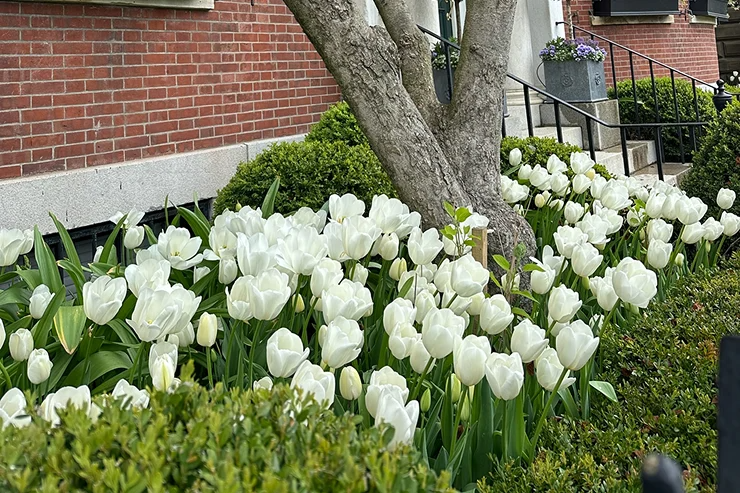
Properties closer to the Newton and Chestnut Hill border see regular deer traffic, especially where yards back onto conservation land or larger unfenced lots. We favor deer-resistant plant families for exposed beds — boxwood, catmint, and ornamental grasses over hostas and daylilies — and reserve netting or fencing for high-value plantings like specimen roses or new fruit trees.
Mature tree root zones
Established trees on older Brookline lots mean compacted, root-dense soil close to the trunk. New beds within the drip line get hand-dug rather than tilled, with amended planting pockets instead of a full bed turnover, so we don’t damage roots that took decades to establish.
Large-lot irrigation and drainage
Bigger properties often mean longer runs from the water source and more variation in slope across the yard. We zone drip irrigation by sun exposure and soil type rather than running one system across the whole lot, so a shaded rear border and a sun-baked front bed aren’t getting the same schedule.
Recent Brookline work
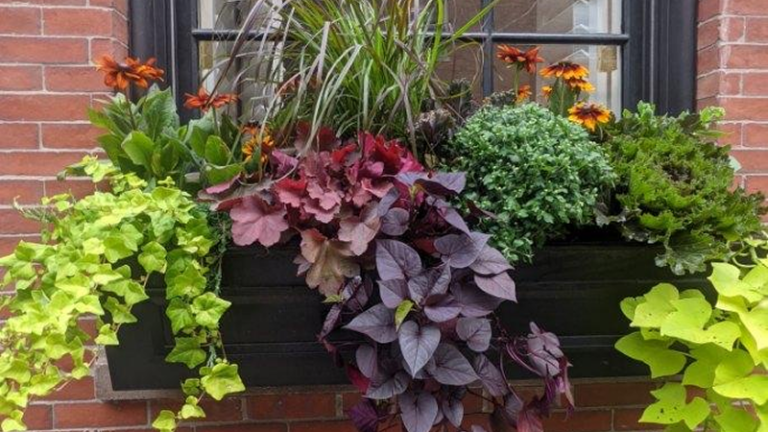
A recurring project type on Brookline’s larger, tree-shaded lots is a full perennial border renovation around an established specimen tree, where the existing bed had thinned out or gone patchy from years of root competition and changing shade patterns. The work typically involves reworking soil pockets by hand near the trunk, reintroducing a shade-tolerant layer beneath the canopy, and extending a deer-resistant planting scheme out to the sunnier edges of the lot. We’ve also handled Commission-reviewed front entry plantings on historic-district streets, where the plant list and any visible structural elements needed sign-off before installation began.
Other services we provide in Brookline
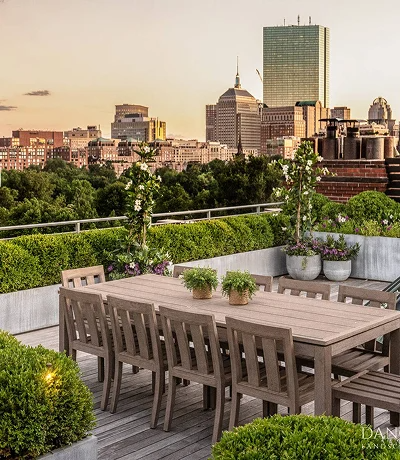
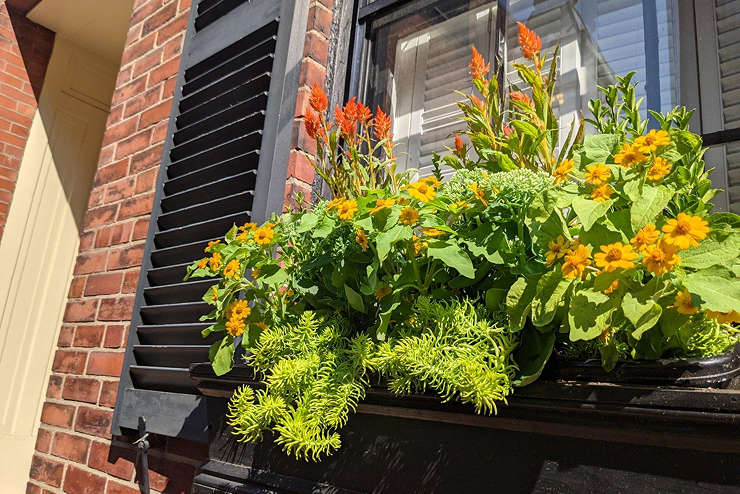
Garden design in Brookline is usually one part of a broader relationship. Once a design is in the ground, most clients move into ongoing fine gardening and maintenance so the plantings we’ve specified actually mature the way they were designed to. Larger lots with mature trees often need drip irrigation zoned by sun exposure, low-voltage lighting along paths and specimen plantings for evening use, and seasonal container work at entries and terraces to carry color through the parts of the year the perennial beds aren’t peaking. For Brookline properties with porches, roof decks, or rear terraces, we handle container and window box planting and terrace planting as a coordinated extension of the ground-level garden rather than a separate afterthought.
Boston, Winchester, and South End garden design
The same design approach — matched to whatever the specific site actually presents — carries across our service area. See our work in garden design in Boston, and the same service in Winchester and the South End, each shaped by that neighborhood’s own lot sizes, light, and review requirements.
Start a Brookline garden design project
Brookline is roughly 5.4 miles from our Brookline location, and it’s a neighborhood we work in regularly enough to know which streets sit inside Preservation Commission review and which blocks see the heaviest deer traffic before we ever walk the property. Call to set up a site visit. We’ll assess the lot, flag anything that needs Commission review up front, and put together a planting plan built for the light, soil, and deer pressure your specific property has to handle.
Other services we provide in Brookline
A garden design plan is the blueprint, but most Brookline clients continue on with us well past the initial layout. Once beds and hardscape are in place, ongoing maintenance and seasonal fine gardening keep the property looking as intended through summer heat and winter dieback alike. For homes on tighter lots near Coolidge Corner or the Village, container plantings and entry beds often deliver a polished street presence without a full-scale redesign.
We also fold in supporting systems as part of most design packages, including:
- Drip irrigation sized to bed layout and soil type
- Low-voltage landscape lighting for paths and plantings
- Seasonal color rotations and bed edging
- Soil amendment and mulching programs
Ready to plan your Brookline garden?
Reach out to arrange a walk-through of your Brookline property. We’ll look at sun patterns, soil, sightlines from the house, and any lot-size or setback quirks common to the neighborhood, then put together a written design scope and price for your review.
- No obligation to proceed
- Clear scope before any work begins
What Our Customers Say
Frequently Asked Questions
Do all Brookline gardens require Preservation Commission approval?
No. Only properties within designated local historic districts, such as parts of Cottage Farm or the Point, typically need review, and usually only for street-visible changes like fencing, walls, or major hardscape. We check a property's district status before finalizing any design that includes structural elements.
How do you design around deer without giving up flowering plants?
We lean on deer-resistant flowering perennials and shrubs — catmint, Russian sage, boxwood, and many ornamental alliums, for example — and reserve fencing or netting for higher-value plantings like roses or new fruit trees, especially on properties closer to the Newton line where deer pressure is heaviest.
Can you work with an existing mature garden instead of starting over?
Yes, and on Brookline's older lots that's the more common project. We assess what's established and healthy, then design new plantings to fill gaps and improve seasonal interest around what's already thriving, rather than clearing beds that have decades of growth in them.
How far in advance should I plan if my property needs historic review?
Commission review timelines vary, but we recommend starting the conversation at least one full season ahead of an installation date if the project includes any street-visible structural work, so approval doesn't hold up planting season.
Do you install irrigation and lighting as part of a garden design project?
Yes. Drip irrigation and low-voltage lighting are typically designed alongside the planting plan itself, especially on larger Brookline lots where sun exposure and soil conditions vary significantly across the property.