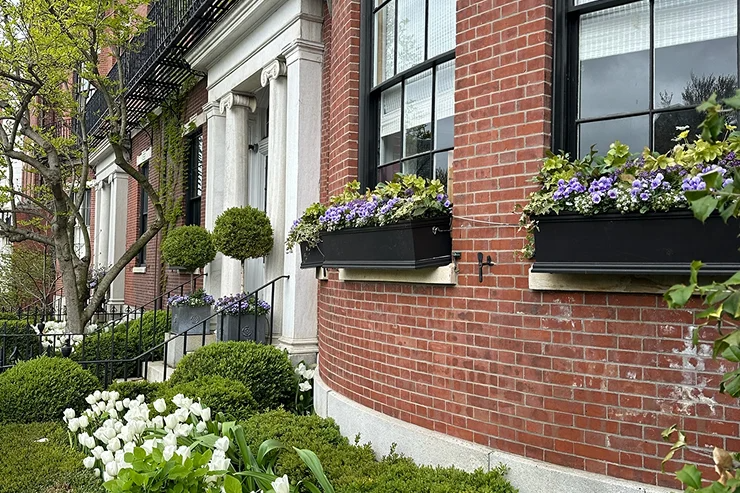
Rouvalis Gardens

Window Boxes in Boston, MA

If your building has no ground-level soil, or a facade under historic commission review, or a south wall that scorches everything by August, a window box is often the only planting option that actually works — and the only one that needs to look right from the sidewalk, not just up close. Rouvalis Gardens designs, builds, plants, and irrigates window boxes for townhouses, brownstones, and street-level storefronts across Boston. Most projects run from an initial site visit to installed boxes in two to three weeks, with a maintenance plan that keeps them full through frost.

What's included

Box design and material selection

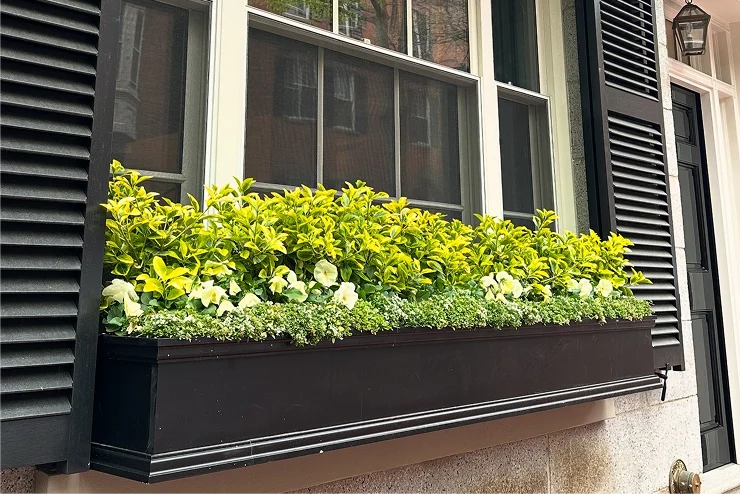
We measure your sill or bracket condition on site and specify boxes in a material that suits the facade — powder-coated aluminum, cedar, or fiberglass composite — sized to the window proportions rather than a stock width. On landmarked buildings, we match the box profile and mounting method to what the historic commission has already approved for similar properties, so you’re not the test case.

Structural mounting and bracket engineering
Boxes on upper floors carry real weight once soil and plants are saturated. We spec brackets rated for the load, mount into masonry or framing rather than trim, and, where a building’s facade rules require it, submit mounting details for approval before installation. This is the step most catalog window-box vendors skip, and it’s the one that causes call-backs.

Planting design by exposure and season

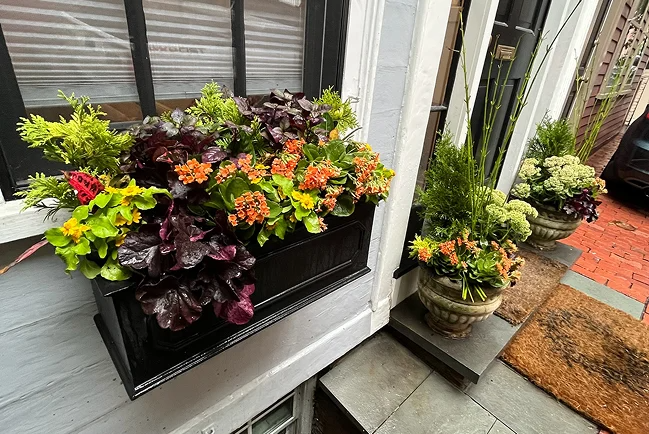
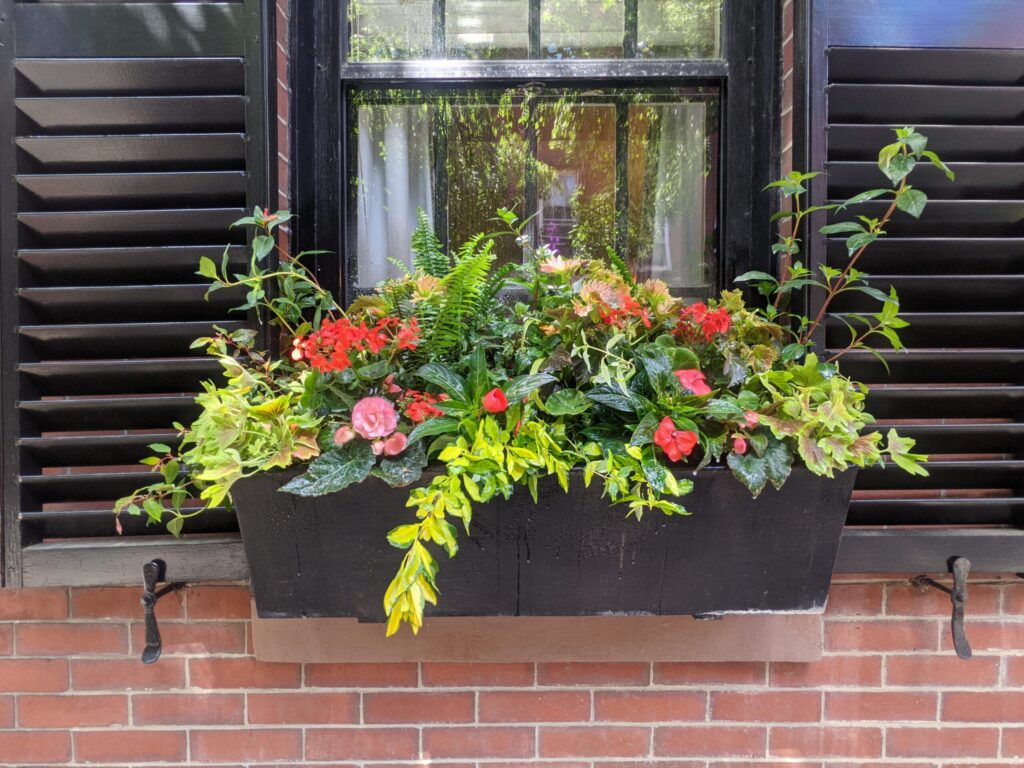
We plant to the light the box actually receives, not the light the room behind it suggests. A north-facing box on a Beacon Hill row house gets a different palette than a south-facing box three doors down. Plantings are rotated across three to four seasons a year so the box never sits empty or leggy between changes.

Drip irrigation and self-watering reservoirs
Window boxes dry out faster than any other container on the property, especially against brick that’s held afternoon sun all day. We fit boxes with a self-watering reservoir or tie them into a building’s drip line where one exists, and set a schedule that accounts for the specific wall’s heat gain.

Ongoing maintenance and seasonal changeovers

Deadheading, feeding, pest checks, and the changeover between spring, summer, fall, and winter plantings are scheduled on a recurring visit, not left for you to request each time. You get a call or text before each changeover with what’s going in and why.

Winter and holiday dressing

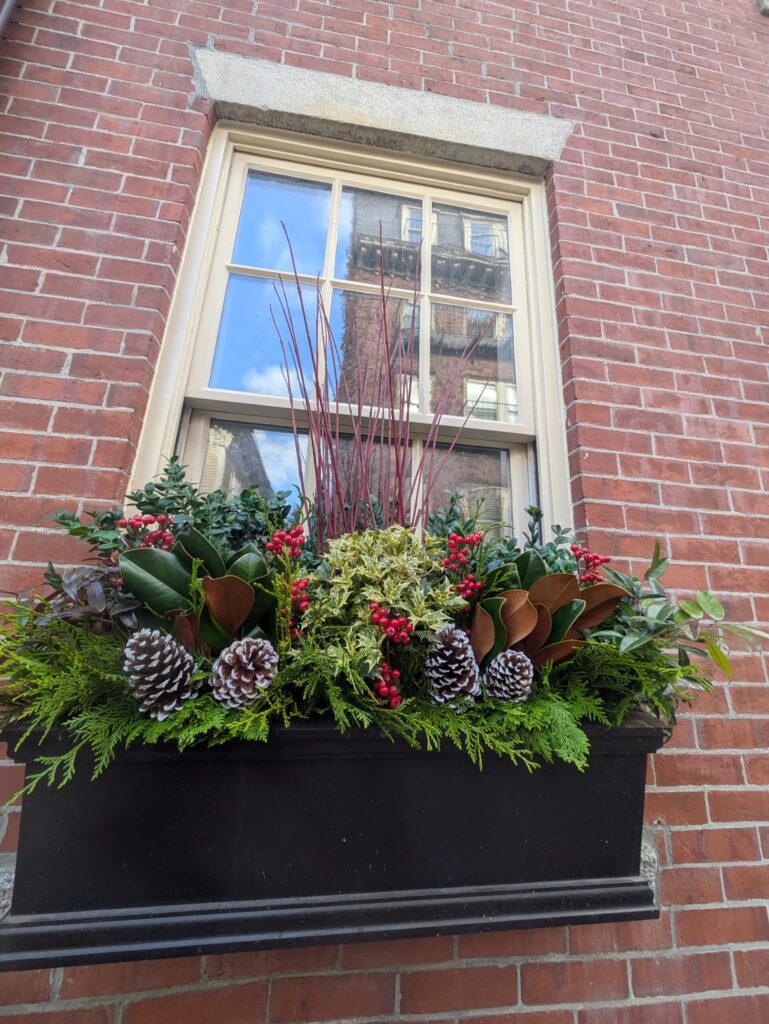
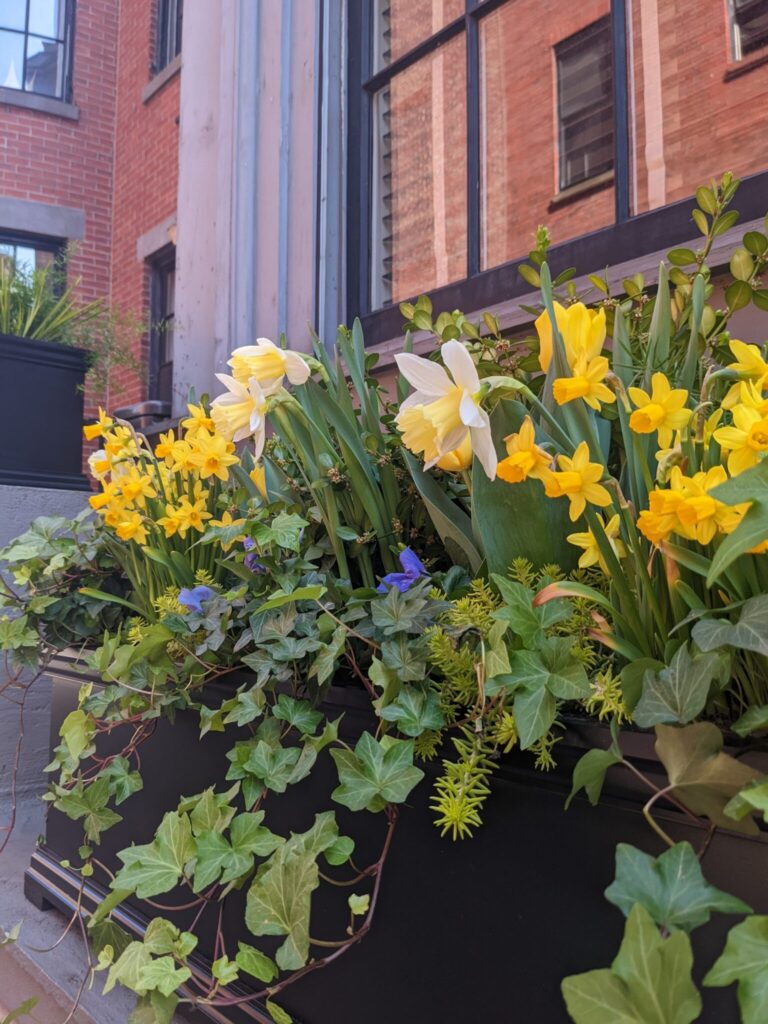
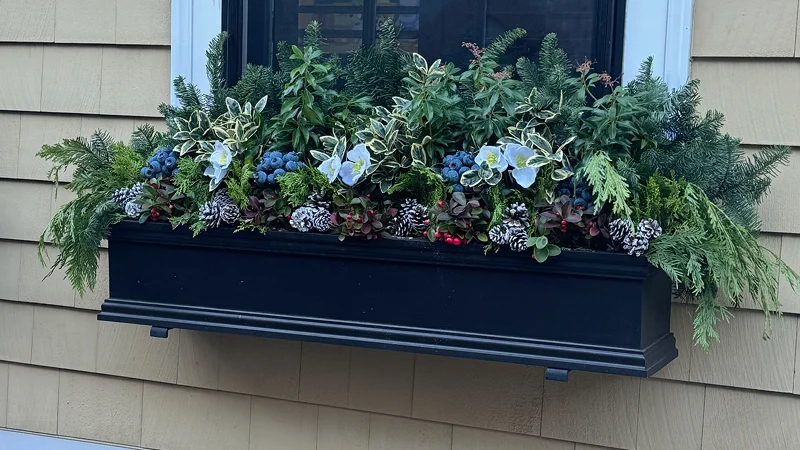
For clients who want the boxes to carry through the cold months rather than sit empty, we build winter arrangements — cut evergreens, birch, dogwood, magnolia — and can coordinate holiday lighting integration with your low-voltage system where one exists.

Why window boxes matter in Boston specifically

Boston’s older housing stock creates a planting problem that suburban landscaping advice doesn’t address. In the North End and on Beacon Hill, most buildings have no ground-level soil at all — the sidewalk runs straight to the foundation, and a window box is often the only planting surface a property has access to. That changes the design brief entirely: the box isn’t a supplement to a garden, it is the garden, and it has to carry the visual weight of the whole facade on its own.
South-facing brick compounds the problem. Brick absorbs heat through the day and releases it slowly into the evening, so a box mounted against a south wall runs hotter than the ambient air temperature well into the night. By mid-July, plantings specified for “full sun” on a nursery tag are often still underperforming against a Boston brick wall, because the tag wasn’t written for masonry radiant heat. We plant these boxes differently — species selection and watering volume both shift for wall exposure, not just compass direction.
Height introduces a second variable. Boxes mounted above the fourth floor, particularly near the harbor or along wider streets that funnel wind, take a steady scour that dries soil faster than the temperature alone would suggest and can physically stress or snap tender stems. We build the planting palette and the watering schedule around wind exposure as a distinct factor from heat, not a footnote to it.
And Boston’s frost window is longer than most planting calendars assume — it typically runs from mid-October to mid-May. That’s roughly seven months a year when summer annuals are not an option, which is why a maintenance plan built around four seasonal changeovers, rather than the two most national services default to, matters here more than in milder climates.

Our process
We walk the facade, measure each window or bracket, photograph the wall’s exposure through the day if timing allows, and note any historic commission constraints on file for the building. Deliverable: a measured plan with box count, sizes, and mounting approach.
You receive a proposal with box material, planting concept by season, and irrigation approach, along with pricing. Deliverable: a written proposal you can approve or revise.
Boxes are built or ordered to spec. On landmarked properties we handle the commission submission for mounting hardware and box visibility. Deliverable: approved boxes ready to install, on a confirmed install date.
Brackets are mounted, boxes are set, irrigation is connected, and the first seasonal planting goes in. Deliverable: completed, planted boxes and a walkthrough of the watering setup.
A recurring visit schedule covers feeding, deadheading, pest checks, and four seasonal changeovers a year. Deliverable: a maintenance calendar and a direct line to your account contact.

Where we do this work

We build and maintain window boxes across the neighborhoods where ground-level soil is scarce and facade rules are strict. In Beacon Hill, where nearly every property sits under historic commission review, and in the North End, where sidewalk-to-foundation lots leave no planting bed at all, window boxes are frequently the only option a homeowner has. The same is true along Back Bay’s brownstone rows and through the South End, where bow-front facades and bracketed sills are original to the buildings.
Closer to the water, in Charlestown and the Seaport, wind scour off the harbor shapes both the planting palette and the watering schedule. In South Boston and Jamaica Plain, we work on a mix of triple-deckers and renovated row houses where bracket condition varies block to block, so each site gets measured rather than assumed.
Across the river, we serve Cambridge and Somerville, where brick and clapboard sit side by side and box specification changes accordingly. In the western suburbs, we work with property managers and homeowners in Brookline, Newton, Wellesley, Weston, Dover, and Chestnut Hill, where larger properties often pair window boxes with entry and terrace containers as part of one coordinated planting plan.
Related services

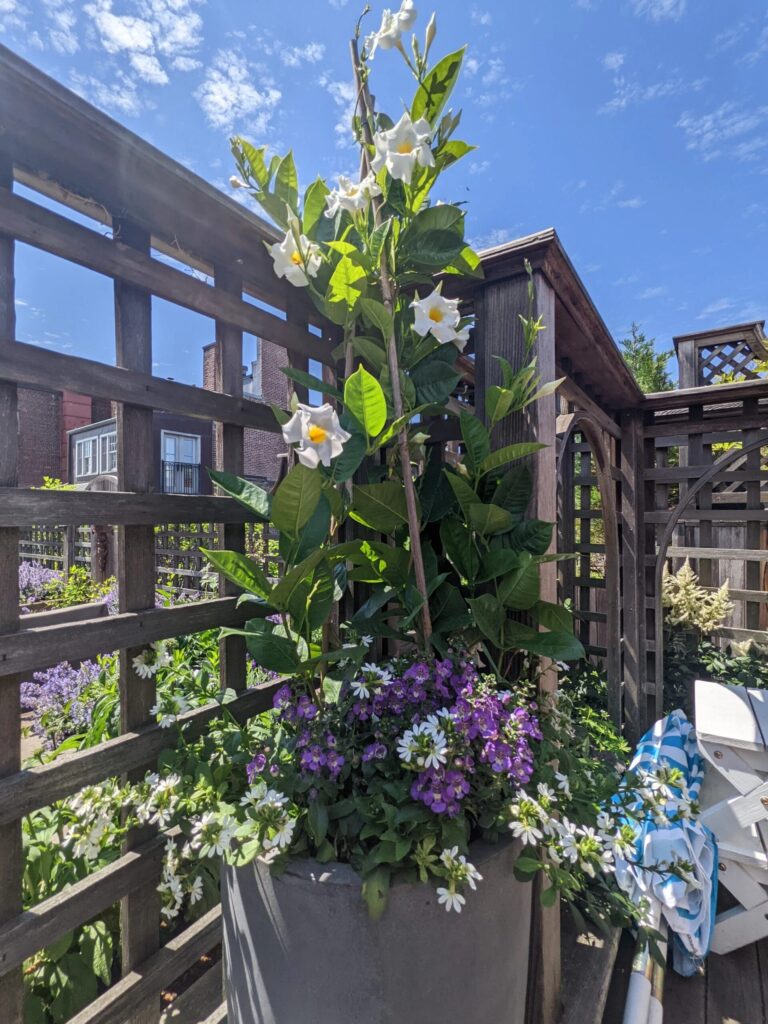
Window boxes are usually one piece of a broader planting plan. If your property also has a roof deck or terrace, see our roof deck and terrace planting page. For ground-level or large-format pots at an entry or storefront, see container design and planting. Boxes on upper floors are frequently tied into a building’s drip irrigation system, and evening presentation is often finished with low-voltage landscape lighting aimed at the facade.

Start with a site visit

Every property’s brackets, exposure, and approval requirements are different, which is why we start with a walk of the facade rather than a phone quote. Call (617) 555-0142 to schedule a site visit, or request a consultation and we’ll follow up within one business day. After the visit, you’ll have a measured plan and a written proposal in hand before anything is ordered.

Frequently Asked Questions

If your property is in a designated historic district — Beacon Hill, Back Bay, the South End, and parts of Charlestown are the most common cases — the commission typically reviews box material, color, and mounting hardware, though requirements vary by district and sometimes by block. We handle the submission and have existing approvals on file for many buildings in these areas, which usually speeds the process.
It depends on the window’s age, the wall material behind it, and whether there’s existing masonry anchoring available. Saturated soil in a filled box can weigh significantly more than most people expect, which is why we spec brackets to the load rather than to the box size alone, and why we look at the wall in person before quoting.
Yes, with the right plant selection and watering volume. Brick radiates stored heat well past sunset, so a box on a south wall needs species that tolerate both direct sun and elevated nighttime temperatures, plus a watering schedule built for that wall rather than a generic “full sun” default.
Most clients either keep a winter arrangement of cut evergreens and branches in place through the cold months or have the boxes emptied and covered until spring planting. Both are part of the standard maintenance plan — we ask which you prefer during the initial proposal.
Four times a year as standard: spring, summer, fall, and a winter arrangement. Boston’s frost window runs roughly mid-October to mid-May, which is longer than most planting calendars assume, so the changeover schedule is built around that rather than a generic two-season plan.
Often, yes. If the existing boxes are structurally sound and properly mounted, we can plant and maintain them without replacing the hardware. If the mounting doesn’t meet current load or historic-approval standards, we’ll flag that during the site visit before quoting any planting work.
Both. Most upper-floor boxes get a self-watering reservoir or a tie-in to the building’s drip system, since hand-watering upper floors reliably is difficult for most clients and property managers to sustain.
Pricing depends on box count, material, mounting complexity, and whether historic approval is required. We provide a written proposal after the site visit rather than a phone estimate, because bracket condition and wall exposure both affect the number meaningfully.
For spring installs, four to six weeks ahead is typical, earlier if the property requires historic commission review, since that approval has its own timeline separate from ours.
We work throughout Boston and the western suburbs. If your property isn’t listed above, call and we’ll confirm coverage.