- Serving Boston and the Greater Boston Area

Seasonal Container Planting in Boston, MA
Seasonal container planting is a scheduled rotation of pots and window boxes — typically four changeovers a year, timed to Boston’s actual growing season — so that containers look considered every month instead of collapsing by mid-August. Rouvalis Gardens designs the plant palette, sources and places the containers, plants each rotation, and returns between changeovers for upkeep. The service suits homeowners and property managers who have no time to manage this themselves and want containers that read as designed, not decorated. Your part: one short design conversation per season, and a phone call to book the date.

What's Included
Design & Plant Palette Consultation
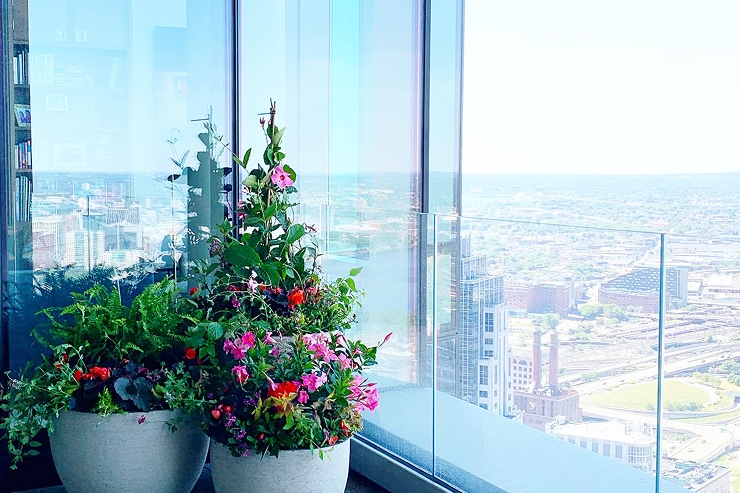
Before anything is planted, we walk the property — front stoop, terrace, roof deck, or all three — and note light exposure, wind exposure, and what the architecture or historic commission allows in terms of container material and color. From that walk-through we build a plant palette for the coming season and, if you want it, a full-year calendar so you’re not re-deciding four times a year. Materials, colorways, and plant selections are proposed in writing before we order anything.
Container Sourcing, Sizing & Placement
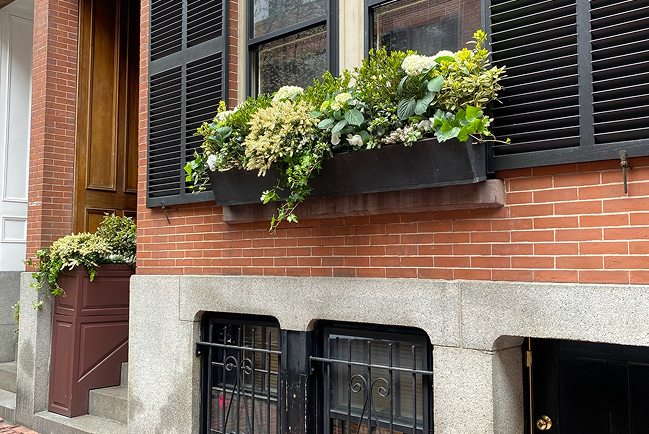
We source containers sized correctly for the plant mass they’ll carry through a Boston summer, not the undersized pots that ship with most off-the-shelf planting services. On brownstone stoops and Beacon Hill entries, that usually means fiberglass or glazed ceramic in a size and finish that reads correctly against the facade; on roof decks, it means lightweight material rated for the structural load your building allows. We handle placement, drainage layers, and — where a property sits under historic commission review — container styling that won’t draw a violation notice.
Spring & Summer Rotation
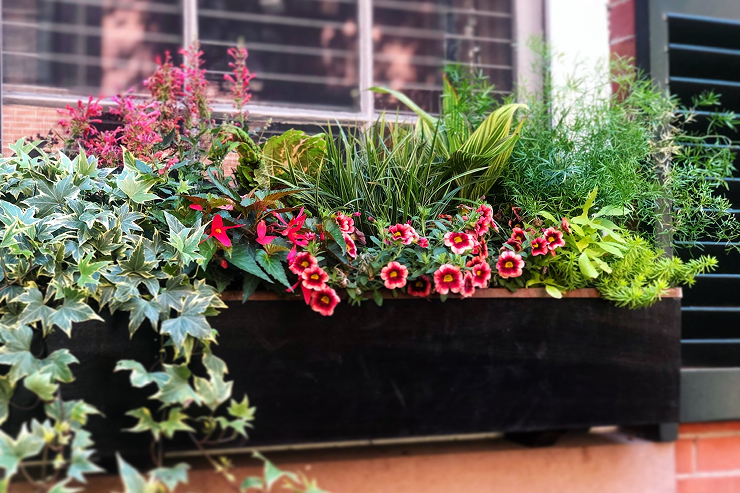
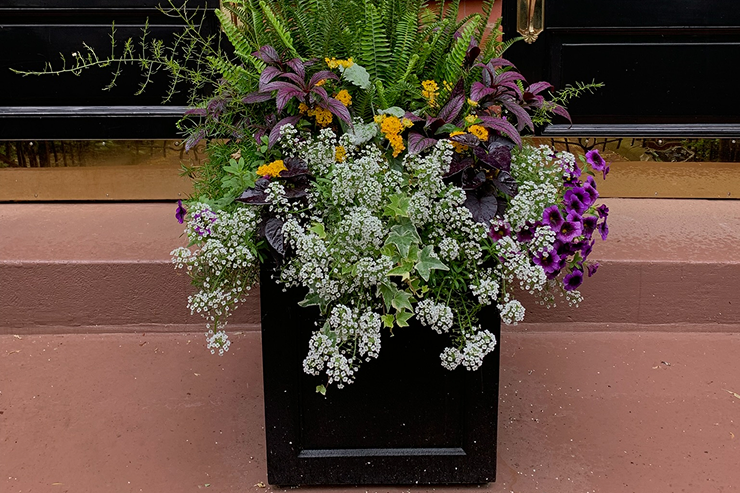
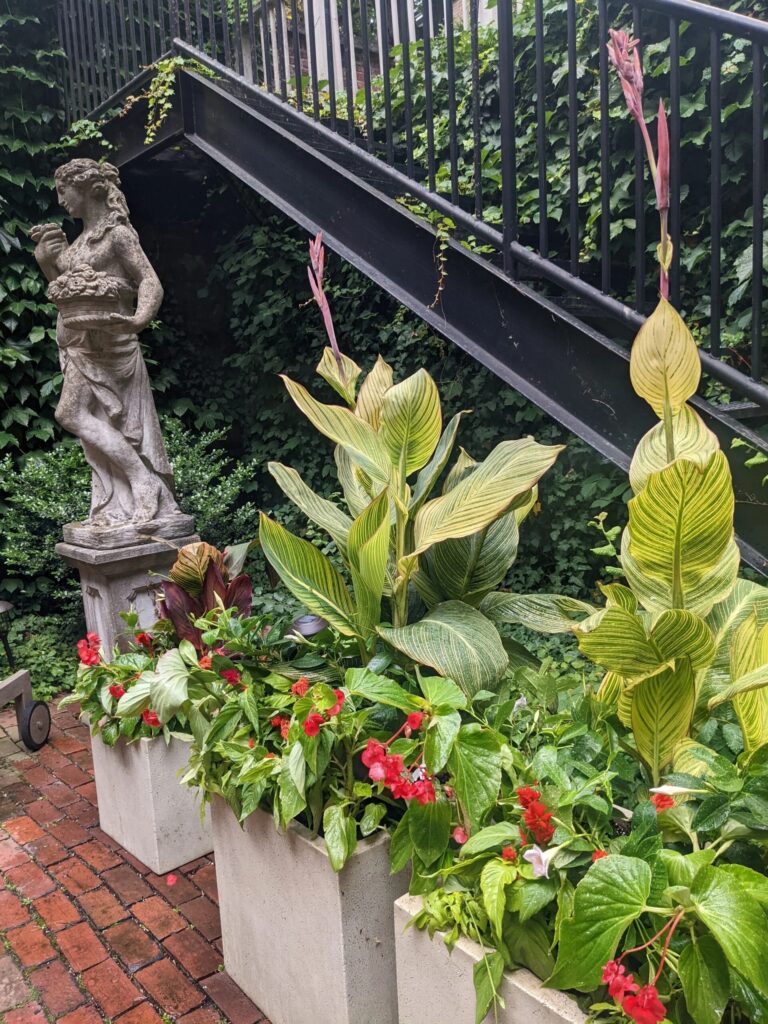
Planted once the last frost risk has passed, this rotation is built to hold its shape and color through Boston’s hottest, most humid stretch, typically late May into September depending on the year’s frost dates. Plant selections account for how much direct, reflected, or baking heat a given exposure actually receives — a south-facing brick wall on Commonwealth Avenue is not the same growing environment as a shaded North End courtyard, and we plant accordingly.
Fall & Winter Rotation
Once summer material is spent, we replace it with a cold-hardy fall display — ornamental kale, mums, grasses, and berried stems — followed by an evergreen winter arrangement built to hold structure through a Boston winter without replanting again until spring. Winter containers are chosen for their tolerance of freeze-thaw cycles in an above-grade pot, which is a harsher environment than the same plant would face in the ground.
Irrigation Integration for Containers
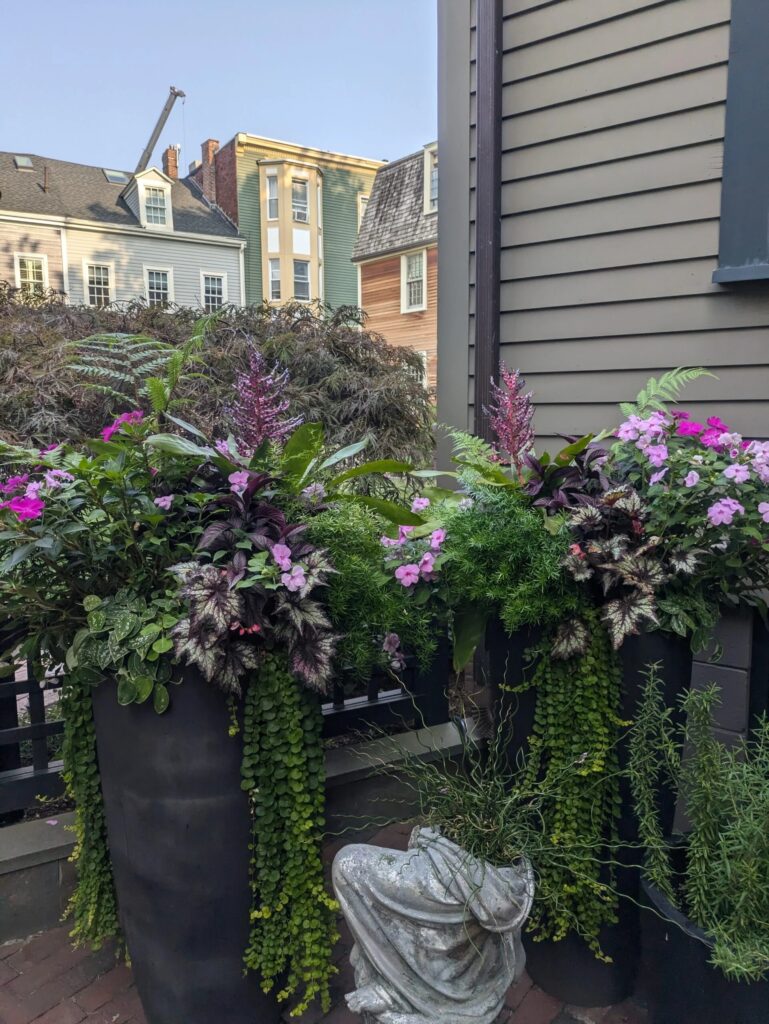
Containers dry out faster than garden beds, and a missed watering cycle during a July heat wave is the single most common reason container plantings fail in this city. Where the property allows it, we tie containers into a drip irrigation zone on a timer; where that’s not possible, we build a manual watering schedule into the maintenance visit and, for properties without daily staff on site, flag which containers are most exposed and most likely to need attention between visits.
Ongoing Maintenance Visits
Between the four seasonal changeovers, we visit to deadhead, prune, feed, and replace anything that’s failed early — a broken stem, a plant that didn’t take, a container that got more wind than expected. This is what keeps a container planting looking like it was installed last week rather than three months ago, and it’s the part most homeowners underestimate when they try to run this themselves.
Why Seasonal Container Planting Matters in Boston Specifically
Container planting in Boston is a different discipline from container planting almost anywhere else, and the difference comes down to four conditions that show up again and again across the neighborhoods we work in.
Almost no ground-level soil in the North End and on Beacon Hill.
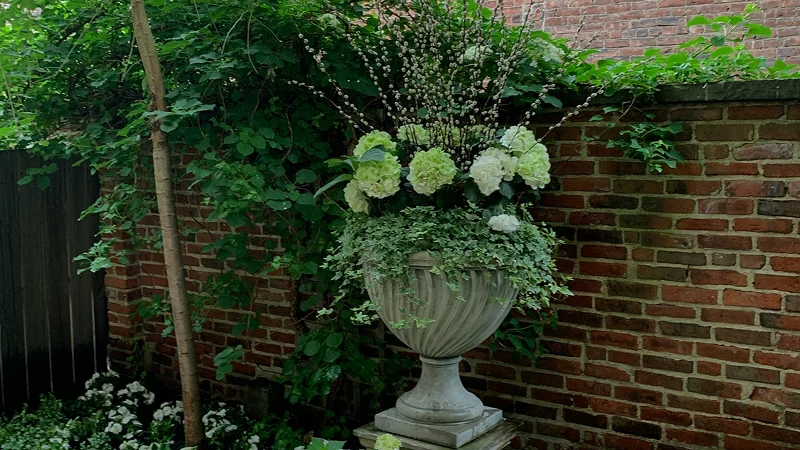
A large share of the properties we work on don’t have a planting bed at all — the front of the building is brick, stone, or sidewalk, and containers are the only planting available to the property. That means the container is not a supplement to a garden; it is the garden, and it has to be sized, planted, and maintained with that weight of responsibility.
South-facing brick that bakes containers by mid-July.
Brick and brownstone hold and radiate heat long after the sun has moved off a facade, which pushes root-zone temperatures in a container well above what the same plant would experience in ground soil. A plant palette selected for a north-facing garden bed will scorch on a south-facing Back Bay stoop by the Fourth of July. We plant for the wall, not just for the season.
Wind scour on any terrace above the fourth floor.
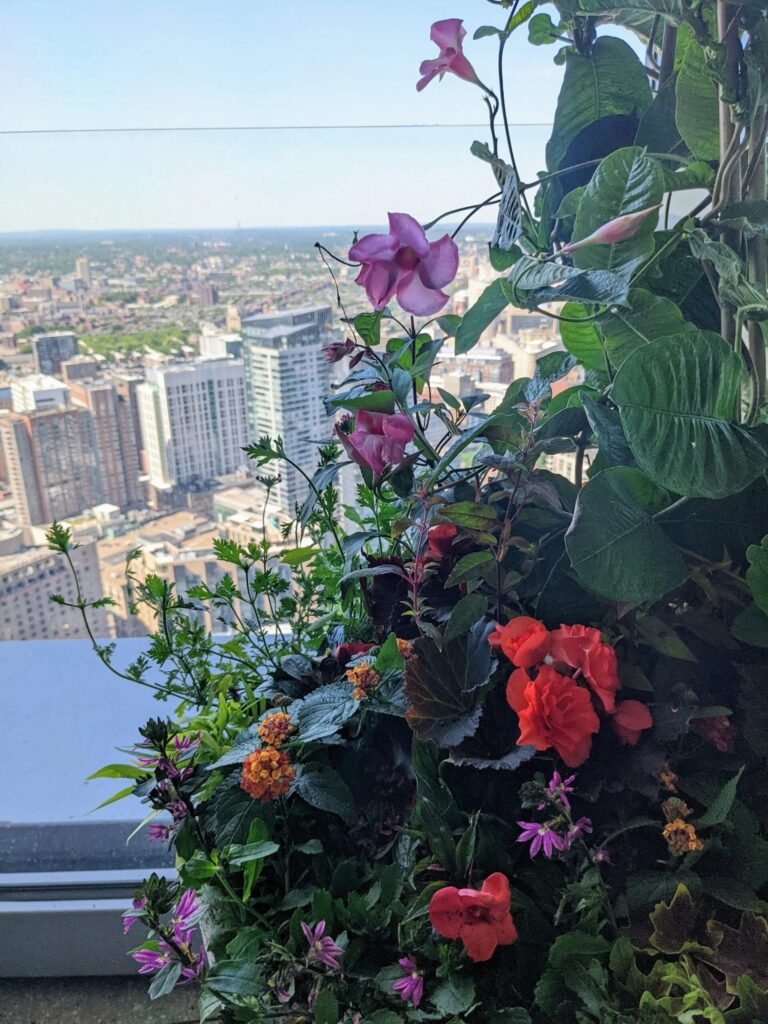
Roof decks and upper-floor terraces in Boston see sustained wind loads that strip moisture from foliage and containers far faster than a street-level planting. Plant selection, container weight, and watering frequency all change once you’re above that line, and a planting plan that ignores it dries out or blows over within a season.
A frost window that runs mid-October to mid-May.
Boston’s average last frost typically falls in late April to early May, and first frost arrives by mid-October, which leaves a genuinely short window for tender annuals and a long stretch where containers need something structural and cold-hardy or they sit empty for six months. Our four-rotation calendar is built around this window specifically, not around a generic national planting calendar.
Our Process
Site walk and light assessment
We visit the property, assess sun exposure by facade, note wind conditions on any elevated terrace, and confirm any historic commission or condo association restrictions on container material and placement. Deliverable: a written site assessment.
Plant palette and container proposal
Based on the site walk, we propose a plant palette, container specification, and a year-round rotation calendar. Deliverable: a proposal you approve before anything is ordered.
Sourcing and installation
We source containers and plant material, then install on the agreed date. Deliverable: a completed planting, photographed for your records.
Seasonal rotation
As each season turns, we return to remove spent material and plant the next rotation, on a schedule set at the start of the relationship. Deliverable: four planned changeovers per year, scheduled in advance.
Maintenance between rotations
Regular visits to deadhead, feed, prune, and address anything that isn’t performing. Deliverable: a maintenance log after each visit noting what was done and what to watch.
Where We Do This Work
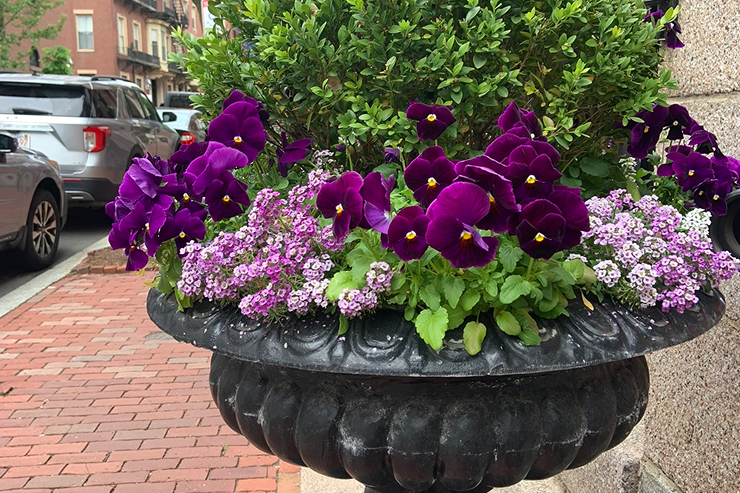
We plant and maintain containers across fifteen Boston-area neighborhoods, from dense historic districts with no ground-level soil to western suburban properties with more open exposure. In Beacon Hill and the North End, the work is almost entirely container-based given the lack of front-of-house planting beds. In Back Bay, South End, and Bay Village, we plant a mix of stoop containers and small front gardens, often under historic commission guidelines. In Charlestown, where our studio is based, and the West End, we work across brownstone stoops, condo terraces, and the occasional roof deck. Moving toward the river and the western suburbs, we plant containers and terrace displays in Cambridge, Brookline, Belmont, Chestnut Hill, Newton, Wellesley, Weston, and Lincoln, where properties more often combine containers with adjacent garden beds. If your property sits in one of these areas, the neighborhood page linked above has photos and specifics from work we’ve done nearby.
Related Services
Container gardening is often one piece of a broader planting program. Related services include Rooftop Garden Installation for terraces and roof decks, Seasonal Container Planting for properties on a spring/fall changeover schedule, Window Box Design & Installation, Drip Irrigation for Containers and Beds, and Low-Voltage Landscape Lighting for evening definition on containers and entries.
Get Started
If you’re ready to put your property on a seasonal rotation, call (617) 555-0134 to set up a site walk. On that call we’ll confirm your address, get a general sense of your containers or exposure, and schedule a visit — most properties can be assessed within a week and planted within two to three weeks of approving the proposal, subject to the season’s frost dates.
Frequently Asked Questions
How many times a year do you change out containers?
Most properties get four rotations a year — spring, summer, fall, and winter — timed to Boston’s frost dates rather than a fixed calendar month. Some clients choose a simpler two-rotation plan (warm season and cold season); we’ll recommend what fits your exposure and budget during the site walk
Do you provide the containers, or do I need to buy my own?
We can supply containers as part of the proposal, sized and specified for your facade and exposure, or plant into containers you already own. Either way, we confirm sizing and drainage before planting.
What does this cost?
Cost depends on the number and size of containers, plant selection, and whether irrigation work is included. We provide a written proposal after the site walk rather than a flat rate, since a pair of window boxes and a full roof-deck program are not comparable jobs.
My building is under historic commission review — does that limit what you can do?
It limits container material, color, and sometimes placement, not the planting itself. We’ve worked on properties under Beacon Hill and Back Bay historic guidelines and will flag anything that needs commission sign-off before we order materials.
Will containers survive a Boston winter, or do they need to come inside?
Frost-tolerant containers and hardy evergreen material can stay out year-round; glazed ceramic and some fiberglass containers can crack in repeated freeze-thaw cycles if they’re not rated for it. We specify winter-safe containers as part of the proposal.
Can you tie containers into an existing irrigation system?
Where a drip system already serves the property, we can usually extend a zone to cover containers. Where there’s no system, we either propose one or build a manual watering schedule into the maintenance visit.
What happens if a plant dies between visits?
We replace it at the next scheduled visit at no additional charge if it’s a plant we installed and it failed under normal conditions. Anything caused by external damage — pets, foot traffic, a dropped object — is assessed separately.
Do you work on roof decks and terraces above the fourth floor?
Yes. Wind exposure at that height changes both plant selection and container weight, and we account for both — heavier, wind-rated containers and plant material that tolerates sustained air movement rather than a still, ground-level microclimate.
How far in advance should I book my first rotation?
For a spring rotation, we recommend contacting us by late March to secure your planting date before the post-frost rush. For fall and winter rotations, four to six weeks ahead is usually enough.
Do you only do containers, or can you also plant garden beds?
We do both. If your property has in-ground beds in addition to containers, we can fold both into a single seasonal program — see our Planting & Maintenance page for that broader service.