
Garden Design vs. Landscape Design: What Boston Homeowners Need to Know Before Hiring a Pro
If you’ve been searching for ways to improve your outdoor space in Boston, you’ve probably come across two terms that get used interchangeably, garden design and landscape design. But they’re not the same thing, and understanding the difference can save you time, money, and a whole lot of frustration.
Whether you’re working with a compact Beacon Hill courtyard, a South End rooftop terrace, or a backyard in Brookline, the right approach depends on what you’re starting with and what you want to end up with. At Rouvalis Gardens, we’ve spent years helping Boston homeowners and property managers figure out exactly that.
What Is Garden Design?
Garden design is the art and science of planning a planting-focused outdoor space. It’s centered on plants, how they’re chosen, where they go, how they interact with each other through the seasons, and how they complement the architecture around them.
A good garden designer doesn’t just pick pretty flowers. They study your soil, your sun exposure, your microclimates, and even how water moves across your property after a rainstorm. They think about what the space looks like in January, not just in June.
At Rouvalis Gardens, our garden design services start with a site visit where we observe all of this firsthand. We don’t design from a desk. We walk your property, look at your light, and listen to how you actually want to use the space.
The result is a layered planting plan that delivers year-round beauty, spring bulbs, summer perennials, fall foliage, and winter structure, built around plants that genuinely thrive in New England’s climate, not just look good in a catalog.
What Is Landscape Design?
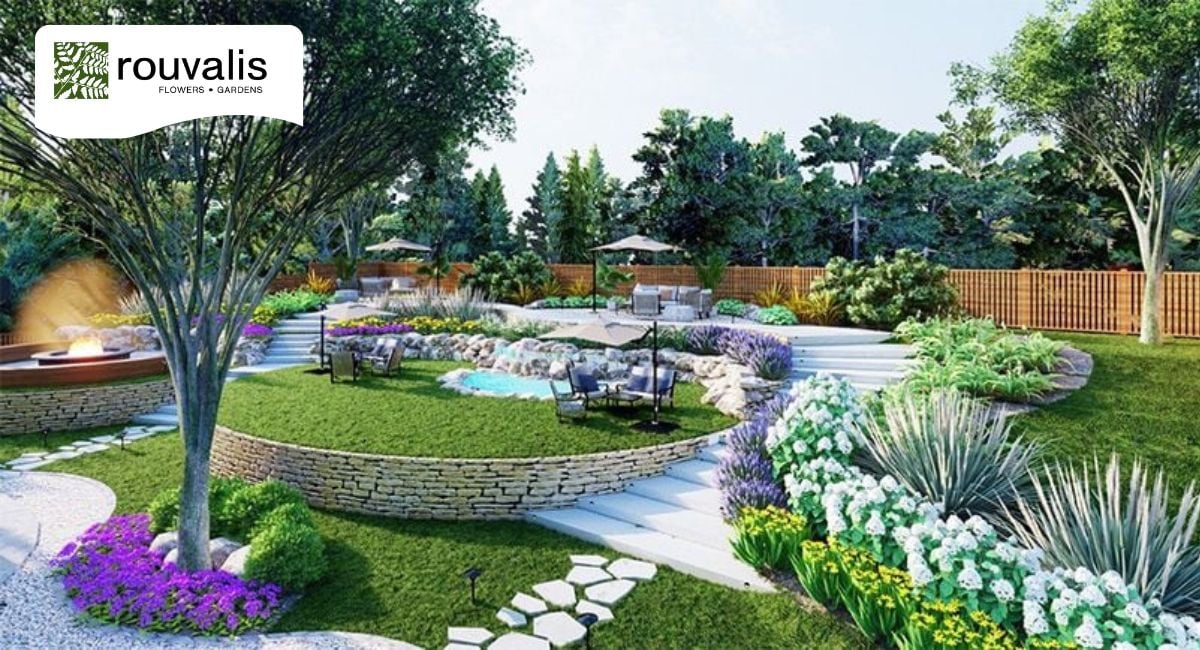
Landscape design takes a bigger picture view. It includes everything garden design covers, plus the structural and architectural elements of your outdoor space, patios, walkways, retaining walls, lighting, drainage systems, and how all of these elements work together as a whole.
Think of it this way: if garden design is about what grows, landscape design is about what’s built and how the entire space is organized and experienced.
For Boston properties, landscape design often means solving real problems. Urban lots deal with compacted soil, limited drainage, heat reflected off brick and concrete, and awkward grade changes. A well-executed landscape design addresses all of this, not just for how it looks, but for how the space actually functions over time.
Our landscape design process integrates materials like bluestone, granite, and brick that honor Boston’s historic character while bringing modern performance and sustainability to your outdoor space.
Do You Need Garden Design, Landscape Design, or Both?
Here’s an honest way to think about it:
If your bones are already good, you have a patio or walkway you’re happy with, and you mostly want better plants, more seasonal color, or a cohesive planting plan, you likely need garden design.
If you’re starting from scratch, dealing with drainage problems, want to add a patio or lighting, or the entire space feels disconnected and unplanned, you probably need landscape design.
And if your space has both structural problems and planting problems, which is the case for most Boston properties we visit, you need both working together from the start. That’s where the real magic happens.
Why Boston Properties Need a Local Expert
Designing a garden in Boston is not the same as designing one in the suburbs of Atlanta or Phoenix. New England’s climate is demanding. Winters are harsh. Springs are wet. Summers can be hot and dry. And many Boston properties sit in dense urban environments where reflected heat, limited soil depth, and shade from neighboring buildings create unique challenges.
Beyond climate, there’s architectural context. Beacon Hill townhouses, Back Bay brownstones, and Charlestown rowhouses all have distinct character. A great garden or landscape design should feel like it belongs to the building, not like it was dropped in from somewhere else.
Rouvalis Gardens has spent years working in these neighborhoods. We know which plants survive, and which ones struggle, in these specific conditions. We know the historical commission guidelines for properties that fall under review. And we know how to use materials that look like they’ve been there for decades, even when they’re brand new.
What the Design Process Actually Looks Like
Many homeowners are nervous about hiring a designer because they don’t know what to expect. Here’s how the Rouvalis Gardens process works:
First, we spend time at your property. We observe the light, the drainage, the soil, and the existing features worth keeping. We ask how you use the space and what frustrates you about it.
Then we develop a design that reflects your property’s real conditions, not a generic template. You’ll see detailed plans and understand not just what we’re proposing, but why each element belongs there.
Once you’re happy with the design, installation moves efficiently. Most projects install in one to two weeks. And we don’t disappear after planting day, we provide care instructions and stay available as your garden establishes and matures.
Conclusion
Your outdoor space in Boston should be more than an afterthought. Whether you need focused garden design to bring your planting plan to life, a full landscape design that reimagines your entire outdoor environment, or something in between, the right expertise makes the difference between a space that disappoints and one that you’re proud of every day.
Rouvalis Gardens brings local knowledge, a hands-on design process, and real experience working with Boston’s unique properties and neighborhoods. We don’t do cookie-cutter things. We design spaces that feel like they belong.
Ready to transform your outdoor space? Contact us today to schedule a consultation and bring your dream garden to life.
Frequently Asked Questions
What is the difference between garden design and landscape design?
Garden design focuses primarily on plants, selecting, arranging, and managing them for aesthetic and practical results. Landscape design is broader and includes structural elements like patios, walkways, walls, drainage, and lighting in addition to planting. Many projects benefit from both.
How long does a garden or landscape design project take in Boston?
Most design plans are completed within four to six weeks from the initial consultation. Installation typically takes one to two weeks, depending on the scope of the project. More complex properties with grade changes or historical commission requirements may take additional time.
What plants work well in Boston gardens?
Plants that handle New England’s climate reliably include boxwood, hydrangeas, hostas, geraniums, ferns, and native perennials like coneflowers and black-eyed Susans. Native plants are especially valuable because they support local pollinators and require less maintenance once established.
Can Rouvalis Gardens work with Boston’s historical commission requirements?
Yes. We are familiar with the guidelines that apply in neighborhoods like Beacon Hill and Back Bay, and we design gardens that meet those requirements while still delivering a beautiful, functional space. We can also guide you through the approval process when it applies.
How much maintenance will a professionally designed garden require?
That depends on the choices you make during the design process. We can create very low-maintenance gardens, or more dynamic designs with seasonal containers and rotating plantings. We have an honest conversation about maintenance expectations before any work begins so your garden matches your lifestyle.
Does garden design help with drainage problems?
Yes. Drainage is one of the most common challenges on Boston urban properties, and it’s something we specifically plan for. Solutions can include grading adjustments, rain gardens, French drains, permeable paving, and plant selection that handles wet or dry conditions depending on where they’re placed.