- Serving Boston and the Greater Boston Area
Window Boxes in Boston, MA

What's included
Box design and material selection
Structural mounting and bracket engineering
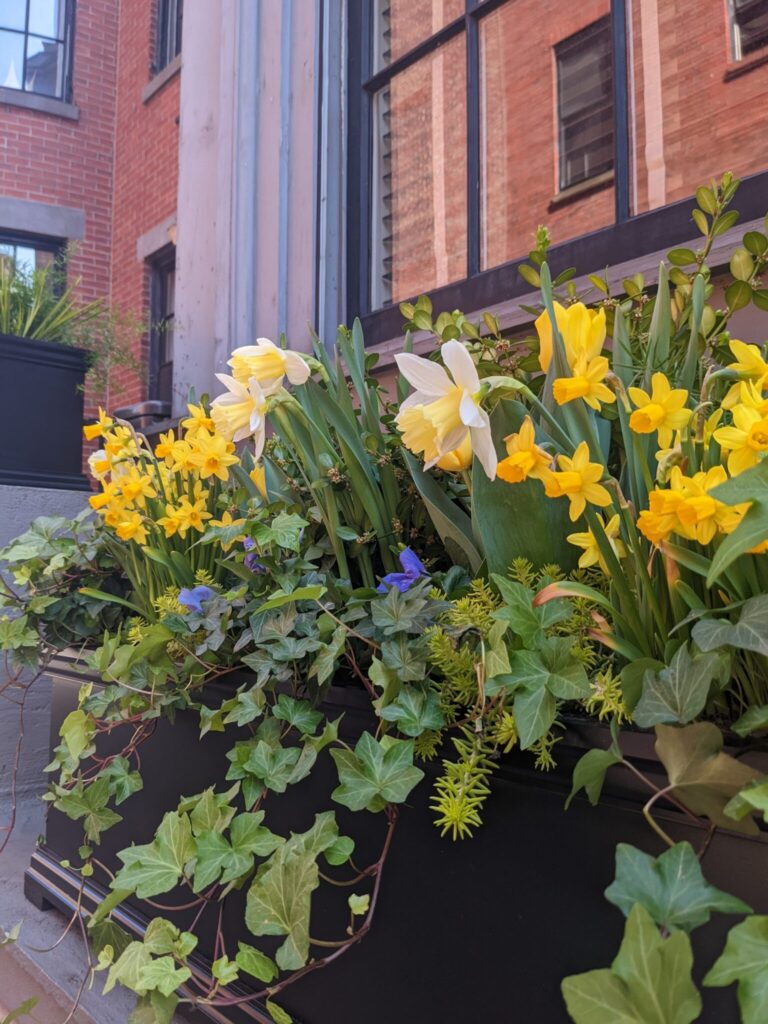
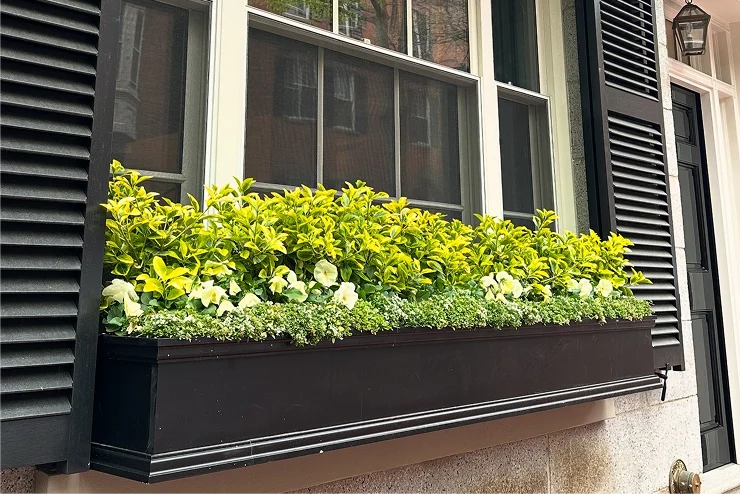
Planting design by exposure and season
Drip irrigation and self-watering reservoirs
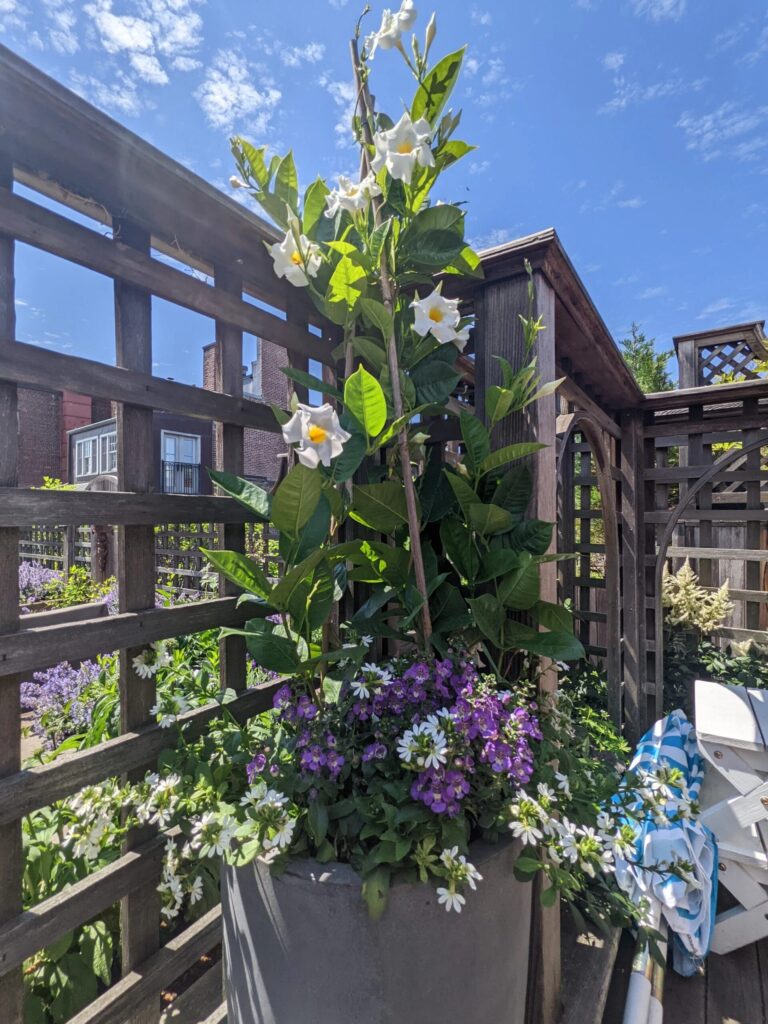
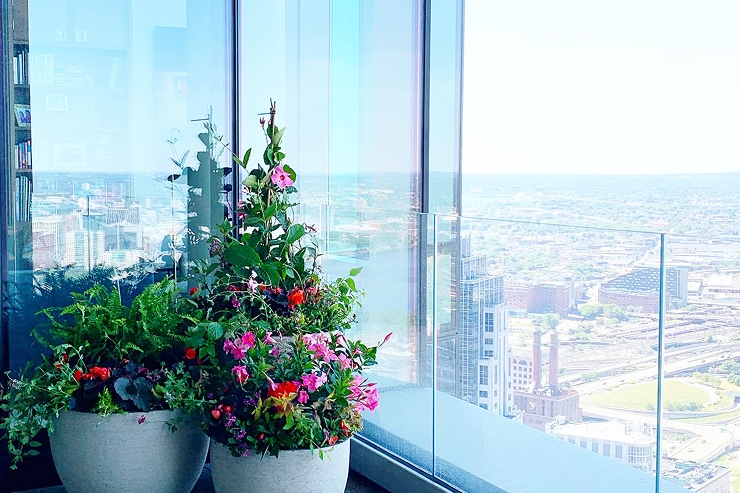
Ongoing maintenance and seasonal changeovers
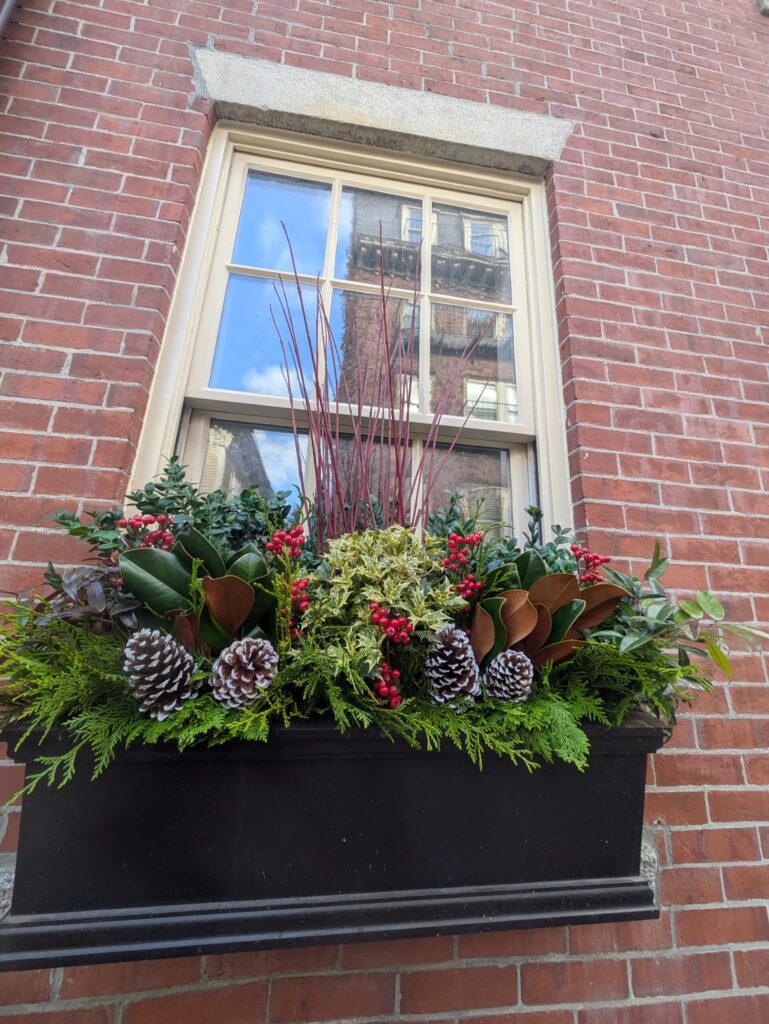
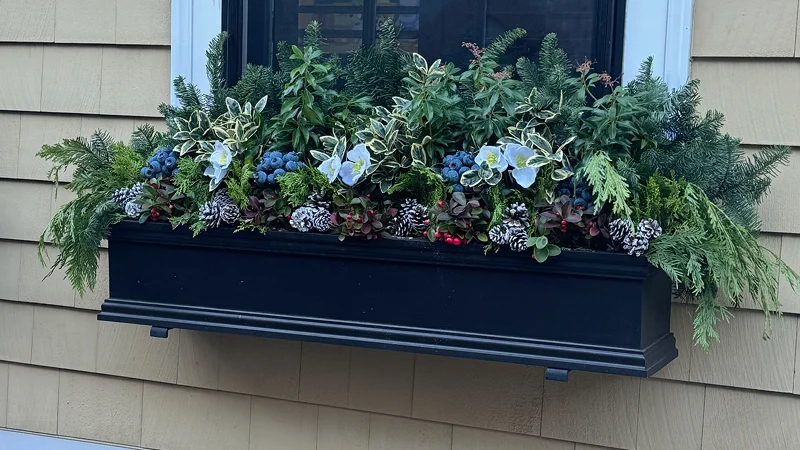
Winter and holiday dressing
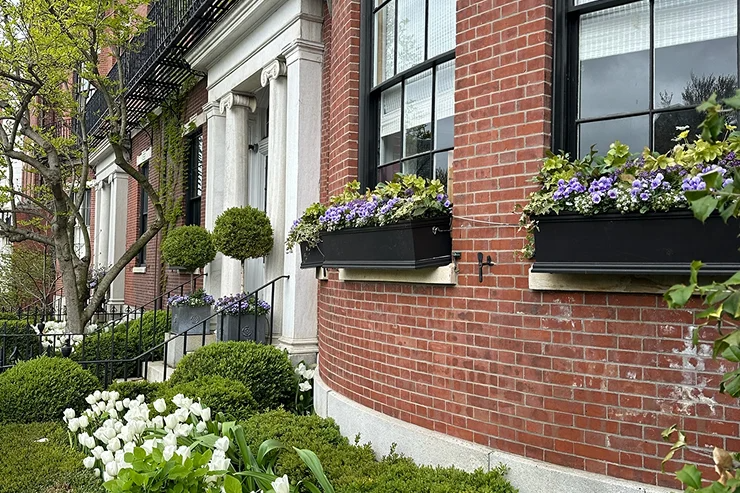
Why window boxes matter in Boston specifically
Boston’s older housing stock creates a planting problem that suburban landscaping advice doesn’t address. In the North End and on Beacon Hill, most buildings have no ground-level soil at all — the sidewalk runs straight to the foundation, and a window box is often the only planting surface a property has access to. That changes the design brief entirely: the box isn’t a supplement to a garden, it is the garden, and it has to carry the visual weight of the whole facade on its own.
South-facing brick compounds the problem. Brick absorbs heat through the day and releases it slowly into the evening, so a box mounted against a south wall runs hotter than the ambient air temperature well into the night. By mid-July, plantings specified for “full sun” on a nursery tag are often still underperforming against a Boston brick wall, because the tag wasn’t written for masonry radiant heat. We plant these boxes differently — species selection and watering volume both shift for wall exposure, not just compass direction.
Height introduces a second variable. Boxes mounted above the fourth floor, particularly near the harbor or along wider streets that funnel wind, take a steady scour that dries soil faster than the temperature alone would suggest and can physically stress or snap tender stems. We build the planting palette and the watering schedule around wind exposure as a distinct factor from heat, not a footnote to it.
And Boston’s frost window is longer than most planting calendars assume — it typically runs from mid-October to mid-May. That’s roughly seven months a year when summer annuals are not an option, which is why a maintenance plan built around four seasonal changeovers, rather than the two most national services default to, matters here more than in milder climates.
Our process
Site visit and measurement.
Design and material proposal.
Fabrication and historic approval, where required.
Installation and first planting.
Ongoing maintenance and changeovers.
Where we do this work
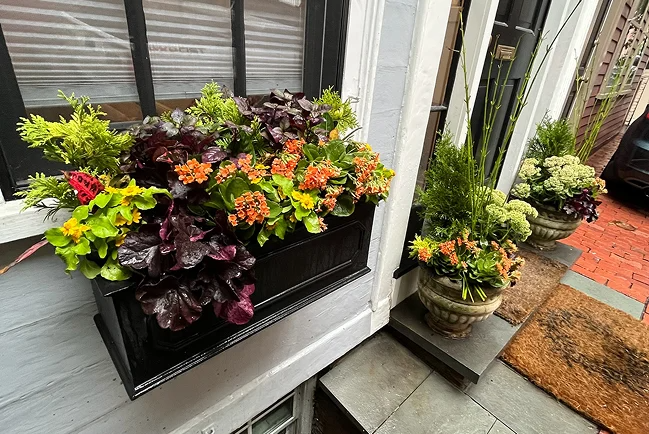
We build and maintain window boxes across the neighborhoods where ground-level soil is scarce and facade rules are strict. In Beacon Hill, where nearly every property sits under historic commission review, and in the North End, where sidewalk-to-foundation lots leave no planting bed at all, window boxes are frequently the only option a homeowner has. The same is true along Back Bay’s brownstone rows and through the South End, where bow-front facades and bracketed sills are original to the buildings.
Closer to the water, in Charlestown and the Seaport, wind scour off the harbor shapes both the planting palette and the watering schedule. In South Boston and Jamaica Plain, we work on a mix of triple-deckers and renovated row houses where bracket condition varies block to block, so each site gets measured rather than assumed.
Across the river, we serve Cambridge and Somerville, where brick and clapboard sit side by side and box specification changes accordingly. In the western suburbs, we work with property managers and homeowners in Brookline, Newton, Wellesley, Weston, Dover, and Chestnut Hill, where larger properties often pair window boxes with entry and terrace containers as part of one coordinated planting plan.
Related services
Start with a site visit
Every property’s brackets, exposure, and approval requirements are different, which is why we start with a walk of the facade rather than a phone quote. Call (617) 555-0142 to schedule a site visit, or request a consultation and we’ll follow up within one business day. After the visit, you’ll have a measured plan and a written proposal in hand before anything is ordered.