
Container Gardening South End, MA: Low-Maintenance Ideas for Busy Professionals
If you live in the South End and your idea of a weekend involves brunch on Tremont Street rather than digging in the dirt, you are not alone. Most people in this neighborhood are juggling demanding careers, packed social calendars, and apartments or condos with little to no yard space. But here is the thing you do not need a backyard or a green thumb to grow something beautiful. Container gardening South End, MA is quietly becoming one of the most popular ways locals are bringing life to their stoops, decks, bay windows, and rooftop spaces.
This is not about turning your brownstone into a botanical garden. It is about finding simple, realistic ways to add greenery to your space without it becoming another thing on your to-do list.
Why Container Gardening Makes Sense for South End Living
The South End is one of Boston’s most walkable and vibrant neighborhoods, but outdoor space is a luxury. Most residents are working with a front stoop, a shared courtyard, a narrow balcony, or maybe a rooftop deck if they are lucky. Container gardening fits perfectly into that kind of environment.
You get to control everything the soil, the sunlight exposure, the watering schedule without committing to a full landscape. Containers can be moved around depending on the season. They can go indoors when temperatures drop in November. They do not require renting equipment or hiring a landscaper. And when done right, they look genuinely stunning.
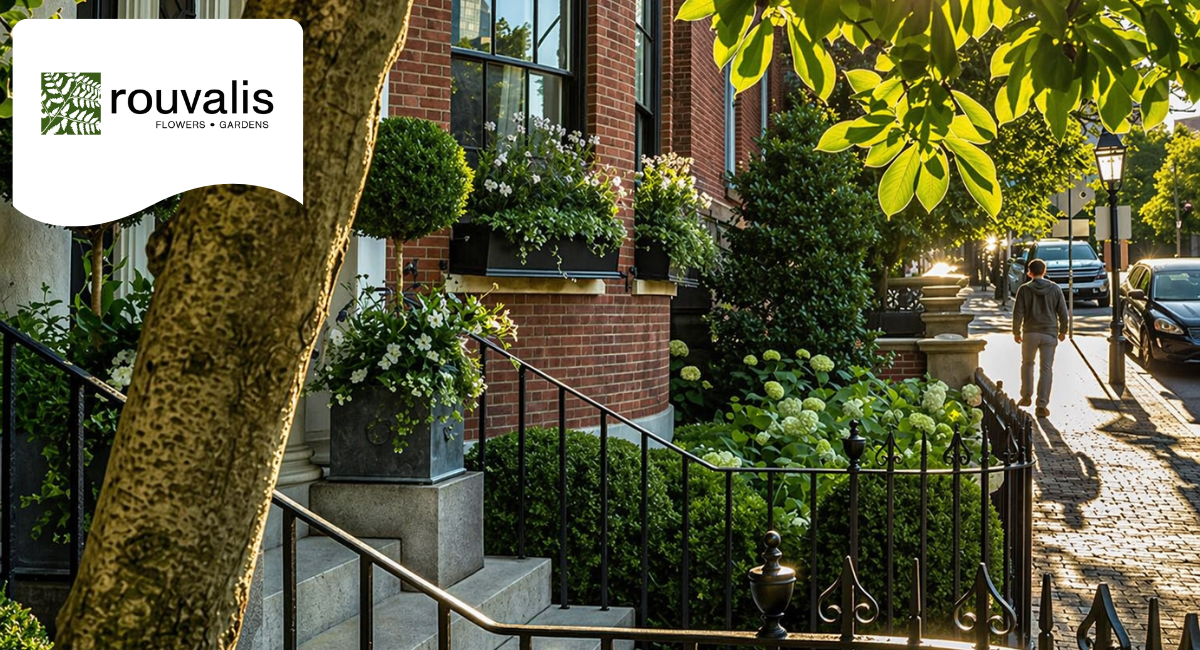
The South End’s tree-lined streets and historic brick architecture actually create a beautiful backdrop for potted plants. A few well-placed containers on your front steps or deck can make a real visual difference, both for you and for your neighbors.
Choosing the Right Containers for a Busy Lifestyle
Before you think about what to plant, think about the container itself. Busy professionals do not have time to water twice a day, so choosing the right pot can save you a lot of effort.
- Self-watering containers are a game changer. They have a built-in reservoir at the bottom that wicks water up to the roots as needed. You fill the reservoir once every few days instead of watering daily. For someone leaving for work before 7 AM and getting home after dark, this is not a luxury, it is a necessity.
- Lightweight fiberglass or resin pots are ideal for rooftop decks and balconies where weight limits matter. They look like ceramic or stone but weigh almost nothing and hold up well through Boston winters.
Go bigger than you think you need. Larger containers hold moisture longer, which means less frequent watering. A ten-inch pot dries out fast. A twenty-inch pot gives roots room to breathe and keeps soil moist for days longer.
Best Low-Maintenance Plants for Container Gardening South End, MA
Not every plant belongs in a container, and not every container plant works for a busy schedule. Here are the ones that consistently perform well for urban professionals who cannot commit to high-maintenance gardening.
- Lavender thrives in full sun, smells incredible, and actually prefers to dry out a little between waterings. It is drought-tolerant, pollinator-friendly, and looks beautiful in terracotta.
- Sedums and succulents are nearly indestructible. They store water in their leaves, which means forgetting to water for a week or two is not catastrophic. They come in interesting textures and colors and work great on sunny windowsills or south-facing stoops.
- Ornamental grasses add movement and texture with almost zero effort. They are incredibly hardy, look great from spring through fall, and come back reliably year after year in perennial varieties.
- Geraniums are the unsung heroes of container gardening. They flower for months, handle dry spells reasonably well, and come in colors that pop against brick and iron railings.
- Herbs like rosemary and thyme are drought-tolerant, useful in the kitchen, and compact enough for a windowsill or small balcony corner. Unlike basil which can be dramatic and temperamental these two practically take care of themselves.
- Begonias are worth mentioning for shadier spots. If your stoop or balcony does not get much direct sun, wax begonias bloom reliably in partial shade without needing constant attention.
Roof Deck Planting South End, MA: What You Need to Know
If your building has rooftop access, you have something genuinely special. Roof deck planting South End, MA has taken off in recent years as more residents look to transform underused rooftop space into something functional and beautiful.
Rooftop conditions are different from ground-level gardening. The wind is stronger up there. Sun exposure is often intense and unfiltered. Weight capacity is a real consideration. And irrigation requires more planning because rooftop containers dry out faster than those at street level.
Here is what works well on South End rooftop decks:
Start with wind-resistant plants. Ornamental grasses, agapanthus, and compact evergreen shrubs handle wind far better than tall, top-heavy plants that can topple or stress out in gusty conditions.
Use large, heavy-bottomed containers or secure lightweight pots with deck anchors. The last thing you want is a pot blowing across your roof on a windy October night.
Consider a drip irrigation system with a timer. These are more affordable and easier to install than most people expect, and they completely eliminate the daily watering burden. For busy professionals, this is often the difference between a thriving rooftop garden and a graveyard of dried-out pots.
Raised planter boxes work well for rooftop spaces because they distribute weight across a larger surface area. Lightweight growing mediums like a peat or perlite-based mix instead of heavy garden soil also help manage load concerns.
If you have a south or west-facing roof deck, take advantage of it. Full sun is a gift in container gardening South End, MA use it for tomatoes, peppers, herbs, or flowering perennials that would struggle in shadier ground-level spots.
Seasonal Tips to Keep Things Simple
Spring is your planning season. Buy your containers, pick up a bag of high-quality potting mix, and choose plants suited to your light conditions. Do not overthink it start with three or four containers maximum.
Summer is when everything comes alive. Water deeply but less frequently to encourage deep root growth. Add a slow-release fertilizer at planting time so you are not scrambling to feed your plants every week.
Fall is underrated. Swap out summer annuals for ornamental cabbage, mums, or cool-season grasses. Your containers can look beautiful well into October and November.
Winter is a time. Bring tender plants indoors, store empty containers in a sheltered spot, and start thinking about what you want to try next year.
Keep It Simple, Keep It Going
The biggest mistake busy professionals make with container gardening is overcommitting. Start small, choose the right plants, invest in self-watering containers, and let the garden grow at its own pace. You do not need to be home every day. You do not need to spend every weekend outside. You just need a little intention and the right setup.
The South End is a neighborhood that values beauty, community, and craft and a well-tended container garden fits right into that culture.
If you are ready to take it further or want expert help designing a rooftop or patio container setup, Rouvalis Gardens has deep roots in the Boston urban gardening scene and understands exactly what works in neighborhoods like ours. Whether you are starting from scratch or refreshing an existing space, Rouvalis Gardens is worth a conversation.
Your greenest chapter starts with a single pot. Might as well make it a good one.
FAQs – (Frequently Asked Questions)
Q1. What are the best low-maintenance plants for container gardening South End, MA?
Lavender, sedums, ornamental grasses, geraniums, and drought-tolerant herbs like rosemary and thyme are the best choices. They handle Boston’s climate well, require minimal watering, and thrive in containers on stoops, balconies, and rooftop decks.
Q2. How often do I need to water my container garden if I have a busy schedule?
With self-watering containers, you only need to refill the reservoir every 3 to 5 days. Choosing larger pots and drought-tolerant plants reduces the need even further. A drip irrigation timer can make it completely hands-free.
Q3. Is roof deck planting South End, MA possible for beginners?
Absolutely. Start with wind-resistant plants, use lightweight fiberglass containers, and install a simple drip timer. Rooftop decks in the South End often get full sun, which actually gives you more planting options than shaded ground-level spots.
Q4. What size container works best for a small South End balcony or stoop?
Go with containers that are at least 16 to 20 inches wide. Larger pots retain moisture longer, give roots more room to grow, and reduce how often you need to water, perfect for busy professionals who are not home every day.
Q5. When is the best time to start container gardening in South End, MA?
Late April through mid-May is the ideal window after Boston’s last frost date passes. This gives your plants a full growing season from spring through fall before temperatures drop in November.